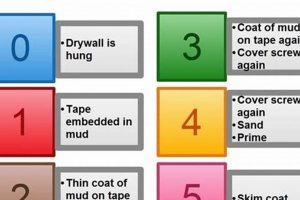
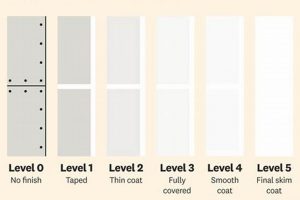
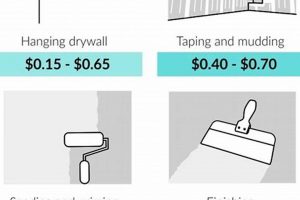
These standards define the degree of smoothness and preparation applied to gypsum board surfaces before final decoration. Ranging from zero to five, each level specifies the work required, impacting the final appearance and suitability for different applications. For instance, a garage might require a lower degree of finish than a formal dining room.
Properly executed surface preparation ensures optimal adhesion of paint, wallpaper, or other coverings, contributing to a professional aesthetic and preventing future problems like blistering or peeling. Historically, these guidelines were developed to provide clarity and consistency within the construction industry, minimizing miscommunication and ensuring predictable results.
Understanding these standardized measures is crucial for accurately estimating project costs, selecting appropriate materials, and achieving the desired visual outcome in any construction or renovation endeavor. Subsequent sections will delve into the specific requirements and applications of each grade, providing a detailed overview of the process.
Tips for Achieving Optimal Results
Achieving the desired finish requires careful attention to detail and adherence to established best practices. The following tips provide guidance for ensuring a successful outcome.
Tip 1: Select the Appropriate Level: Clearly define the intended use of the space to determine the appropriate degree of surface preparation. Higher numbers necessitate more extensive work and are typically reserved for areas with critical lighting conditions or decorative finishes.
Tip 2: Proper Joint Compound Application: Apply joint compound in thin, even coats, allowing each coat to dry completely before applying the next. This minimizes shrinkage and cracking, leading to a smoother surface.
Tip 3: Sanding Techniques: Employ appropriate sanding techniques to blend joints and screw indentations seamlessly into the surrounding surface. Use progressively finer grits of sandpaper to avoid creating scratches or gouges.
Tip 4: Priming: Always apply a primer before painting. Primer seals the surface, promotes adhesion, and ensures uniform paint absorption, resulting in a consistent color and finish.
Tip 5: Control Environmental Conditions: Maintain consistent temperature and humidity levels during application and drying. Extreme fluctuations can negatively impact the curing process and lead to imperfections.
Tip 6: Adequate Lighting: Use sufficient lighting during the process to identify imperfections that may not be visible under dim conditions. Proper illumination is crucial for ensuring a flawless surface.
Tip 7: Use Quality Materials: Invest in high-quality joint compound, tape, and sanding materials. Substandard materials can compromise the final result and necessitate rework.
These strategies promote enhanced aesthetics, prevent future problems, and increase the longevity of the finish. Employing these methods will assist in meeting the requirements of each specified criteria.
The following sections explore the specific attributes of each grade in greater depth.
1. Appearance

The final appearance of a wall or ceiling is directly dictated by the surface preparation grade selected. Each escalating preparation grade progressively reduces surface imperfections, creating an increasingly smooth and uniform substrate for paints, textures, or wallpapers. The selection of a particular grade is, therefore, a crucial aesthetic decision.
For instance, a Level 1 finish, commonly used in areas hidden from view such as service corridors or above suspended ceilings, may exhibit visible tape seams and fastener heads. This is entirely acceptable in such applications where visual perfection is not a concern. Conversely, a Level 5 finish, characterized by a skim coat applied over the entire surface, eliminates virtually all texture and imperfections. Level 5 is ideal for surfaces receiving glossy paints or located in areas with critical lighting conditions where even minor blemishes would be readily apparent.
The relationship between the smoothness of the surface and the final aesthetic outcome is undeniable. A higher surface preparation grade inherently translates to a more refined and visually appealing surface. Careful consideration of the desired visual outcome is therefore essential in selecting the appropriate criteria, balancing aesthetic goals with budgetary constraints and functional requirements.
2. Application

The intended application of a given wall or ceiling assembly is a primary determinant of the necessary preparation grade. Surfaces in areas requiring minimal aesthetic refinement, such as storage spaces or concealed areas above suspended ceilings, typically necessitate only a Level 0 or Level 1 preparation. These applications prioritize functionality over visual appeal, thereby justifying a less intensive preparation process. Conversely, prominent surfaces in residential or commercial spaces, particularly those designed to receive decorative finishes or critical lighting, demand higher standards, ranging from Level 3 to Level 5. The selection of an insufficient grade for such applications can lead to visible imperfections, negatively impacting the overall aesthetic and potentially compromising the longevity of the finish.
Consider, for example, a newly constructed office building. The plenum space above the drop ceiling would require only minimal preparation, as the surface is not intended for direct viewing. However, the reception area, designed to project a professional image, would necessitate a higher grade of surface preparation to ensure a smooth, flawless appearance. Failure to recognize this distinction during the planning phase can result in costly rework and delays. Similarly, walls intended to receive wallpaper typically require a Level 4 or Level 5 finish to prevent telegraphing of imperfections through the wallpaper surface.
In conclusion, a clear understanding of the intended use of the space is paramount when determining the appropriate surface preparation grade. Misapplication of grades can result in either unnecessary expenditure of resources (in cases where an excessively high grade is selected for a low-visibility area) or compromised aesthetic outcomes (in cases where an insufficient grade is selected for a high-visibility area). Therefore, careful consideration of the relationship between application and surface preparation is essential for achieving optimal results, balancing aesthetic considerations with budgetary constraints and functional requirements.
3. Cost

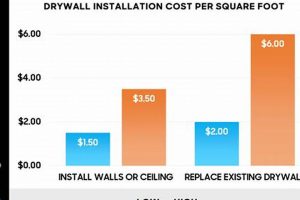
The expense associated with achieving different surface preparation grades constitutes a significant factor in construction and renovation budgets. Each increase in the required smoothness necessitates more materials, labor, and time, translating directly into higher overall project costs. Understanding the cost implications of each grade is, therefore, crucial for effective budget management and informed decision-making.
- Material Costs
Higher surface preparation grades demand increased quantities of joint compound, specialized tapes, and sanding materials. For instance, achieving a Level 5 finish requires a skim coat of joint compound over the entire surface, substantially increasing material consumption compared to a Level 1 or Level 2 finish where only joints and fasteners are treated. The differential in material costs can be significant, particularly in large-scale projects.
- Labor Costs
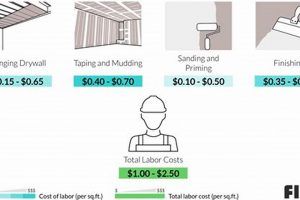
The labor required to achieve higher grades also contributes substantially to overall expenses. Level 4 and Level 5 finishes demand skilled labor proficient in applying thin, even coats of joint compound, sanding surfaces to a flawless smoothness, and identifying and rectifying imperfections. The increased labor hours associated with these grades translate into higher labor costs, especially given the specialized expertise required.
- Time Costs
Projects requiring elevated standards inherently necessitate longer completion times. The multi-step process of applying multiple coats of joint compound, allowing each to dry completely, and sanding meticulously can extend project timelines considerably. This prolonged duration not only increases labor costs but can also impact overall project scheduling and potentially delay occupancy or use of the finished space.
- Equipment Costs
While often overlooked, specialized equipment may be required to achieve the most superior grades, particularly in commercial settings. Power sanders, dust collection systems, and specialized lighting can enhance efficiency and precision, but their acquisition or rental represents an additional cost component. The need for such equipment should be considered when evaluating the overall cost implications of each preparation standard.
In summary, the relationship between preparation grade and cost is directly proportional. Selecting a higher grade invariably increases material, labor, time, and potentially equipment expenses. Project managers and homeowners must carefully weigh the aesthetic and functional benefits of each grade against its cost implications to arrive at a balanced and cost-effective solution. Prioritizing surface smoothness without considering budgetary constraints can lead to overspending, while prioritizing cost savings without considering aesthetic requirements can result in an unsatisfactory final outcome.
4. Durability

The preparation grade applied to gypsum board surfaces directly influences its resistance to damage and degradation over time. Higher preparation grades, characterized by multiple coats of joint compound and thorough sanding, create a more robust and resilient surface compared to lower grades. This enhanced robustness translates into improved durability, extending the lifespan of the finished surface and reducing the need for frequent repairs or repainting.
For instance, a surface finished to Level 5, featuring a skim coat across the entire board, exhibits superior resistance to impact and abrasion compared to a Level 2 finish, where only joints and fasteners are treated. This increased resistance is particularly significant in high-traffic areas such as hallways or commercial spaces, where walls are more susceptible to accidental bumps and scrapes. The skim coat acts as a sacrificial layer, protecting the underlying paper face of the gypsum board from damage. Similarly, higher preparation grades enhance resistance to moisture penetration. The multiple layers of joint compound create a denser, less porous surface, minimizing water absorption and reducing the risk of mold growth or delamination in damp environments such as bathrooms or kitchens. A real-world example can be seen in comparing the long-term condition of a Level 2 finished wall in a rental property, which tends to show corner and impact damage quickly, versus a Level 4 finished wall in a high-end home that remains pristine for years.
In summary, the investment in a higher surface preparation grade yields significant long-term benefits in terms of enhanced durability and reduced maintenance costs. Selecting an appropriate level, considering the intended use of the space and potential exposure to damage, is crucial for maximizing the lifespan of the finished surface. While higher grades may initially entail increased material and labor costs, the resulting durability and reduced need for repairs offer a substantial return on investment over the long term. Therefore, durability must be carefully considered when determining the appropriate preparation standard, balancing initial expenses with long-term performance and minimizing life-cycle costs.
5. Texture

The relationship between surface texture and the standards defining surface preparation is direct and influential. Each surface preparation grade establishes a baseline texture, ranging from the relatively rough finish of Level 0 to the virtually smooth plane of Level 5. This inherent texture influences the suitability of the surface for subsequent decorative treatments and the overall visual impact of the completed space.
- Textural Base for Finishes
The preparation establishes the foundational texture upon which further decorative finishes are applied. A Level 2 finish, for example, leaves noticeable joint lines and fastener indentations. This inherently textured base is unsuitable for smooth paints or delicate wallpapers, as imperfections will be visible through the final finish. Conversely, a Level 5 finish, with its skim coat and smooth sanded surface, provides an ideal canvas for glossy paints or any decorative treatment requiring a flawless substrate. The initial degree of smoothness predetermines the achievable textural qualities of the final surface.
- Texture Hiding or Enhancement
The selection of a preparation standard directly impacts the extent to which underlying board joints and imperfections are hidden or enhanced. Lower grades tend to emphasize existing texture, while higher grades strive to eliminate it. For example, a deliberately textured finish, such as orange peel or knockdown, can effectively conceal minor imperfections on a Level 3 or Level 4 surface. However, attempting to apply a smooth paint to the same surface will likely reveal the underlying texture. The texture either works with or against the preparation, depending on the intended outcome.
- Light Reflectance and Texture
Surface preparation also influences light reflectance and shadowing, which can accentuate or minimize texture. Smoother surfaces, such as those achieved with a Level 5 finish, reflect light more uniformly, creating a brighter and more visually consistent appearance. Conversely, rougher surfaces, typical of lower preparation grades, scatter light, creating subtle shadows that emphasize the inherent texture. These effects are particularly pronounced under critical lighting conditions, where even minor surface imperfections can become highly visible. The interaction of light and texture must be considered when selecting the appropriate standard, especially in areas where lighting is a prominent design feature.
- Cost and Texture Trade-offs
Achieving a particular textural effect involves trade-offs between cost and surface preparation. A smooth, texture-free surface necessitates a Level 5 finish, incurring higher material and labor costs. Conversely, a textured surface can often be achieved with a lower preparation grade, reducing expenses. However, the savings must be weighed against the aesthetic impact and the suitability of the final surface for its intended purpose. A balance must be struck between budgetary constraints and the desired textural outcome, ensuring that the chosen grade aligns with both aesthetic goals and practical considerations.
The interaction between preparation and texture is complex and multi-faceted. The grade selected establishes the textural foundation, influencing the suitability of various finishes, the visibility of imperfections, and the way the surface interacts with light. A thorough understanding of this interplay is essential for achieving the desired aesthetic and functional outcome, balancing textural considerations with budgetary constraints and practical requirements. In the end, consideration of the application or environment of the wall being finished should drive the drywall finishing levels to determine proper texture.
6. Environment
The surrounding conditions exert a significant influence on the selection and performance of different surface preparation grades. Environmental factors such as humidity, temperature fluctuations, and exposure to contaminants directly impact the durability, aesthetics, and longevity of finished walls and ceilings.
- Humidity and Moisture Exposure
In environments with elevated humidity or direct exposure to moisture, higher preparation grades are essential to mitigate the risk of mold growth, delamination, and paint failure. Level 4 or Level 5 surfaces, with their multiple coats of joint compound, provide a greater barrier against moisture penetration compared to Level 1 or Level 2 finishes. Bathrooms, kitchens, and coastal regions necessitate careful consideration of humidity levels when specifying the appropriate preparation standard to ensure long-term performance. For example, a Level 2 finish in a bathroom would likely experience bubbling and peeling paint within a short timeframe, while a Level 5 finish would offer significantly greater resistance to moisture-related damage.
- Temperature Fluctuations
Extreme temperature variations can induce expansion and contraction in materials, potentially leading to cracking and joint separation in surfaces finished to lower standards. Higher preparation grades, with their reinforced joint treatment and skim coats, provide greater stability and resistance to thermal stress. Unconditioned spaces, such as garages or attics, often experience significant temperature swings, necessitating more robust surface preparation to prevent premature failure. A well-prepared surface, using quality materials, will stand the tests of temperatures. Lower quality surfaces tend to fail quicker in these environments.
- Air Quality and Contaminants
Environments with poor air quality or exposure to contaminants, such as industrial settings or areas near roadways, require surface preparation grades that are resistant to staining and degradation. Smooth, non-porous finishes, achievable with Level 4 or Level 5 preparation, are easier to clean and maintain in these environments, preventing the accumulation of dirt, dust, and pollutants. A rough, textured surface finished to Level 2 would be more susceptible to staining and difficult to clean in a factory setting compared to a smooth, sealed surface finished to a higher standard.
- Interior vs. Exterior Applications
While technically exterior applications use specific exterior rated products, the principle is the same. Interior and exterior environments present distinct challenges that necessitate different surface preparation approaches. Exterior applications are exposed to the full spectrum of environmental elements, including sunlight, rain, and wind, requiring highly durable and weather-resistant finishes. Interior environments, while less exposed to the elements, may still experience variations in temperature and humidity, as well as exposure to contaminants. Therefore, the selection of the appropriate preparation grade must consider the specific environmental conditions to which the surface will be exposed.
In conclusion, the interplay between environmental factors and the standards of surface preparation is crucial for ensuring the long-term performance and aesthetic appeal of finished walls and ceilings. Understanding the specific environmental conditions to which a surface will be exposed, including humidity, temperature fluctuations, air quality, and exposure to the elements, is essential for selecting the appropriate preparation grade. Failing to account for these environmental influences can lead to premature failure, increased maintenance costs, and compromised aesthetic outcomes, highlighting the importance of integrating environmental considerations into the surface preparation process. The selection of the appropriate level must carefully consider the conditions of the environment and the desired performance of the finished surface.
Frequently Asked Questions
This section addresses common inquiries regarding standardized measures for preparing gypsum board surfaces, offering clarity on their application and implications.
Question 1: What constitutes the fundamental distinction between the various standardized measures?
The primary difference lies in the degree of smoothness and uniformity achieved. Progressively higher numbers denote increasing levels of refinement, demanding more extensive material application and labor.
Question 2: Are there specific situations where certain grades are preferentially applied?
Yes. Lower grades are suitable for concealed areas or spaces where aesthetics are not paramount. Higher grades are recommended for surfaces receiving critical lighting or high-gloss paints.
Question 3: How do these measures influence the overall cost of a construction or renovation project?
Higher grades necessitate greater material consumption and labor hours, resulting in increased project expenses. Budgetary considerations should, therefore, inform the selection process.
Question 4: Does the selected finish impact the long-term durability of the surface?
Indeed. Higher standards, characterized by multiple coats and thorough sanding, enhance resistance to damage and moisture, thereby extending the lifespan of the surface.
Question 5: What role does the environment play in determining the appropriate grade?
Environmental factors such as humidity, temperature fluctuations, and exposure to contaminants influence the performance of the finished surface. Consequently, environmental conditions must be considered during the selection process.
Question 6: Can a layperson accurately assess the preparation grade of a given surface?
While some differences are readily apparent, accurate assessment often requires experience and familiarity with the specifications outlined in industry-recognized standards. Consultation with a qualified professional is advisable in cases of uncertainty.
These frequently asked questions offer a foundational understanding of surface preparation grades. Careful consideration of these factors ensures optimal results, balancing aesthetic goals with budgetary constraints and functional requirements.
The subsequent section explores case studies illustrating the application of these principles in real-world scenarios.
Drywall Finishing Levels
This exploration of drywall finishing levels reveals their importance in achieving desired aesthetic and functional outcomes within construction projects. The standards, ranging from Level 0 to Level 5, dictate the degree of surface preparation, influencing factors such as appearance, durability, and cost. Understanding the nuances of each level is essential for making informed decisions that align with project requirements and budgetary constraints.
Therefore, proper adherence to specified drywall finishing levels is not merely a cosmetic concern, but a critical factor influencing the long-term performance and value of any construction endeavor. Continued diligence in understanding and applying these standards will ensure optimal results, enhancing both the visual appeal and structural integrity of finished spaces.