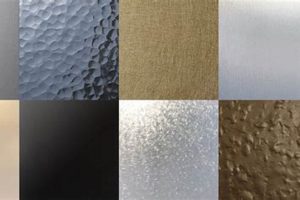
Automated systems designed to apply coatings or surface treatments to metallic components in a sequential and efficient manner are integral to modern manufacturing. These specialized configurations often involve a series of tanks, spray booths, ovens, and conveyance mechanisms, all working in concert to prepare, treat, and finish metal parts. A common example includes systems used in the automotive industry to apply protective and aesthetic coatings to vehicle bodies and components.
The implementation of these systems provides significant advantages in terms of production efficiency, consistency, and quality control. They enable manufacturers to achieve uniform finishes across large volumes of parts, reduce labor costs, and minimize waste. Historically, these operations were often manual and subject to significant variation. The advent of automation has revolutionized the industry, providing improved process control and repeatability.
The following sections will delve into specific aspects of these automated systems, including the various pretreatments employed, coating methods utilized, and critical process parameters that affect the final product quality.
Optimization Strategies for Automated Metal Coating Systems
The following recommendations are intended to enhance the efficiency, reliability, and overall performance of automated systems for metallic surface treatment.
Tip 1: Implement Rigorous Pretreatment Procedures: Surface preparation is critical for coating adhesion and corrosion resistance. Ensure thorough cleaning, degreasing, and descaling processes are consistently applied prior to coating application. For instance, inadequate removal of mill scale can lead to premature coating failure.
Tip 2: Control Bath Chemistry with Precision: Maintaining optimal chemical concentrations and pH levels in pretreatment and coating baths is essential. Implement automated monitoring and dosing systems to ensure consistency and minimize variations. Fluctuations in bath chemistry can significantly impact coating quality and longevity.
Tip 3: Optimize Conveyance System Speed: Carefully calibrate the speed of the conveyance system to match the residence time requirements of each stage in the process. Overly rapid conveyance can result in inadequate treatment, while slow speeds reduce throughput and efficiency. Utilize sensors and feedback controls to maintain consistent speeds.
Tip 4: Employ Real-Time Monitoring Systems: Integrate sensors and data acquisition systems to continuously monitor critical process parameters such as temperature, pressure, and coating thickness. Implement alarm systems to alert personnel to deviations from established parameters, enabling prompt corrective action.
Tip 5: Implement Regular Maintenance Schedules: Establish and adhere to a comprehensive maintenance schedule for all equipment, including pumps, spray nozzles, ovens, and conveyance systems. Preventative maintenance minimizes downtime and extends the lifespan of the automated system. Regular inspections of filters and fluid levels should also be implemented.
Tip 6: Optimize Coating Application Techniques: Select the most appropriate coating application method based on part geometry, coating material, and desired finish characteristics. Optimize spray nozzle patterns, airflow rates, and electrostatic charge parameters to maximize transfer efficiency and minimize overspray. For complex parts, consider robotic coating systems.
Consistent implementation of these strategies will yield improved coating quality, reduced operational costs, and increased overall productivity of automated systems for metallic surface treatment.
The concluding section will address future trends and emerging technologies in the field of automated metal coating systems.
1. Pretreatment Chemistries

Pretreatment chemistries are foundational elements within systems used to apply coatings or surface treatments to metallic components. Their selection and control are paramount to achieving desired final product characteristics, impacting adhesion, corrosion resistance, and overall durability. These processes occur prior to the application of any coating, setting the stage for subsequent finishing stages.
- Alkaline Cleaning
Alkaline cleaning employs solutions with high pH to remove oils, greases, and particulate matter from metal surfaces. These contaminants, if left untreated, can impede coating adhesion and lead to premature failure. In automotive manufacturing, alkaline cleaners are used extensively to prepare car bodies before primer application, ensuring uniform coating and preventing corrosion under the paint.
- Acid Etching
Acid etching utilizes acidic solutions to remove oxides and scale from metal surfaces, creating a micro-roughened surface that promotes mechanical interlocking of the coating. This process is commonly used in the aerospace industry to prepare aluminum alloys for anodizing or painting, enhancing corrosion protection in harsh environments. Improper etching can weaken the substrate, so careful monitoring is essential.
- Phosphating
Phosphating involves the application of a phosphate conversion coating to metal surfaces, creating a layer that improves corrosion resistance and provides a better base for subsequent coatings. Zinc phosphating, for example, is widely used in the appliance industry to prepare steel components for powder coating, extending the product’s lifespan and enhancing its aesthetic appeal. The consistency of the phosphate layer is critical for long-term performance.
- Passivation
Passivation treatments are applied to stainless steel and other corrosion-resistant alloys to enhance their natural protective oxide layer. By removing surface contaminants and promoting the formation of a stable oxide film, passivation significantly improves resistance to corrosion in aggressive environments. In medical device manufacturing, passivation is a critical step in ensuring the biocompatibility and long-term reliability of stainless steel implants.
The efficacy of pretreatment chemistries directly influences the longevity and performance of the entire metal finishing process. Careful selection, monitoring, and control of these processes are crucial for achieving optimal results in automated coating applications. Failure to properly pretreat metal surfaces can negate the benefits of even the most advanced coating technologies, leading to costly rework or premature product failure.
2. Coating Application Methods

The integration of coating application methods within automated systems for metallic surface treatment is a critical determinant of coating quality, efficiency, and material utilization. The selection of an appropriate method is dictated by factors such as part geometry, coating material properties, production volume, and desired finish characteristics. Effective implementation of these methods is integral to optimizing system performance.
- Spray Coating
Spray coating involves atomizing a liquid coating material and propelling it onto the metal surface using compressed air or electrostatic forces. This technique is versatile, suitable for a wide range of coating materials and part geometries. However, it can generate significant overspray, leading to material waste and environmental concerns. Examples include the application of automotive paints and protective coatings for industrial machinery. Optimized spray techniques are essential for minimizing waste within the system.
- Dip Coating
Dip coating involves immersing the metal part into a tank of coating material, allowing the coating to adhere to the surface as it is withdrawn. This method is particularly suitable for coating complex shapes and internal surfaces. However, it can be challenging to control coating thickness and prevent drips or runs. Dip coating is commonly used for applying primers and sealants to electronic components. Precise control of withdrawal speed and coating viscosity is critical for consistent results.
- Electrodeposition Coating
Electrodeposition, also known as e-coating, utilizes an electric field to deposit a thin, uniform coating onto the metal surface. This method is particularly effective for coating complex geometries and achieving excellent corrosion resistance. E-coating is widely used in the automotive industry for applying primer coats to vehicle bodies. Careful control of voltage, current, and bath chemistry is essential for achieving optimal coating performance.
- Powder Coating
Powder coating involves applying a dry, free-flowing powder onto the metal surface, followed by curing in an oven to fuse the powder into a continuous film. This method offers excellent durability, chemical resistance, and environmental advantages due to the absence of solvents. Powder coating is commonly used for finishing appliances, architectural components, and automotive parts. Proper grounding and electrostatic charging are crucial for achieving uniform coverage and preventing Faraday cage effects.
The choice of coating application method significantly impacts the overall efficiency and effectiveness of a system used to apply coatings or surface treatments to metallic components. Selection criteria must consider coating material characteristics, part complexity, production requirements, and environmental considerations. Continuous optimization of these techniques is essential for maximizing throughput and minimizing operational costs within these systems.
3. Cure Oven Temperatures

The precise regulation of cure oven temperatures is a critical parameter within automated systems used to apply coatings or surface treatments to metallic components. The temperature profile directly influences the cross-linking reactions within the applied coating, determining its final physical and chemical properties. Inadequate temperature control can result in coatings that are brittle, lacking in adhesion, or susceptible to premature degradation. Conversely, excessively high temperatures may cause discoloration, blistering, or even damage to the underlying metal substrate. Therefore, accurate temperature monitoring and control are essential for ensuring coating performance and longevity.
Consider, for example, the powder coating process in the automotive industry. Automotive components are often powder-coated for corrosion protection and aesthetic appeal. A specific powder coating may require curing at 180C for 20 minutes to achieve optimal cross-linking and desired hardness. Deviations from this temperature range can compromise the coating’s ability to withstand environmental stressors, such as UV radiation and road salts, leading to premature failure and corrosion. Similarly, in the aerospace industry, where coatings are used to protect aircraft components from extreme temperatures and chemical exposure, precise control of oven temperatures is vital for ensuring that the coatings meet stringent performance requirements.
In conclusion, the relationship between cure oven temperatures and coating quality within automated systems is direct and consequential. Maintaining accurate and consistent temperature profiles within these systems is crucial for achieving the desired performance characteristics of the applied coatings. Challenges in achieving precise temperature control often stem from variations in oven load, airflow patterns, and heating element performance. Careful attention to these factors, combined with the use of advanced temperature monitoring and control systems, is essential for optimizing coating quality and ensuring the long-term reliability of coated metal components.
4. Conveyor System Speed

Conveyor system speed exerts a direct influence on the efficacy and throughput of automated lines designed to apply coatings or surface treatments to metallic components. The rate at which parts traverse each stage pretreatment, coating application, curing, and cooling dictates residence time. Insufficient residence time in pretreatment stages, for example, may result in inadequate surface preparation, compromising coating adhesion and corrosion resistance. Conversely, excessively rapid speeds can lead to uneven coating application or incomplete curing. The consequences of mismatched conveyor speeds manifest as reduced product quality, increased rework rates, and diminished overall system efficiency.
The automotive industry provides a tangible illustration of this principle. In vehicle body painting, conveyor speed is meticulously calibrated to ensure consistent and complete coverage during spray application. Too fast, and areas may be missed, requiring manual touch-ups. Too slow, and excessive coating thickness can lead to drips, runs, and increased material consumption. Similarly, in the powder coating of appliance components, the speed of the conveyor dictates the time available for the powder to adhere electrostatically to the parts. An optimal speed ensures uniform powder distribution, minimizing the risk of thin spots or powder fall-off before entering the curing oven. Practical implementation involves integrating sensors and control systems to dynamically adjust conveyor speed based on process parameters, such as bath chemistry, coating viscosity, and ambient temperature.
Therefore, understanding and optimizing conveyor system speed is paramount for maximizing the performance of systems used to apply coatings or surface treatments to metallic components. Challenges include accounting for variations in part size and geometry, as well as maintaining consistent speeds across multiple stages. Investing in automated control systems and regular calibration procedures are essential for achieving stable and repeatable processes, ultimately enhancing product quality and reducing operational costs. The conveyor system is also linked to waste treatment processes, since it affect the overall system that applies coatings or surface treatments to metallic components.
5. Waste Treatment Systems

Effective waste management is an indispensable element of modern systems used to apply coatings or surface treatments to metallic components. The processes inherent in metal finishing generate a diverse array of hazardous wastes, including heavy metals, acids, alkalis, and organic solvents. Consequently, robust waste treatment systems are essential for mitigating environmental impact, complying with regulatory requirements, and promoting sustainable manufacturing practices.
- Chemical Precipitation
Chemical precipitation involves the addition of chemical reagents to wastewater to induce the formation of insoluble precipitates containing heavy metals. For example, hydroxide precipitation is commonly used to remove metals such as chromium, nickel, and zinc from rinse waters generated in electroplating processes. The resulting sludge must then be dewatered and disposed of properly, typically in a permitted landfill. Ineffective precipitation can result in the discharge of toxic metals into waterways, posing significant environmental risks.
- Ion Exchange
Ion exchange utilizes resin beads to selectively remove ionic contaminants from wastewater. These resins have a high affinity for specific ions, such as chromate or cyanide, allowing for their removal from the waste stream. The spent resins must then be regenerated or disposed of, creating a secondary waste stream. Ion exchange is particularly effective for removing trace amounts of pollutants that may be difficult to remove by other methods. Improper resin management can lead to breakthrough, where contaminants are released back into the treated water.
- Evaporation
Evaporation systems concentrate wastewater by boiling off water, leaving behind a concentrated waste stream that is significantly smaller in volume. This method is particularly useful for treating rinse waters containing high concentrations of dissolved solids. The evaporated water can be condensed and reused in the process, reducing water consumption. However, evaporation systems require significant energy input and may generate air emissions that must be controlled. Failure to properly maintain the evaporation system can lead to scaling and reduced efficiency.
- Sludge Dewatering
Sludge dewatering is the process of removing water from the solid waste generated by waste treatment processes. This can be accomplished through various methods, including filtration, centrifugation, and drying. Reducing the water content of the sludge significantly reduces its volume and weight, making it easier and less expensive to transport and dispose of. Improperly dewatered sludge can pose handling challenges and increase disposal costs.
In summary, comprehensive waste treatment systems are integral to the responsible operation of metal finishing facilities. The selection and implementation of appropriate technologies are driven by factors such as the types and concentrations of pollutants present in the waste stream, regulatory requirements, and economic considerations. Continuous monitoring and optimization of waste treatment processes are essential for minimizing environmental impact and ensuring the long-term sustainability of metal finishing operations.
6. Quality Control Measures
Stringent quality control protocols are inextricably linked to the successful operation of systems used to apply coatings or surface treatments to metallic components. These measures serve as a critical validation mechanism, ensuring that the output consistently meets predetermined specifications and performance criteria. The absence of robust quality control can result in defects, inconsistencies, and premature failures, undermining the value and reliability of the finished product.
- Coating Thickness Measurement
Coating thickness is a fundamental parameter directly influencing the protective and aesthetic properties of the finished metal. Non-destructive techniques, such as eddy current and ultrasonic measurement, are routinely employed to verify that the applied coating falls within the specified thickness range. In automotive manufacturing, for example, precise coating thickness is essential for ensuring adequate corrosion protection and a uniform paint appearance. Deviations from the specified thickness can lead to accelerated corrosion or visible imperfections, necessitating costly rework or even product recalls.
- Adhesion Testing
Adhesion testing evaluates the bond strength between the coating and the metal substrate, providing a critical indication of long-term durability. Methods such as pull-off testing and cross-cut testing are commonly used to assess the coating’s resistance to detachment under stress. In the aerospace industry, for instance, coatings are subjected to rigorous adhesion testing to ensure that they can withstand the harsh environmental conditions encountered during flight. Poor adhesion can lead to coating delamination, exposing the underlying metal to corrosion and potentially compromising structural integrity.
- Corrosion Resistance Testing
Corrosion resistance testing simulates the corrosive environments that the finished metal component is likely to encounter in service. Salt spray testing, humidity testing, and immersion testing are used to assess the coating’s ability to prevent corrosion over time. In the marine industry, for example, coatings are subjected to prolonged salt spray testing to evaluate their resistance to saltwater exposure. Coatings that fail to withstand these tests may exhibit blistering, rust formation, or other forms of degradation, indicating a need for process adjustments or material substitutions.
- Visual Inspection
Visual inspection is a crucial component of quality control, involving a trained inspector visually examining the coated metal surface for defects such as scratches, dents, runs, drips, or color variations. While seemingly subjective, visual inspection can identify flaws that may not be detected by automated testing methods. In the appliance industry, for example, visual inspection is used to ensure that the powder-coated surfaces of refrigerators and washing machines are free from blemishes and imperfections. Skilled inspectors can identify subtle defects that can impact the aesthetic appeal and perceived quality of the finished product.
The implementation of comprehensive quality control measures is paramount for ensuring the consistent production of high-quality, durable, and reliable metal components. These measures provide a critical feedback loop, enabling manufacturers to identify and address process deviations, optimize coating performance, and minimize the risk of costly defects. Neglecting quality control can undermine the benefits of even the most advanced metal finishing technologies, leading to customer dissatisfaction and reputational damage.
Frequently Asked Questions
The following section addresses common inquiries regarding the operation, maintenance, and optimization of automated systems designed to apply coatings or surface treatments to metallic components.
Question 1: What are the primary factors influencing the selection of a specific metal finishing process line for a given application?
Selection hinges on several interdependent factors, including the substrate material, the desired coating properties (e.g., corrosion resistance, hardness, aesthetic appeal), production volume requirements, regulatory compliance constraints, and budgetary limitations. A thorough analysis of these factors is essential for determining the most appropriate process line configuration.
Question 2: How does pretreatment affect the overall performance of a metal finishing process line?
Pretreatment is a critical step that prepares the metal surface for subsequent coating applications. It removes contaminants, such as oils, grease, and oxides, and creates a surface profile that promotes coating adhesion. Inadequate pretreatment can lead to premature coating failure, regardless of the quality of the coating itself.
Question 3: What are the key considerations for maintaining consistent coating quality in a metal finishing process line?
Maintaining consistent coating quality requires precise control of process parameters, including bath chemistry, temperature, pH, and conveyor speed. Regular monitoring and adjustment of these parameters, along with rigorous quality control testing, are essential for ensuring uniformity and minimizing defects.
Question 4: What are the typical waste treatment challenges associated with metal finishing process lines, and how can they be addressed?
Waste treatment challenges include the disposal of heavy metals, acids, alkalis, and organic solvents. These challenges can be addressed through the implementation of appropriate waste treatment technologies, such as chemical precipitation, ion exchange, evaporation, and sludge dewatering. Source reduction and process optimization can also help minimize waste generation.
Question 5: How can automation improve the efficiency and effectiveness of a metal finishing process line?
Automation can improve efficiency by reducing labor costs, increasing throughput, and minimizing process variability. Automated systems also provide improved process control, enabling tighter tolerances and more consistent coating quality. However, careful planning and implementation are essential to ensure that automation investments deliver the desired results.
Question 6: What are some emerging trends in metal finishing process lines?
Emerging trends include the development of more environmentally friendly coatings, the adoption of advanced process monitoring and control technologies, and the integration of robotics and artificial intelligence to further automate and optimize process operations.
In conclusion, understanding and addressing these frequently asked questions is crucial for the successful design, operation, and maintenance of automated systems designed to apply coatings or surface treatments to metallic components.
The concluding section will summarize the key takeaways from this discussion and offer insights into future developments in the field.
Conclusion
The preceding discussion has provided a comprehensive overview of automated systems designed to apply coatings or surface treatments to metallic components, encompassing critical aspects from pretreatment chemistries and coating application methods to cure oven temperatures, conveyor system speeds, and waste treatment systems. A thorough understanding of these interconnected elements is paramount for achieving optimal coating performance and maximizing operational efficiency.
As technology continues to evolve, ongoing research and development efforts are focused on creating more sustainable and environmentally friendly metal finishing processes. Businesses should prioritize continuous improvement initiatives, embracing innovative solutions to meet increasingly stringent regulatory standards and maintain a competitive edge in the global marketplace. Further advancements in automation, data analytics, and material science will undoubtedly shape the future of systems designed to apply coatings or surface treatments to metallic components, driving progress toward enhanced quality, productivity, and environmental stewardship.