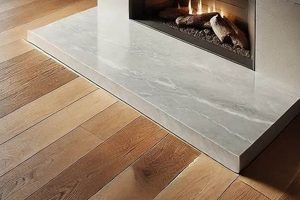
A decorative technique alters the surface of hardened cementitious material through the application of a diluted acidic solution. This process selectively removes a thin layer of the surface, exposing the aggregate beneath and creating a textured appearance. The resulting effect can range from a subtle mottling to a more pronounced, heavily-textured profile, depending on the acid concentration, application method, and the original composition of the concrete mix.
This finishing method offers enhanced aesthetic appeal, improved slip resistance, and a durable surface suitable for both interior and exterior applications. Historically, this surface treatment provided a cost-effective way to improve the visual characteristics of concrete, moving beyond strictly utilitarian applications to incorporate decorative elements. It also has a functional benefit, creating a more porous surface that can accept stains and sealers, further enhancing its longevity and visual appeal.
The subsequent sections will delve into the specific methodologies involved in achieving this effect, including preparation techniques, acid application processes, neutralization procedures, and the selection of appropriate sealants for long-term protection and enhancement of the treated surface. Further discussion will cover safety precautions essential during application and maintenance recommendations for preserving the resulting finish.
Tips for Achieving a Successful Acid Wash Concrete Finish
Achieving a desirable outcome when employing a diluted acidic solution on cementitious surfaces requires careful planning, meticulous execution, and adherence to safety protocols. The following guidelines provide essential advice for those undertaking this process.
Tip 1: Proper Surface Preparation is Critical: Ensure the concrete is fully cured, clean, and free from any sealers, coatings, or contaminants. Failure to properly prepare the surface will result in uneven etching and unsatisfactory results. Mechanical abrasion, such as grinding or shot blasting, may be necessary to remove stubborn coatings.
Tip 2: Dilution is Key: Always dilute the acidic solution according to the manufacturer’s instructions and adjust based on the desired level of etching. Using an excessively concentrated solution can cause irreversible damage and weaken the concrete structure. Start with a weaker solution and gradually increase concentration as needed.
Tip 3: Controlled Application is Essential: Apply the solution evenly using a low-pressure sprayer or a chemical-resistant brush. Avoid puddling and ensure the solution remains wet for the recommended dwell time. Uneven application will lead to inconsistent etching patterns.
Tip 4: Neutralization is Mandatory: Thoroughly neutralize the acidic residue with an alkaline solution, such as ammonia or sodium bicarbonate, after the etching process. Failure to neutralize will allow the acid to continue reacting with the concrete, causing ongoing damage. Confirm complete neutralization with pH testing.
Tip 5: Rinse Thoroughly and Repeatedly: After neutralization, rinse the concrete surface extensively with clean water to remove all traces of the acidic solution and neutralizing agent. Multiple rinses are recommended to prevent future efflorescence or discoloration.
Tip 6: Seal to Protect and Enhance: After drying, apply a high-quality concrete sealer to protect the treated surface from staining, weathering, and abrasion. Select a sealer appropriate for the intended use and desired aesthetic. Consider using a penetrating sealer to maintain the natural appearance of the concrete.
Tip 7: Prioritize Safety: Always wear appropriate personal protective equipment (PPE), including acid-resistant gloves, safety glasses, and a respirator, when working with acidic solutions. Work in a well-ventilated area to minimize exposure to harmful fumes. Familiarize oneself with all applicable safety regulations and emergency procedures.
Adherence to these tips promotes a durable and aesthetically pleasing surface. The combined effect of careful preparation, controlled application, thorough neutralization, and protective sealing results in a long-lasting and visually appealing finish.
The subsequent sections will provide detailed information on the specific types of acidic solutions used, advanced application techniques, and troubleshooting common issues encountered during the process.
1. Acid Concentration

The concentration of the acidic solution is a paramount factor determining the final aesthetic and structural properties of the resulting surface treatment. It directly influences the rate and depth of etching, ultimately defining the texture and appearance of the finished cementitious material.
- Etch Rate and Depth
Higher acid concentrations yield a faster etch rate and greater depth, aggressively removing cement paste and exposing more of the aggregate. This results in a more heavily textured surface. Conversely, lower concentrations produce a subtle etch, creating a smoother, more refined appearance. Selection of the appropriate concentration is vital to achieving the desired visual effect and avoiding excessive material removal.
- Aggregate Exposure
The concentration directly affects the degree to which the aggregate is revealed. A stronger solution will expose more aggregate, potentially altering the color and pattern of the surface. Careful consideration of the aggregate type and desired level of exposure is crucial. An overly aggressive solution can undermine the structural integrity of the material by removing too much of the binding cement paste.
- Reaction Control
Precise control over the chemical reaction is essential. Too high of a concentration leads to an uncontrollable or uneven reaction, resulting in inconsistent texturing and potential damage. Lower concentrations allow for greater control, enabling the operator to fine-tune the etching process and achieve a uniform finish. Monitoring the dwell time and reaction rate is critical for consistent results.
- Safety Implications
Increased concentrations pose greater safety risks. Stronger solutions are more corrosive and require stricter adherence to safety protocols, including the use of appropriate personal protective equipment and ventilation. Improper handling of concentrated acids can result in severe chemical burns and respiratory irritation. Dilution procedures should always be performed carefully and according to manufacturer instructions.
In summary, the precise acidic solution concentration dictates the final outcome of the concrete alteration process. Choosing an appropriate concentration, combined with careful application and monitoring, ensures a durable, aesthetically pleasing surface. Consideration must be given to the desired aesthetic effect, the concrete’s composition, and the safety implications of working with various acidic concentrations.
2. Surface Preparation

The effectiveness of a concrete treatment that utilizes diluted acidic solutions is inextricably linked to the initial state of the substrate. Surface preparation constitutes a critical precursor to the chemical treatment process, directly influencing the uniformity, adhesion, and overall durability of the resultant finish. Contaminants, existing coatings, or inadequately cured concrete present formidable barriers to the acid’s ability to uniformly etch the surface. For example, oil or grease residue will repel the acidic solution, leading to uneven texturing and a mottled appearance. Similarly, pre-existing sealers must be completely removed to ensure consistent acid penetration and desired aggregate exposure.
Failure to address surface imperfections such as cracks or spalling prior to the acidic application can exacerbate these issues and compromise the structural integrity of the surface. Consider a scenario where a concrete slab exhibits minor cracking. Applying a diluted acidic solution to this unprepared surface will not only fail to conceal the cracks but may also enlarge them due to the chemical reaction within the fissures. Therefore, appropriate surface preparation techniques, including thorough cleaning, degreasing, patching of imperfections, and potentially mechanical abrasion, are essential for creating a receptive surface. The specific method employed depends on the nature and extent of the surface contaminants and imperfections.
In conclusion, proper surface preparation is not merely a preliminary step, but an integral component of a successful decorative technique utilizing diluted acidic solutions. It is the foundational element that ensures uniform chemical reaction, optimal adhesion of subsequent sealers, and long-term durability of the treated concrete. Neglecting this critical phase invariably leads to compromised aesthetics, reduced lifespan, and potential structural issues, underscoring the practical significance of meticulous surface preparation.
3. Neutralization Process

The neutralization process represents a critical stage in achieving a stable and durable decorative concrete finish. This step counteracts the effects of the acidic solution used to etch and texture the cementitious surface, preventing ongoing damage and ensuring the long-term integrity of the treated material.
- Cessation of Chemical Reaction
The primary function of neutralization is to halt the ongoing chemical reaction between the acid and the concrete. Residual acidic solution, if left unaddressed, will continue to dissolve cement paste, weakening the surface and potentially leading to efflorescence or structural deterioration. Neutralization introduces an alkaline substance that counteracts the acidity, stabilizing the pH of the surface and preventing further etching.
- Prevention of Efflorescence
Efflorescence, a white, powdery deposit that forms on concrete surfaces, is a common consequence of incomplete neutralization. Residual acidic compounds react with soluble salts within the concrete, leading to their migration to the surface as moisture evaporates. A thorough neutralization process mitigates this risk by eliminating the acidic source, thus preventing the formation of unsightly efflorescence.
- Enhanced Sealer Adhesion
An improperly neutralized surface can impede the adhesion of sealers. Residual acidic compounds can interfere with the chemical bonding between the sealer and the concrete, leading to premature failure of the sealant and compromised protection. Neutralization creates a chemically balanced surface that promotes optimal sealer adhesion, extending the lifespan and effectiveness of the protective coating.
- Protection of Reinforcement
In reinforced concrete structures, incomplete neutralization poses a threat to the embedded steel. Residual acidity can penetrate the concrete and corrode the steel reinforcement, weakening the structure and potentially leading to costly repairs. A properly executed neutralization process protects the reinforcement by eliminating the corrosive environment within the concrete.
The effectiveness of the neutralization process hinges on the selection of an appropriate alkaline solution and its thorough application. Common neutralizing agents include sodium bicarbonate and ammonia solutions. Following neutralization, the surface requires extensive rinsing to remove all residual chemicals. The neutralization process is, therefore, an indispensable element in achieving a durable and aesthetically pleasing surface treatment.
4. Sealer application

Sealer application is an indispensable step following the cementitious material surface modification, directly influencing its longevity, aesthetic appeal, and resistance to environmental factors. The application of a suitable sealer protects the etched surface, enhances its visual characteristics, and minimizes the ingress of moisture and contaminants.
- Protection Against Staining and Chemical Attack
Sealers form a protective barrier that prevents the penetration of stains, oils, and other contaminants that could otherwise mar the etched surface. In environments exposed to chemicals, such as garages or industrial settings, sealers provide resistance against corrosive substances that can degrade the concrete. For instance, a properly applied sealer can prevent oil stains on a garage floor or protect against acid spills in a manufacturing facility, preserving the concrete’s appearance and structural integrity.
- Enhancement of Aesthetic Appearance
Sealers can enhance the aesthetic qualities of the decorative concrete finish. They come in various finishes, including matte, satin, and gloss, allowing for customization of the final appearance. For example, a gloss sealer can accentuate the exposed aggregate and create a vibrant, polished look, while a matte sealer can provide a more subtle, natural finish. Some sealers are also formulated with color enhancers that deepen the color and contrast of the etched surface.
- Prevention of Moisture Intrusion and Freeze-Thaw Damage
Sealers impede the penetration of moisture into the concrete, reducing the risk of freeze-thaw damage in colder climates. Water that enters the pores of concrete can expand upon freezing, causing cracks and spalling. A sealer creates a hydrophobic barrier that minimizes water absorption, preventing freeze-thaw cycles and extending the lifespan of the concrete surface. This is particularly critical for exterior applications, such as patios and driveways.
- Increased Durability and Abrasion Resistance
Sealers improve the abrasion resistance of the concrete surface, protecting it from wear and tear caused by foot traffic, vehicular traffic, or other forms of mechanical abrasion. This is especially important in high-traffic areas, such as commercial floors or walkways. A sealer creates a durable layer that resists scratching and scuffing, maintaining the appearance and integrity of the decorative finish over time.
In conclusion, sealer application is not merely an aesthetic consideration but a critical protective measure. The choice of sealer should be based on the intended use of the surface, the desired aesthetic, and the environmental conditions to which it will be exposed. A properly selected and applied sealer is essential for maximizing the longevity, appearance, and performance of the modified surface.
5. Safety Precautions

The application of diluted acidic solutions to cementitious surfaces demands strict adherence to safety protocols due to the inherent hazards associated with handling corrosive substances. Direct contact with acidic solutions can cause severe chemical burns to the skin and eyes. Inhalation of fumes can lead to respiratory irritation and, in severe cases, pulmonary edema. Therefore, comprehensive safety measures are not merely recommendations but essential prerequisites for executing this type of finish.
The use of appropriate personal protective equipment (PPE) is paramount. This includes, at minimum, acid-resistant gloves, safety glasses or a face shield, and a respirator equipped with acid gas cartridges. Impermeable clothing that covers exposed skin is also advisable. Adequate ventilation is crucial to minimize the risk of inhaling harmful fumes; outdoor application is preferable, and indoor application requires forced-air ventilation systems. Furthermore, readily accessible emergency eyewash stations and safety showers are necessary to provide immediate decontamination in the event of accidental exposure. Failure to implement these precautions can result in serious injury and long-term health complications. For example, consider a scenario where an individual neglects to wear safety glasses during the application process. A splash of acidic solution to the eye can cause immediate and potentially irreversible damage to vision.
In conclusion, safety precautions are not an ancillary consideration but an integral component of a surface treatment involving diluted acidic solutions. The potential consequences of negligence are severe, ranging from minor irritations to life-altering injuries. A proactive and comprehensive approach to safety, encompassing the use of appropriate PPE, adequate ventilation, and readily available emergency equipment, is essential for ensuring the well-being of personnel involved in this process and mitigating the risks associated with handling corrosive materials. The integration of these safety measures is not just a matter of compliance but a moral imperative.
6. Aesthetic variations

The decorative technique offers a wide range of possibilities for modifying surface appearance. These variations arise from the interplay of several factors, including acid concentration, application methods, aggregate type, and subsequent sealing processes. The resulting surface can range from subtly textured to dramatically exposed, influencing the overall visual impact and suitability for specific applications.
- Degree of Aggregate Exposure
The level to which the aggregate is revealed dictates the texture and color composition. A light application of diluted acidic solution produces a subtle mottling, preserving much of the original cementitious surface. Conversely, a more aggressive application exposes a greater amount of aggregate, creating a rougher texture and highlighting the colors and patterns inherent in the aggregate material. This choice is pivotal in achieving the desired visual effect, balancing the smoothness of the cement matrix with the character of the aggregate.
- Color Modification
The application can also influence the color of the surface. The etching process may lighten the cement paste, enhancing the contrast between the paste and the aggregate. Additionally, staining techniques can be employed after the acid wash to further alter the color, creating custom shades or highlighting specific elements of the concrete. For instance, an iron oxide stain can impart a rustic, earthy tone, while a concrete dye can introduce vibrant colors to complement architectural designs.
- Texture Variation
The resulting texture can vary from smooth to rough, depending on the acid concentration and application method. A light wash may produce a slightly roughened surface that enhances slip resistance while maintaining a relatively smooth appearance. A more aggressive application can create a deeply textured surface with significant aggregate relief. This variation allows for customization to suit specific functional requirements, such as slip resistance in pedestrian areas, or aesthetic preferences, such as a rustic, natural look.
- Sealer Effects
The choice of sealer significantly impacts the final aesthetic. Gloss sealers enhance the color and reflectivity of the treated surface, creating a polished, high-end appearance. Matte sealers, on the other hand, provide a more natural, understated look, preserving the texture and color variations without adding sheen. Color-enhancing sealers can further accentuate the aggregate and deepen the color of the cementitious material, creating a richer, more vibrant finish. The selection of the appropriate sealer is crucial for achieving the desired visual effect and protecting the treated surface.
These aesthetic variations underscore the versatility of the decorative technique. By carefully controlling the acid concentration, application method, and sealer selection, it is possible to create a wide range of visually appealing surfaces that meet both functional and aesthetic requirements. The ability to customize the texture, color, and sheen of the treated concrete makes it a versatile choice for a variety of applications, from residential patios to commercial floors.
Frequently Asked Questions
This section addresses common inquiries regarding the cementitious material decorative treatment, providing concise and informative answers to assist in understanding its nuances and practical applications.
Question 1: Is surface treatment with diluted acidic solution inherently damaging to the underlying concrete structure?
When performed correctly, this surface treatment is not inherently damaging. It removes a thin layer of the surface paste, exposing the aggregate. However, excessive acid concentrations or prolonged exposure can weaken the concrete. Proper dilution and neutralization are critical to preserving structural integrity.
Question 2: What types of acids are typically employed in this surface treatment, and what are their respective advantages and disadvantages?
Muriatic acid (hydrochloric acid) is commonly utilized due to its availability and effectiveness. Phosphoric acid is another option, offering a slower, more controlled etching process. The choice depends on the desired etch rate, the composition of the concrete, and safety considerations. Muriatic acid is more aggressive but requires careful handling, while phosphoric acid is generally safer but may require longer application times.
Question 3: How does the age of the concrete influence the outcome of the acid surface treatment?
Newly poured concrete is more susceptible to damage from acidic solutions. It is generally recommended to allow concrete to cure for at least 28 days before applying this technique. Older concrete, while more resistant to damage, may require more aggressive etching techniques to achieve the desired effect.
Question 4: What are the primary indicators of an improperly neutralized surface following treatment?
The presence of a white, powdery residue (efflorescence) is a common indicator of inadequate neutralization. A persistent acidic odor or a sticky surface texture also suggests incomplete neutralization. pH testing of the surface runoff is a reliable method for confirming complete neutralization.
Question 5: What types of sealers are best suited for use with modified concrete, and what factors should influence the selection process?
Acrylic sealers, epoxy sealers, and polyurethane sealers are commonly used. The choice depends on the intended use of the surface, the desired aesthetic, and the level of protection required. Acrylic sealers are cost-effective and offer good UV resistance, while epoxy sealers provide superior chemical resistance and durability. Polyurethane sealers offer excellent abrasion resistance and flexibility.
Question 6: How often should a treated surface be resealed to maintain its appearance and protective qualities?
The frequency of resealing depends on the level of traffic and exposure to environmental factors. Generally, resealing is recommended every 1-3 years for high-traffic areas and every 3-5 years for low-traffic areas. Regular inspection of the sealer for signs of wear or degradation is crucial in determining the appropriate resealing schedule.
In summary, successful modification of the cementitious material surface depends on a thorough understanding of the process, careful execution of each step, and adherence to safety guidelines. Proper planning and maintenance are essential for ensuring the longevity and aesthetic appeal of the treated surface.
The subsequent sections will delve into case studies and real-world applications of this technique, showcasing its versatility and potential in various settings.
Conclusion
The preceding exploration has delineated the critical parameters governing successful execution and long-term performance of an acid wash concrete finish. From meticulous surface preparation and precise acidic solution application to thorough neutralization and strategic sealer implementation, each step demands careful consideration and adherence to established best practices. Safety protocols, dictated by the inherent hazards of handling corrosive substances, must be rigorously enforced throughout the process. A comprehensive understanding of aesthetic variations, arising from the interplay of diverse factors, enables informed decision-making and customized outcomes.
The enduring value of this surface treatment lies in its capacity to transform utilitarian concrete into aesthetically pleasing and functionally enhanced surfaces. Continued research and refinement of techniques, coupled with diligent adherence to safety standards, will further unlock the potential of this method for diverse applications. As such, practitioners must prioritize knowledge acquisition, responsible implementation, and ongoing evaluation to maximize the benefits and minimize the risks associated with this transformative process. The future of this lies in informed application and relentless pursuit of enhanced safety and efficacy.