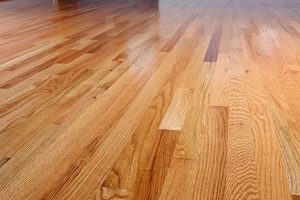
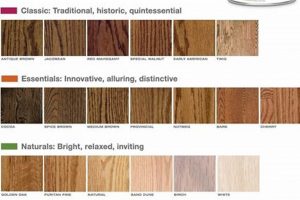
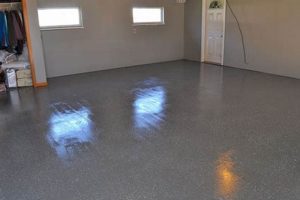
The selection of a final protective coat for wooden floors frequently involves choosing between sheen levels that offer distinct aesthetic and functional properties. Two common options provide different degrees of reflectivity and impact the perceived texture and maintenance requirements of the surface. A lower sheen finish, often described as having a velvety appearance, diffuses light and minimizes the visibility of imperfections. Conversely, a higher sheen finish reflects more light, resulting in a lustrous surface that can accentuate the wood’s natural grain.
The choice between these floor coatings significantly affects the ambiance and practicality of a space. Lower reflectivity options tend to create a more subdued, forgiving surface suitable for high-traffic areas where scratches and scuffs are likely to occur. Higher reflectivity, while visually appealing, may require more frequent cleaning to maintain its pristine appearance and can highlight surface defects. Historically, preferences for floor finishes have shifted with evolving design trends and advancements in coating technology, balancing aesthetic appeal with durability and ease of maintenance.
Understanding the nuances of these differing coating characteristics is essential before committing to a specific application. Factors such as room size, natural light exposure, and lifestyle considerations should all be carefully weighed to ensure a harmonious and practical flooring solution. The subsequent discussion will delve into the specific attributes of each option, including their durability, maintenance requirements, and suitability for various environments.
Selection Guidance
The ultimate selection of a floor coating necessitates careful consideration of various factors beyond mere aesthetics. The following guidance aims to provide a structured approach to this decision-making process.
Tip 1: Assess Ambient Lighting: Higher reflectivity finishes may exacerbate glare in rooms with abundant natural light. Evaluate the light levels throughout the day to determine if a lower sheen option would be more comfortable.
Tip 2: Evaluate Traffic Levels: Areas with heavy foot traffic benefit from lower reflectivity coatings that conceal scratches and scuffs more effectively. Consider a higher sheen only in low-traffic zones.
Tip 3: Consider Maintenance Requirements: Higher reflectivity surfaces require more frequent cleaning to maintain their luster. Assess the time and resources available for regular upkeep.
Tip 4: Analyze Existing Decor: The floor finish should complement the overall aesthetic of the space. A lower sheen can create a more rustic or casual atmosphere, while a higher sheen lends itself to a more formal or contemporary style.
Tip 5: Sample Before Committing: Obtain samples of both finishes and apply them to a small, inconspicuous area of the floor. Observe how they look under different lighting conditions before making a final decision.
Tip 6: Research Coating Durability: Investigate the abrasion resistance of different finish products. Polyurethane-based coatings generally offer greater durability than other options.
Tip 7: Consider Room Size: Higher reflectivity can make a small room feel larger and brighter, while a lower sheen can create a sense of warmth and intimacy in a large space.
By carefully considering these factors, it is possible to select a floor coating that balances aesthetic appeal with practical considerations, resulting in a durable and visually pleasing surface.
The next section will discuss the actual application of selected coats, including preperation and proper techniques.
1. Reflectivity
Reflectivity, in the context of wood floor finishing, denotes the degree to which a surface bounces back incident light. This property is a defining characteristic that distinguishes satin and semi-gloss finishes. Satin finishes possess a lower degree of reflectivity, causing light to diffuse across the surface. This results in a muted sheen that tends to obscure minor imperfections such as scratches and dust. In contrast, semi-gloss finishes exhibit higher reflectivity, producing a more pronounced shine and a clearer reflection of objects and light sources. The choice between these two hinges significantly on the desired aesthetic and practical considerations related to light management within a space. For instance, a room with ample natural light might benefit from a satin finish to mitigate glare, whereas a darker room could leverage the reflectivity of semi-gloss to enhance illumination. The cause and effect relationship is clear: a higher gloss level leads to increased light reflection, which impacts visual perception.
The importance of reflectivity lies in its direct impact on the perceived cleanliness and condition of the floor. A semi-gloss finish, while visually appealing, necessitates more frequent cleaning because its high reflectivity makes dust, footprints, and scratches more visible. This effect can be particularly pronounced in high-traffic areas. Conversely, the low reflectivity of a satin finish provides a more forgiving surface, minimizing the appearance of everyday wear and tear. Real-life examples illustrate this point: a busy family home with pets and children might find a satin finish more practical, while a formal dining room could benefit from the elegance and brightness afforded by a semi-gloss finish. Furthermore, the selection of reflectivity directly influences the ambiance of a room. A satin finish can create a warm, inviting atmosphere, while a semi-gloss finish projects a more modern and sophisticated look.
In summary, reflectivity is a fundamental aspect of wood floor finishes, dictating both aesthetic appeal and practical maintenance requirements. Understanding the relationship between reflectivity and the properties of satin and semi-gloss options allows for informed decision-making. The challenge lies in balancing the desired visual impact with the realities of daily use and upkeep. Ultimately, the most suitable finish is one that aligns with both the functional needs and the aesthetic preferences of the space, ensuring a durable and visually pleasing flooring solution.
2. Durability

Durability constitutes a pivotal consideration when selecting a wood floor finish. The inherent resistance to wear and tear directly influences the longevity and aesthetic appeal of the flooring. Evaluating the comparative durability of satin and semi-gloss finishes is therefore crucial for ensuring an optimal balance between visual preference and practical resilience.
- Abrasion Resistance
Abrasion resistance refers to a finish’s ability to withstand scratching and scuffing from daily use. While the specific composition of the finish is the primary determinant of abrasion resistance, sheen level can indirectly influence perceived durability. Satin finishes, by virtue of their lower reflectivity, tend to conceal minor surface imperfections more effectively than semi-gloss finishes. Consequently, a satin finish may appear more durable over time, even if its actual resistance to abrasion is comparable to a semi-gloss finish. For instance, in a household with pets, a satin finish might maintain its visual appeal longer due to its ability to mask scratches caused by animal claws. The implications of abrasion resistance extend beyond mere aesthetics, as increased scratching can compromise the protective layer of the finish, leaving the wood vulnerable to moisture and staining.
- Impact Resistance
Impact resistance pertains to a finish’s capacity to withstand dents and chips caused by dropped objects or heavy furniture. The impact resistance of a wood floor finish is largely independent of its sheen level. Both satin and semi-gloss finishes will offer similar levels of protection against physical impact, provided they share a comparable chemical formulation and thickness. Real-world examples include scenarios where a heavy object, such as a book or a piece of furniture, is dropped onto the floor. Regardless of the sheen, the finish will either resist the impact or sustain damage depending on its inherent properties and the force of the impact. The significance of impact resistance lies in preventing structural damage to the wood itself, which can be difficult and costly to repair. Proper padding under furniture legs can help mitigate impact, regardless of the finish selected.
- Chemical Resistance
Chemical resistance denotes a finish’s ability to withstand exposure to household cleaners, spills, and other potentially damaging substances. Again, the sheen level has little bearing on a finish’s chemical resistance. The determining factor is the composition of the finish itself, with polyurethane-based finishes generally offering superior resistance to chemicals compared to other types of finishes. For example, accidental spills of acidic substances, such as vinegar or lemon juice, can damage certain finishes if not cleaned promptly. However, a high-quality polyurethane finish, whether satin or semi-gloss, will typically provide adequate protection against such spills. The consequences of inadequate chemical resistance can range from discoloration and staining to complete degradation of the finish, necessitating costly refinishing. The use of appropriate cleaning products specifically formulated for wood floors is crucial for maintaining the integrity of the finish.
- UV Resistance
UV resistance describes a finish’s ability to resist discoloration and fading caused by exposure to ultraviolet (UV) radiation from sunlight. The sheen level does not directly influence the UV resistance of a wood floor finish. UV resistance is determined by the presence of UV inhibitors in the finish formulation. Without these inhibitors, prolonged exposure to sunlight can cause the finish to yellow or fade, altering the appearance of the floor. For instance, areas of a floor that are exposed to direct sunlight through windows may exhibit noticeable fading over time if the finish lacks adequate UV protection. The implications of poor UV resistance include a decrease in aesthetic appeal and a potential reduction in the value of the property. The use of window coverings, such as blinds or curtains, can help minimize UV exposure and prolong the life of the finish.
In conclusion, while sheen level may indirectly influence perceived durability through its impact on visibility of surface imperfections, the actual durability of a wood floor finish is primarily determined by its composition and the presence of additives such as UV inhibitors. The selection of a durable finish, whether satin or semi-gloss, requires careful consideration of factors such as abrasion resistance, impact resistance, chemical resistance, and UV resistance. Prioritizing these factors over sheen level will ensure a flooring solution that maintains its integrity and aesthetic appeal over the long term. A balance between selecting a visually appealing style and resistance to the wear and tear of everyday life is important when deciding between sheen types.
3. Maintenance

The maintenance requirements associated with wood floor finishes are directly influenced by the sheen level chosen. A careful evaluation of these requirements is paramount to ensuring the long-term aesthetic and structural integrity of the floor.
- Visibility of Dirt and Scratches
The degree to which dirt and scratches are visible is a primary factor in determining the frequency and intensity of cleaning required. Semi-gloss finishes, due to their higher reflectivity, tend to accentuate surface imperfections such as dust, footprints, and minor scratches. This necessitates more frequent cleaning to maintain a pristine appearance. In contrast, satin finishes, with their lower reflectivity, effectively mask these imperfections, reducing the need for constant upkeep. For instance, a household with pets and children may find that a satin finish requires significantly less frequent cleaning than a semi-gloss finish to maintain a comparable level of visual cleanliness. The implications extend beyond mere aesthetic considerations, as excessive cleaning can potentially damage the finish over time, leading to premature wear.
- Cleaning Frequency
The recommended frequency of cleaning varies significantly depending on the finish. Semi-gloss floors typically require daily sweeping or vacuuming to remove loose dirt and debris, as well as regular damp mopping to eliminate smudges and footprints. Satin floors, on the other hand, can often be adequately maintained with less frequent sweeping and damp mopping. For example, a semi-gloss floor in a high-traffic area may require daily attention, while a satin floor in the same location might only need to be cleaned every other day or even less frequently. The frequency of cleaning directly impacts the time and resources required for floor maintenance, and it can also affect the lifespan of the finish. Over-cleaning can strip away the protective layers of the finish, while infrequent cleaning can allow dirt and debris to accumulate, leading to increased wear and tear.
- Cleaning Product Selection
The choice of cleaning products is also influenced by the sheen level of the floor. Semi-gloss floors often require specialized cleaning solutions designed to enhance shine and prevent streaking. These products may contain ingredients that can be too harsh for satin finishes, potentially dulling their appearance over time. Satin floors generally require milder cleaning solutions that are specifically formulated for wood floors and will not strip away the finish. For instance, using a highly alkaline cleaner on a satin floor can result in a loss of its characteristic low-gloss sheen. The correct selection of cleaning products is essential for preserving the appearance and integrity of the finish, regardless of its sheen level. Always consult the manufacturer’s recommendations for approved cleaning products before use.
- Refinishing Requirements
The lifespan of a wood floor finish and the frequency with which it needs to be refinished are indirectly affected by the chosen sheen level. While the inherent durability of the finish is the primary determinant of its lifespan, the visibility of wear and tear can influence the perceived need for refinishing. A semi-gloss floor, due to its higher reflectivity, may appear worn sooner than a satin floor, even if the actual level of wear is comparable. This can lead homeowners to refinish their semi-gloss floors more frequently, resulting in higher long-term maintenance costs. In contrast, a satin floor may maintain its aesthetic appeal for a longer period, reducing the perceived need for refinishing. Regular maintenance, including proper cleaning and the use of protective mats and rugs, can significantly extend the lifespan of any wood floor finish, regardless of its sheen level. Choosing between the two sheen choices should depend on the home owner’s ability to keep up with proper maintenance.
In summary, the maintenance requirements associated with wood floor finishes are intrinsically linked to the chosen sheen level. Semi-gloss finishes, while aesthetically appealing, demand more frequent and intensive cleaning to maintain their pristine appearance. Satin finishes offer a more forgiving surface that requires less frequent upkeep. The selection of the appropriate finish should therefore be guided by a realistic assessment of the time, resources, and effort that the homeowner is willing to dedicate to floor maintenance. The right choice will depend upon how the home owner lives.
4. Aesthetic

The selection between differing sheen levels for wood floor finishes fundamentally shapes the aesthetic character of a space. The aesthetic impact is not merely a matter of subjective preference; it is intrinsically linked to the perceived dimensions, light levels, and overall ambiance of a room. A high-reflectivity finish, such as semi-gloss, inherently amplifies natural and artificial light, creating a brighter, more spacious feel. Conversely, a low-reflectivity finish, exemplified by satin, diffuses light, resulting in a warmer, more intimate atmosphere. The choice, therefore, dictates the visual narrative of the interior.
Consider a compact urban apartment with limited natural light. Implementing a semi-gloss finish can effectively maximize the available light, making the space appear larger and more inviting. The increased reflectivity serves to counteract the spatial constraints. In contrast, a sprawling suburban home with abundant natural light might benefit from the understated elegance of a satin finish. The reduced glare contributes to a sense of tranquility and sophistication, preventing the space from feeling overly bright or sterile. Furthermore, the finish should complement the existing design elements. A contemporary interior design scheme often pairs well with the sleek, modern look of a semi-gloss finish, while a more traditional setting might be enhanced by the subtle warmth of a satin finish. The coordination of the floor finish with other architectural and decorative elements is essential for achieving a cohesive and visually appealing aesthetic.
Ultimately, the selection of a wood floor finish involves a careful consideration of both objective factors, such as light levels and room size, and subjective preferences related to personal style and desired atmosphere. While functionality and durability are undoubtedly important, the aesthetic impact of the finish cannot be overlooked. The successful integration of these elements results in a harmonious and visually pleasing space that reflects the unique character and needs of its occupants. The selection process should prioritize informed decision-making, considering the interplay of light, space, and design, to achieve the desired aesthetic outcome. Understanding the subtle nuances of sheen level is thus crucial for creating a cohesive and impactful interior environment.
5. Application

The application process significantly influences the final appearance and longevity of wood floor finishes, with distinct considerations arising when working with varying sheen levels. The application technique impacts how a coating flows and levels, directly affecting the uniformity and smoothness of the final surface. Higher sheen finishes, such as semi-gloss, tend to amplify any imperfections present in the substrate or introduced during the application, making meticulous surface preparation critical. Incomplete sanding, residual dust, or uneven application can all become readily apparent in the highly reflective surface. Conversely, lower sheen finishes, like satin, exhibit a greater degree of forgiveness, as their reduced reflectivity helps to mask minor surface irregularities. A case study involving two identical wood floors, one finished with semi-gloss and the other with satin, revealed that the semi-gloss floor required significantly more intensive sanding and multiple coats to achieve a comparable level of smoothness to the satin floor. The precision with which a finish is applied thus has a direct impact on the labor, time, and material costs associated with the project.
The environmental conditions present during application also play a crucial role, particularly concerning the potential for dust contamination and variations in drying time. Higher humidity levels can prolong the drying time of water-based finishes, increasing the risk of dust settling on the surface and becoming embedded in the coating. This is more noticeable with semi-gloss finishes, as the high reflectivity accentuates any surface contaminants. Proper ventilation and climate control are essential for mitigating these risks. Furthermore, the choice of application tools, such as brushes, rollers, or sprayers, can influence the uniformity and thickness of the finish. Spraying typically provides the most consistent and even application, particularly for high-sheen finishes, but requires specialized equipment and expertise. A real-world example highlighting the practical significance of proper application involved a flooring contractor who initially used a brush to apply a semi-gloss finish, resulting in visible brush strokes. Switching to a sprayer yielded a far superior result, demonstrating the importance of selecting appropriate tools and techniques.
In summary, the application phase is an integral determinant of the success of any wood floor finishing project. The inherent properties of semi-gloss finishes necessitate meticulous surface preparation, precise application techniques, and stringent environmental control to achieve a flawless result. Satin finishes, while more forgiving, still benefit from careful application to ensure optimal durability and aesthetic appeal. Choosing between the two thus involves balancing the desired visual effect with the practical considerations of application complexity and the potential for increased labor and material costs. The challenge lies in selecting a finish that aligns with both the aesthetic preferences of the homeowner and the skill level and resources of the installer. These two factors are vitally important when determining the correct application method.
Frequently Asked Questions
This section addresses common inquiries regarding the selection and application of wood floor finishes, specifically focusing on the distinctions between satin and semi-gloss options.
Question 1: Does sheen level affect the durability of a wood floor finish?
Sheen level does not directly influence the inherent durability of a wood floor finish. Durability is primarily determined by the composition of the finish itself, with factors such as abrasion resistance, impact resistance, chemical resistance, and UV resistance playing crucial roles. However, higher sheen finishes may exhibit wear and tear more readily due to their increased reflectivity.
Question 2: Which sheen level is better for high-traffic areas?
Satin finishes are generally preferable for high-traffic areas. Their lower reflectivity helps to conceal scratches, scuffs, and other surface imperfections, resulting in a floor that maintains its aesthetic appeal for longer with less frequent maintenance.
Question 3: How does sheen level impact the visibility of dirt and dust?
Semi-gloss finishes, due to their higher reflectivity, accentuate dirt, dust, and footprints more readily than satin finishes. This necessitates more frequent cleaning to maintain a pristine appearance.
Question 4: Does sheen level affect the ease of application?
Semi-gloss finishes typically require more meticulous surface preparation and application techniques to avoid highlighting imperfections. Satin finishes are generally more forgiving and can be easier to apply, especially for DIY projects.
Question 5: Which sheen level is better for small, dark rooms?
Semi-gloss finishes can be beneficial for small, dark rooms as their higher reflectivity helps to maximize available light, making the space appear larger and brighter.
Question 6: Are specific cleaning products required for different sheen levels?
While all wood floors benefit from pH-neutral cleaners designed for wood, specialized products may be marketed towards glossier finishes. Milder solutions are appropriate for satin finishes, and it’s crucial to avoid harsh chemicals that could damage any finish.
In summary, the selection of a wood floor finish sheen should be based on a careful assessment of aesthetic preferences, maintenance capabilities, and the specific characteristics of the space. Both satin and semi-gloss finishes offer distinct advantages and disadvantages that must be weighed to achieve the desired outcome.
The subsequent section will explore professional tips for wood floor care.
Conclusion
The preceding exploration has delineated the salient distinctions between satin and semi gloss wood floor finish options, encompassing aspects of reflectivity, durability, maintenance protocols, aesthetic considerations, and application methodologies. The analysis reveals that the selection of a particular sheen level necessitates a holistic assessment of the intended environment, usage patterns, and available resources for ongoing upkeep. Furthermore, the inherent properties of each finish type influence the preparatory work, application techniques, and potential challenges encountered during the installation process.
Ultimately, the decision regarding wood floor finish involves balancing competing priorities and making informed compromises. By carefully considering the factors outlined herein, stakeholders can mitigate risks, optimize long-term performance, and realize the full potential of their investment. The informed selection and responsible maintenance of wood flooring contribute significantly to the longevity and aesthetic value of any built environment, warranting careful deliberation and diligent execution. Future advancements in coating technology will likely continue to refine the performance characteristics and expand the range of options available, further underscoring the importance of staying abreast of industry developments.