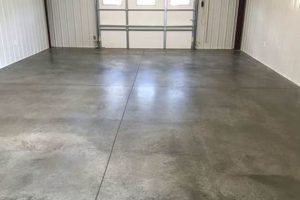
Concrete surfaces, after placement and curing, are often modified to achieve desired aesthetic and functional characteristics. These modifications, resulting in varied appearances and performance attributes, are crucial in determining the suitability of the flooring for specific applications. For instance, a polished surface offers a sleek, modern look, while an epoxy coating provides enhanced durability and chemical resistance.
The selection of a suitable surface treatment plays a vital role in the longevity, maintenance requirements, and overall cost-effectiveness of the flooring. Historically, simple treatments were applied primarily for protection. However, advancements in materials science have led to a wider array of options, allowing for greater design flexibility and specialized performance properties, such as slip resistance and stain protection. The economic implications of choosing the correct surface treatment are significant, impacting both initial investment and long-term operational expenses.
The following sections will delve into specific surface treatments, outlining their properties, application methods, and optimal use cases. This includes a discussion of options such as polished, stained, epoxy-coated, and micro-topped surfaces, providing a detailed overview of the characteristics and benefits of each.
Considerations for Surface Selection
The selection process requires careful evaluation of several factors to ensure optimal performance and aesthetic alignment with project requirements. The following are crucial considerations when specifying a surface treatment.
Tip 1: Assess Intended Use: The primary function of the space should dictate the selection. High-traffic areas, such as retail spaces, necessitate durable, abrasion-resistant options like polished concrete or epoxy coatings. Residential applications may prioritize aesthetic appeal, allowing for choices like stained or micro-topped surfaces.
Tip 2: Evaluate Existing Slab Condition: Prior to surface treatment, a thorough assessment of the existing slab is essential. Cracks, unevenness, and existing coatings must be addressed to ensure proper adhesion and longevity of the new surface. Self-leveling compounds may be required to correct imperfections.
Tip 3: Consider Maintenance Requirements: Different options have varying maintenance needs. Polished concrete, for example, requires regular cleaning and occasional re-sealing, while epoxy coatings may necessitate specialized cleaning products. Factor in these long-term costs when making a selection.
Tip 4: Analyze Environmental Factors: Exposure to moisture, chemicals, and UV radiation can significantly impact the performance of the surface. For outdoor applications, select treatments that are resistant to weathering and UV degradation, such as sealants with UV inhibitors.
Tip 5: Determine Desired Aesthetic: A wide array of colors, textures, and finishes are available. Consider the overall design aesthetic of the space and select a treatment that complements the existing architectural elements. Sample mockups are recommended to visualize the final result.
Tip 6: Account for Budgetary Constraints: Costs vary significantly depending on the complexity of the application, materials used, and labor involved. Obtain multiple quotes from qualified contractors to ensure cost-effectiveness. Consider long-term value in addition to initial expenses.
Tip 7: Evaluate Slip Resistance Requirements: Safety is paramount, especially in areas prone to spills or moisture. Select surfaces with appropriate slip resistance ratings, or consider incorporating additives to enhance traction. Consult relevant safety standards and regulations.
Careful consideration of these factors is essential for selecting a surface treatment that meets both functional and aesthetic requirements, ensuring a durable, attractive, and cost-effective flooring solution.
The next section will examine specific application techniques and best practices to ensure optimal results.
1. Polished Concrete

Polished concrete represents a significant category within surface treatments, distinguished by its mechanical refinement of the existing slab. This process transforms ordinary surfaces into durable, aesthetically pleasing floors. Its position within the broader spectrum is defined by the specific techniques and equipment employed to achieve a high-gloss, reflective surface.
- Grinding and Honing Process
The initial stage involves the use of progressively finer diamond-impregnated abrasives to grind down the surface, removing imperfections and exposing the aggregate. This process, known as honing, is critical for achieving a smooth, level substrate suitable for polishing. For instance, in warehouses, heavy-duty grinders are utilized to withstand the demands of large areas. The effectiveness of this stage directly impacts the final appearance and longevity of the polished surface.
- Densification and Hardening
Following the initial grinding, a chemical densifier is applied to penetrate the slab and increase its hardness and resistance to abrasion. This chemical reaction fills pores within the, making it more compact and less susceptible to staining and damage. In high-traffic commercial environments, densification significantly extends the lifespan of the surface, reducing maintenance costs.
- Polishing Stages and Sheen Levels
Subsequent polishing involves the use of progressively finer polishing pads to achieve the desired sheen level. Options range from a matte finish to a high-gloss, mirror-like appearance. Specifying the appropriate sheen level depends on the intended use and aesthetic preferences. Retail environments often opt for high-gloss finishes to enhance visual appeal, while industrial settings may favor matte or satin finishes for improved slip resistance.
- Sealing and Protection
The final stage involves the application of a protective sealer to guard against staining and wear. This sealer penetrates the surface, providing a barrier against liquids and contaminants. Regular maintenance, including cleaning and re-sealing, is essential for preserving the appearance and integrity of the polished surface. In food processing facilities, specialized sealers are required to meet stringent hygiene standards.
In summary, polished concrete represents a sophisticated surface treatment within the array of options, offering a balance of durability, aesthetics, and sustainability. Its implementation demands skilled execution and careful attention to detail to fully realize its potential. When compared to other options, polished concrete stands out for its longevity and resistance to heavy use, making it a cost-effective solution for a variety of applications.
2. Epoxy Coatings

Epoxy coatings represent a significant category within the spectrum of concrete surface treatments, distinguished by their ability to provide a seamless, durable, and chemically resistant layer. These coatings, composed of thermosetting polymers, bond directly to the substrate, creating a protective barrier that enhances both the functional and aesthetic properties of the flooring. The choice of epoxy coatings as a finish is driven by specific performance requirements, such as resistance to abrasion, chemicals, or impact, and the desire to create a hygienic and easily cleanable surface. For example, in manufacturing plants, epoxy coatings protect against spills of corrosive materials, preventing degradation of the slab and ensuring worker safety. In healthcare facilities, their seamless nature minimizes the risk of bacterial contamination, contributing to a sterile environment.
The application of epoxy coatings involves careful preparation of the substrate, including cleaning, profiling, and, if necessary, repairing any existing damage. The coating itself is typically applied in multiple layers, each serving a specific purpose, such as providing a base coat for adhesion or a topcoat for wear resistance. The thickness of the coating can be varied to meet specific performance requirements, with thicker coatings offering greater durability and chemical resistance. The visual aspect of the coating can also be customized through the addition of pigments, decorative flakes, or metallic powders, allowing for a wide range of aesthetic options. Practical applications extend from industrial settings to commercial kitchens, laboratories, and even residential garages, where the benefits of a durable, easy-to-maintain surface are highly valued.
In summary, epoxy coatings are an integral component within surface treatments, offering a versatile solution for enhancing the performance and appearance of surfaces. Their selection requires careful consideration of the specific application requirements, including the expected traffic, chemical exposure, and aesthetic preferences. Challenges include ensuring proper surface preparation and selecting the appropriate type of epoxy for the intended use. Understanding the characteristics and benefits of epoxy coatings is essential for specifying durable, functional, and aesthetically pleasing concrete flooring solutions.
3. Stained Concrete

Stained concrete represents a decorative surface treatment within the diverse range of available options. It alters the appearance through chemical reactions or pigment penetration, rather than forming a topical layer like coatings. The method yields unique, often variegated color patterns that integrate directly into the material, offering aesthetic versatility while retaining the substrate’s inherent texture.
- Acid-Based Stains: Reactive Coloration
Acid-based stains react chemically with the concrete, creating permanent color changes that are unique to each slab. Metallic salts in the stain react with the lime content in the , producing mottled, earth-toned effects. The resulting color variations add depth and character, mimicking the look of natural stone. For instance, commercial spaces often utilize acid staining to achieve a rustic or industrial aesthetic. The chemical reaction ensures the color is permanent and resists fading, making it suitable for high-traffic areas.
- Water-Based Stains: Pigment Penetration
Water-based stains use pigments to color the , offering a wider range of color options compared to acid-based stains. These stains penetrate the pores of the substrate, depositing pigments that create a more uniform color. Water-based stains are less reactive than acid-based stains, providing greater control over the final color. For example, residential interiors frequently employ water-based stains to achieve specific color schemes that complement the overall design. The non-reactive nature of water-based stains also makes them environmentally friendly.
- Application Techniques: Enhancing Visual Effects
Various application techniques can further enhance the visual effects of stained concrete. Techniques such as layering different stain colors, using stencils, or employing faux finishing methods can create intricate patterns and designs. For example, staining is often used in retail spaces to delineate different areas or create visually appealing focal points. The ability to customize the appearance through various application techniques makes stained concrete a versatile decorative choice.
- Sealing and Protection: Preserving Color and Finish
Sealing is essential to protect stained concrete from staining, wear, and moisture damage. Sealers create a protective barrier that prevents liquids and contaminants from penetrating the surface. Regular maintenance, including cleaning and re-sealing, is necessary to preserve the color and finish. For instance, in restaurants, sealing protects the stained surface from spills and stains, ensuring a long-lasting and attractive appearance. The choice of sealer should be based on the intended use and environmental conditions.
In summary, stained concrete offers a versatile method for adding color and character while preserving the integrity of the substrate. Its diverse coloration options, varied application techniques, and essential sealing process make it a suitable choice in the wide variety of available options. Compared to options like epoxy coatings, stained concrete offers a natural, integrated appearance that enhances the inherent texture of the material. Understanding these facets is essential for selecting durable, functional, and aesthetically pleasing concrete flooring solutions.
4. Overlays/Micro-toppings

Overlays and micro-toppings constitute a specific category within surface treatments, functioning as a restorative or aesthetic enhancement applied atop existing slabs. These cementitious materials, often polymer-modified, address surface imperfections or provide a completely new aesthetic. They represent a proactive solution to damaged or unattractive surfaces, offering a cost-effective alternative to complete slab replacement. For instance, in retail spaces with existing floors exhibiting wear and tear, micro-toppings can create a seamless, modern surface ready for subsequent treatments, such as staining or polishing. The cause-and-effect relationship is clear: flawed surfaces necessitate corrective measures, and overlays/micro-toppings directly rectify these issues.
The practical significance of overlays/micro-toppings lies in their versatility. They can be applied in thin layers, allowing for minimal disruption and quick turnaround times. Furthermore, they can be textured, colored, and patterned to achieve diverse aesthetic outcomes. High-end residential projects frequently utilize overlays to create custom designs or mimic the appearance of more expensive materials, such as tile or stone. The choice of overlay materialpolymer-modified, self-leveling, or stampeddepends on the specific performance requirements and aesthetic goals of the project. Their role is vital when the original slab is not in suitable condition for other finishing treatments.
In summary, overlays/micro-toppings are integral to surface treatments, providing a practical solution for restoring damaged surfaces or achieving specific aesthetic objectives. They offer a cost-effective alternative to complete slab replacement, enabling a wide range of design possibilities. While challenges exist, such as ensuring proper adhesion and avoiding cracking, the benefits of overlays/micro-toppings are substantial when implemented correctly, bridging the gap between flawed originals and beautiful surface treatments.
5. Sealed Concrete
Sealed concrete represents a fundamental category within surface treatments, denoting the application of a protective coating to enhance durability and resistance against various forms of degradation. The act of sealing is often the concluding step for numerous concrete finishing processes. It is not a standalone finish in most contexts but an integral component that significantly impacts the longevity and aesthetic appeal of other applied treatments. Without proper sealing, the underlying surface, whether polished, stained, or overlaid, remains vulnerable to staining, abrasion, and moisture damage. For instance, polished surfaces benefit from sealants that prevent water and oil penetration, preserving their reflective sheen. Similarly, stained surfaces require sealing to lock in color and prevent fading due to UV exposure or foot traffic.
The specific type of sealant employed is dictated by the nature of the underlying finish and the anticipated environmental stressors. Acrylic sealers offer basic protection and are suitable for low-traffic areas, while epoxy or polyurethane sealers provide superior resistance to chemicals and abrasion, making them ideal for industrial or commercial settings. Penetrating sealers, such as silicates and siloxanes, chemically react with the , creating a hydrophobic barrier that repels water and prevents salt intrusion. The selection process necessitates a careful assessment of the environment, traffic levels, and potential exposure to harsh substances. Proper application is paramount; inadequate surface preparation or uneven distribution of the sealant can compromise its effectiveness and lead to premature failure.
In summary, sealed concrete is a critical aspect of surface treatments, functioning as a protective layer that preserves and enhances the appearance and performance of underlying finishes. It is not merely an optional add-on but a necessary step to ensure the long-term viability of the surface. Choosing the appropriate sealer and applying it correctly are essential for maximizing its benefits and preventing costly repairs. This understanding underscores the importance of considering the entire system, including sealing, when specifying concrete flooring solutions,linking the practical significance to the broader theme of making informed decisions in surface treatment selections.
Frequently Asked Questions
The following questions address common concerns and misconceptions regarding surface treatments, aiming to provide clarity and informed decision-making.
Question 1: What distinguishes polished concrete from epoxy-coated concrete?
Polished concrete involves mechanically grinding and refining the existing slab to achieve a smooth, reflective surface. Epoxy coatings, conversely, consist of a resinous material applied atop the slab, creating a protective layer. The former emphasizes the inherent properties of the material, while the latter introduces a distinct, often colored, surface layer.
Question 2: Is stained concrete a durable surface treatment option?
The durability of stained concrete depends largely on the sealant applied. While the stain itself penetrates the , the sealant provides protection against abrasion, staining, and moisture. Regular maintenance, including re-sealing, is crucial to maintain its appearance and longevity.
Question 3: When are overlays/micro-toppings necessary for surface preparation?
Overlays and micro-toppings are employed when the existing slab exhibits significant imperfections, such as cracks, unevenness, or spalling. These materials create a smooth, uniform substrate suitable for subsequent finishes, such as polishing or staining. They serve as a restorative measure rather than a decorative one.
Question 4: How does sealing contribute to the performance of surface treatments?
Sealing is critical for protecting surfaces from staining, abrasion, and moisture damage. Sealants create a barrier that prevents liquids and contaminants from penetrating the , thereby preserving the appearance and integrity of the underlying finish. The selection of the appropriate sealant is contingent on the environment and the nature of the finish.
Question 5: What are the primary considerations for selecting surface treatments for high-traffic areas?
For high-traffic areas, durability and ease of maintenance are paramount. Polished concrete and epoxy coatings are often preferred due to their abrasion resistance and ability to withstand heavy use. Slip resistance is another important factor to consider, particularly in commercial settings.
Question 6: Are there environmentally friendly surface treatment options?
Yes, several eco-conscious options exist. Water-based stains and sealers with low volatile organic compound (VOC) emissions are considered environmentally friendly. Additionally, polished concrete can be a sustainable choice, as it utilizes the existing slab and reduces the need for new materials.
In summary, the selection and maintenance require careful consideration of the application, environment, and desired outcome. Proper planning and execution are crucial for ensuring a durable, attractive, and cost-effective flooring solution.
The next section will provide a glossary of terms related to types of concrete floor finishes.
Conclusion
This exploration of types of concrete floor finishes has highlighted the diverse range of options available, each possessing unique properties and application considerations. From the mechanical refinement of polished concrete to the protective barriers offered by epoxy coatings, and the aesthetic versatility of stained surfaces, the selection process demands a thorough understanding of performance requirements, environmental factors, and budgetary constraints. Overlays and micro-toppings serve as valuable tools for surface restoration, while proper sealing remains a fundamental step in ensuring the long-term viability of any chosen treatment.
The responsible application of knowledge regarding types of concrete floor finishes translates directly to durable, functional, and aesthetically pleasing flooring solutions. The understanding gained should inform future decisions, promoting informed selection and responsible implementation. Continued advancements in material science promise further innovation within this field, warranting ongoing vigilance and adaptation to emerging technologies and best practices.