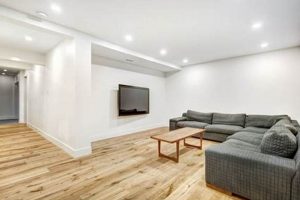
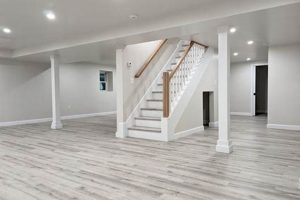
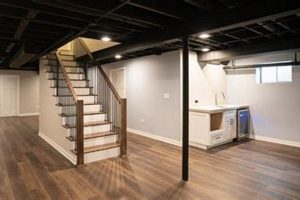
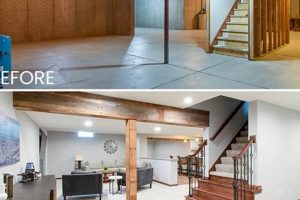
A lower-level space exhibiting features of both unfinished and completed areas represents an area with potential. It typically includes some elements of a finished room, such as drywall on some walls, basic flooring, or rudimentary electrical wiring and lighting, while retaining aspects of an unfinished basement, such as exposed ceiling joists, bare concrete walls, or visible plumbing. An example is a basement where one section is converted into a playroom with finished walls and flooring, while the remaining area serves as storage with unfinished concrete walls.
Such a space offers a middle ground between raw, utilitarian storage and fully habitable living space. It can increase a property’s appeal to potential buyers who envision expanding the living area without undertaking a complete renovation. Historically, basements were primarily utilitarian spaces, but homeowners increasingly seek to maximize the usable area of their homes, making partially completed areas a cost-effective compromise. This approach allows for customized expansion in phases, aligning improvements with available budget and lifestyle needs.
Understanding the features and considerations associated with this type of space is crucial for assessing its potential and planning further development. Key topics to explore include identifying existing finishes, evaluating structural integrity, addressing moisture issues, planning electrical and plumbing upgrades, and considering insulation and ventilation requirements. These elements are fundamental to successfully transforming the area into a fully functional and comfortable extension of the home.
Enhancing a Partially Finished Basement
Maximizing the value and usability of a partially finished lower-level space requires careful planning and execution. The following tips offer guidance on improving functionality and comfort.
Tip 1: Assess Existing Conditions: Conduct a thorough inspection of the existing finishes. Identify areas needing repair, such as water damage, mold, or structural issues, before proceeding with further renovations. This assessment informs subsequent decisions about materials and renovation priorities.
Tip 2: Prioritize Moisture Control: Basement environments are often prone to dampness. Implement measures to control moisture, such as sealing cracks in the foundation, installing a dehumidifier, or improving drainage around the property’s perimeter. Effective moisture control is paramount for preventing mold growth and protecting finishes.
Tip 3: Upgrade Insulation: Enhancing insulation improves energy efficiency and comfort. Insulate exterior walls and the ceiling to minimize heat loss and reduce energy consumption. Consider using moisture-resistant insulation materials specifically designed for basement environments.
Tip 4: Plan Electrical and Plumbing: Determine the electrical and plumbing needs based on the intended use of the space. Plan for adequate outlets, lighting, and plumbing fixtures, ensuring compliance with local building codes. Consult with qualified professionals for electrical and plumbing installations.
Tip 5: Consider Flooring Options: Select flooring materials appropriate for basement environments. Options include engineered wood, laminate, tile, or epoxy coatings. Prioritize moisture resistance and durability when choosing flooring to withstand potential dampness.
Tip 6: Address Ventilation: Ensure adequate ventilation to prevent the buildup of moisture and stale air. Install exhaust fans in bathrooms and consider adding windows or an air exchanger to improve airflow. Proper ventilation contributes to a healthier and more comfortable environment.
Tip 7: Optimize Lighting: Maximize natural light by enlarging existing windows or adding new ones. Supplement natural light with strategic placement of artificial lighting, such as recessed lights, task lighting, and ambient lighting, to create a well-lit and inviting space.
Implementing these tips enhances the comfort, usability, and value of the existing space. Prioritizing moisture control, insulation, and proper planning is essential for creating a functional and appealing living area.
With careful planning and execution, a partially finished basement can be transformed into a valuable asset, adding significant living space and increasing overall property value.
1. Existing Infrastructure

The presence and condition of existing infrastructure within an unfinished lower-level space is a primary determinant of renovation feasibility and cost. It dictates the scope of work required to transform the area into a habitable or functional space. Assessment of these elements is paramount prior to planning any improvements.
- Electrical Systems
The existing electrical setup must be evaluated for capacity and code compliance. Partially completed spaces might have rudimentary wiring intended only for basic lighting or outlets. Upgrading the electrical panel, adding circuits, or relocating outlets may be necessary to support modern appliances, entertainment systems, or specialized equipment. Failure to adequately assess and address electrical needs can result in safety hazards and functional limitations. For instance, a single circuit powering multiple high-draw devices could overload, creating a fire risk.
- Plumbing Systems
The location and accessibility of existing plumbing lines influence the potential for adding bathrooms, wet bars, or laundry facilities. A partially completed area might have capped plumbing stubs intended for future expansion. However, the condition of these lines, their capacity, and their compliance with current plumbing codes must be verified. Extending plumbing can be expensive, particularly if it involves breaking through concrete floors or rerouting existing lines. An example is the installation of a basement bathroom; the cost can vary significantly based on proximity to existing plumbing.
- HVAC Systems
The heating, ventilation, and air conditioning (HVAC) system’s capacity must be assessed to ensure it can effectively regulate temperature and air quality in the finished space. Partially completed areas often lack adequate ductwork or insulation, leading to temperature imbalances and increased energy consumption. Extending the HVAC system may involve installing additional ductwork, upgrading the furnace or air conditioner, or adding a separate zone control. Neglecting HVAC considerations results in an uncomfortable environment and potentially elevated utility bills.
- Structural Elements
Existing structural elements, such as support beams, load-bearing walls, and foundation integrity, impose constraints on layout and design possibilities. A completed area must ensure that alterations to structural components adhere to building codes and do not compromise the building’s integrity. This often requires professional engineering assessments and permits before commencing any work. For example, relocating a load-bearing wall will always need the proper authorization and design.
In conclusion, the integration of an existing infrastructure necessitates a comprehensive assessment encompassing electrical, plumbing, HVAC, and structural elements. Adequately evaluating and addressing these factors optimizes the space’s functionality, ensures code compliance, and enhances its overall value.
2. Moisture Management

Effective moisture management is critically important in partially finished lower-level spaces due to their inherent susceptibility to dampness and water intrusion. Addressing moisture issues proactively safeguards the structural integrity of the building, protects interior finishes, and prevents the growth of mold and mildew. These factors are paramount to the long-term usability and value of such a space.
- Foundation Waterproofing
Foundation waterproofing is a first line of defense against moisture penetration. It involves applying a waterproof coating to the exterior of the foundation walls to prevent groundwater from seeping into the basement. In areas with high water tables or frequent rainfall, additional measures like drainage systems and sump pumps may be required. For instance, a home built on a clay soil is particularly vulnerable to hydrostatic pressure, necessitating robust waterproofing measures.
- Vapor Barriers
Vapor barriers are materials installed on the interior side of basement walls to prevent moisture from diffusing through the concrete. These barriers help regulate humidity levels within the finished space and protect insulation and framing from moisture damage. Proper installation of a vapor barrier is crucial to ensure its effectiveness. For example, a vapor barrier must be properly sealed at seams and penetrations to prevent moisture migration.
- Ventilation Systems
Effective ventilation is essential for removing excess moisture from the air and preventing the buildup of condensation. Installing exhaust fans in bathrooms and laundry areas helps remove moisture generated by showers and washing machines. Additionally, ensuring adequate airflow throughout the space can reduce humidity levels. For instance, installing a dehumidifier can effectively control humidity in areas with poor natural ventilation.
- Grading and Drainage
Proper grading and drainage around the perimeter of the building directs water away from the foundation. Ensuring the ground slopes away from the foundation walls and installing gutters and downspouts to collect rainwater prevents water from pooling around the basement walls. For example, a poorly graded yard can cause water to accumulate near the foundation, increasing the risk of water intrusion.
Addressing moisture management in partially finished areas involves a multifaceted approach that includes foundation waterproofing, vapor barriers, ventilation systems, and proper site grading and drainage. Implementing these strategies effectively mitigates the risks associated with moisture and ensures a healthy and durable living environment. Neglecting moisture management will lead to structural damage, health hazards, and diminished property value.
3. Code Compliance

Code compliance in a partially finished lower level space is not merely a procedural formality, but a critical factor that directly impacts safety, habitability, and property value. The process of finishing such an area triggers specific building codes that address structural integrity, fire safety, egress, ventilation, and electrical and plumbing systems. Failure to adhere to these codes can result in hazardous living conditions and potential legal ramifications. For instance, inadequate egress in the event of a fire can create life-threatening situations, while improper electrical wiring can lead to electrical fires. Consequently, understanding and meeting these codes is essential to creating a safe and legally compliant living space.
The practical implications of code compliance extend beyond immediate safety concerns. Compliance impacts the marketability and insurability of the property. Non-compliant spaces may not be included in the assessed value of the home, thereby reducing its resale value. Moreover, insurance companies may deny claims related to incidents in non-compliant spaces, leaving homeowners financially vulnerable. A real-world example includes a basement renovation without proper permits or inspections, leading to structural issues that were not covered by the homeowner’s insurance. This highlights the long-term financial benefits of adhering to building codes. Furthermore, improper construction can affect neighboring residents by causing damage to the home’s support systems.
Navigating the complexities of building codes often requires the expertise of qualified professionals, such as architects, engineers, and licensed contractors. They are familiar with local regulations and can ensure that all work meets the required standards. While engaging professionals may increase the initial cost of the project, it mitigates the risk of non-compliance and associated consequences. Therefore, prioritizing code compliance from the outset is a prudent investment that safeguards the health, safety, and financial interests of homeowners. Moreover, adhering to building codes will lead to higher-quality construction due to the high standards.
4. Cost Assessment

Cost assessment is a critical precursor to any decision regarding the renovation or utilization of a partially finished lower-level space. The nature of this assessment dictates the feasibility and scope of potential improvements, directly influencing the return on investment. The initial cost of purchasing a property with such an area is often lower than a comparable property with a fully finished basement; however, the subsequent investment required to complete the space must be carefully evaluated. For instance, a preliminary estimate should incorporate the cost of addressing any existing moisture issues, upgrading electrical and plumbing systems, and installing insulation, drywall, flooring, and lighting. Ignoring these upfront costs can lead to significant budget overruns and compromise the quality of the finished space.
A comprehensive cost assessment extends beyond material expenses and encompasses labor costs, permit fees, and potential unforeseen expenses. Labor costs will vary depending on the complexity of the project and the prevailing rates for skilled tradespeople in the area. Permit fees, required to ensure compliance with local building codes, can range from a few hundred to several thousand dollars. Unforeseen expenses, such as the discovery of asbestos or structural defects, can significantly impact the overall budget. For example, the discovery of asbestos during demolition necessitates professional abatement services, adding considerable expense and delaying the project. Therefore, a contingency fund, typically 10-15% of the total estimated cost, should be included to mitigate the impact of unexpected issues. Furthermore, cost evaluation should take into account the potential increase in property taxes associated with the finished space, as the assessed value of the home will likely rise following the renovation.
In summary, a thorough cost assessment is indispensable for transforming a partially finished basement into a valuable and functional living area. This assessment must encompass all potential expenses, including material costs, labor, permit fees, unforeseen expenses, and property tax implications. A realistic budget, coupled with a contingency fund, enables informed decision-making and minimizes the risk of financial strain. Diligent cost assessment promotes prudent investment and maximizes the return on the renovation, ensuring the finished space enhances both the homeowner’s quality of life and the property’s overall value.
5. Future Expansion
A lower-level space characterized by partial completion inherently presents opportunities for future expansion. The initial design choices, even in a partially finished state, directly impact the ease and cost-effectiveness of subsequent renovations. For instance, the strategic placement of load-bearing walls, the accessibility of plumbing stubs, and the capacity of the electrical panel all influence the potential for adding bathrooms, bedrooms, or recreational areas. If these foundational elements are planned with future expansion in mind, later renovations can be significantly less disruptive and costly. This proactive approach contrasts sharply with a scenario where the initial partial finishing is executed without regard for future needs, potentially necessitating costly and complex modifications later on. The presence of a separate entrance from the outside to the basement can easily transform the basement into a separate apartment or room for rent in the future.
The phased approach facilitated by a partially completed area enables homeowners to align expansion with evolving needs and budgetary constraints. This iterative process allows for incremental improvements over time, spreading the financial burden and minimizing disruption to daily life. For example, a homeowner might initially finish a small portion of the area as a home office and subsequently expand it into a full recreational room as financial resources become available. Furthermore, this phased approach allows homeowners to adapt the design and functionality of the space based on evolving lifestyle preferences. Conversely, undertaking a complete basement renovation upfront may lead to overspending or design choices that become unsuitable over time. A homeowner, for example, might create a movie theater room but later regret the specialized design when considering resale, as a more flexible space would appeal to a broader range of potential buyers.
In essence, the potential for future expansion is a defining characteristic of a partially completed lower-level space. Careful planning and execution of the initial partial finishing, with consideration for future needs and phased development, optimizes the long-term value and functionality of the space. This approach allows homeowners to tailor the area to their evolving needs while mitigating financial risks and maximizing the overall return on investment. By integrating a forward-thinking approach to design and infrastructure, the homeowner can realize the full potential of this versatile area as an integrated part of the home.
6. Usability Assessment

The transformation of a partially finished lower-level space hinges significantly on a comprehensive usability assessment. This process evaluates the suitability of the area for specific intended purposes, considering existing conditions, potential limitations, and desired functionalities. The assessment serves as the foundation for informed decision-making regarding design, renovation, and resource allocation. A lack of proper usability assessment can lead to a finished space that fails to meet the homeowner’s needs, resulting in wasted investment and unrealized potential. For example, converting a low-ceiling area with poor ventilation into a bedroom would be an impractical and potentially non-code-compliant decision; whereas, it might make more sense to convert it into a storage area.
Effective usability assessment encompasses several key considerations. First, a thorough inspection of the existing structure is crucial, including evaluation of ceiling height, natural light availability, and potential moisture issues. Second, identification of intended uses guides the design process. Will the space serve as a home office, recreational area, guest suite, or storage area? Each intended use has specific requirements for layout, electrical capacity, plumbing, and ventilation. Third, an analysis of potential limitations, such as load-bearing walls or restrictive plumbing locations, informs design constraints and potential workarounds. Finally, consideration of long-term needs and flexibility ensures the finished space remains functional and adaptable over time. For instance, homeowners might consider the potential for aging in place by incorporating accessible design features during the renovation phase. A detailed usability assessment therefore ensures that the renovated area aligns with the homeowner’s lifestyle and future needs. Another good real-world example would be finishing the area as a play-area for children, then turning it into a home-office as the children grow older.
In summary, usability assessment is not a mere formality, but a critical component of successfully converting a partially finished space into a valuable and functional extension of the home. This assessment facilitates informed decision-making, optimizes design efficiency, and mitigates the risk of costly mistakes. By prioritizing a comprehensive evaluation of existing conditions, intended uses, and potential limitations, homeowners can ensure that the finished area meets their needs and enhances their quality of life. It will add to the home’s value overall.
Frequently Asked Questions
This section addresses common inquiries and misconceptions regarding partially finished lower-level areas. Information presented aims to provide clarity and inform decision-making related to this type of space.
Question 1: What defines a partially finished basement?
A partially finished basement exhibits characteristics of both unfinished and fully finished spaces. It typically includes some elements of completion, such as framed walls, basic flooring, or rudimentary electrical work, while retaining unfinished aspects like exposed ceilings, bare concrete walls, or visible utilities.
Question 2: Does a partially finished basement increase property value?
The extent to which a partially finished basement increases property value depends on the quality of the existing improvements, the potential for further development, and local market conditions. A well-maintained and functional space with potential for additional finishing is more likely to positively impact property value.
Question 3: Are permits required to finish a partially finished basement?
Whether permits are required depends on the scope of the intended work and local building codes. Significant alterations, such as adding walls, changing electrical or plumbing systems, or creating habitable spaces, typically necessitate permits. Contacting the local building department is essential to ensure compliance.
Question 4: How can moisture issues be addressed in a partially finished basement?
Addressing moisture issues involves several strategies, including improving drainage around the foundation, sealing cracks in the foundation walls, installing a vapor barrier, and ensuring adequate ventilation. In severe cases, professional waterproofing services may be necessary.
Question 5: What are the most cost-effective ways to improve a partially finished basement?
Cost-effective improvements include insulating exterior walls, installing energy-efficient lighting, adding a simple subfloor, and creating a functional storage area. Prioritizing essential improvements that enhance usability and comfort is often the most prudent approach.
Question 6: What are the potential drawbacks of a partially finished basement?
Potential drawbacks include increased humidity, limited usability, aesthetic concerns, and the potential for hidden structural issues. These factors should be carefully considered when evaluating the space and planning improvements.
In conclusion, partially finished lower-level areas present both opportunities and challenges. Thorough assessment, careful planning, and adherence to building codes are essential for maximizing the value and functionality of these spaces.
The subsequent section will delve into resources available for homeowners considering improvements to their partially completed area.
Partially Finished Basements
This exploration has detailed the multifaceted nature of partially finished basements, emphasizing the critical aspects of assessment, planning, and execution. From structural integrity and moisture management to code compliance and cost considerations, the transformation of such spaces requires a comprehensive and informed approach. The potential for future expansion and the ultimate usability of the area are intrinsically linked to the diligence exercised during the initial planning stages.
The presence of a partially finished basement represents both an opportunity and a responsibility. The long-term value and functionality of the space hinge upon a commitment to sound construction practices and adherence to regulatory standards. Prudent homeowners will prioritize thorough evaluation, engage qualified professionals where necessary, and approach the transformation process with a clear understanding of the challenges and potential rewards. The informed and responsible development of a partially finished basement not only enhances the quality of life within the home but also safeguards its long-term value and structural integrity.
![Define: What Does Finished Basement Mean? [Explained] | Best Final Touch: Elevate Your Projects with Professional Finishing](https://bestfinaltouch.com/wp-content/uploads/2026/05/th-167-300x200.jpg "Define: What Does Finished Basement Mean? [Explained] Best Final Touch: Elevate Your Projects with Professional Finishing")