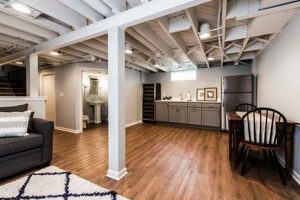
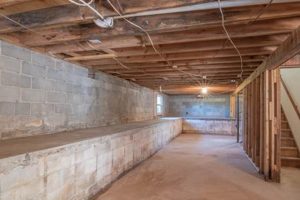
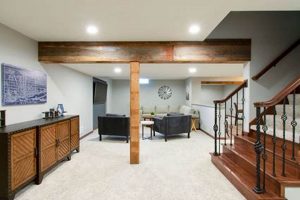
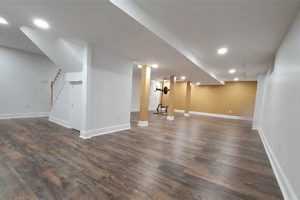
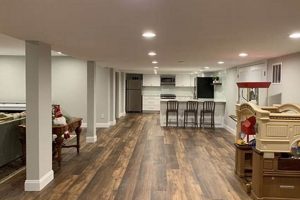
The process of transforming an unfinished lower level into a functional and aesthetically pleasing living space within the Garden State is a specialized construction endeavor. This undertaking generally involves adding insulation, framing walls, installing electrical and plumbing systems, and applying finished surfaces like flooring, drywall, and paint to a previously bare or minimally developed basement area. The goal is to convert a storage or utility space into a comfortable and habitable extension of the home.
Completing such a project can significantly increase property value and expand usable living area without the expense of building an addition. Historically, basements often served primarily utilitarian purposes; however, converting them into living areas has become a popular method for homeowners seeking more space for recreation, entertainment, home offices, or guest accommodations. The controlled climate and structural integrity of a properly finished lower level offer distinct advantages.
The following sections will delve into key considerations for a successful lower level transformation, including regulatory compliance, cost factors, design options, and the selection of qualified contractors. These aspects are crucial for achieving a durable, functional, and valuable result that meets homeowner needs and expectations.
Essential Considerations for Lower Level Transformation Projects
Prudent planning and execution are vital for successful underground space improvement. These insights aim to provide critical guidance for property owners embarking on such ventures.
Tip 1: Regulatory Compliance: Local building codes and permitting requirements must be rigorously followed. Failure to secure proper approvals can lead to costly delays, fines, or even the requirement to dismantle completed work. Verify zoning regulations pertaining to habitable space in underground structures.
Tip 2: Moisture Mitigation: Addressing existing or potential moisture problems is paramount. Install a robust waterproofing system, including a vapor barrier, to prevent mold growth and structural damage. Consider a sump pump and drainage system to manage groundwater intrusion.
Tip 3: Insulation and Climate Control: Adequate insulation is essential for maintaining a comfortable temperature and reducing energy consumption. Employ closed-cell spray foam or rigid foam board to provide effective thermal resistance and moisture protection. Plan for efficient heating, ventilation, and air conditioning (HVAC) to ensure proper air circulation and temperature regulation.
Tip 4: Egress and Safety: Ensure compliance with egress window requirements for safe emergency exit. Install smoke detectors and carbon monoxide detectors throughout the finished area. Consider fire-rated materials for walls and ceilings, particularly around mechanical systems.
Tip 5: Professional Contractor Selection: Engage a licensed and insured contractor with demonstrable experience in underground construction. Obtain multiple bids and thoroughly vet references. A detailed contract outlining the scope of work, payment schedule, and warranty provisions is crucial.
Tip 6: Design Considerations: Prioritize natural light through the use of larger or strategically placed windows and light wells. Consider ceiling height limitations and design accordingly to maximize perceived spaciousness. Soundproofing materials can enhance privacy and reduce noise transmission to upper levels.
The preceding recommendations emphasize the importance of compliance, safety, and quality in underground habitat enhancement. Careful consideration of these factors contributes to a durable, comfortable, and valuable expansion of living space.
The final section will consolidate the key themes and highlight the long-term benefits of a professionally executed underground space improvement project.
1. Permitting and compliance

Strict adherence to local and state regulations is a non-negotiable aspect of basement finishing in New Jersey. The absence of proper permits can result in stop-work orders, fines, and potential legal action requiring the removal of improperly installed improvements. Consequently, understanding and navigating the permitting process is paramount for avoiding significant financial and logistical setbacks. For example, many municipalities in New Jersey mandate specific ceiling heights, egress window dimensions, and fire-resistant materials in finished basements intended for habitable use.
The specific requirements vary by municipality; therefore, engaging with local building departments is crucial. The types of permits needed typically encompass building, electrical, and plumbing aspects of the project. Moreover, alterations impacting structural integrity, such as relocating load-bearing walls, necessitate detailed engineering plans and approvals. Ignorance of these requirements does not excuse non-compliance, and enforcement actions can include compelled remediation at the homeowner’s expense. In some cases, unpermitted work can also affect property resale value and insurability.
The interconnectedness of permitting and compliant construction practices ensures the safety and habitability of the finished basement. Properly obtained permits are not merely bureaucratic hurdles; they are safeguards that guarantee the project adheres to established safety standards and protects the long-term value of the property. Therefore, homeowners undertaking basement finishing in New Jersey must prioritize compliance from the outset to prevent potentially costly and legally challenging consequences.
2. Moisture mitigation
The presence of moisture poses a significant threat to underground space finishing in New Jersey, making effective mitigation strategies an essential component of any such project. The state’s climate, characterized by seasonal variations in temperature and precipitation, combined with varying soil conditions, creates a high potential for water intrusion into basements. This intrusion can manifest as groundwater seepage, condensation, or even flooding, each carrying the potential to cause substantial damage. The impact of unchecked moisture ranges from cosmetic issues, such as peeling paint and stained walls, to structural deterioration, fostering mold growth and compromising indoor air quality. These conditions, if left unaddressed, can create an unhealthy and uninhabitable environment, negating the benefits of a finished basement.
Effective moisture management in underground space improvement often necessitates a multi-pronged approach. This typically begins with exterior measures, such as proper grading to direct surface water away from the foundation, installation of functioning gutters and downspouts, and application of waterproofing membranes to the exterior foundation walls. Interior strategies may include the installation of a sump pump system to remove accumulated groundwater, the application of a vapor barrier to interior walls to prevent moisture transmission, and the use of dehumidifiers to control humidity levels. For example, in areas of New Jersey prone to flooding, like certain parts of Bergen County, a battery backup sump pump system is almost mandatory to ensure continuous operation even during power outages. The choice of appropriate mitigation measures depends on a comprehensive assessment of the site’s specific conditions and potential sources of moisture.
In summation, effective dampness control is not merely an optional add-on but a fundamental prerequisite for a successful and sustainable underground construction project within the state. Addressing dampness proactively through appropriate waterproofing, ventilation, and climate control measures safeguards the investment in finishing the space, protects the building’s structural integrity, and ensures a healthy and comfortable living environment. Failure to prioritize dampness management can lead to costly remediation efforts, diminished property value, and significant health concerns.
3. Insulation Efficiency
Insulation efficiency is a critical determinant of comfort, energy conservation, and long-term value in basement finishing projects in New Jersey. The state’s climate, with its cold winters and humid summers, necessitates a robust insulation strategy to maintain a stable and comfortable indoor environment year-round. Inadequate insulation leads to significant heat loss during winter months and excessive heat gain during summer, resulting in elevated energy consumption and increased heating and cooling costs. Furthermore, inefficient insulation can contribute to condensation and moisture buildup, creating an environment conducive to mold growth and structural damage. The direct consequence of poor insulation is a compromised living space that is both uncomfortable and costly to maintain.
Several insulation materials are commonly employed in basement finishing projects, each with varying levels of thermal resistance (R-value) and moisture resistance. Rigid foam board, closed-cell spray foam, and fiberglass batts are frequently used. The choice of material depends on factors such as budget, available space, and specific moisture conditions. For instance, closed-cell spray foam is often favored in basements prone to moisture due to its superior ability to create an air and vapor barrier. Proper installation is as crucial as the selection of appropriate materials. Gaps or voids in the insulation layer compromise its effectiveness and allow for thermal bridging, which can significantly reduce overall energy performance. Ensuring that insulation is installed correctly and completely is paramount to achieving optimal energy savings and preventing moisture-related problems.
In summary, insulation efficiency is an indispensable component of successful basement finishing projects in New Jersey. The impact of inadequate insulation extends beyond mere discomfort, affecting energy costs, indoor air quality, and structural integrity. The selection of appropriate materials, coupled with meticulous installation practices, ensures a comfortable, energy-efficient, and healthy living space. Prioritizing this factor is not only an investment in the immediate comfort of the home but also a safeguard against long-term maintenance issues and reduced property value. Building codes and energy efficiency standards in New Jersey are progressively emphasizing higher insulation requirements, making it essential for homeowners and contractors to stay informed and compliant.
4. Egress and Safety

Egress and safety are inextricably linked to the lawful and responsible practice of basement finishing in New Jersey. The conversion of an unfinished basement into a habitable space necessitates strict adherence to building codes designed to ensure occupants can safely evacuate in the event of an emergency, such as a fire. The lack of proper egress can transform a finished basement from an amenity into a potentially lethal trap. For instance, New Jersey’s building codes typically mandate that all finished basements intended for use as bedrooms or living areas have at least one means of egress that leads directly to the exterior, independent of the main dwelling’s exits. This often takes the form of an egress window of specific dimensions or an exterior door. Failure to comply with these egress requirements can result in the denial of permits, fines, and, more importantly, an increased risk of injury or death in the event of a fire or other emergency.
The practical significance of proper egress extends beyond mere code compliance. It involves a thorough understanding of the potential hazards associated with basement environments, such as limited natural light, potential for flooding, and the presence of mechanical systems. Consequently, the design and implementation of egress solutions should be integrated into the overall planning of the project from the outset. For example, in addition to egress windows, smoke detectors, carbon monoxide detectors, and fire-resistant materials are essential safety components that mitigate risks. Furthermore, ensuring that pathways to egress points are clear, unobstructed, and well-lit contributes significantly to the safety and security of occupants. Local New Jersey municipalities, like those in densely populated areas such as Hudson County, often have stringent fire safety requirements that must be met during basement finishing projects.
In conclusion, egress and safety are not merely peripheral considerations but fundamental prerequisites for any legally and ethically sound basement finishing project in New Jersey. Ignoring or minimizing these aspects can have dire consequences. Prioritizing egress and safety through strict code compliance, thoughtful design, and meticulous execution ensures that the finished basement enhances the value and usability of the home while simultaneously protecting the lives and well-being of its occupants. The commitment to egress and safety reflects a responsible approach to home improvement and a dedication to upholding the highest standards of building practice.
5. Contractor Expertise
The successful completion of lower level transformations within New Jersey is significantly dependent on the level of expertise possessed by the contractor. The complexities inherent in these projects necessitate a specialized skill set, extending beyond general construction knowledge. The contractor’s proficiency directly impacts the project’s quality, adherence to code, and overall durability.
- Permitting and Regulatory Navigation
Contractors experienced with lower level transformations in New Jersey possess a thorough understanding of local building codes and permitting processes. This expertise ensures compliance with regulations concerning egress, fire safety, and structural integrity. A knowledgeable contractor can efficiently navigate the often-complex permitting landscape, avoiding costly delays and potential legal issues. For example, they will be aware of specific requirements related to ceiling heights or flood zone construction within particular municipalities.
- Moisture Management and Waterproofing
Lower levels are particularly vulnerable to moisture intrusion, making waterproofing expertise crucial. Contractors specializing in this area understand the principles of hydrostatic pressure, drainage systems, and vapor barriers. They can accurately diagnose existing moisture problems and implement effective solutions to prevent future issues, such as mold growth or structural damage. The application of appropriate waterproofing techniques is vital for ensuring the long-term health and usability of the finished basement.
- Structural Considerations and Load-Bearing Modifications
Altering a basement’s layout may involve modifications to load-bearing walls or support structures. Contractors with structural expertise can assess the impact of these changes on the building’s stability and implement necessary reinforcements. This might involve installing support beams, reinforcing foundations, or rerouting plumbing and electrical systems without compromising structural integrity. Failure to address structural concerns adequately can lead to serious safety hazards and significant financial losses.
- HVAC and Ventilation Systems
Proper heating, ventilation, and air conditioning (HVAC) systems are essential for maintaining a comfortable and healthy living environment. Contractors with experience in lower level spaces can design and install HVAC systems that effectively circulate air, control humidity, and provide adequate heating and cooling. This may involve ductwork modifications, supplemental heating units, or specialized ventilation strategies to address the unique challenges of underground environments. A well-designed HVAC system prevents mold growth and ensures optimal air quality.
These interconnected facets of contractor expertise highlight the importance of selecting a qualified professional for any lower level finishing project in New Jersey. The contractor’s proficiency in these areas directly influences the project’s success, ensuring code compliance, structural integrity, and long-term habitability. Engaging a contractor with proven experience in lower level construction is a critical investment that safeguards both the homeowner’s financial resources and the safety of the occupants.
Frequently Asked Questions
The following addresses commonly encountered inquiries related to converting below-grade areas into habitable living spaces within the state. This information seeks to clarify key considerations and dispel potential misconceptions.
Question 1: What permits are typically required for basement finishing projects in New Jersey?
Permit requirements vary depending on the scope of work and the municipality. Generally, building permits are necessary for structural alterations, electrical permits for wiring modifications, and plumbing permits for any changes to water or sewer lines. Contacting the local building department is advisable to confirm specific requirements.
Question 2: How can one effectively prevent moisture problems in a finished basement?
Moisture mitigation strategies include exterior waterproofing, proper grading to direct water away from the foundation, interior vapor barriers, and the installation of a sump pump if groundwater intrusion is a concern. Addressing existing cracks in the foundation is also crucial.
Question 3: What are the minimum egress requirements for a finished basement intended as a living space?
Building codes typically mandate at least one direct means of egress to the exterior, independent of the main dwelling’s exits. This is commonly achieved through an egress window of specific dimensions or an exterior door, adhering to local regulations.
Question 4: How does the finishing process impact the property’s assessed value?
A properly finished basement that meets code requirements and adds functional living space can increase the assessed value of the property. However, the exact impact depends on factors such as the quality of the work, the overall design, and local market conditions.
Question 5: What are the common challenges encountered during basement transformation?
Common challenges include low ceiling heights, limited natural light, moisture problems, and the need to work around existing utilities. Careful planning and design can mitigate these challenges.
Question 6: How does climate control play a role in lower level finishing?
Adequate heating, ventilation, and air conditioning (HVAC) are essential for maintaining a comfortable and healthy indoor environment. Proper climate control prevents moisture buildup, ensures adequate air circulation, and regulates temperature.
Prudent planning and expert execution are essential to overcoming these challenges, securing a durable and functional enhanced living area.
The subsequent sections will delve into cost factors, offering guidance for budgeting and managing expenses effectively.
Concluding Remarks on Lower Level Transformation in the Garden State
The preceding exploration of basement finishing new jersey underscores the critical importance of regulatory compliance, moisture mitigation, insulation efficiency, egress and safety considerations, and contractor expertise. These elements are inextricably linked to the successful conversion of underutilized space into habitable living areas within the state. Ignoring any of these factors can result in costly repercussions, compromised structural integrity, and potential safety hazards.
Therefore, undertaking lower level transformation in New Jersey demands meticulous planning, diligent execution, and a steadfast commitment to quality. Prospective renovators are urged to prioritize these aspects, securing the long-term value of their investment and ensuring the creation of a safe, comfortable, and code-compliant extension of their homes. Informed decision-making and professional guidance are essential for navigating the complexities of these projects and achieving optimal results.