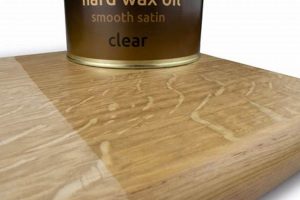
A rapid drying and hardening process utilizing ultraviolet light to initiate polymerization in specialized coatings applied to wooden surfaces. This process results in a durable, protective layer. An example includes its use on hardwood flooring to provide resistance against scratches and wear.
The adoption of this coating technology is driven by its reduced volatile organic compound (VOC) emissions, faster production cycles, and enhanced resistance to chemicals and abrasion compared to traditional finishing methods. Historically, manufacturers sought alternatives to solvent-based coatings to comply with environmental regulations and improve production efficiency.
The subsequent sections will elaborate on the specific chemical mechanisms involved, equipment requirements, application techniques, and potential limitations associated with this advanced wood finishing method.
Guidance on Implementing Ultraviolet Light Activated Wood Coating
The subsequent guidelines provide essential information for achieving optimal results when employing radiation-cured protective surface treatments on wooden substrates.
Tip 1: Formulation Selection: The selection of the appropriate formulation is critical. Coatings must be specifically designed for radiation-curing processes, considering wood species, desired finish characteristics (gloss level, color), and end-use requirements. Consult with coating manufacturers for product recommendations and compatibility data.
Tip 2: Surface Preparation: Proper substrate preparation is paramount. The wooden surface must be clean, dry, and free of contaminants such as dust, grease, and previous coatings. Sanding to the appropriate grit level, followed by thorough dust removal, ensures optimal coating adhesion.
Tip 3: Application Technique: Uniform application is essential for consistent results. Application methods such as spray, roller, or curtain coating should be optimized for the specific coating viscosity and desired film thickness. Over-application can lead to incomplete curing and potential defects.
Tip 4: Lamp Selection and Maintenance: The selection of the appropriate UV lamp type (mercury vapor, LED) and output intensity is crucial. Regular lamp maintenance, including cleaning and replacement according to manufacturer specifications, ensures consistent curing performance.
Tip 5: Curing Process Monitoring: Monitoring the curing process is essential for quality control. Factors such as exposure time, lamp intensity, and substrate temperature should be carefully controlled and monitored to ensure complete polymerization of the coating.
Tip 6: Safety Precautions: Appropriate safety measures are imperative. Operators must wear appropriate personal protective equipment (PPE), including UV-protective eyewear and gloves, to minimize exposure to ultraviolet radiation.
Adhering to these guidelines will contribute to a more efficient and effective radiation-curing process, resulting in enhanced durability, aesthetics, and environmental performance of finished wooden products.
The following section will address potential challenges and troubleshooting strategies associated with radiation-cured wood finishes.
1. Rapid Curing

Rapid curing is an intrinsic characteristic of ultraviolet light activated wood coatings. The process involves the instantaneous polymerization of the coating upon exposure to ultraviolet radiation, transforming the liquid formulation into a solid, durable film within seconds. This speed contrasts sharply with traditional wood finishes that require extended air-drying or heat-curing periods, often spanning hours or even days. The underlying mechanism involves photoinitiators within the coating formulation that absorb ultraviolet energy and trigger a chain reaction, rapidly crosslinking the polymer chains and solidifying the finish. An example is found in high-volume furniture manufacturing, where rapid curing allows for immediate handling and further processing of coated components, dramatically increasing throughput.
The importance of rapid curing extends beyond mere time savings. It minimizes dust and other airborne contaminants from settling on the wet finish, thereby reducing surface imperfections and enhancing the overall aesthetic quality. This accelerated processing enables manufacturers to implement lean manufacturing principles, reducing work-in-progress inventory and optimizing floor space utilization. Furthermore, the reduced exposure time limits the potential for volatile organic compound (VOC) emissions, contributing to a more environmentally sustainable finishing process. Consider the automotive industry, where wood trim components finished with ultraviolet light activated coatings are rapidly cured and integrated into vehicle interiors, meeting stringent production timelines and quality standards.
In summary, rapid curing is not merely a beneficial attribute of ultraviolet light activated wood coatings; it is a fundamental component that drives its adoption across various industries. It delivers efficiency gains, enhances finish quality, reduces environmental impact, and facilitates streamlined production processes. However, achieving consistent rapid curing requires careful control of factors such as lamp intensity, coating formulation, and substrate preparation. Addressing these challenges ensures optimal performance and unlocks the full potential of this advanced finishing technology.
2. Durability enhancement
Increased resistance to physical and chemical stresses is a primary driver for the implementation of ultraviolet light activated wood coating. The resultant finish exhibits superior performance characteristics compared to traditional methods, extending the service life and maintaining the aesthetic appeal of coated wood products. This enhancement stems from several key factors related to the cross-linked polymer network created during the curing process.
- Abrasion Resistance
The dense, cross-linked polymer matrix formed upon exposure to ultraviolet radiation imparts a high degree of resistance to scratching and wear. This is particularly relevant in high-traffic applications, such as flooring and furniture surfaces. For example, laboratory testing demonstrates that wood coated with these finishes can withstand significantly more abrasion cycles before showing signs of wear compared to those coated with conventional varnishes.
- Chemical Resistance
The cured coating exhibits improved resistance to a wide range of chemicals, including solvents, acids, and household cleaning agents. This property safeguards the underlying wood from staining and degradation caused by accidental spills or routine cleaning procedures. This resistance is crucial in environments such as kitchens and laboratories, where exposure to harsh chemicals is common. For example, kitchen cabinets finished with radiation-cured coatings withstand prolonged exposure to common cleaning solutions without discoloration or surface damage.
- Moisture Resistance
The coating acts as a barrier against moisture penetration, protecting the wood from swelling, warping, and decay. This is particularly important in humid environments or applications where the wood is exposed to water. Exterior wood doors and window frames benefit significantly from this property, as the coating minimizes moisture absorption and subsequent structural damage. Field data confirms reduced rates of rot and mildew formation on wooden structures finished with this method in comparison to traditional paint systems.
- Impact Resistance
While perhaps less obvious than abrasion resistance, the crosslinked structure of the cured coating also provides increased resistance to impacts. The coating can absorb and dissipate energy from minor impacts, preventing localized damage to the wood substrate. This is beneficial in furniture applications where accidental bumps and knocks are common. For instance, table tops finished with this are less prone to denting or chipping compared to those treated with conventional finishes.
The enhanced durability conferred by ultraviolet light activated wood coatings directly translates to reduced maintenance requirements and extended product lifecycles. This combination of improved performance and longevity makes it a cost-effective and sustainable finishing solution for a wide range of wood products. The development of increasingly sophisticated coating formulations continues to push the boundaries of durability, further solidifying its position as a leading finishing technology.
3. Environmental compliance

The adoption of ultraviolet light activated wood coatings is significantly influenced by increasing stringency in environmental regulations governing volatile organic compound (VOC) emissions. Traditional solvent-based wood finishes release substantial amounts of VOCs into the atmosphere during application and curing, contributing to air pollution and potential health hazards. The transition to these coatings offers a pathway to minimize VOC emissions and comply with environmental mandates.
The formulations for radiation-cured finishes typically contain a high solids content, reducing the need for volatile solvents. Upon exposure to ultraviolet light, the liquid coating rapidly polymerizes into a solid film with minimal evaporation, resulting in significantly lower VOC emissions compared to conventional coatings. For instance, furniture manufacturers operating in regions with strict air quality regulations, such as California, have increasingly adopted these coatings to meet compliance standards and avoid penalties. In practical terms, this shift has resulted in a measurable reduction in VOC emissions from wood finishing operations, contributing to improved air quality in surrounding communities. Another example is the wood flooring industry, where radiation-cured finishes are now a standard option to meet LEED (Leadership in Energy and Environmental Design) certification requirements for environmentally friendly building materials.
Therefore, ultraviolet light activated wood coatings play a key role in achieving environmental compliance within the wood finishing industry. The ongoing development of water-based and powder coatings for this technology further reduces reliance on traditional solvents, positioning this method as a sustainable alternative for enhancing both product performance and environmental responsibility. Challenges remain in optimizing formulation for specific applications and ensuring cost competitiveness; however, the trend towards greater environmental awareness and stricter regulations will continue to drive its adoption.
4. Equipment investment

The implementation of ultraviolet light activated wood coating necessitates a significant capital investment in specialized equipment. The nature and scale of this investment are critical considerations for any organization contemplating a transition to this finishing technology.
- UV Curing Lamps and Delivery Systems
The core component of this equipment is the UV lamp system, which provides the necessary ultraviolet radiation to initiate polymerization. Options include mercury vapor lamps, LED systems, and excimer lamps, each with varying energy outputs, spectral distributions, and operational lifespans. The selection of an appropriate lamp type depends on the coating formulation, substrate material, and desired curing speed. Furthermore, a delivery system, such as reflectors, focusing optics, or light guides, is required to direct the UV radiation onto the coated surface with optimal uniformity. For example, a small-scale woodworking shop might opt for a portable UV curing lamp, while a high-volume manufacturing facility would require an automated, conveyorized system with multiple high-powered lamps.
- Coating Application Equipment
The method of coating application must be compatible with the high-viscosity and fast-curing characteristics of ultraviolet light activated formulations. Common application methods include spray coating, roller coating, and curtain coating. Each method requires specialized equipment to ensure precise and uniform coating thickness. Spray systems, for instance, may require heated lines and specialized nozzles to maintain the coating viscosity and prevent clogging. Roller and curtain coating systems must be designed to handle the rapid curing properties of the coating, preventing buildup and ensuring consistent film deposition. Consider a manufacturer of kitchen cabinets, which would likely invest in automated spray coating lines to achieve a consistent, high-quality finish on a large volume of components.
- Safety and Ventilation Systems
Exposure to ultraviolet radiation poses potential health risks, requiring the implementation of comprehensive safety measures. These measures include enclosed curing chambers, safety interlocks, and personal protective equipment (PPE) for operators. Additionally, adequate ventilation systems are essential to remove any residual VOCs released during the curing process and maintain a safe working environment. Meeting these safety requirements necessitates an investment in specialized equipment, such as UV-protective eyewear, gloves, and air filtration systems. For example, a company using radiation-cured coatings must install appropriate ventilation to ensure employee safety and comply with occupational health and safety regulations.
- Monitoring and Control Systems
To ensure consistent and optimal curing performance, monitoring and control systems are essential. These systems track parameters such as lamp intensity, substrate temperature, and exposure time. Feedback loops allow for real-time adjustments to maintain the desired curing conditions and prevent defects. Advanced systems may incorporate automated inspection capabilities to detect imperfections in the cured finish. For example, an automated wood flooring production line might employ sensors to continuously monitor lamp intensity and adjust the conveyor speed to ensure consistent curing across the entire product surface.
The substantial equipment investment associated with radiation-cured wood coating requires a thorough cost-benefit analysis. While the initial outlay may be significant, the long-term benefits of increased production speed, improved finish quality, reduced VOC emissions, and enhanced durability can justify the investment. Careful planning and selection of appropriate equipment are crucial for maximizing the return on investment and ensuring the successful implementation of this finishing technology.
5. Application expertise

The attainment of optimal results with radiation-cured wood coating is inextricably linked to the level of application expertise employed. The process is not merely a matter of applying a coating and exposing it to ultraviolet light. Instead, it demands a deep understanding of the coating’s chemical properties, the behavior of the substrate, and the operational parameters of the curing equipment. Inadequate application expertise can lead to a range of defects, including incomplete curing, uneven film thickness, poor adhesion, and surface imperfections, ultimately compromising the performance and aesthetics of the finished product. For instance, an untrained operator may apply an insufficient coating thickness, resulting in inadequate protection against abrasion and chemical attack. Conversely, excessive coating thickness can lead to incomplete curing and a tacky surface.
The expertise encompasses a diverse range of skills, from proper surface preparation to precise control of the application process and the curing environment. Surface preparation is paramount, as contaminants or imperfections on the substrate can interfere with coating adhesion. Skilled applicators understand the importance of sanding, cleaning, and priming the surface to ensure a smooth and receptive base for the coating. Furthermore, they must be proficient in selecting the appropriate application method, whether it is spray coating, roller coating, or curtain coating, and adjusting the application parameters to achieve the desired film thickness and uniformity. An experienced technician, for example, can adjust spray gun settings to achieve optimal atomization and minimize coating waste. This precision minimizes the risk of defects and maximizes the efficiency of the process. Consider the specialized training programs offered by coating manufacturers and equipment suppliers, which emphasize hands-on experience and theoretical knowledge.
In conclusion, application expertise is a critical, yet often underestimated, component of successful radiation-cured wood finishing. It directly influences the quality, durability, and cost-effectiveness of the process. Continuous training, adherence to best practices, and a commitment to quality control are essential for maximizing the benefits of this advanced finishing technology. The challenges associated with developing and maintaining application expertise highlight the need for collaboration between coating manufacturers, equipment suppliers, and end-users. This synergy will facilitate the dissemination of knowledge and the development of standardized procedures, ensuring consistent and predictable results.
6. Cost optimization
The integration of ultraviolet light activated wood coating into manufacturing processes necessitates careful consideration of cost optimization strategies. While the initial investment in equipment and materials can be substantial, a holistic approach to cost management can yield significant long-term savings. This analysis examines key facets influencing the overall economic viability of this finishing technology.
- Material Efficiency
Reducing coating waste and optimizing application rates is crucial for cost containment. The precise control afforded by automated spray systems, coupled with accurate viscosity management and proper nozzle selection, minimizes overspray and ensures consistent film thickness. For instance, implementing a closed-loop feedback system that monitors coating usage and adjusts application parameters in real-time can significantly reduce material consumption. A furniture manufacturer transitioning to radiation-cured coatings can achieve substantial savings by optimizing spray gun settings and training operators to minimize waste.
- Reduced Labor Costs
The rapid curing characteristics of this technology translate to faster production cycles and reduced handling times. Eliminating the need for lengthy air-drying periods frees up labor resources and allows for greater throughput. For example, a cabinet manufacturer can reduce labor costs by automating the coating process and minimizing the time required for handling and stacking coated components. Furthermore, the improved durability of the finish reduces the need for rework and repairs, further decreasing labor expenses.
- Energy Efficiency
While UV curing lamps consume electrical energy, the overall energy footprint of the process can be lower compared to traditional heat-curing methods. Optimizing lamp intensity, exposure time, and reflector design minimizes energy consumption. LED UV curing systems, in particular, offer significant energy savings compared to mercury vapor lamps due to their lower power requirements and longer lifespan. A wood flooring manufacturer can reduce energy costs by switching to LED UV curing lamps and optimizing the curing process parameters.
- Minimizing Rejects and Rework
Consistency of finish is improved through better application. Consistent quality of the finish reduces the amount of rejects during quality control. Better material application improves finish and prevents defects.
In conclusion, the economic viability of ultraviolet light activated wood coating hinges on a comprehensive strategy that encompasses material efficiency, reduced labor costs, energy efficiency, and waste minimization. By carefully managing these factors, manufacturers can optimize the cost-effectiveness of this advanced finishing technology and realize its full economic potential. A proactive approach to cost optimization is crucial for achieving a sustainable competitive advantage in the wood products industry.
Frequently Asked Questions about Ultraviolet Light Activated Wood Coating
The following questions address common inquiries regarding the application, performance, and considerations associated with this advanced wood finishing technology.
Question 1: What are the primary advantages of ultraviolet light activated wood coating over traditional finishing methods?
The principal benefits include rapid curing times, enhanced durability, reduced volatile organic compound (VOC) emissions, and improved resistance to chemicals and abrasion.
Question 2: Is specialized equipment necessary for implementing this finishing process?
Yes, specialized equipment is required, including ultraviolet curing lamps, coating application systems, and safety ventilation systems. The specific equipment needs depend on the scale and nature of the operation.
Question 3: What types of wood are best suited for use with this coating technology?
Most wood species can be coated using this method. However, the appropriate coating formulation and application parameters should be selected based on the specific wood species’ characteristics, such as porosity and grain structure.
Question 4: How does the cost of ultraviolet light activated wood coating compare to traditional finishing methods?
While the initial investment in equipment and materials may be higher, the long-term cost-effectiveness can be achieved through reduced labor costs, faster production cycles, and improved product durability.
Question 5: What safety precautions should be observed when working with ultraviolet light activated coatings?
Appropriate personal protective equipment (PPE), including UV-protective eyewear and gloves, should be worn to minimize exposure to ultraviolet radiation. Adequate ventilation is also essential to remove any residual VOCs.
Question 6: Can ultraviolet light activated coatings be repaired or refinished?
Repairing or refinishing this type of coating can be challenging due to its durable and cross-linked nature. However, localized repairs may be possible depending on the extent of the damage.
The adoption of ultraviolet light activated wood coating requires a comprehensive understanding of its capabilities, limitations, and best practices. Careful planning and execution are essential for realizing the full benefits of this technology.
The subsequent section provides a concluding overview of the key considerations for successful implementation.
Conclusion
The preceding exploration has elucidated the multifaceted nature of ultraviolet light activated wood coating, encompassing its rapid curing capabilities, durability enhancements, environmental compliance attributes, associated equipment investment, the necessity of application expertise, and the importance of cost optimization. The successful integration of this technology requires a thorough understanding of these factors and a commitment to best practices.
As environmental regulations become more stringent and consumer demand for durable, sustainable products increases, the adoption of ultraviolet light activated wood coatings is poised to accelerate. Continued research and development efforts focused on improving coating formulations, reducing equipment costs, and streamlining application processes will further enhance the viability and appeal of this advanced finishing method. Businesses should carefully evaluate their specific needs and resources to determine whether this technology aligns with their strategic objectives and long-term sustainability goals.