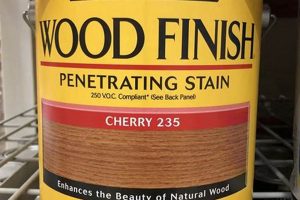
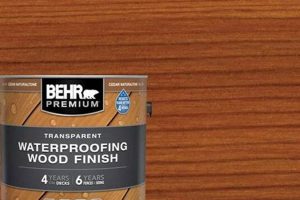
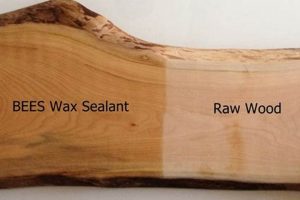
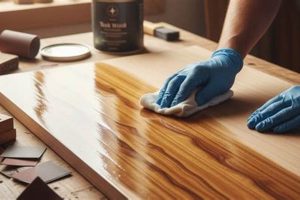
Coatings designed to resist water penetration and subsequent damage when applied to wooden surfaces are crucial for preserving the integrity and appearance of wood exposed to moisture. These barriers prevent water absorption, thereby mitigating risks of warping, rot, and fungal growth. Exterior doors and marine applications exemplify environments where such protective measures are indispensable.
The implementation of effective moisture barriers extends the lifespan of wooden structures and items, reducing maintenance costs and preserving aesthetic value. Historically, natural oils and waxes served this purpose; however, modern advancements offer more durable and chemically resistant solutions. This evolution reflects a growing demand for long-lasting protection against environmental elements.
An understanding of the diverse range of available options, their application methods, and performance characteristics is essential for selecting the optimal solution for any given woodworking project. Subsequent sections will delve into specific types of products, application techniques, and factors influencing selection.
Application Best Practices
Optimal performance from water-resistant treatments on timber relies on adherence to established application guidelines. Improper preparation or technique can significantly reduce efficacy and longevity.
Tip 1: Surface Preparation: Prior to product application, ensure the wooden surface is clean, dry, and free from loose particles, old coatings, or contaminants. Sanding may be necessary to create a suitable bonding profile.
Tip 2: Product Selection: Choose a formulation specifically designed for the intended application and wood type. Consider factors such as UV exposure, abrasion resistance, and desired aesthetic qualities.
Tip 3: Multiple Coats: Applying multiple thin coats, as opposed to a single thick coat, generally yields superior protection and prevents issues like runs, sags, or incomplete curing.
Tip 4: Edge Sealing: Pay particular attention to sealing edges and end grains, as these areas are most susceptible to water absorption. Consider using an edge sealer specifically designed for this purpose.
Tip 5: Proper Curing: Allow sufficient curing time as specified by the manufacturer. Avoid exposing the treated wood to moisture or stress until the curing process is complete.
Tip 6: Ventilation: Ensure adequate ventilation during application and curing to facilitate proper drying and minimize the risk of solvent vapor accumulation.
Tip 7: Maintenance: Regularly inspect the treated surface for signs of wear or damage. Reapplication or touch-up may be necessary to maintain optimal protection.
Implementing these practices will enhance the protective capabilities and extend the service life of wood surfaces exposed to moisture. Careful attention to detail is paramount for achieving durable and aesthetically pleasing results.
The subsequent section will address frequently asked questions regarding the selection and maintenance of water-resistant wood treatments.
1. Penetration Depth

The efficacy of a moisture-resistant wood treatment is intrinsically linked to its penetration depth. A superficial coating offers limited long-term protection, as surface damage can readily expose the underlying wood to moisture. Deeper penetration, conversely, allows the protective agent to impregnate the wood fibers, creating a more resilient barrier against water intrusion. The depth achieved is a critical factor determining the lifespan and effectiveness of the finish.
Several factors influence penetration depth, including the wood species, the solvent used in the formulation, and the application method. Softwoods, with their more porous structure, typically exhibit greater absorption than hardwoods. Similarly, treatments utilizing low-viscosity solvents tend to penetrate deeper than those employing thicker, more viscous carriers. Application techniques such as vacuum impregnation or pressure treatment are specifically designed to maximize the depth of penetration, often employed in demanding applications like marine construction.
Ultimately, optimizing penetration depth is crucial for achieving durable moisture resistance in wood. Selecting appropriate formulations and application methods based on the specific wood species and environmental conditions are necessary to ensure long-term protection. Treatments that achieve significant penetration offer a substantial advantage in preventing water damage and extending the service life of wooden structures and components.
2. Surface Preparation
Effective moisture-resistant treatments for wood depend critically on adequate surface preparation. The presence of contaminants, existing coatings, or surface imperfections can significantly impede the adhesion and penetration of the protective layer, resulting in premature failure. For instance, applying a coating over a surface contaminated with oil or grease prevents proper bonding, leading to peeling or blistering when exposed to moisture. Similarly, loose paint or varnish will compromise the integrity of any subsequent treatment, necessitating complete removal prior to application.
The objective of surface preparation is to create a clean, stable, and appropriately textured surface that promotes optimal bonding. This typically involves cleaning to remove dirt, grease, and other contaminants, followed by sanding to create a slightly roughened profile. The specific preparation steps will vary depending on the type of wood, the existing condition of the surface, and the type of barrier being applied. For example, hardwoods may require more aggressive sanding to open the grain and improve absorption, while softwoods may need gentler treatment to avoid damaging the surface fibers. In some cases, chemical treatments may be necessary to remove mildew or other biological growth.
Neglecting surface preparation undermines the effectiveness of even the highest-quality coatings. Proper attention to detail during this initial stage significantly contributes to the long-term performance and durability of wood exposed to moisture. Therefore, thorough and meticulous surface preparation is an indispensable prerequisite for achieving reliable protection against water damage.
3. Chemical Resistance

The ability of a moisture barrier on wood to withstand exposure to various chemicals is a critical aspect of its overall performance and longevity. Chemical resistance dictates the durability and integrity of the treatment in diverse environments, extending beyond mere water repellency.
- Protection from Cleaning Agents
Many common household and industrial cleaning agents contain harsh chemicals that can degrade or dissolve certain types of finishes. A chemically resistant treatment remains unaffected by routine cleaning, preserving its protective qualities and aesthetic appearance. Examples include resistance to ammonia-based cleaners, detergents, and solvents used for surface sanitation.
- Resistance to Environmental Pollutants
Exterior applications expose wood to a range of environmental pollutants, including acid rain, smog, and industrial emissions. These substances can slowly erode the protective barrier, leading to premature failure. Chemically resistant treatments are formulated to withstand these corrosive elements, ensuring long-term protection against environmental degradation.
- Barrier Against Biological Agents
Certain chemical treatments incorporate biocides or fungicides that inhibit the growth of mold, mildew, and algae. These biological agents can thrive in damp environments and contribute to the deterioration of wood and its coatings. Chemical resistance, in this context, extends to the ability of the coating to maintain its anti-microbial properties over time.
- Stability in Contact with Other Materials
Wood treatments may come into contact with other building materials, such as adhesives, sealants, or metal fasteners. A chemically stable barrier will not react adversely with these materials, preventing discoloration, corrosion, or loss of adhesion. This compatibility is crucial for ensuring the overall integrity of the assembly.
Therefore, the selection of a treatment with appropriate chemical resistance characteristics is essential for maximizing its effectiveness and lifespan in specific applications. A comprehensive understanding of potential chemical exposures is necessary to ensure that the chosen formulation can withstand the rigors of its intended environment, thereby providing long-lasting protection against water damage and other forms of degradation.
4. Application Method

The procedure by which a moisture-resistant treatment is applied to wood is paramount in determining its ultimate effectiveness. Deviations from recommended application techniques can compromise the protective qualities of even the highest-grade products, leading to premature failure and water damage. The selected application method must align with the specific formulation and the characteristics of the wood being treated.
- Brush Application
Brushing is a common method, particularly suitable for smaller projects or areas requiring precise control. The technique allows for thorough penetration into the wood grain, especially when using high-quality brushes and applying even strokes. However, brushing can result in brush marks and may require sanding between coats for a smooth finish. Proper brush selection and technique are critical to avoid uneven application or the introduction of contaminants.
- Spray Application
Spraying provides a uniform coating and is advantageous for large surfaces or intricate designs. This method utilizes compressed air or airless sprayers to atomize the treatment and apply it as a fine mist. Spraying minimizes brush marks and can achieve a consistent film thickness. However, it requires careful masking to protect surrounding areas and proper ventilation to mitigate overspray and inhalation hazards. Furthermore, some spray equipment may not be compatible with certain treatment formulations, necessitating careful consideration of material compatibility.
- Roller Application
Rolling is an efficient method for applying treatments to flat, broad surfaces. This technique employs rollers with varying nap lengths to achieve different levels of coating thickness and texture. Rolling can be faster than brushing but may be less effective at penetrating intricate details or reaching into tight corners. The selection of an appropriate roller cover and the use of consistent pressure are essential for achieving a uniform and even finish. Overlapping roller strokes is crucial to avoid missed spots or inconsistencies in the coating.
- Immersion and Pressure Treatment
Immersion involves submerging wood components in the treatment solution for a specified period, allowing for deep penetration. Pressure treatment further enhances penetration by forcing the treatment into the wood under high pressure. These methods are typically used for large-scale applications, such as lumber intended for exterior construction or marine environments. Immersion and pressure treatment provide superior protection against decay and insect infestation but require specialized equipment and facilities. These methods are often employed in industrial settings rather than for individual woodworking projects.
These application methodologies directly impact the performance of moisture-resistant treatments on wood. Precise execution and adherence to manufacturer guidelines are essential to maximize the protective capabilities and ensure the longevity of the finish. Incorrect application can lead to inadequate protection, resulting in costly repairs or replacements. Therefore, careful consideration of the application method is a fundamental aspect of any woodworking project where moisture resistance is a critical requirement.
5. Drying Time

The drying time of a protective finish is intrinsically linked to its ultimate performance in resisting water damage. Insufficient drying or curing can compromise the film’s integrity, rendering it susceptible to moisture penetration. The uncured finish remains soft and permeable, negating its intended function. For example, applying multiple coats of a varnish before the previous layer has fully dried traps solvents, hindering proper cross-linking and resulting in a finish that is prone to clouding and water absorption. The inverse is also true; excessively rapid drying, often induced by high temperatures or forced air, can result in surface skinning, where a hardened outer layer forms while the underlying material remains liquid. This creates internal stresses and can lead to cracking or delamination upon exposure to environmental fluctuations.
The specific drying time varies significantly depending on the type of finish, the ambient temperature and humidity, and the thickness of the applied coat. Oil-based treatments typically require longer drying periods than water-based alternatives. High humidity retards the evaporation of solvents, prolonging the drying process. Following manufacturer instructions regarding drying times is crucial. Inadequate drying can lead to adhesion problems, reduced hardness, and increased vulnerability to scratches and abrasions, thereby shortening the lifespan of the protected wood. Conversely, proper adherence to drying guidelines ensures the finish achieves its optimal hardness, flexibility, and water-resistant properties. This, in turn, enhances the durability and aesthetic appeal of the treated wood.
In conclusion, the drying time is not merely a waiting period but a critical phase in the creation of a durable, water-resistant barrier. Optimizing drying conditions and adhering to recommended drying schedules are essential for realizing the full potential of any protective wood finish. Failing to account for drying time adequately negates the intended benefits, resulting in compromised performance and increased susceptibility to moisture damage. Understanding this principle is fundamental for achieving successful and long-lasting protection against water penetration in woodworking projects.
6. Wood Type

The selection of an appropriate protective finish for wood is inextricably linked to the inherent characteristics of the wood species itself. Different wood types exhibit varying degrees of porosity, density, and natural oil content, all of which influence the penetration, adhesion, and ultimately, the effectiveness of any applied barrier. Therefore, understanding the specific properties of the wood is paramount in selecting a suitable, moisture-resistant treatment.
- Hardwood vs. Softwood
Hardwoods, typically derived from deciduous trees, generally possess a denser cellular structure compared to softwoods, which originate from coniferous trees. This difference in density affects the absorption rate of finishes. Softwoods tend to be more porous and readily absorb treatments, potentially requiring fewer coats. Conversely, hardwoods may necessitate more extensive surface preparation and specialized formulations to achieve adequate penetration and adhesion. The choice of finish must consider these inherent differences to ensure optimal protection.
- Natural Oil Content
Certain wood species, such as teak and cedar, contain significant amounts of natural oils that contribute to their inherent water resistance. These oils can interfere with the adhesion of some finishes, particularly water-based formulations. In such cases, it may be necessary to degrease the wood surface prior to treatment or select a finish specifically designed to adhere to oily surfaces. Understanding the natural oil content of the wood is critical in choosing a compatible and effective moisture barrier.
- Grain Structure
The grain structure of wood, including the size and orientation of its pores, influences the rate and depth of finish penetration. Open-grained woods, such as oak and ash, absorb finishes more readily than closed-grained woods, such as maple and birch. This difference in absorption affects the number of coats required and the overall level of protection achieved. The choice of finish and application technique must account for the grain structure to ensure uniform coverage and adequate water resistance.
- Dimensional Stability
Dimensional stability refers to a wood’s ability to resist changes in size or shape due to moisture fluctuations. Woods with low dimensional stability are more prone to warping, cracking, and swelling when exposed to moisture. In these cases, a flexible finish that can accommodate these dimensional changes is essential. Rigid finishes may crack or delaminate as the wood expands and contracts. Selecting a finish with appropriate flexibility is crucial for maintaining long-term protection and preventing structural damage.
In conclusion, selecting the appropriate barrier for wood requires a thorough understanding of the specific properties of the wood species in question. Factors such as hardwood vs. softwood classification, natural oil content, grain structure, and dimensional stability all play a crucial role in determining the most effective treatment for preventing water damage. Careful consideration of these factors ensures that the selected finish provides long-lasting protection and maintains the integrity and aesthetic appeal of the wood.
7. Environmental Factors

The performance and longevity of moisture-resistant wood treatments are significantly influenced by environmental conditions. Exposure to various environmental elements can accelerate the degradation of these finishes, necessitating careful consideration of these factors during product selection and application.
- Ultraviolet (UV) Radiation
UV radiation from sunlight is a primary cause of finish degradation, leading to discoloration, cracking, and loss of adhesion. Finishes formulated with UV absorbers or stabilizers offer enhanced protection against these effects, extending the lifespan of the treatment and preserving the appearance of the wood. Wood located in direct sunlight requires finishes with strong UV resistance to prevent premature failure. The presence of UV inhibitors helps to mitigate the breakdown of the protective coating, maintaining its integrity.
- Temperature Fluctuations
Repeated cycles of heating and cooling can induce stress in finishes, particularly those that are rigid or inflexible. This stress can lead to cracking and delamination, compromising the barrier’s integrity. Flexible coatings that can accommodate dimensional changes in the wood are better suited for environments with significant temperature variations. The expansion and contraction of wood due to temperature changes place considerable strain on the finish, making flexibility a crucial characteristic for long-term performance.
- Moisture Exposure (Rain, Humidity, Snow)
The degree and duration of moisture exposure are critical factors influencing the performance of water-resistant wood treatments. Prolonged exposure to rain, high humidity, or snow can accelerate the breakdown of finishes, particularly those that are not specifically formulated for exterior use. Finishes with excellent water repellency and resistance to fungal growth are essential in environments with high moisture levels. Wood surfaces exposed to constant moisture require robust protection to prevent rot, decay, and structural damage.
- Air Pollution and Chemical Exposure
Exposure to airborne pollutants, such as acid rain, industrial emissions, and salt spray, can degrade finishes and accelerate corrosion of wood. Finishes with chemical resistance are necessary in environments with high levels of air pollution. The chemical composition of these pollutants can react with the finish, leading to discoloration, blistering, and loss of protective properties. Selecting a finish with appropriate chemical resistance characteristics is crucial for ensuring long-term performance in polluted environments.
These environmental variables collectively exert a significant influence on the durability of moisture-resistant wood treatments. The selection of finishes must account for the specific environmental challenges posed by the intended application environment, ensuring long-lasting protection against water damage and other forms of degradation. Understanding the interplay between environmental factors and finish performance is paramount for maintaining the integrity and aesthetic appeal of treated wood surfaces.
Frequently Asked Questions
The following section addresses common inquiries regarding the selection, application, and maintenance of wood treatments designed to mitigate water damage. The information presented aims to provide clarity and guidance on best practices.
Question 1: What distinguishes a water-repellent finish from a waterproof finish?
Water-repellent finishes, often containing waxes or oils, resist water absorption to a certain degree but are not impervious to prolonged exposure. Waterproof finishes, conversely, create a more impermeable barrier, preventing water penetration even under sustained contact. The selection depends on the severity of moisture exposure anticipated.
Question 2: How does one determine the appropriate number of treatment coats required?
The required number of coats depends on the product’s formulation, the wood’s porosity, and the intended application. Manufacturer recommendations serve as a baseline, but additional coats may be necessary for highly porous woods or environments with extreme moisture exposure. Visual inspection ensures adequate coverage and uniform appearance.
Question 3: Is sanding between coats always necessary?
Sanding between coats is recommended for achieving a smooth, uniform finish, particularly with oil-based treatments. Sanding removes imperfections, creates a mechanical key for subsequent coats, and improves overall adhesion. However, certain water-based finishes may not require sanding between coats if applied within a specific recoat window.
Question 4: What are the potential consequences of applying a finish in humid conditions?
High humidity retards the evaporation of solvents, prolonging drying times and potentially leading to a cloudy or milky appearance in the finish. Furthermore, excessive humidity can interfere with the curing process, resulting in a softer, less durable film. Application during periods of low to moderate humidity is generally recommended.
Question 5: How does one properly dispose of used finish applicators and containers?
Applicators and containers containing solvent-based finishes should be disposed of according to local regulations. Many jurisdictions classify such materials as hazardous waste. Allow applicators to dry completely in a well-ventilated area before disposal to prevent spontaneous combustion. Empty containers should be thoroughly cleaned and recycled or disposed of as directed by local authorities.
Question 6: What are the signs of a failing moisture barrier?
Indications of a failing barrier include blistering, cracking, peeling, discoloration, and the presence of mold or mildew. These signs suggest that the barrier has lost its protective properties and is allowing moisture to penetrate the wood. Prompt reapplication or repair is necessary to prevent further damage.
In summary, the selection, application, and maintenance of effective moisture-resistant wood treatments necessitate careful consideration of various factors. Adherence to best practices ensures long-lasting protection and preserves the integrity of wooden structures and components.
The subsequent section will provide a concluding summary of key considerations and recommendations.
Conclusion
The preceding discussion has elucidated the critical factors involved in selecting and applying effective waterproof finishes for wood. Emphasis has been placed on surface preparation, product selection tailored to wood type and environmental conditions, proper application techniques, and the crucial role of drying time. Consideration of chemical resistance and potential environmental stressors further informs the decision-making process.
Ultimately, the successful implementation of waterproof finishes for wood hinges on a comprehensive understanding of both the material properties of the wood and the characteristics of the protective treatment. Diligent adherence to best practices will ensure the longevity and structural integrity of wooden structures, safeguarding against the detrimental effects of moisture and environmental degradation. Investment in informed selection and meticulous application is paramount to achieving lasting protection.