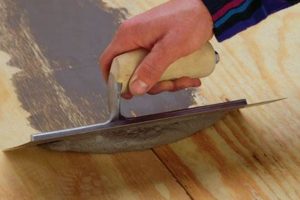
This wall coating presents a textured surface achieved by integrating small granular particles within a plaster matrix. The application results in a subtly abrasive feel and a visual appearance characterized by minute variations in depth and tone. For example, it might be applied to exterior walls to provide a durable and aesthetically pleasing facade.
The utilization of this technique provides several advantages, including enhanced resistance to weathering, increased surface durability, and an attractive, natural aesthetic. Historically, such coatings have been employed to protect structures from the elements while simultaneously offering a decorative element that blends well with various architectural styles. The inherent texture can also effectively conceal minor imperfections in the underlying substrate.
Subsequent sections will delve into the specific application methods, suitable base materials, potential challenges, and long-term maintenance requirements associated with achieving this distinctive wall treatment. Further discussion will address cost considerations and comparisons to alternative finishing options.
Application Guidelines
The following guidelines provide critical recommendations for achieving optimal results when implementing a fine granular plaster veneer.
Tip 1: Surface Preparation is Paramount: Ensure the substrate is clean, dry, and structurally sound. Remove any loose debris, existing coatings, or contaminants that may impede adhesion. A properly prepared surface is crucial for long-term durability.
Tip 2: Priming for Adhesion: Apply a suitable primer compatible with both the substrate and the plaster material. The primer enhances the bond strength and prevents premature drying of the plaster, reducing the risk of cracking.
Tip 3: Consistent Mixing is Essential: Adhere strictly to the manufacturer’s instructions regarding water-to-plaster ratios. Inconsistent mixing can lead to variations in color, texture, and curing time, compromising the final appearance and structural integrity.
Tip 4: Application Technique Matters: Employ consistent application techniques to maintain a uniform texture and thickness. Variations in application can result in an uneven appearance and potential weak points in the finish.
Tip 5: Control Environmental Conditions: Avoid applying in extreme temperatures or direct sunlight. Rapid drying can cause cracking and reduce the overall strength of the plaster. Ideally, apply in moderate temperatures and shaded areas.
Tip 6: Curing Process: Allow adequate curing time as specified by the manufacturer. Premature exposure to moisture or stress can compromise the cured finish.
Tip 7: Sealing for Longevity: Consider applying a sealant specifically designed for plaster finishes. This will provide added protection against moisture intrusion, staining, and environmental degradation.
Adhering to these guidelines will significantly increase the likelihood of a successful application, resulting in a durable, aesthetically pleasing, and long-lasting exterior or interior surface.
The subsequent sections will cover the necessary tools, potential troubleshooting scenarios, and long-term maintenance strategies.
1. Material Composition

The constituent elements fundamentally determine the properties and characteristics of a fine granular plaster veneer. Variations in the type and proportion of components directly influence the resultant texture, durability, and aesthetic appeal. The base matrix, typically comprising cement, lime, or a combination thereof, provides the binding agent that holds the granular particles in place. The aggregate component, consisting of precisely graded granular material, dictates the texture’s fineness. Using lower quality raw materials and incorrect mix will result to quality degradation of finished product.
The selection of appropriate materials, and adherence to correct proportions, mitigates issues such as cracking, delamination, and premature degradation. For instance, an insufficient binder-to-aggregate ratio can lead to a weak, friable finish susceptible to weathering. Conversely, an excessive binder content can result in increased shrinkage, potentially causing cracking during the curing process. Pigments or additives incorporated into the mix can affect color consistency and fade resistance. Using appropriate materials leads to durable and longer lifespan.
In summation, the precise material composition is paramount to the success of any application. A thorough understanding of the interplay between components is essential for achieving the desired texture, durability, and longevity. Challenges related to inappropriate material selection can be avoided through adherence to industry best practices and manufacturer specifications. A balanced composition is the foundation of a durable and aesthetically pleasing surface.
2. Application Techniques

Application techniques directly influence the final aesthetic, durability, and longevity of a fine granular plaster veneer. The method of application determines the uniformity of texture, the adhesion strength to the substrate, and the overall structural integrity of the finish. For instance, inconsistent trowel pressure can result in variations in the depth of the plaster layer, creating an uneven texture and potential weak spots. Similarly, improper mixing of the plaster can lead to segregation of the granular material, compromising the finish’s aesthetic appeal and its resistance to weathering.
The number of coats applied, and the timing between coats, significantly impact the final outcome. Applying multiple thin coats, rather than a single thick coat, promotes even drying and reduces the risk of cracking. Proper curing techniques, such as misting the surface with water during the initial curing period, are essential for preventing premature drying and ensuring adequate hydration of the cementitious materials. Consider, for example, the application of this finish on a historical building; the adherence to historically accurate techniques is crucial for maintaining the building’s architectural integrity.
In summary, mastery of application techniques is essential for achieving a successful application. This mastery involves understanding the material properties, employing proper mixing procedures, applying consistent trowel pressure, adhering to recommended curing practices, and addressing the material’s inherent limitations. Ultimately, the application process transforms raw materials into a protective and aesthetically pleasing surface.
3. Textural characteristics

The textural characteristics are integral to the visual and tactile properties of a fine granular plaster veneer, defining its aesthetic impact and contributing to its overall performance.
- Granularity and Surface Roughness
Granularity, the size and distribution of the granular particles within the plaster matrix, directly determines the surface roughness. A finer granularity results in a smoother, less abrasive texture, while coarser granules yield a more pronounced, tactile surface. This impacts the aesthetic appeal, ranging from subtle elegance to rustic charm. A real-world example is the choice between a smooth finish for a modern interior and a coarser finish for a traditional exterior, where the texture complements the architectural style.
- Uniformity and Consistency
Uniformity refers to the consistency of the texture across the surface. A consistent texture implies an even distribution of granular particles, achieved through proper mixing and application techniques. Lack of uniformity can result in an uneven appearance, detracting from the aesthetic appeal and potentially indicating underlying application flaws. Consider a large exterior wall where variations in texture become readily apparent under varying light conditions.
- Depth and Shadowing
The depth of the texture, determined by the size and density of the granular particles, influences the play of light and shadow on the surface. A deeper texture creates more pronounced shadowing, enhancing visual interest and adding dimensionality. This is especially evident on exterior surfaces, where sunlight interacts with the texture to create dynamic patterns. The depth must be controlled to prevent excessive shadowing that could appear visually busy or harsh.
- Color and Light Reflectance
The textural characteristics also affect color perception and light reflectance. A rougher texture diffuses light, resulting in a matte appearance and a reduced sheen. A smoother texture reflects light more directly, creating a glossier appearance. The selection of the appropriate texture can therefore influence the perceived color of the finish, impacting the overall ambiance of the space. For instance, a darker color may appear more subdued on a rough texture due to increased light absorption.
These interconnected textural aspects of fine granular plaster veneers serve as significant determinants of aesthetic outcome, durability, and overall suitability for particular applications. A comprehensive understanding of these characteristics is vital for achieving the desired results. By carefully considering these factors, specifiers can ensure the selected finish complements the architectural style, enhances the visual appeal, and provides the intended functional benefits.
4. Durability considerations

The inherent durability of fine granular plaster veneers represents a critical performance factor, directly influencing their long-term viability and cost-effectiveness. Several interconnected facets contribute to the overall durability, demanding careful consideration during material selection, application, and maintenance.
- Resistance to Weathering
Exposure to environmental elements such as rain, snow, ultraviolet radiation, and temperature fluctuations significantly impacts the longevity of this finish. The composition of the plaster, including the type of binder and aggregates, determines its ability to withstand these weathering effects. A well-formulated plaster exhibits resistance to cracking, fading, and erosion. For example, a stucco finish in a coastal environment requires enhanced resistance to salt spray and moisture, necessitating the use of specialized additives and sealants.
- Impact Resistance
The capacity to withstand physical impacts, such as those from hail, debris, or accidental contact, is a crucial aspect of durability, particularly in high-traffic areas or regions prone to severe weather events. Plasters with higher compressive strength and appropriate aggregate gradation offer improved impact resistance, minimizing the risk of chipping, cracking, or delamination. Consider the application in a public space where accidental impacts from pedestrians or equipment are likely; a more robust plaster formulation is essential.
- Moisture Permeability and Breathability
The ability of the plaster to allow moisture vapor to pass through it, without trapping moisture within the wall assembly, is essential for preventing issues such as mold growth, rot, and structural damage. A breathable plaster allows moisture to escape, maintaining a dry and healthy environment within the building. Conversely, an impermeable plaster can trap moisture, leading to significant problems over time. A historic building restoration, where preserving the original building fabric is paramount, necessitates the use of highly breathable plaster to avoid moisture-related damage.
- Resistance to Biological Growth
The propensity of the plaster surface to support the growth of mold, mildew, or algae affects its aesthetic appearance and structural integrity. Plasters formulated with antimicrobial additives exhibit enhanced resistance to biological growth, maintaining a cleaner and more durable surface. This consideration is particularly relevant in humid climates or shaded areas where conditions favor biological activity. A north-facing wall, consistently exposed to moisture and shade, may require a plaster with enhanced antimicrobial properties to prevent unsightly staining and degradation.
These facets collectively dictate the long-term performance and aesthetic appeal of the plaster. Selecting appropriate materials, employing proper application techniques, and implementing a proactive maintenance plan are essential for maximizing durability and ensuring a cost-effective and aesthetically pleasing result over the lifespan of the structure. Proper installation leads to durability and the use of a lower-grade plaster will lead to less durability.
5. Maintenance requirements

The longevity and aesthetic appeal of fine granular plaster veneers are inextricably linked to consistent and appropriate maintenance practices. Neglecting recommended maintenance protocols can lead to premature degradation, diminished aesthetic value, and potentially costly repairs. The granular texture, while aesthetically pleasing, can trap dirt, pollutants, and biological growth, necessitating periodic cleaning. Cracks, if left unattended, allow moisture ingress, exacerbating damage and potentially compromising the structural integrity of the underlying substrate. Therefore, maintenance represents a critical component of the overall investment in this surface treatment.
Preventive measures, such as regular inspections and gentle cleaning, are crucial for mitigating potential problems. Power washing, while effective for removing surface debris, can damage the finish if performed improperly. Soft washing techniques, using low pressure and mild detergents, are generally recommended to avoid dislodging granular particles or causing surface erosion. Timely repair of cracks, using compatible patching materials, prevents moisture intrusion and inhibits further damage. Sealants, when applied periodically, provide an additional layer of protection against weathering and biological growth. For instance, a building located in a heavily polluted urban environment may require more frequent cleaning and sealant applications than a building in a rural setting. Similarly, a structure in a climate with frequent freeze-thaw cycles will necessitate rigorous crack inspection and repair to prevent water damage from expanding ice.
In conclusion, proper maintenance is not merely an afterthought, but an integral aspect of ensuring the lasting beauty and functionality. By adhering to recommended maintenance schedules and employing appropriate techniques, property owners can preserve their initial investment, avoid costly repairs, and maintain the desired aesthetic for years to come. Failure to address maintenance needs proactively will inevitably lead to premature degradation and increased long-term costs.
Frequently Asked Questions
The following questions address common inquiries regarding fine granular plaster veneers, providing clarity and guidance for informed decision-making.
Question 1: What is the expected lifespan?
The longevity of a fine granular plaster veneer is contingent upon several factors, including material composition, application quality, environmental exposure, and maintenance practices. Under optimal conditions, a lifespan of 50 years or more can be achieved. However, neglecting maintenance or employing substandard materials can significantly reduce this timeframe.
Question 2: Is it suitable for all climates?
While adaptable to various climates, specific formulations and application techniques must be tailored to the prevailing environmental conditions. In areas with extreme temperature fluctuations, flexible plaster mixtures are recommended to mitigate cracking. Coastal environments necessitate the use of salt-resistant additives. Proper sealing is essential in areas with high rainfall.
Question 3: How does it compare to other wall finishes in terms of cost?
The initial cost may be higher than some conventional wall finishes. However, its enhanced durability and potential longevity can result in lower life-cycle costs due to reduced maintenance and replacement needs. Cost factors include material costs, labor expenses, and the complexity of the application.
Question 4: Can it be applied over existing surfaces?
Application over existing surfaces is feasible, provided the substrate is sound, clean, and properly prepared. Loose coatings must be removed, and the surface must be primed to ensure adequate adhesion. A test patch is recommended to verify compatibility and adhesion strength.
Question 5: How is it cleaned and maintained?
Cleaning should be performed using gentle methods, such as soft washing with mild detergents. Avoid abrasive cleaners or high-pressure washing, which can damage the surface. Regular inspections for cracks are essential, and any cracks should be promptly repaired with compatible patching materials.
Question 6: Can it be painted or colored?
Yes, it can be painted or colored. Integral color pigments can be added to the plaster mix to achieve the desired hue. Alternatively, a compatible exterior-grade paint can be applied after the plaster has fully cured. Proper surface preparation and priming are essential for optimal paint adhesion and durability.
These FAQs are intended to provide general guidance. Specific applications may require further consultation with qualified professionals.
The next section will explore case studies showcasing successful applications and innovative uses.
Conclusion
The preceding discussion has elucidated various facets of fine sand stucco finish, encompassing its material composition, application techniques, textural characteristics, durability considerations, and maintenance requirements. The synthesis of these elements underscores the importance of informed decision-making and diligent execution to ensure a successful and long-lasting application. The judicious selection of materials, coupled with meticulous preparation and application, constitutes the bedrock of a durable and aesthetically pleasing surface.
The enduring appeal and functional benefits warrant careful consideration by architects, contractors, and property owners alike. Further research and adherence to best practices will undoubtedly contribute to the continued refinement and innovative application of this versatile surface treatment. The responsible application of fine sand stucco finish promises to yield structures that are both visually compelling and structurally sound for generations to come.