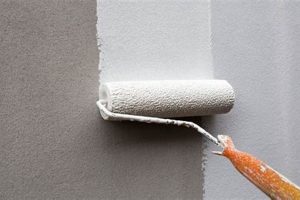
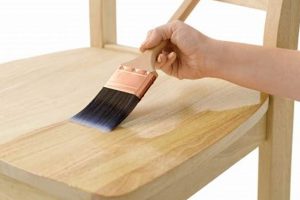
This tool, designed for applying coatings to surfaces, prioritizes a sleek and even result. Its construction typically involves a tightly woven fabric sleeve affixed to a cylindrical core, which then attaches to a frame for manual or extension pole operation. For instance, when applying a satin or eggshell paint to interior walls, this applicator minimizes texturing, contributing to a professional-looking outcome.
The significance of selecting the correct application tool resides in the quality of the final aesthetic. A uniform coating lacking pronounced ridges or stippling enhances the perceived value and longevity of the painted surface. Historically, achieving such outcomes often required skilled brushwork; however, advancements in manufacturing have made achieving comparable results more accessible to a broader range of users.
This article will delve into the specific attributes that contribute to achieving optimal results, examining material compositions, appropriate applications, and best practices for utilization and maintenance, providing a comprehensive guide for paint application.
Tips for Optimal Application
Employing the correct techniques maximizes the benefits of using an implement designed for creating even coatings. These guidelines ensure a professional and durable painted surface.
Tip 1: Material Selection: Prioritize microfiber or tightly woven fabrics. These materials minimize shedding and provide even paint distribution, crucial for achieving a blemish-free finish.
Tip 2: Surface Preparation: Ensure surfaces are properly primed and free of imperfections. Imperfections will be accentuated, not concealed, by the coating. Sanding to a smooth substrate is essential.
Tip 3: Loading Technique: Saturate the application device evenly. Avoid overloading, as this can lead to drips and uneven coverage. A grid-patterned paint tray is ideal for consistent loading.
Tip 4: Application Method: Apply the coating using consistent, overlapping strokes. Maintain a wet edge to prevent visible lap marks. Consistent pressure and speed contribute to uniformity.
Tip 5: Angle of Application: Minor adjustments in angle relative to the surface help mitigate imperfections and ensure even distribution, particularly in textured areas. Experiment with slight variations.
Tip 6: Multi-Coat Application: Achieve optimal results with multiple thin coats rather than a single thick coat. This approach minimizes runs, sags, and ensures proper adhesion and even drying.
Tip 7: Cleanliness and Storage: Thorough cleaning is critical to prolong the lifespan. After each use, remove all paint and store in a clean, dry environment. Solvent-based cleaners are appropriate for oil-based paints; water and soap are suitable for latex paints.
Adhering to these guidelines allows for efficient coating application and a uniform finish, increasing both the aesthetic appeal and the longevity of the painted surface.
The next section will discuss the proper maintenance of application tools, maximizing their lifespan and preserving optimal performance.
1. Fabric Material

The fabric material of a paint applicator significantly influences the final texture and overall quality of a painted surface. Selecting the appropriate material is crucial for achieving the desired aesthetic, particularly when a sleek, uniform appearance is the objective. The following elements delineate the influence of fabric materials on coating application:
- Fiber Type and Absorbency
Fiber type directly correlates with paint absorbency and release. Microfiber and synthetic blends generally offer superior paint holding capacity and controlled release compared to natural fibers like wool or cotton. This controlled release minimizes drips and ensures even paint distribution, reducing the likelihood of texturing and streaking.
- Weave Density and Surface Texture
A tightly woven fabric with a smooth surface is essential. High weave density minimizes gaps, preventing uneven paint transfer. The surface texture, or nap, should be short and uniform to limit stippling. Fabrics with longer or irregular nap lengths are better suited for textured surfaces or situations where a smooth outcome is not prioritized.
- Shedding Resistance
The tendency of a fabric to shed fibers during application directly impacts the quality of the final coating. Materials prone to shedding introduce imperfections, requiring additional surface preparation and re-coating. High-quality synthetic blends are generally designed for minimal shedding, ensuring a cleaner, more professional result.
- Solvent Compatibility and Durability
Different fabric materials exhibit varying degrees of resistance to solvents used in paints and cleaning solutions. Selecting a fabric compatible with the intended paint and cleaning agents ensures the longevity and performance. Degradation of the fabric can lead to uneven paint distribution and necessitate more frequent replacements.
The properties of the fabric material directly influence the application process, determining paint absorption, distribution, and the potential for surface imperfections. These considerations are crucial in achieving a professional coating with a uniform and sleek aesthetic.
2. Roller Nap

Roller nap, the length of the fibers extending from the roller’s core, directly influences the texture imparted onto a coated surface. Achieving a sleek, uniform finish necessitates careful consideration of nap length. Shorter nap lengths, typically 1/4 inch or less, are optimal for minimizing stippling and creating the sought-after smooth result. Conversely, longer naps, exceeding 3/8 inch, are designed for textured surfaces, where the increased fiber length facilitates paint penetration into crevices and irregularities. The causal relationship is clear: a shorter nap length directly causes a smoother finish, while a longer nap length results in a more textured finish. A real-life example includes using a 1/4″ nap roller with semi-gloss paint on a smooth drywall surface to minimize orange peel effect.
The selection of an inappropriate nap length can negate the benefits of high-quality paints or meticulous surface preparation. For instance, employing a roller with a 3/4″ nap on a surface intended for a smooth finish will invariably result in excessive texturing, requiring additional sanding and re-coating to achieve the desired outcome. The practical significance of understanding nap length lies in preventing such inefficiencies and ensuring efficient use of materials and labor. This knowledge is fundamental to both professional painters and DIY enthusiasts aiming for professional-grade results.
In summary, the correlation between roller nap and final surface texture is undeniable. Selecting the correct nap length is not merely a preference, but a critical determinant of the project’s success. While other factors such as paint quality and application technique play roles, nap length sets the foundation for the overall smoothness. Challenges often arise from a lack of awareness regarding nap variations, leading to suboptimal results. This detailed understanding of roller nap directly relates to the broader goal of achieving high-quality, aesthetically pleasing painted surfaces.
3. Core Density
The core density of a paint roller, often overlooked, is fundamentally linked to its ability to deliver a sleek and uniform coating. Core density dictates the amount of paint the roller can retain and, crucially, how evenly that paint is released onto the substrate. A high-density core, typically constructed from phenolic or polypropylene materials, provides structural integrity, preventing flexing or deformation during use. This rigidity ensures consistent contact with the surface, translating into an even layer of paint. Conversely, a low-density core is more prone to compression, leading to uneven paint distribution and potential streaking. A practical example is the professional painter who recognizes that high-density cores last longer and yield better results on large projects.
The influence of core density extends beyond paint release; it also affects the ease of cleaning and the roller’s lifespan. High-density cores are less porous, reducing paint absorption into the core material itself. This facilitates thorough cleaning, preventing paint buildup that can compromise future applications. Rollers with low-density cores tend to retain more paint, making them more difficult to clean and more susceptible to degradation over time. The practical application of understanding core density is evident in selecting tools durable enough to withstand repeated use and rigorous cleaning protocols without sacrificing performance.
In summary, core density is not merely a structural attribute but a key determinant of a paint roller’s ability to produce a sleek, uniform coating. Neglecting this aspect can lead to compromised paint distribution, increased cleaning difficulty, and reduced tool lifespan. Recognizing the critical role of core density allows for informed selection, contributing to efficient workflow, cost-effectiveness, and ultimately, a superior quality coating. The challenges lies in identifying core density when purchasing paint roller or knowing how to buy a paint roller in general.
4. Frame Compatibility

Frame compatibility is a critical, yet often overlooked, aspect of achieving a smooth finish with a paint roller. The interface between the roller sleeve and the frame directly influences stability, control, and ultimately, the uniformity of the applied coating. Incompatible components can lead to slippage, uneven pressure, and a compromised finish.
- Roller Diameter and Frame Width
The roller sleeve diameter must precisely match the frame’s designated width. Undersized sleeves will slip, causing inconsistent paint application and potential frame damage. Oversized sleeves may not rotate freely, resulting in drag marks and uneven coating. Professional painters routinely verify this compatibility before commencing work to avoid such issues.
- Cage Design and Sleeve Retention
The frame’s cage design, including the presence and configuration of retaining mechanisms, is crucial for secure sleeve retention. Frames with robust cages and effective locking systems prevent sleeve migration during use, maintaining consistent pressure and preventing paint buildup at the roller ends. Conversely, frames with weak cages may allow sleeve movement, leading to uneven paint distribution.
- Threaded vs. Clip-On Handles
The handle attachment mechanismthreaded or clip-onimpacts stability and control, particularly when using extension poles for ceilings or high walls. Threaded handles offer a more secure connection, minimizing wobble and providing greater control over the roller’s movement. Clip-on handles, while convenient, may exhibit play, reducing precision and potentially compromising the smoothness of the finish.
- Material Composition and Durability
The frame material should be robust enough to withstand the rigors of repeated use and cleaning. Chrome-plated steel and reinforced polymers are common choices due to their durability and resistance to corrosion. Frames constructed from lightweight or flimsy materials may bend or break under pressure, leading to uneven paint application and a shortened lifespan.
By ensuring proper frame compatibility, users can maximize the potential of their application tools and achieve a superior-quality, smooth finish. The synergy between a well-matched frame and roller sleeve contributes to enhanced control, consistent paint distribution, and ultimately, a professional outcome.
5. Application Technique
Application technique serves as a critical determinant in realizing the full potential of an implement designed for creating even coatings. The effectiveness of such a tool is contingent on employing correct methods; subpar technique negates the benefits of a quality applicator. A direct causal relationship exists: meticulous application yields the desired result, while careless technique results in surface imperfections. For instance, using excessive pressure when applying paint, even with a roller renowned for its sleek results, will create noticeable ridges and inconsistencies in the coating.
Consistent, overlapping strokes are essential. The objective is to maintain a “wet edge,” preventing visible lap marks. The applicator should be loaded with paint evenly, avoiding both saturation and starvation. Consider the example of painting a large wall: dividing the surface into manageable sections and systematically working through each section with consistent pressure and stroke overlap will produce a uniform result. Deviations from this technique, such as sporadic strokes or inconsistent paint loading, will create a variegated appearance, undermining the purpose of using a tool designed for even distribution.
Proper application technique, therefore, is not merely a supplementary consideration but an integral component of achieving a smooth finish. Recognizing this is essential for both professionals and amateur users. While the material properties of the roller itself are important, their potential is only realized through deliberate and consistent application. The practical significance of this understanding lies in the ability to achieve professional-grade results with accessible tools, provided the correct techniques are employed. Overcoming the challenge of achieving quality results often involves focusing on technique and process.
6. Proper Cleaning
The longevity and performance of a paint roller designed for creating even coatings are inextricably linked to meticulous cleaning protocols. Proper cleaning constitutes a critical component of maintaining a smooth-finish paint roller’s efficacy. The cause-and-effect relationship is straightforward: inadequate cleaning results in paint buildup, hardened fibers, and ultimately, a compromised application surface. Conversely, consistent and thorough cleaning preserves the fabric’s texture and absorbency, ensuring uniform paint distribution during subsequent use. For example, failing to remove residual paint from a microfiber roller can cause the fibers to mat together, creating an uneven surface that will imprint imperfections onto the next project.
The practical significance of proper cleaning extends beyond the immediate preservation of the roller. Residual paint introduces contaminants that can alter the properties of subsequent coatings. Furthermore, hardened paint within the roller impedes its ability to absorb and release paint evenly, resulting in streaks, ridges, and an overall decline in the quality of the finish. To illustrate, consider the consequences of using a poorly cleaned roller with a light-colored paint: residual dark paint within the roller can leach into the light coating, causing discoloration and necessitating additional coats to achieve uniform coverage. Proper cleaning therefore enhances the overall quality, reducing labor and material costs associated with rework.
In summary, rigorous adherence to cleaning protocols is essential for realizing the full potential and extending the lifespan of paint rollers designed for smooth application. Neglecting this process leads to diminished performance, compromised finish quality, and increased material waste. Proper cleaning directly contributes to the consistent delivery of a professional, aesthetically pleasing coating, while avoiding the challenges associated with poorly maintained application tools. These practices, thus, exemplify the symbiosis between the tool and the process for efficient workflow.
Frequently Asked Questions
The following questions address common concerns and misconceptions regarding the selection, utilization, and maintenance of paint rollers specifically designed for achieving a smooth surface aesthetic.
Question 1: How does roller nap length impact the final finish?
Roller nap length is inversely proportional to surface smoothness. Shorter nap lengths (1/4 inch or less) are optimal for minimizing texturing on smooth surfaces. Longer nap lengths are intended for textured surfaces where paint penetration is prioritized over uniformity.
Question 2: What fabric materials are best suited for a smooth paint application?
Microfiber and tightly woven synthetic blends are preferred. These materials offer superior paint absorption and release, minimizing drips and ensuring even distribution. They are also less prone to shedding, reducing the likelihood of imperfections.
Question 3: How does core density contribute to a smooth application?
A high-density core maintains structural integrity during use, preventing flexing and deformation. This ensures consistent contact with the surface and even paint distribution. Low-density cores are prone to compression, leading to uneven coating.
Question 4: What is the correct technique for achieving a consistent, smooth coat?
Employ consistent, overlapping strokes while maintaining a wet edge. Load the roller evenly with paint, avoiding both saturation and starvation. Apply moderate pressure to ensure uniform distribution without creating ridges or texture.
Question 5: How crucial is proper cleaning for maintaining roller performance?
Proper cleaning is essential for prolonging the roller’s lifespan and preserving its performance. Residual paint causes fiber matting, uneven surfaces, and compromised paint distribution. Thorough cleaning after each use prevents these issues.
Question 6: How important is frame compatibility?
Frame compatibility is vital for ensuring stable and controlled operation. The roller sleeve diameter must match the frame width. A robust cage design with a secure locking system is essential for preventing slippage and uneven paint distribution.
Understanding these principles enables users to make informed decisions regarding their application tools and techniques, leading to superior quality finishes and increased project efficiency.
The next section offers concluding remarks regarding the strategic use of such rollers.
Conclusion
This article has illuminated the critical attributes and application techniques necessary for maximizing the performance of tools designed to deliver sleek, even coatings. From material selection and core density to frame compatibility and cleaning protocols, each element directly impacts the final aesthetic. Achieving a professional result necessitates a comprehensive understanding of these interconnected factors.
The discerning user will recognize that the selection and conscientious maintenance of a smooth finish paint roller represent a strategic investment in quality. Informed application contributes not only to the visual appeal of a project but also to its longevity and overall value. Continued adherence to best practices remains paramount in ensuring consistently superior results in diverse coating applications.