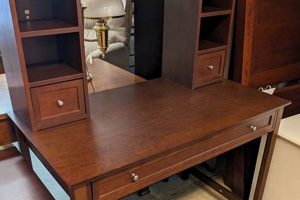
A coating system uses water as its primary solvent. This type of product is designed to protect and enhance surfaces, providing a durable layer while minimizing the emission of volatile organic compounds. For example, it can be applied to wood furniture to impart a protective sheen and highlight the natural grain.
The significance of this coating lies in its reduced environmental impact and improved air quality. Compared to solvent-based alternatives, it releases fewer harmful fumes during application and curing. This characteristic contributes to a safer working environment and aligns with growing sustainability concerns. Its development represents a significant advancement in coating technology, responding to demands for greener and healthier products.
The following sections will delve into specific applications, performance characteristics, and advancements related to this technology, providing a detailed understanding of its properties and uses across various industries.
Application and Usage Guidelines
Optimal results are achieved through careful adherence to application guidelines and consideration of specific product characteristics. These tips are designed to maximize the protective and aesthetic qualities of the coating.
Tip 1: Surface Preparation is Paramount. Thoroughly clean and sand the substrate prior to application. Remove any contaminants, dust, or existing coatings to ensure proper adhesion.
Tip 2: Temperature and Humidity Control. Maintain a stable environment within recommended temperature and humidity ranges. Fluctuations can negatively impact drying time and film formation.
Tip 3: Thin Coats are Preferred. Apply multiple thin coats rather than a single thick coat. This technique promotes even drying, reduces the risk of runs or sags, and enhances durability.
Tip 4: Appropriate Application Tools. Select brushes, rollers, or spray equipment designed for this coating. Using the correct tools optimizes product distribution and minimizes defects.
Tip 5: Stir, Do Not Shake. Gently stir the coating to ensure uniform consistency. Shaking can introduce air bubbles, which may compromise the finish quality.
Tip 6: Allow Adequate Drying Time. Adhere strictly to the recommended drying times between coats and before placing the coated object into service. Insufficient drying can lead to softness or tackiness.
Tip 7: Proper Ventilation is Essential. Ensure adequate ventilation during application and drying. This facilitates solvent evaporation and contributes to a safer working environment.
Following these guidelines will contribute to a durable, aesthetically pleasing, and long-lasting protective layer. Paying attention to detail throughout the process yields a superior final product.
The subsequent section will examine the long-term performance and maintenance of surfaces treated with this coating, providing insights into maximizing its lifespan and visual appeal.
1. Durability

The durability of a water-based finish is a critical performance metric, directly impacting its suitability for various applications. Its capacity to withstand abrasion, impact, and chemical exposure determines the longevity of the protective layer and the substrate beneath. For instance, a floor coating must endure repeated foot traffic and cleaning solutions without significant degradation. Similarly, a furniture finish should resist scratches and spills. The inherent properties of the resins and additives used in the formulation dictate its resistance to physical and chemical stressors. Inadequate durability results in premature failure, necessitating repairs or recoating, thereby increasing lifecycle costs.
Advances in resin technology have substantially improved the durability of these products. Crosslinking agents and UV absorbers enhance the coating’s resistance to wear and tear, making them viable alternatives to solvent-based systems in many instances. Automotive clear coats provide a practical example, where scratch and mar resistance are paramount in maintaining the vehicle’s aesthetic appeal. Certain formulations rival the performance of traditional coatings in terms of hardness and flexibility, demonstrating the ongoing improvements in material science.
In summary, the durability of this coating hinges on its formulation and application. Selecting the appropriate product for the intended use, coupled with proper surface preparation and application techniques, is essential for achieving optimal performance and extending the lifespan of the treated surface. Compromises in any of these areas may negate the environmental benefits and increase long-term costs, highlighting the significance of understanding the durability characteristics of a specific water-based product.
2. Application

The application of a water-based finish is a crucial determinant of its performance and longevity. The process involves more than simply applying the liquid; it encompasses surface preparation, environmental conditions, and the techniques employed, each playing a pivotal role in achieving the desired outcome.
- Surface Preparation
Proper surface preparation is paramount. Contaminants such as dust, grease, or existing coatings must be removed to ensure adequate adhesion. Sanding the substrate creates a mechanical key, further enhancing the bond between the coating and the surface. Inadequate preparation leads to adhesion failures, resulting in peeling, blistering, or premature wear. For example, applying a water-based polyurethane over an oily wood surface without proper cleaning invariably leads to poor adhesion and a compromised finish.
- Environmental Conditions
Temperature and humidity significantly influence the drying and curing process. Extreme temperatures can affect viscosity and flow, while high humidity retards evaporation, potentially leading to a milky or cloudy appearance. The manufacturer’s recommendations regarding optimal environmental conditions must be strictly adhered to. Applying a water-based finish in excessively humid conditions, for example, can prolong the drying time and compromise the hardness of the final coating.
- Application Techniques
The method of applicationwhether brush, roller, or sprayaffects the uniformity and thickness of the coating. Each technique requires specific adjustments and skill to avoid issues such as brush marks, roller stipple, or uneven coverage. Spraying, for instance, offers the potential for a smooth, even finish but necessitates proper equipment and technique to prevent runs or overspray. Achieving a flawless finish on cabinetry often requires multiple thin coats applied with a high-volume, low-pressure (HVLP) sprayer.
- Cure Time and Recoating
Water-based coatings require adequate cure time to achieve their full hardness and durability. Premature use or exposure to moisture can compromise the finish’s integrity. Furthermore, adhering to recommended recoating intervals is essential for building up sufficient film thickness and achieving optimal protection. Rushing the curing process of a water-based floor finish, for instance, can result in a soft, easily damaged surface.
In summary, successful application hinges on meticulous attention to surface preparation, careful control of environmental conditions, the selection of appropriate application techniques, and adherence to recommended drying and curing schedules. Ignoring these factors, regardless of the coating’s inherent quality, will invariably result in a subpar finish and diminished performance.
3. Environment

The relationship between the environment and water-based finishes is primarily defined by the reduced emission of volatile organic compounds (VOCs). Traditional solvent-based coatings release significant quantities of VOCs during application and curing, contributing to air pollution and posing health risks. Water-based alternatives, by utilizing water as the primary solvent, drastically minimize VOC emissions, thereby mitigating environmental impact. The causality is clear: the shift to water-based formulations directly results in improved air quality and a reduced carbon footprint associated with coating processes. The Environment factor is not merely an ancillary benefit but a core component driving the adoption and development of water-based finish technology. For example, stricter environmental regulations in the automotive and construction industries have compelled manufacturers to transition to lower-VOC coatings to comply with air quality standards. This has led to significant investment in water-based formulations and application technologies.
Further analysis reveals practical applications of this understanding. The selection of water-based finishes in interior spaces, such as homes and offices, minimizes the exposure of occupants to harmful chemicals, creating a healthier indoor environment. The implementation of water-based systems in manufacturing facilities reduces the need for extensive ventilation, lowering energy consumption and improving worker safety. Moreover, the lifecycle assessment of coatings reveals that water-based options often have a lower environmental impact across their entire lifespan, considering factors such as raw material extraction, production, application, and disposal. One illustrative example is the widespread adoption of water-based paints in the residential sector, directly improving indoor air quality and reducing the off-gassing of harmful chemicals compared to traditional oil-based paints.
In summary, the key insight is that the adoption of water-based finishes is a tangible step towards environmental stewardship. While challenges remain in achieving comparable performance characteristics to solvent-based systems in all applications, ongoing advancements in resin technology and formulation are continuously expanding their capabilities. The practical significance lies in the ability to reduce air pollution, improve indoor air quality, and lower the overall environmental impact associated with coating processes. This aligns with broader sustainability goals and contributes to a healthier, more environmentally conscious future.
4. Appearance

The aesthetic outcome achievable with this coating system is a critical factor influencing its selection for various applications. The visual properties, including gloss level, clarity, and color retention, significantly contribute to the perceived value and suitability of the finished product.
- Clarity and Color Retention
Water-based finishes are known for their exceptional clarity, allowing the natural beauty of the underlying substrate, such as wood grain, to be clearly visible. They also exhibit excellent color retention, resisting yellowing or discoloration over time. For instance, a clear water-based coating on a maple tabletop will showcase the wood’s subtle hues and maintain its original appearance for an extended period, unlike some solvent-based coatings that may yellow with age. This attribute is particularly important in applications where maintaining the true color and appearance of the material is paramount.
- Gloss Level Versatility
These coatings are available in a wide range of gloss levels, from matte to high-gloss, offering flexibility in achieving the desired aesthetic effect. Matte finishes provide a subtle, non-reflective surface, ideal for concealing imperfections or creating a rustic appearance. High-gloss finishes, on the other hand, impart a shiny, reflective surface, enhancing the richness and depth of the color. The versatility in gloss levels allows designers and manufacturers to tailor the appearance of the finished product to specific aesthetic requirements. A furniture designer, for example, might choose a satin finish for a dining table to provide a subtle sheen without excessive glare, while a high-gloss finish may be selected for a display case to maximize visual impact.
- Film Build and Texture
The film build, or thickness of the coating, and its resulting texture are important considerations in determining the overall appearance. Water-based coatings generally have lower solids content compared to solvent-based counterparts, often requiring multiple coats to achieve the desired film build. The texture can range from smooth to slightly textured, depending on the application method and the formulation of the coating. A smooth, even film build is essential for achieving a professional, high-quality appearance. Proper application techniques, such as using a fine-finish sprayer or a high-quality brush, are crucial for minimizing surface imperfections and achieving a uniform texture.
- Susceptibility to Grain Raising
Water-based coatings can cause grain raising in wood, where the wood fibers swell due to the water content of the finish. This can result in a slightly rough or uneven surface if not properly addressed. To mitigate grain raising, it is often necessary to pre-raise the grain by lightly dampening the wood before applying the finish. This allows the wood fibers to swell and then be sanded smooth, creating a smoother surface for the coating. Ignoring this step can result in a less refined appearance, particularly on open-grained woods like oak or ash.
In conclusion, the aesthetics achievable with this type of product depend on factors ranging from color retention to the application and minimization of grain raising, among other traits. The interaction of all such aspects determines the suitability for end-use products.
5. Cost

The economic considerations surrounding water-based finishes are multifaceted, influencing both initial investment and long-term operational expenses. The purchase price of these products frequently exceeds that of traditional solvent-based alternatives. This higher upfront cost stems from the specialized resin technologies and manufacturing processes required to achieve comparable performance characteristics. For instance, a gallon of high-quality water-based polyurethane can cost significantly more than its solvent-based counterpart, directly impacting project budgets, particularly for large-scale applications such as flooring or cabinetry. The perception of increased initial expenditure, therefore, often acts as a barrier to adoption, despite potential long-term savings.
However, a comprehensive cost analysis must extend beyond the initial purchase price to encompass factors such as application, labor, and compliance. The reduced volatile organic compound (VOC) emissions associated with water-based finishes translate to lower ventilation requirements, potentially decreasing energy consumption and improving worker safety. Furthermore, simplified cleanup procedures, utilizing water instead of specialized solvents, reduce material costs and disposal expenses. In environments with stringent environmental regulations, such as furniture manufacturing facilities in California, the cost of non-compliance with VOC emission limits can outweigh the initial savings associated with cheaper, solvent-based coatings. Therefore, a shift towards water-based finishes becomes economically justifiable when considering the totality of associated costs and potential penalties.
In summary, the relationship between cost and water-based finishes is characterized by a higher initial investment offset by potential long-term savings in operational expenses and compliance costs. While the upfront price may deter some users, a holistic cost-benefit analysis, incorporating environmental regulations and worker safety, often reveals the economic advantages of adopting water-based coating systems. Continuous advancements in resin technology are further reducing the price gap between water-based and solvent-based formulations, making the former an increasingly attractive and economically viable alternative. The challenge lies in effectively communicating these long-term benefits and accurately quantifying the true cost of traditional solvent-based systems.
6. Protection
The protective capabilities of a water-based finish represent a primary function, dictating its utility across diverse applications. These finishes create a barrier against various environmental stressors, including moisture, abrasion, ultraviolet radiation, and chemical exposure. The degree of protection offered directly influences the lifespan and aesthetic integrity of the underlying substrate. A causal relationship exists between the finish’s formulation and its ability to shield against these threats; for example, the addition of UV absorbers enhances resistance to sunlight degradation, while crosslinking agents improve abrasion resistance. Without adequate protective qualities, the coating fails to fulfill its intended purpose, leading to premature failure and increased maintenance requirements. Consider a water-based floor finish: its ability to withstand foot traffic, spills, and cleaning solutions directly determines the flooring’s longevity and appearance.
Further analysis reveals the practical significance of understanding the specific protective properties of different water-based formulations. Industrial applications demand robust chemical resistance to withstand exposure to solvents, acids, or alkalis. In contrast, exterior applications require superior UV resistance to prevent fading and cracking caused by prolonged sun exposure. The selection of the appropriate finish, therefore, necessitates a thorough assessment of the environmental conditions and potential threats to which the coated surface will be exposed. Automotive clear coats, for instance, require a balance of scratch resistance, chemical resistance, and UV protection to maintain the vehicle’s paint finish and protect it from environmental damage. Similarly, a water-based coating used on outdoor furniture must resist moisture, mold growth, and UV degradation to withstand the elements.
In summary, the protective function of a water-based finish is paramount, driving its selection and application across numerous industries. While offering environmental benefits, its ability to shield against specific threats determines its overall effectiveness. Ongoing advancements in resin technology and formulation are continuously improving the protective capabilities of water-based coatings, expanding their applications and ensuring long-term performance. The challenge lies in selecting the appropriate product for the intended use and understanding its specific protective properties to maximize its lifespan and maintain the integrity of the coated surface.
7. Maintenance

Maintaining surfaces coated with a finish employing water as the primary solvent involves specific considerations to ensure longevity and preserve aesthetic qualities. Proper care extends the lifespan of the coating and protects the underlying substrate. Deviations from recommended maintenance procedures can lead to premature degradation, necessitating costly repairs or recoating.
- Cleaning Procedures
Routine cleaning should involve non-abrasive methods and pH-neutral cleaning agents. Harsh chemicals or abrasive materials can damage the finish, leading to scratches or dulling. For example, using a mild soap solution and a soft cloth is suitable for cleaning water-based polyurethane on hardwood floors. Avoiding ammonia-based cleaners is crucial to prevent discoloration or damage to the coating.
- Spot Repairs and Touch-Ups
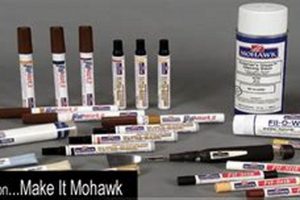
Minor scratches or imperfections can often be addressed with spot repairs or touch-up applications. Matching the original finish is essential for seamless blending. For instance, a furniture restorer may use a compatible water-based touch-up pen to conceal small scratches on a water-based lacquered surface. Proper surface preparation, including light sanding, is necessary to ensure adhesion of the repair material.
- Recoating Intervals
Periodic recoating rejuvenates the protective layer and extends the lifespan of the underlying material. The frequency of recoating depends on the level of use and environmental exposure. A water-based floor finish in a high-traffic area may require recoating every one to two years, while a similar finish in a low-traffic area may last significantly longer. Proper cleaning and light abrasion are required before recoating to ensure adhesion.
- Environmental Considerations
Excessive moisture or prolonged exposure to direct sunlight can negatively impact the integrity of the coating. Addressing moisture issues promptly and providing shade or UV protection can mitigate potential damage. For example, water-based coatings on exterior surfaces, such as doors or trim, benefit from regular inspection and maintenance to prevent moisture-related failures. Periodic application of UV-protective coatings can further enhance durability.
These maintenance practices, when consistently applied, contribute to the long-term performance and aesthetic appeal of water-based finishes. A proactive approach to maintenance minimizes the need for extensive repairs or premature recoating, ultimately reducing lifecycle costs and preserving the value of the coated surfaces.
Frequently Asked Questions about Water Based Finishes
This section addresses common inquiries regarding water based finish technology, offering clarifications and insights into its properties, applications, and limitations.
Question 1: Are water based finishes as durable as solvent-based alternatives?
Durability is contingent on formulation and application. High-quality water based products can achieve comparable or even superior durability compared to some solvent-based options, particularly in resistance to abrasion and chemical exposure. However, selecting the appropriate product for the specific application and adhering to proper application techniques are crucial for optimal performance.
Question 2: Do water based finishes require specialized application equipment?
While standard application tools such as brushes, rollers, and sprayers can be used, optimizing the equipment for water based materials is beneficial. Fine-finish spray tips and high-quality brushes designed for water based paints can improve the final appearance. Proper cleaning of equipment immediately after use is essential to prevent clogging and ensure future usability.
Question 3: Are water based finishes suitable for exterior applications?
Certain water based formulations are specifically designed for exterior use, incorporating UV absorbers and mildewcides to withstand weathering. Selecting a product explicitly labeled for exterior applications is essential for ensuring long-term performance and preventing premature degradation due to sun exposure and moisture.
Question 4: How long does it take for a water based finish to fully cure?
Cure time varies depending on the specific product and environmental conditions, typically ranging from several days to a few weeks. Adhering to the manufacturer’s recommended cure time before subjecting the coated surface to heavy use is crucial for achieving optimal hardness and durability. Lower temperatures and higher humidity can prolong the curing process.
Question 5: Are water based finishes environmentally friendly?
Water based finishes generally exhibit lower volatile organic compound (VOC) emissions compared to solvent-based alternatives, contributing to improved air quality and reduced environmental impact. However, the overall environmental footprint also depends on factors such as the sourcing of raw materials, manufacturing processes, and disposal methods. Evaluating the product’s lifecycle assessment can provide a more comprehensive understanding of its environmental impact.
Question 6: Can water based finishes be applied over existing solvent-based coatings?
Compatibility is a primary concern when applying a water based finish over an existing solvent-based coating. Proper surface preparation, including thorough cleaning and sanding, is essential to promote adhesion. A compatibility test on a small, inconspicuous area is recommended to ensure that the new coating does not react adversely with the existing finish. A primer coat may be necessary to facilitate adhesion and prevent incompatibility issues.
In summary, understanding the nuances of water based finish technology empowers informed decision-making, optimizing its application and ensuring long-term performance.
The following section will explore future trends and advancements in water-based coating systems, highlighting emerging technologies and their potential impact on various industries.
Conclusion
The preceding sections have explored diverse facets of water based finish technology, encompassing its application, environmental implications, cost considerations, protective capabilities, and maintenance requirements. A comprehensive understanding of these elements is crucial for informed decision-making and optimizing the performance of these coatings in varied scenarios.
Continued innovation in resin technology and formulation promises further advancements in the durability, versatility, and environmental profile of water based finish systems. Evaluating the specific needs of each application and carefully considering the characteristics of available products will maximize the benefits of this evolving technology. The shift toward sustainable coating solutions necessitates ongoing research and development to address existing limitations and unlock the full potential of water based finishes across industries.