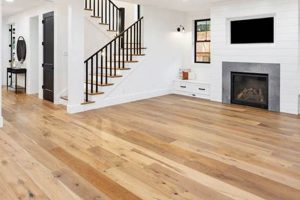
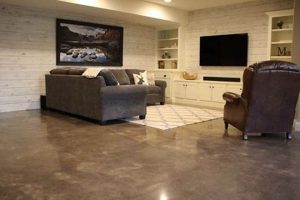
Coatings and treatments applied to concrete surfaces to enhance their appearance, durability, and functionality are available in a wide array. These surface applications can range from simple sealers designed to protect against stains to more complex epoxy or polyurethane coatings that provide a high-gloss, resilient surface. For example, a warehouse might utilize a penetrating sealer to protect against forklift traffic, while a modern residence may opt for a polished finish with a decorative stain to achieve a specific aesthetic.
The selection of appropriate methods plays a critical role in determining the lifespan, maintenance requirements, and overall appeal of a concrete floor. These choices influence factors such as resistance to abrasion, chemical spills, and moisture penetration. Historically, the development of these surface treatments has mirrored advancements in material science, with early applications focusing primarily on protection and recent innovations prioritizing aesthetics and sustainability.
Therefore, this article will examine the diverse range of available surface treatments, outlining their specific characteristics, application methods, and suitability for various environments. The discussion will encompass sealers, coatings, stains, and polishing techniques, providing a detailed overview of factors to consider when selecting the most appropriate choice for a given project.
Selecting Surface Treatments
Choosing the appropriate surface treatment for concrete floors requires careful evaluation of several key factors. The following tips provide guidance to ensure optimal performance and longevity.
Tip 1: Assess the Intended Use. The primary function of the floor dictates the required level of protection. High-traffic areas necessitate durable coatings, while low-impact environments may only require a sealant.
Tip 2: Evaluate Environmental Factors. Exposure to chemicals, moisture, and temperature fluctuations significantly impacts the selection. Industrial settings demand chemical-resistant coatings, while outdoor applications require UV protection.
Tip 3: Determine the Desired Aesthetic. Surface treatments range from matte sealers to high-gloss coatings. Consider the architectural style and desired visual impact when making a selection.
Tip 4: Consider Maintenance Requirements. Different surface treatments require varying levels of maintenance. Evaluate the long-term costs associated with cleaning and upkeep.
Tip 5: Research Application Procedures. Proper application is crucial for achieving optimal performance. Adhere strictly to manufacturer’s instructions and consider professional installation for complex treatments.
Tip 6: Investigate Longevity and Life Cycle Cost. Some treatments may have a lower initial cost, but a shorter lifespan. Calculate the total cost over the expected lifespan of the floor.
Tip 7: Understand Safety Considerations. Some coatings contain volatile organic compounds (VOCs) that require specific ventilation and safety precautions during application.
Tip 8: Test a Sample Area. Before applying any surface treatment to the entire floor, test a small, inconspicuous area to ensure compatibility and desired results.
By carefully considering these points, one can choose a treatment that maximizes the floor’s durability, appearance, and overall value. A well-informed decision will minimize maintenance and maximize the return on investment.
The subsequent sections of this article will explore specific treatment types in greater detail, providing a comparative analysis of their respective strengths and weaknesses.
1. Sealers

Sealers represent a foundational category within concrete surface treatments, acting as protective barriers to enhance durability and lifespan. They are typically the first line of defense against staining, moisture penetration, and abrasion, making them an essential consideration in selecting an appropriate surface treatment.
- Penetrating Sealers: Silicates and Siloxanes
Penetrating sealers, such as silicates and siloxanes, react with the concrete itself, creating a hardened, chemically resistant surface. These sealers do not form a surface film, maintaining the concrete’s natural appearance. For example, a warehouse floor might benefit from a silicate sealer to resist staining from spilled liquids and reduce dust formation, enhancing its resilience.
- Film-Forming Sealers: Acrylics and Polyurethanes
Film-forming sealers, including acrylics and polyurethanes, create a protective layer on the surface of the concrete. These sealers offer a range of finishes, from matte to high-gloss, and can enhance the concrete’s appearance. An example includes using a clear acrylic sealer on a stamped concrete patio to protect the decorative surface and enhance its color, but may need to be reapplied periodically.
- Application and Preparation
Proper application is critical for the effectiveness of any sealer. The concrete surface must be clean, dry, and free of contaminants before application. Multiple thin coats are often preferred over a single thick coat to ensure proper penetration and adhesion. Incorrect preparation or application can result in premature failure of the sealer, negating its protective benefits, such as flaking or bubbling.
- Limitations and Maintenance
While sealers provide significant protection, they are not impervious to damage. Film-forming sealers can be susceptible to scratching and abrasion, while penetrating sealers offer limited protection against strong acids. Regular cleaning and reapplication may be necessary to maintain the sealer’s effectiveness. For example, a high-traffic retail space with an acrylic-sealed floor would require periodic buffing and reapplication to maintain its appearance and protective qualities.
In summary, sealers play a vital role in maintaining the integrity and appearance of concrete floors. The choice between penetrating and film-forming sealers depends on the desired level of protection, aesthetic requirements, and maintenance considerations, illustrating the diverse approach required to achieve concrete floor surface protection.
2. Coatings
Coatings represent a significant category within concrete floor surface treatments, offering enhanced durability, aesthetic versatility, and specialized performance characteristics. These are applied as a distinct layer atop the concrete, differentiating them from penetrating sealers. Their composition and application directly impact the final appearance and functional properties of the floor.
- Epoxy Coatings: Durability and Chemical Resistance
Epoxy coatings are known for their exceptional hardness, abrasion resistance, and chemical resistance, making them suitable for industrial and commercial environments. For example, an automotive repair shop may utilize epoxy to protect against oil spills and heavy machinery. This choice contributes to longevity and reduces maintenance needs compared to untreated concrete.
- Polyurethane Coatings: Flexibility and UV Resistance
Polyurethane coatings provide flexibility and resistance to ultraviolet (UV) light, which prevents yellowing and degradation in sunlight. A sun-exposed showroom floor could benefit from polyurethane to maintain its visual integrity and structural properties over time. This flexibility also allows it to withstand impacts and temperature fluctuations.
- Acrylic Coatings: Cost-Effectiveness and Decorative Options
Acrylic coatings offer a cost-effective option with a wide range of colors and decorative options, enhancing aesthetic appeal. A residential garage or basement could use acrylic coatings to improve the look of floors while maintaining practicality. However, they generally provide less durability and chemical resistance compared to epoxy or polyurethane.
- Specialty Coatings: Anti-Static and Self-Leveling
Specialty coatings address specific needs, such as anti-static coatings for electronics manufacturing or self-leveling coatings for uneven surfaces. An electronics factory would use anti-static coating to prevent electrostatic discharge. Self-leveling coatings are frequently used for floor leveling. These specialized solutions demonstrate the adaptability of coatings to meet diverse functional requirements.
The selection of a specific coating is critical in determining the suitability of a concrete floor for its intended use, highlighting the significant role it plays among “concrete floor surface treatments”. This choice should carefully balance factors such as durability, chemical resistance, flexibility, aesthetic preferences, and budgetary constraints, ensuring the selected material aligns with long-term performance expectations.
3. Polishing
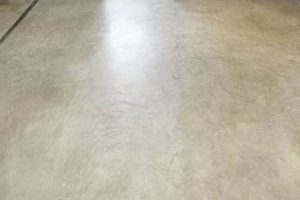
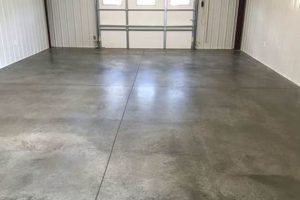
Polishing, as a concrete floor surface treatment, fundamentally alters the surface profile, resulting in increased reflectivity and enhanced durability. Unlike coatings, which add a layer on top of the concrete, polishing mechanically refines the existing surface through a progressive sequence of grinding and polishing with increasingly finer grits of diamond-impregnated abrasives. This process densifies the concrete surface, increasing its resistance to abrasion, staining, and water penetration. The result is a hard, smooth, and low-maintenance surface. For instance, a large retail space may choose polished concrete for its high durability and aesthetic appeal, resulting in lower long-term maintenance costs and a modern, clean appearance. This makes it a viable surface treatment.
The selection of polishing as a concrete floor surface treatment directly impacts the maintenance protocol and lifecycle costs associated with the floor. Polished concrete typically requires less frequent cleaning and does not require the periodic reapplication of coatings. A school gymnasium, for example, benefits from polished concrete due to its resistance to scuffing and marking from athletic footwear, reducing the need for frequent waxing or refinishing. Moreover, polished concrete can be customized through the addition of dyes or stains prior to polishing, allowing for a range of aesthetic options without compromising the inherent durability of the process. This customization, along with its inherent performance benefits, positions polishing as a versatile solution.
In summation, polishing represents a significant element within concrete floor surface treatments, offering a durable, aesthetically adaptable, and low-maintenance solution. While initial costs may be higher compared to some coating options, the long-term benefits of reduced maintenance and increased lifespan often outweigh the initial investment. The understanding of polishing as a surface treatment is vital for selecting the appropriate system that aligns with intended use, aesthetic requirements, and long-term economic considerations.
4. Staining

Staining, as a technique within concrete floor finish options, serves to impart color and aesthetic variation to the concrete surface. The effect is achieved through the application of reactive or non-reactive chemical solutions that penetrate the concrete pores, resulting in permanent coloration. Unlike coatings that form a surface film, stains create integral color that won’t chip or peel. Acid-based stains react chemically with the concrete’s calcium hydroxide, producing mottled, variegated effects that are unique to each floor. Water-based stains, conversely, deposit pigment into the pores, offering greater color consistency and control. For example, a restaurant owner might select an acid-based stain to achieve a rustic, organic aesthetic, while a retail space might opt for a water-based stain to match specific branding colors.
The selection of staining as a concrete floor finish option necessitates careful consideration of the concrete’s existing condition and composition. Porosity, surface preparation, and previous treatments can significantly impact the stain’s penetration and color development. Proper surface preparation, including cleaning and profiling, is critical to ensure uniform stain absorption. The final color achieved is also subject to variations in concrete mix design and environmental conditions during application. To illustrate, a densely troweled concrete floor will exhibit less stain penetration compared to a more porous surface. Further surface protection, such as a sealer, is essential after staining to protect the color and prevent staining from spills and use. The choice of sealer can greatly affect the final look; some sealers add gloss while others retain a matte finish.
Ultimately, staining presents a versatile and enduring concrete floor finish option, offering a spectrum of aesthetic possibilities, from subtle color washes to bold, vibrant hues. The process requires meticulous attention to detail, from surface preparation to sealant application, to achieve the desired result. While staining offers permanent color, ongoing maintenance is crucial to preserve the floor’s appearance and protect against staining from everyday use. Therefore, staining represents a commitment to both aesthetics and floor longevity, requiring understanding and care for long-term value.
5. Overlays
Overlays represent a distinct category of concrete floor finish options, involving the application of a cementitious or polymer-modified material over an existing concrete substrate. This approach allows for resurfacing damaged or uneven floors, achieving desired aesthetic effects, or enhancing performance characteristics without the expense and disruption of complete concrete replacement. The selection of a suitable overlay is contingent upon factors such as the existing substrate condition, intended use, and desired aesthetic qualities.
- Microtoppings: Smooth Resurfacing
Microtoppings are thin, cement-based overlays designed to create a smooth, seamless surface over existing concrete. These materials can be applied in multiple thin coats to conceal minor imperfections and provide a clean slate for staining or other decorative treatments. For instance, a worn concrete slab in a retail space may be resurfaced with a microtopping to create a contemporary, polished appearance. The overlay provides a uniform surface conducive to subsequent finishes.
- Self-Leveling Overlays: Leveling and Repair
Self-leveling overlays are formulated to flow and level automatically, correcting unevenness and creating a flat surface. These materials are often used in commercial or industrial settings where precise leveling is required for equipment placement or safety. An example might be a warehouse floor with slight undulations that are corrected with a self-leveling overlay before the application of an epoxy coating. The overlay ensures a consistent thickness of the coating and a level working surface.
- Stamped Overlays: Decorative Textures
Stamped overlays involve the application of a cementitious material followed by the imprinting of a pattern using specialized stamps. This technique allows for the creation of realistic textures that mimic natural stone, brick, or tile. For instance, a homeowner might choose a stamped overlay to create a decorative patio that resembles flagstone without the cost and installation complexity of actual stone. The overlay provides a durable and visually appealing surface.
- Epoxy Overlays: Enhanced Durability
Epoxy overlays offer enhanced durability and chemical resistance compared to traditional cement-based overlays. These materials are suitable for industrial environments where floors are subjected to heavy traffic, chemical spills, and abrasion. A manufacturing facility, for example, might utilize an epoxy overlay to protect the concrete floor from damage caused by forklifts and corrosive substances. The overlay extends the lifespan of the floor and reduces maintenance requirements.
In summary, overlays offer a versatile means of transforming existing concrete floors, addressing both functional and aesthetic needs. The choice of overlay material and application technique should be carefully considered based on the specific requirements of the project, with proper surface preparation being paramount to ensuring long-term performance. These options greatly expand the possibilities when improving, resurfacing, and modifying concrete floors.
6. Texturing
Texturing, as a concrete floor finish option, fundamentally alters the surface characteristics to enhance functionality, safety, and aesthetics. It deviates from purely aesthetic treatments by introducing variations in surface profile, impacting properties such as slip resistance, drainage, and visual appeal. The method selected directly influences the suitability of a concrete floor for its intended use, particularly in environments where safety or performance is paramount.
- Broom Finishing: Practical Slip Resistance
Broom finishing is a common and economical texturing method that involves dragging a broom across the surface of freshly poured concrete. This creates fine ridges that enhance traction, making it well-suited for exterior applications such as sidewalks, driveways, and patios. The broom finish provides practical slip resistance without significantly altering the overall appearance of the concrete. For instance, a broom-finished concrete sidewalk offers improved safety for pedestrians, especially in wet or icy conditions.
- Stamped Texturing: Decorative and Functional Integration
Stamped texturing utilizes specialized stamps to imprint patterns into the concrete surface, replicating the appearance of natural stone, brick, or tile. This technique offers both decorative and functional benefits, as the textured surface provides increased slip resistance compared to smooth concrete. A stamped concrete patio, for example, can emulate the look of expensive paving materials while providing a safer walking surface around a pool or outdoor living area.
- Exposed Aggregate: Durability and Visual Interest
Exposed aggregate involves removing the surface layer of cement paste to reveal the underlying aggregate, creating a textured surface with visual interest. This method enhances the durability and slip resistance of the concrete floor, making it suitable for high-traffic areas such as commercial entrances and industrial floors. An exposed aggregate concrete entrance to a building, for example, provides a durable and attractive surface that withstands heavy foot traffic while minimizing the risk of slips and falls.
- Acid Etching: Subtle Texture Enhancement
Acid etching involves applying a mild acid solution to the concrete surface to create a subtle textured finish. This method can improve the adhesion of coatings and sealers while providing a slight increase in slip resistance. An acid-etched concrete floor in a light industrial setting, for example, can offer improved traction for workers while facilitating the application of a protective coating to resist chemical spills and abrasion.
Texturing, therefore, represents a versatile component of concrete floor finish options, extending beyond mere aesthetics to address critical performance considerations. The choice of texturing method should align with the intended use of the floor, balancing safety requirements, aesthetic preferences, and budget constraints. Careful consideration of these factors ensures a concrete floor that is both visually appealing and functionally appropriate for its environment.
7. Maintenance

The long-term performance of any concrete floor is inextricably linked to the chosen finish option and the subsequent maintenance regimen implemented. Appropriate upkeep is not merely an afterthought but a critical component in preserving the integrity, appearance, and functionality of the floor. The selection of a specific finish should always be informed by an understanding of its maintenance requirements and the resources available to fulfill them.
- Cleaning Protocols and Finish Longevity
Different floor finishes necessitate distinct cleaning protocols. For instance, polished concrete requires regular dust mopping and occasional wet mopping with a neutral pH cleaner to maintain its shine and prevent scratching. Conversely, epoxy-coated floors may demand more aggressive cleaning agents to remove industrial contaminants but must avoid harsh abrasives that could damage the coating. Neglecting these specific requirements can lead to premature degradation of the finish and increased repair costs. The type of cleaner used can greatly affect the longevity of the finish.
- Repair Strategies and Material Compatibility
Damage to a concrete floor finish, whether from impact, abrasion, or chemical exposure, necessitates timely repair. The repair strategy must align with the original finish material to ensure compatibility and seamless integration. For example, patching a damaged section of a stained concrete floor requires matching the stain color and application technique to achieve a consistent appearance. Using incompatible materials can result in unsightly repairs and compromise the floor’s structural integrity, impacting appearance and durability.
- Sealer Reapplication and Protection Enhancement
Many concrete floor finish options, particularly sealers, require periodic reapplication to maintain their protective properties. The frequency of reapplication depends on the traffic volume, environmental conditions, and type of sealer used. A high-traffic retail space with an acrylic-sealed floor might require resealing every 1-2 years, while a residential garage with an epoxy-sealed floor may only need resealing every 5-7 years. Regular reapplication enhances the finish’s ability to resist staining, moisture penetration, and abrasion, contributing to a longer lifespan. Preventative maintenance significantly extends floor life.
- Preventative Measures and Damage Mitigation
Implementing preventative measures can significantly reduce the need for extensive maintenance and repairs. These measures include using walk-off mats to trap dirt and debris, placing protective pads under furniture legs, and promptly cleaning up spills to prevent staining or chemical damage. In industrial environments, implementing traffic control measures and using appropriate floor protection can minimize the risk of damage from heavy machinery. Proactive steps preserve the floor’s aesthetic qualities and functionality, contributing to its long-term value.
Ultimately, maintenance is not a separate consideration but an integral part of the decision-making process when selecting concrete floor finish options. A comprehensive understanding of the cleaning protocols, repair strategies, sealer reapplication needs, and preventative measures associated with each finish is essential for ensuring long-term performance and minimizing lifecycle costs. Prioritizing maintenance ensures that the chosen finish continues to deliver the desired aesthetic and functional benefits for years to come.
Frequently Asked Questions
The following questions address common inquiries regarding concrete floor finish options, providing factual and objective responses.
Question 1: What constitutes a suitable concrete floor finish option for high-traffic commercial spaces?
Epoxy coatings or polished concrete are typically recommended for high-traffic commercial spaces. Epoxy offers high durability and resistance to abrasion and chemical spills, while polished concrete provides a long-lasting, low-maintenance surface with a professional appearance. The selection should be based on specific performance requirements and aesthetic considerations.
Question 2: How does the selection of a concrete floor finish option impact long-term maintenance costs?
Certain options, such as polished concrete, generally result in lower long-term maintenance costs due to their durability and resistance to wear. Conversely, coatings may require periodic reapplication, increasing maintenance expenditures over time. A life-cycle cost analysis is advisable when making a selection.
Question 3: Can staining be considered a permanent concrete floor finish option?
Staining is a permanent coloring solution, but the surface requires a sealer to protect the color from wear and tear. The sealer might need to be reapplied periodically, depending on traffic. Proper maintenance is essential to long-term color retention.
Question 4: What surface preparation is necessary prior to applying a concrete floor finish option?
Surface preparation typically involves cleaning to remove dirt, oil, and other contaminants. Grinding or etching may also be necessary to improve adhesion and ensure a uniform surface profile. Proper surface preparation is critical for the successful application and long-term performance of any finish.
Question 5: Are there environmentally friendly concrete floor finish options available?
Water-based stains, sealers with low VOC (volatile organic compounds) emissions, and polished concrete can be considered more environmentally friendly options. These choices reduce the impact on air quality and minimize the use of hazardous chemicals.
Question 6: How does texturing contribute to the functionality of a concrete floor finish option?
Texturing enhances slip resistance, improving safety in areas prone to moisture or spills. Broom finishes, stamped patterns, and exposed aggregates are common texturing methods that provide added traction. The selection of a texturing technique should consider the specific requirements of the environment.
Selecting the right finish greatly depends on balancing practical needs with budgetary requirements and aesthetic taste. Thorough research helps to get the best results.
The subsequent article sections will present an objective perspective on concrete floor finish considerations.
Conclusion
The preceding exploration has detailed numerous aspects of concrete floor finish options, spanning considerations from initial protection via sealers to aesthetic enhancements through staining and overlays. It is evident that the selection process demands a comprehensive understanding of performance characteristics, maintenance requirements, and the specific demands of the intended environment. These choices impact not only immediate appearance but also the long-term durability and lifecycle costs associated with the flooring system.
Careful evaluation of presented information, coupled with site-specific assessments, is paramount for informed decision-making. Further investigation into emerging technologies and sustainable materials will undoubtedly continue to refine and expand available concrete floor finish options. The responsible selection and implementation of these treatments are essential for optimizing functionality, ensuring safety, and maximizing the economic value of concrete flooring installations, driving innovation in the construction and design industries.