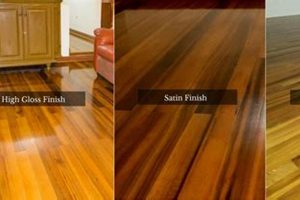
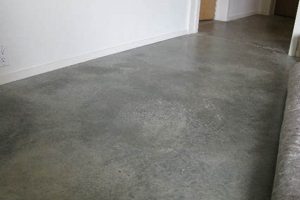
A durable coating applied to flooring surfaces, typically in commercial and industrial settings, provides protection against wear, scuffs, and staining. This treatment enhances the appearance of floors, imparting a glossy or matte sheen depending on the formulation. For instance, facilities maintenance personnel might apply several coats to a vinyl composition tile (VCT) floor to preserve its integrity and maintain a professional aesthetic.
The application of such a product can significantly extend the lifespan of flooring, reducing the need for costly replacements. It simplifies routine cleaning, making surfaces easier to sanitize and maintain. Historically, these coatings evolved from simple wax-based products to more sophisticated polymer formulations offering enhanced durability and resistance to chemicals and abrasion. This advancement reflects a commitment to both aesthetic appeal and long-term cost savings for facility managers.
The subsequent discussion will delve into the specific characteristics, application techniques, maintenance procedures, and environmental considerations related to modern floor coatings. It will also explore the various types available, including acrylic, urethane, and epoxy-based products, each designed to meet the unique demands of different flooring materials and traffic levels.
Application and Maintenance Guidelines
Effective utilization requires adherence to specific guidelines. These recommendations aim to optimize performance, longevity, and maintain the intended aesthetic properties of the treated surfaces.
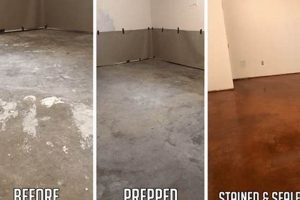
Tip 1: Surface Preparation is Paramount: Prior to application, ensure the flooring is thoroughly cleaned and free from dirt, grease, and existing coatings. Inadequate preparation can compromise adhesion and result in premature failure of the coating.
Tip 2: Follow Manufacturer’s Dilution Instructions: Improper dilution can affect the coating’s gloss level, durability, and drying time. Adhere precisely to the recommended mixing ratios to achieve optimal results.
Tip 3: Apply Thin, Even Coats: Multiple thin coats are generally preferable to a single thick coat. This technique promotes uniform coverage, reduces the likelihood of streaking or bubbling, and facilitates faster drying.
Tip 4: Allow Adequate Drying Time Between Coats: Premature application of subsequent coats can trap moisture and solvents, leading to a hazy or uneven finish. Consult the product’s technical data sheet for recommended drying times.
Tip 5: Utilize Appropriate Application Equipment: Employ a microfiber mop or applicator specifically designed for floor finishes. This helps ensure even distribution and minimizes the risk of lint or other contaminants becoming embedded in the coating.
Tip 6: Implement a Regular Maintenance Program: Routine cleaning with a neutral pH cleaner is essential for preserving the coating’s gloss and preventing the build-up of dirt and grime. Avoid using harsh chemicals or abrasive cleaning agents.
Tip 7: Consider Burnishing for Enhanced Gloss: For high-gloss finishes, periodic burnishing with a high-speed floor machine can restore and maintain the desired sheen. Use appropriate burnishing pads designed for the specific coating type.
Consistent adherence to these guidelines will maximize the performance and extend the lifespan, contributing to a clean, attractive, and safe environment.
The final section will address common challenges encountered during application and maintenance, offering practical solutions and troubleshooting advice.
1. Durability

Durability, in the context of floor coatings, refers to the product’s ability to withstand wear and tear over an extended period. It is a paramount consideration when selecting a floor treatment, as it directly influences the frequency of reapplication, maintenance costs, and the long-term appearance of the flooring surface. The intrinsic properties dictate its performance under various stress factors.
- Abrasion Resistance
Abrasion resistance measures the coating’s ability to resist scratching, scuffing, and general surface wear caused by foot traffic, equipment movement, and cleaning processes. Formulations with higher abrasion resistance ratings will maintain their appearance longer in high-traffic areas, such as hallways and retail spaces. For example, a product designed for hospital corridors would necessitate a superior abrasion resistance compared to one used in a low-traffic office.
- Impact Resistance
Impact resistance signifies the coating’s capacity to withstand sudden, forceful impacts without cracking, chipping, or delaminating. This is particularly important in industrial settings or areas where heavy objects might be dropped. A warehouse floor, for instance, requires a coating with high impact resistance to prevent damage from dropped tools or materials. The formulation and thickness directly influence this property.
- Chemical Resistance
Chemical resistance relates to the coating’s ability to withstand exposure to various chemicals, including cleaning agents, solvents, oils, and acids, without degradation. This is crucial in environments such as laboratories, manufacturing facilities, and food processing plants where chemical spills are likely. A product used in an automotive repair shop must be highly resistant to oils and solvents to prevent softening, discoloration, or peeling.
- Lifespan and Longevity
Lifespan and longevity encompass the overall period for which the coating maintains its desired performance characteristics before requiring reapplication or significant maintenance. Factors such as traffic volume, cleaning practices, and environmental conditions significantly influence this. Products with superior performance characteristics translate to reduced labor and material costs over the flooring’s lifespan.
In summary, the interaction of these facets directly influences the overall life cycle cost. A durable product, possessing strong abrasion, impact, and chemical resistance, combined with a long lifespan, reduces the frequency of reapplication and the need for frequent repairs, providing long-term value and minimizing disruptions to operations. Selecting a formulation that aligns with the specific demands of the environment is crucial for maximizing the benefits.
2. Slip Resistance
Slip resistance is a critical performance attribute of floor coatings, directly impacting safety and liability within a facility. The coefficient of friction (COF) quantifies this property, with higher values indicating greater resistance to slipping. Products failing to meet established COF standards can create hazardous walking surfaces, increasing the risk of falls and potential injuries. This consideration is especially vital in environments with high foot traffic or where liquids are frequently present.
The formulation significantly influences the degree of slip resistance achieved. Some contain additives, such as silica or other texturizing agents, to enhance traction. The application method also plays a role; improper application can result in an uneven surface, compromising slip resistance. Regular maintenance, including appropriate cleaning procedures, is necessary to preserve the intended slip-resistant properties over time. For instance, the accumulation of soap residue or oily substances can reduce the COF, even on a floor initially treated with a slip-resistant product.
Ultimately, the selection and maintenance of a suitable floor coating with adequate slip resistance represent a proactive measure to mitigate risks and ensure a safe environment. Failure to address this aspect can lead to legal ramifications and negatively impact a facility’s reputation. Adherence to industry standards and manufacturer recommendations is essential for achieving and maintaining the desired level of slip resistance.
3. Gloss Retention

Gloss retention, concerning floor coatings, signifies the ability of a product to maintain its initial shine and reflective properties over time, despite exposure to traffic, cleaning, and environmental factors. It directly correlates with the perceived cleanliness and aesthetic appeal of the flooring surface. A coating demonstrating superior gloss retention requires less frequent maintenance to sustain a desired appearance, thereby reducing labor and material costs. The initial gloss level of a finish is, therefore, only one component; the longevity of that gloss is the key metric.
The formulation determines the level of gloss retention attainable. Products containing higher-quality polymers and cross-linking agents typically exhibit enhanced resistance to dulling and scratching. For example, a high-end acrylic floor finish, often used in retail environments, may incorporate specialized additives to minimize the impact of scuff marks from shopping carts and foot traffic, preserving its glossy appearance for a longer duration. Regular maintenance practices, such as using neutral pH cleaners and employing microfiber mops, contribute significantly to maximizing gloss retention. Aggressive cleaning chemicals and abrasive pads can prematurely degrade the coating, leading to a loss of shine and requiring more frequent reapplication.
In conclusion, gloss retention is a critical attribute in floor finish selection, impacting both aesthetics and long-term cost. Choosing a product with proven gloss retention capabilities, coupled with appropriate maintenance protocols, ensures a consistently attractive and professional appearance while minimizing the overall expense associated with floor care. Neglecting this aspect can result in a dull, unattractive surface, necessitating more frequent and costly restoration efforts.
4. Application Ease

The ease of application is a critical factor determining the efficiency and overall cost-effectiveness. The less complex and time-consuming the application process, the lower the labor costs and the faster a floor can be returned to service. Several facets contribute to the practical ease of applying such a product.
- Viscosity and Flow
The viscosity of the product directly affects its flow and spread during application. Lower viscosity formulations typically spread more easily, requiring less effort to achieve a uniform coating. An overly viscous product can be difficult to apply evenly, leading to streaking or pooling. The ideal viscosity balances ease of spreading with minimal dripping or splattering, reducing product waste and cleanup time.
- Drying Time
The drying time between coats and before the floor can be opened to traffic significantly impacts the overall application timeline. Faster drying times allow for multiple coats to be applied in a single day, accelerating the completion of the project. However, excessively rapid drying can lead to application issues, such as lap marks or unevenness. The product’s technical data sheet provides the recommended drying times, which should be strictly adhered to for optimal results.
- Application Method
The recommended application method, whether mop, applicator, or sprayer, affects the ease and speed of the process. Mop application is generally straightforward and requires minimal specialized equipment, making it suitable for smaller areas. Applicators offer more precise control and can reduce the risk of streaking. Sprayers can cover large areas quickly but require specialized equipment and proper technique to avoid overspray and uneven coverage. The selected application method should align with the size of the area, the skill level of the applicator, and the desired finish quality.
- Required Equipment
The type and complexity of equipment needed for application directly influence ease of use. Products requiring minimal specialized equipment are generally easier to apply and more accessible to a wider range of users. A straightforward mop-and-bucket application is simpler than a multi-component system requiring mixing, dispensing, and specialized spray equipment. The availability and cost of the necessary equipment should be considered when evaluating overall application ease.
These components collectively determine the level of expertise and time investment required for successful application. A product designed for ease of application minimizes training requirements, reduces the potential for errors, and speeds up the process, resulting in lower labor costs and faster turnaround times. Careful consideration of these factors ensures a smooth and efficient application process, maximizing the benefits of the floor coating.
5. Maintenance Requirements

Maintenance requirements represent a crucial determinant of the long-term performance and lifecycle cost. These requirements, often dictated by the product’s composition and the environment in which it is applied, directly influence the frequency and intensity of cleaning procedures, the need for periodic re-coating, and the overall longevity of the flooring investment. For instance, a high-gloss finish in a busy retail setting will necessitate more frequent burnishing and cleaning to maintain its aesthetic appeal, compared to a matte finish in a low-traffic office environment. Therefore, a comprehensive understanding is essential for budgeting and resource allocation within facility management.
Different product formulations necessitate varying cleaning protocols. Some are highly susceptible to damage from harsh chemicals, requiring the use of pH-neutral cleaners. Others may exhibit greater resistance to chemicals but demand more frequent sweeping or vacuuming to prevent the buildup of abrasive dirt particles that can dull the surface over time. Application of incorrect cleaning methods or products can accelerate the degradation , leading to premature failure and increased maintenance expenditures. As an illustration, using an abrasive cleaner on a floor coated with a sensitive acrylic finish will likely result in scratching and loss of gloss, necessitating more frequent re-coating to restore the desired appearance.
In conclusion, the relationship between maintenance demands and operational expenses is undeniable. Opting for a product that aligns with the existing maintenance capabilities and resources of a facility, or adjusting maintenance practices to suit the chosen product, is critical for maximizing the return on investment. Proactive planning and adherence to manufacturer recommendations for cleaning and upkeep mitigate potential challenges and ensure the ongoing integrity and aesthetic quality of the flooring surface.
6. Chemical Resistance

Chemical resistance, a pivotal attribute, dictates the suitability of a floor coating for environments where exposure to various chemical substances is anticipated. This property governs the degree to which a coating can withstand contact with acids, alkalis, solvents, oils, and other potentially corrosive materials without undergoing degradation. The integrity and longevity directly correlate with its inherent chemical resistance. Formulations lacking sufficient resistance can exhibit softening, swelling, discoloration, or even complete delamination upon exposure, leading to premature failure and necessitating costly repairs or reapplication.
The selection of a floor treatment with appropriate chemical resistance is paramount in settings such as laboratories, manufacturing plants, food processing facilities, and healthcare environments. For example, a floor in a chemical research laboratory must withstand spills of various reagents without being compromised, maintaining a safe and sanitary work surface. Similarly, a floor in a food processing plant must resist the effects of cleaning agents and food byproducts to prevent contamination and ensure compliance with hygiene standards. Disregard for the chemical resistance can lead to hazardous conditions and operational disruptions.
In summary, adequate chemical resistance is not merely a desirable feature but a fundamental requirement for preserving the performance and safety. Understanding the specific chemical exposure risks within a given environment and selecting a product formulated to withstand those challenges is crucial for maximizing its lifespan and minimizing the potential for costly and disruptive failures. Improper selection can result in significant financial losses and potential safety hazards, highlighting the practical significance of this attribute.
7. Environmental Impact

The environmental consequences associated with floor coatings are a critical consideration in modern facility management. The selection and application of such products necessitate careful evaluation of their lifecycle impact, from raw material extraction to disposal, to minimize ecological harm.
- Volatile Organic Compound (VOC) Emissions
VOC emissions during application and curing contribute to air pollution and can pose health risks to occupants. Traditional formulations often contained high levels of VOCs. Modern coatings, however, increasingly utilize water-based or low-VOC formulations to mitigate these emissions. Choosing a product with minimal VOC content reduces the potential for indoor air quality issues and contributes to a healthier environment. For example, some certifications exist for floor finishes that meet strict standards for low VOC content.
- Raw Material Sourcing and Sustainability
The sourcing of raw materials influences the overall sustainability. Coatings derived from renewable resources or recycled content reduce the reliance on finite resources and minimize the environmental footprint. Manufacturers committed to sustainable practices often prioritize the use of responsibly sourced materials and implement environmentally conscious production processes. The trend is to use more sustainable sources and less harmful ingredients.
- Waste Generation and Disposal
Waste generated during application and disposal, including leftover product and empty containers, contributes to environmental pollution. Proper disposal methods, such as recycling programs for containers and responsible disposal of unused product, are essential for minimizing waste. Some manufacturers offer take-back programs for empty containers or provide guidance on proper disposal procedures. Improper disposal leads to harmful effects, especially if the product contaminates the water or ground.
- Water Usage and Wastewater Management
The manufacturing and application of certain floor coatings can consume significant amounts of water and generate wastewater. Implementing water conservation measures in production facilities and utilizing water-based formulations can reduce water usage. Proper treatment and disposal of wastewater are essential to prevent water pollution. Many modern facilities recycle water to preserve environmental quality.
The selection of a floor coating necessitates a holistic assessment encompassing its environmental impact across its entire lifecycle. Prioritizing products with low VOC emissions, sustainable sourcing, responsible waste management, and minimal water usage contributes to a more environmentally sound approach to floor care and minimizes the ecological footprint of facility operations. Selecting the correct product also positively influences customer perception.
Frequently Asked Questions
This section addresses common inquiries concerning the selection, application, and maintenance of this flooring treatment. The information provided aims to clarify technical aspects and offer guidance for optimal results.
Question 1: What factors determine the appropriate for a specific environment?
Several factors dictate the optimal, including traffic volume, flooring material, chemical exposure risks, and desired aesthetic. High-traffic areas necessitate coatings with superior abrasion resistance. Environments with frequent chemical spills require products with high chemical resistance. The flooring material influences the choice as different coatings adhere better to certain surfaces. Finally, the aesthetic considerations such as desired gloss level, also play a role.
Question 2: How can slip resistance be maximized and maintained?
Maximizing slip resistance involves selecting a formulation with a high coefficient of friction (COF) rating and following the manufacturers application guidelines. Proper surface preparation and even application are essential. Regular maintenance, including cleaning with appropriate, non-residue cleaners, helps preserve the desired slip-resistant properties. Avoid using cleaning products that leave slippery residues, as these can negate the benefits.
Question 3: What are the potential consequences of improper application?
Improper application can result in a range of adverse consequences. These include poor adhesion, uneven gloss, streaking, bubbling, and premature wear. These issues detract from the appearance, reduce the coating’s lifespan, and increase the risk of slip and fall accidents. Following manufacturer’s instructions is critical to mitigate these risks.
Question 4: How often should re-coating be performed?
The frequency of re-coating depends on several variables, including traffic volume, cleaning practices, and the durability of the chosen. High-traffic areas will require more frequent re-coating than low-traffic areas. Regular inspection of the flooring surface allows informed decisions regarding re-coating needs. As a general guideline, re-coating should occur before the existing coating exhibits significant wear or damage.
Question 5: What are the recommended cleaning procedures to ensure product longevity?
To maximize longevity, cleaning procedures must align with the formulation’s specific requirements. Typically, the best strategy includes regular sweeping or vacuuming to remove abrasive dirt and debris, followed by mopping with a neutral pH cleaner. Harsh chemicals and abrasive cleaning tools should be avoided, as they can damage the coating and reduce its lifespan. Always consult the manufacturer’s recommendations for cleaning protocols.
Question 6: How does environmental impact influence the selection process?
Environmental impact should be a central consideration in the selection process. Opt for products with low VOC emissions, sustainable sourcing of raw materials, and minimal water usage. Consider formulations that are biodegradable or recyclable and prioritize manufacturers committed to responsible waste management. Choosing an environmentally responsible product reduces the ecological footprint and promotes a healthier indoor environment.
These FAQs provide a foundational understanding of important facets. Addressing these factors contributes to informed decision-making and optimal outcomes.
The subsequent segment provides a comparative analysis of different formulations, highlighting their strengths, limitations, and suitability for various applications.
Conclusion
This exploration has highlighted critical facets. Characteristics, maintenance, and environmental impact have been examined. Proper selection and application are vital for performance, longevity, and safety. Ignoring these factors can lead to increased costs, potential hazards, and environmental harm.
Diligent consideration of all outlined points represents a sound investment. A proactive approach ensures optimal results, creating safer, more sustainable, and aesthetically pleasing environments. Continued vigilance in product selection and maintenance protocols remains essential.