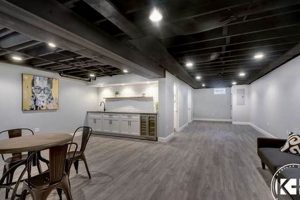
A design choice in subterranean living spaces, this architectural feature leaves the overhead structural components, such as joists, ductwork, and piping, visible rather than concealed behind a traditional drop ceiling or drywall. This approach often involves painting or otherwise treating these elements for aesthetic appeal, integrating them into the overall design scheme of the room. For instance, a homeowner might opt to paint exposed joists black to create a modern, industrial look.
The significance of this design lies in its ability to maximize headroom, particularly valuable in basements where ceiling height is often limited. Further benefits include easier access to utilities for maintenance and repair, as well as the potential for a more open and airy feel compared to enclosed ceilings. Historically, this was primarily a cost-saving measure but has evolved into a deliberate design statement, reflecting contemporary preferences for raw and authentic aesthetics.
The following sections will delve into the various considerations for implementing this design strategy, exploring topics such as soundproofing, lighting options, fire safety measures, and cost-effective strategies for achieving a desirable aesthetic within a finished basement environment. Specific attention will be paid to optimal materials, installation techniques, and long-term maintenance strategies.
Considerations for a Basement Overhead Design
Careful planning and execution are crucial for a successful and aesthetically pleasing open overhead design in a finished basement. Prioritize functionality and safety alongside visual appeal. The following tips provide a framework for informed decision-making.
Tip 1: Plan for Sound Dampening: Exposed structures offer less sound insulation compared to traditional ceilings. Consider incorporating sound-absorbing materials like acoustic panels or spray-on insulation to mitigate noise transfer between floors. Strategic placement of these materials can significantly improve the acoustic environment.
Tip 2: Address Fire Safety Regulations: Consult local building codes regarding fire-resistant materials for exposed joists and utilities. Applying fire-retardant coatings or utilizing fire-rated materials can enhance safety and ensure compliance with regulations.
Tip 3: Strategically Conceal or Highlight Utilities: Plan the placement of ductwork, pipes, and wiring to minimize visual clutter. Options include grouping utilities and strategically boxing them in, or painting them a uniform color to blend with the joists. Alternatively, highlighting certain elements, like vintage pipes, can contribute to a desired aesthetic.
Tip 4: Optimize Lighting Design: Exposed structures allow for creative lighting solutions. Recessed lighting, track lighting, and pendant lights can be strategically placed to illuminate the space effectively and enhance the exposed elements. Consider dimmer switches for adjustable ambiance.
Tip 5: Choose a Consistent Color Palette: Select a cohesive color scheme for the exposed joists, ductwork, and other elements to create a unified and visually appealing design. Neutral colors often provide a versatile backdrop, while accent colors can be used to highlight specific features.
Tip 6: Regularly Inspect and Maintain: Conduct routine inspections of the exposed utilities to identify and address potential issues promptly. Regular cleaning and maintenance will help preserve the aesthetic appeal and prevent deterioration.
Tip 7: Consult with Professionals: Engage with qualified contractors, electricians, and plumbers to ensure the safe and proper installation of utilities and adherence to building codes. Professional expertise is essential for a successful and long-lasting outcome.
By carefully considering these factors, it is possible to achieve a visually striking and functional space that maximizes headroom and minimizes future complications.
The subsequent sections will offer insights into specific design styles and material choices that complement this approach.
1. Headroom Maximization

The relationship between headroom maximization and exposed ceiling designs in finished basements is a direct consequence of the inherent limitations of subterranean spaces. Basement ceilings are often lower than those in above-ground rooms. Opting for an exposed ceiling, in contrast to a traditional dropped ceiling, avoids the further reduction of vertical space that would occur with the installation of drywall or suspended tiles. This becomes particularly significant when the initial ceiling height is already close to the minimum acceptable height according to building codes, or when inhabitants are taller than average. For example, a basement with a 7-foot ceiling, reduced to 6’8″ by a drop ceiling, may feel uncomfortably cramped. The exposed ceiling avoids this reduction, maintaining the full available height.
Practical implications extend beyond mere comfort. Increased headroom can positively impact the perceived value of the finished basement, making it more appealing to potential buyers if the home is sold. Furthermore, it can improve the functionality of the space, allowing for taller furniture or equipment to be used without obstruction. The design choice also simplifies access to utilities. Without a drop ceiling to remove, repairs or upgrades to plumbing, electrical wiring, or HVAC systems are more easily conducted. A hypothetical scenario might involve a homeowner needing to repair a leaking pipe. With an exposed ceiling, the pipe is readily accessible; with a traditional ceiling, removal and reinstallation would be required, adding time and expense to the project.
In summary, headroom maximization is a primary driver behind the adoption of exposed ceilings in finished basements. While aesthetic considerations play a role, the practical benefits of preserving vertical space, simplifying utility access, and potentially increasing property value, make it a significant consideration for homeowners. The trade-offs, such as managing noise and visually integrating utilities, must be carefully addressed to achieve a successful and functional living space.
2. Utility Accessibility

The correlation between exposed overhead designs and utility accessibility within a finished basement environment is a defining characteristic of this architectural choice. By foregoing a traditional ceiling, access to essential building systems plumbing, electrical wiring, HVAC ductwork, and sometimes fire suppression lines is immediately available. This accessibility mitigates the time and cost associated with routine maintenance, repairs, and future upgrades. A practical example illustrates this advantage: Should a water pipe develop a leak, the exposed configuration allows for immediate detection and repair, minimizing potential water damage compared to a scenario where the leak remains hidden above a drywall ceiling.
Further, the initial installation of utilities is often streamlined. The absence of a restrictive ceiling cavity allows for more direct routing of pipes and wires, reducing labor costs and potentially minimizing material usage. Remodeling projects benefit significantly as well. Adding new electrical outlets or rerouting ductwork becomes less intrusive and expensive when the existing utilities are readily visible and reachable. For instance, a homeowner deciding to add recessed lighting would find the task considerably simpler with an exposed overhead, eliminating the need to cut into and patch a ceiling.
In conclusion, the enhanced utility accessibility inherent in an exposed overhead is a substantial advantage. It reduces long-term maintenance expenses, simplifies upgrades and repairs, and potentially lowers initial installation costs. While aesthetic considerations and sound control require careful attention, the practical benefits of easy access to vital building systems solidify its importance in basement design, promoting long-term functionality and cost-effectiveness. The understanding of its utility is also an important aspect of homeowner.
3. Acoustic Management

The design choice of an open overhead in a finished basement directly impacts its acoustic properties. Unlike traditional ceilings that absorb and dampen sound waves, exposed structures tend to reflect sound, potentially leading to increased reverberation and noise levels. This effect occurs because the hard surfaces of exposed joists, ductwork, and concrete foundations offer minimal resistance to sound waves. Consequently, sounds generated within the basement, such as voices, music, or television noise, can bounce off these surfaces, creating echoes and increasing the overall sound pressure level. Effective acoustic management is therefore crucial in mitigating these undesirable effects and establishing a comfortable living environment. Without adequate acoustic treatment, an open overhead can transform a finished basement into a noisy and unpleasant space.
Several strategies can be employed to address the acoustic challenges. Sound-absorbing materials, such as acoustic panels, fiberglass insulation, or specialized spray-on coatings, can be strategically applied to the exposed surfaces. Placement of these materials is critical. Covering large, flat surfaces, like the underside of floor joists, is more effective than treating smaller, irregularly shaped components. Furthermore, the introduction of soft furnishings, such as upholstered furniture, rugs, and curtains, can contribute to sound absorption. In a home theater setting, for example, acoustic panels might be installed on the walls and ceiling to reduce reverberation and improve sound clarity, while a thick rug would absorb sound reflected from the floor. This combination of targeted material application and strategic furniture placement can substantially improve the acoustic environment.
In summary, acoustic management is a critical component of a finished basement featuring an exposed overhead. The inherent reflective properties of exposed structures necessitate the implementation of sound-absorbing strategies to mitigate noise and enhance the overall comfort of the space. Through the strategic application of sound-absorbing materials and the incorporation of soft furnishings, the acoustic challenges can be effectively addressed, transforming the basement into a functional and enjoyable living area. Ignoring these acoustic considerations can lead to an uncomfortable and unusable space, highlighting the importance of proactive planning and implementation.
4. Fire Safety

In the context of finished basements featuring exposed ceilings, fire safety assumes paramount importance due to the absence of a protective barrier that a traditional ceiling provides. Exposed structural elements, such as wood joists, untreated wiring, and plastic plumbing, become directly vulnerable to fire. A fire originating in the basement has unimpeded access to these elements, potentially accelerating its spread to upper levels of the dwelling. The lack of a ceiling cavity also eliminates a space where smoke and heat can initially accumulate, delaying detection by smoke alarms and reducing escape time. Consequently, strict adherence to fire safety regulations and proactive implementation of preventative measures are crucial.
Effective fire safety measures encompass several key areas. The application of fire-retardant coatings to exposed wood surfaces can significantly delay ignition and slow the spread of flames. Enclosing or covering exposed wiring and plumbing with fire-resistant materials provides an additional layer of protection. Strategically placed smoke detectors, interconnected throughout the house, are essential for early fire detection. Ensuring that all basement egress windows are easily accessible and fully operational provides alternative escape routes in case the primary exit is blocked. A real-world example involves a basement fire caused by faulty wiring. In a basement with an exposed ceiling, the fire quickly spread to the wooden joists, causing structural damage and endangering the occupants. Had fire-retardant coatings been applied, the fire’s progression could have been significantly slowed, potentially allowing more time for evacuation and fire suppression.
In conclusion, the absence of a traditional ceiling in a finished basement elevates the risk of fire damage and underscores the necessity of prioritizing fire safety. By implementing fire-retardant treatments, protecting exposed utilities, installing interconnected smoke detectors, and ensuring accessible escape routes, homeowners can substantially mitigate the fire hazards associated with exposed overhead designs. Proactive fire safety measures not only safeguard lives and property but also ensure compliance with building codes and regulations, creating a safer and more secure living environment. Neglecting fire safety can lead to catastrophic consequences, emphasizing the critical role it plays in the overall design and construction of finished basements with exposed ceilings.
5. Aesthetic Cohesion

The concept of aesthetic cohesion is a critical consideration when implementing an exposed overhead design in a finished basement. This approach requires a deliberate and unified visual language to prevent the space from appearing unfinished or haphazard. The exposed elements become integral design features, necessitating careful selection of colors, materials, and finishes to create a harmonious and visually pleasing environment.
- Color Palette Uniformity
A consistent color palette is paramount for achieving aesthetic cohesion. This includes not only the joists and subfloor but also any exposed ductwork, pipes, and wiring. A limited and harmonious color scheme can transform potentially chaotic elements into a unified design statement. For example, painting all overhead components in shades of gray, black, or white creates a modern, industrial aesthetic. Conversely, mismatched colors can create a sense of visual clutter and detract from the overall design.
- Material Consistency
The selection of materials used in the basement should complement the exposed overhead. Choosing materials that align with the exposed structural elements creates a sense of visual harmony. For instance, incorporating reclaimed wood furniture or concrete flooring echoes the raw and industrial aesthetic often associated with exposed ceilings. Conversely, pairing an exposed overhead with overly ornate or traditional furnishings can create a jarring visual contrast.
- Strategic Lighting Placement
Lighting plays a critical role in enhancing aesthetic cohesion. Carefully positioned lighting fixtures can highlight the architectural details of the exposed overhead, transforming them into focal points. Track lighting, pendant lights, or recessed lighting can be used to accentuate specific features and create a visually appealing atmosphere. Conversely, poorly placed or inadequate lighting can diminish the impact of the exposed overhead and make the space feel dark and uninviting.
- Intentional Utility Integration
Exposed utilities, such as pipes and ductwork, can be either visually concealed or intentionally integrated into the design. While concealing utilities can create a cleaner look, strategically integrating them can add character and authenticity. For example, copper pipes can be polished and highlighted, while ductwork can be painted in a contrasting color to create a visual accent. The key is to make a deliberate choice and execute it consistently throughout the space.
Achieving aesthetic cohesion in a finished basement with an exposed overhead demands meticulous planning and attention to detail. By carefully considering color palettes, material consistency, lighting placement, and utility integration, homeowners can transform a potentially utilitarian space into a visually appealing and harmonious living area. A unified design language ensures that the exposed elements contribute to the overall aesthetic rather than detracting from it, creating a finished basement that is both functional and visually compelling.
6. Cost Considerations

The decision to incorporate an exposed overhead design in a finished basement is significantly influenced by cost considerations, impacting both initial construction expenses and long-term maintenance budgets. While often perceived as a cost-saving measure compared to installing a traditional drywall or drop ceiling, this choice presents a unique set of financial implications that demand careful evaluation. The primary effect of selecting an exposed ceiling is a shift in resource allocation rather than a guaranteed reduction in overall project costs. Funds saved on ceiling materials and installation labor may be redirected towards surface preparation, aesthetic enhancements, and potentially more complex utility management. For instance, exposed joists and ductwork may require extensive cleaning, sanding, and painting to achieve a presentable appearance, tasks that can be labor-intensive and necessitate specialized equipment. Additionally, the desire to conceal or artistically integrate utilities may necessitate the hiring of skilled tradespeople, adding to the project’s financial burden.
The importance of cost-effective decision-making extends beyond the initial construction phase. Long-term maintenance expenses must also be factored into the equation. Exposed utilities, while offering ease of access for repairs, are also more susceptible to dust accumulation, requiring more frequent cleaning. Moreover, potential damage to exposed wiring or plumbing is more readily apparent, potentially leading to earlier intervention and reduced long-term damage. In contrast, while a traditional ceiling conceals these issues, it may also mask minor problems, allowing them to escalate into more costly repairs. A realistic example is a homeowner who initially saved money by opting for an exposed ceiling but subsequently incurred higher cleaning costs and invested in soundproofing measures to mitigate noise issues. A thorough cost analysis, considering both immediate and future expenditures, is therefore paramount.
In summary, the relationship between cost considerations and exposed overhead designs in finished basements is nuanced and multifaceted. While the absence of a traditional ceiling may initially appear to be a cost-cutting measure, careful planning and resource allocation are essential to ensure that the project remains within budget and meets aesthetic and functional requirements. A comprehensive understanding of the long-term maintenance implications, coupled with proactive decision-making regarding utility management and aesthetic enhancements, is crucial for maximizing the financial benefits of this design choice. By thoroughly evaluating all relevant factors, homeowners can make informed decisions that align with their budgetary constraints and create a finished basement that is both visually appealing and economically sound.
7. Maintenance Requirements

Maintenance demands for a finished basement featuring an exposed overhead significantly diverge from those associated with traditional ceiling types. The exposed nature of structural components and utilities necessitates a proactive and consistent maintenance schedule to ensure longevity, aesthetic appeal, and optimal functionality. These requirements encompass a range of tasks, from routine cleaning to periodic inspections and potential repairs, each playing a crucial role in preserving the integrity and value of the finished space.
- Dust and Debris Removal
The absence of a ceiling barrier allows dust, cobwebs, and other airborne debris to accumulate directly on exposed joists, ductwork, and pipes. Regular cleaning, typically involving vacuuming or dusting with specialized tools, is essential to prevent the build-up of grime and maintain a presentable appearance. Neglecting this routine task can lead to a visually unappealing environment and potentially contribute to indoor air quality issues. For example, dust accumulation on HVAC ductwork can impede airflow and reduce the system’s efficiency, increasing energy consumption.
- Pest Control and Prevention
Exposed structural elements offer potential harborage for insects and rodents. Regular pest inspections and preventative measures are crucial to protect the integrity of the basement. Sealing any cracks or openings in the foundation, implementing pest control treatments, and maintaining a clean and dry environment can minimize the risk of infestation. Ignoring this aspect can lead to structural damage and unsanitary conditions. A common scenario involves rodents nesting in exposed insulation within the joist bays, requiring costly remediation.
- Moisture Monitoring and Mitigation
Basements are inherently prone to moisture issues, and an exposed overhead can exacerbate these problems. Regular monitoring for signs of leaks, condensation, or mold growth is essential. Addressing any moisture problems promptly can prevent significant structural damage and health hazards. Installing a dehumidifier, ensuring proper ventilation, and promptly repairing any plumbing leaks are crucial preventative measures. For instance, condensation forming on exposed pipes can lead to corrosion and eventual failure, requiring expensive repairs.
- Periodic Inspections and Repairs
Exposed utilities require periodic inspection to identify potential issues such as corrosion, frayed wiring, or loose connections. Addressing these issues promptly can prevent more significant problems and ensure the safe and reliable operation of the basement’s essential systems. Replacing damaged components, tightening connections, and applying protective coatings can extend the lifespan of the exposed utilities. A homeowner might, for example, discover corrosion on exposed electrical conduit, necessitating immediate replacement to prevent a potential fire hazard.
These maintenance facets are intrinsic to the long-term success of any finished basement featuring an exposed overhead. A commitment to proactive maintenance not only preserves the aesthetic appeal and functionality of the space but also safeguards against potential structural damage, health hazards, and costly repairs. By adhering to a consistent maintenance schedule and addressing any issues promptly, homeowners can ensure that their exposed ceiling basement remains a comfortable, safe, and valuable asset for years to come.
Frequently Asked Questions
The following questions address common inquiries and concerns regarding the implementation and maintenance of open ceiling designs in finished basement environments. These responses aim to provide clarity and informed guidance.
Question 1: What are the primary advantages of choosing this design?
Chief among the benefits is maximizing headroom, a critical consideration in basements with limited vertical space. Additional advantages include enhanced accessibility to utilities for maintenance and repairs and the potential for a unique aesthetic appeal.
Question 2: What are the potential drawbacks to consider?
Potential drawbacks include reduced sound insulation, requiring supplementary soundproofing measures, and the necessity of carefully managing the visual appearance of exposed utilities. Additionally, adherence to fire safety regulations is paramount.
Question 3: How can soundproofing be effectively addressed?
Soundproofing can be achieved through the strategic application of sound-absorbing materials such as acoustic panels, fiberglass insulation, or specialized spray-on coatings. Careful placement of these materials is essential for optimal results.
Question 4: What fire safety measures are essential for an exposed overhead?
Essential fire safety measures include the application of fire-retardant coatings to exposed wood surfaces and the enclosure or covering of exposed wiring and plumbing with fire-resistant materials. Working smoke detectors are also imperative.
Question 5: How can utilities be managed aesthetically in an exposed configuration?
Utilities can be managed aesthetically through various methods. These include grouping and boxing in utilities, painting them a uniform color to blend with the joists, or intentionally highlighting certain elements for visual interest. A consistent approach is key.
Question 6: What are the ongoing maintenance requirements for this type of ceiling?
Ongoing maintenance requirements include regular dusting and cleaning of exposed surfaces to prevent dust accumulation, periodic inspections of utilities for signs of damage or wear, and proactive moisture control to prevent mold growth.
In summary, an informed decision regarding an exposed overhead in a finished basement requires a thorough understanding of both the advantages and disadvantages, coupled with a commitment to proactive planning and ongoing maintenance.
The subsequent section will transition into a discussion of specific design styles and material choices that complement this architectural approach.
Finished Basement Exposed Ceiling
This exploration has illuminated the multifaceted considerations inherent in the implementation of a finished basement exposed ceiling. Key aspects include headroom maximization, utility accessibility, acoustic management, fire safety, aesthetic cohesion, cost implications, and rigorous maintenance protocols. A comprehensive understanding of these interdependent elements is indispensable for successful execution. The choice necessitates a balanced approach, weighing potential benefits against the requirements for proactive planning and ongoing stewardship.
The efficacy of a finished basement exposed ceiling ultimately rests upon informed decision-making and diligent execution. A commitment to stringent safety measures and consistent maintenance is not optional but imperative. As architectural trends evolve, the responsible and well-considered application of this design element remains paramount for achieving both functional utility and lasting value. Further research and consultation with qualified professionals are strongly encouraged.
![Find [City/Area] Houses for Rent with Finished Basement Today! | Best Final Touch: Elevate Your Projects with Professional Finishing](https://bestfinaltouch.com/wp-content/uploads/2026/05/th-361-300x200.jpg "Find [City/Area] Houses for Rent with Finished Basement Today! Best Final Touch: Elevate Your Projects with Professional Finishing")