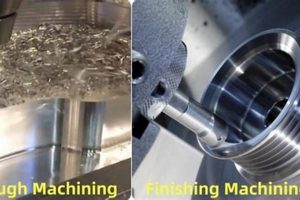
Surface treatment operations designed to enhance material properties and aesthetics across a broad range of manufactured goods are essential components in various sectors. These processes, applicable to metallic and non-metallic substrates, include techniques such as coating, plating, polishing, and cleaning. An example includes applying a protective powder coating to automotive components to increase corrosion resistance.
These procedures are crucial for improving durability, enhancing appearance, and providing specific functionalities, such as conductivity or insulation. Historically, these techniques have evolved from manual applications to highly automated processes, reflecting advancements in materials science and engineering. Consequently, products exhibit extended lifespans and improved performance in demanding environments.
The following discussion will delve into specific techniques, explore quality control considerations, and examine the environmental impact associated with these operations, providing a comprehensive overview of this vital aspect of manufacturing.
Guidance on Surface Enhancement Operations
Effective execution of surface enhancement is critical for optimizing product performance and longevity. The following guidance outlines key considerations for stakeholders involved in material treatment processes.
Tip 1: Material Selection. The choice of base material significantly impacts the success of any subsequent surface treatment. Understanding the compatibility of materials is crucial to avoid issues such as adhesion failure or galvanic corrosion. Consider material properties, such as hardness, ductility, and chemical resistance, when selecting the substrate.
Tip 2: Surface Preparation. Prior to applying any coating or treatment, proper surface preparation is essential. This includes removing contaminants like oils, scale, and rust through methods such as abrasive blasting, chemical etching, or mechanical cleaning. Inadequate surface preparation will compromise adhesion and reduce the effectiveness of the treatment.
Tip 3: Process Control. Maintaining strict control over process parameters is paramount for achieving consistent results. Factors such as temperature, pressure, immersion time, and chemical concentrations must be carefully monitored and adjusted as necessary to ensure optimal performance of the treatment.
Tip 4: Coating Selection. The selection of the appropriate coating or treatment method should align with the specific performance requirements of the component. Consider factors such as corrosion resistance, wear resistance, hardness, and aesthetic requirements when selecting a coating system. Consult with material specialists to ensure the chosen coating is compatible with the base material and operating environment.
Tip 5: Quality Assurance. Implement a robust quality assurance program to verify the effectiveness of the surface treatment. This should include regular inspections, adhesion testing, thickness measurements, and other relevant tests to ensure that the treated components meet the required specifications.
Tip 6: Environmental Considerations. Be mindful of the environmental impact of the treatments employed. Select environmentally friendly processes and materials whenever possible and implement measures to minimize waste and emissions. Ensure compliance with all applicable environmental regulations.
Tip 7: Documentation. Maintain detailed records of all surface treatment processes, including material specifications, process parameters, and quality control results. This documentation is crucial for traceability and for identifying and resolving any issues that may arise.
Adhering to these guidelines will contribute to enhanced product quality, improved performance, and prolonged service life, ultimately leading to greater customer satisfaction.
The subsequent sections will elaborate on specific techniques and best practices related to the discussed points.
1. Corrosion Resistance

Corrosion resistance is a critical performance characteristic often enhanced through various techniques. The selection and application of these techniques are integral to ensuring longevity and reliability in numerous applications and is therefore a primary goal for industrial finishing services.
- Protective Coatings
Protective coatings form a barrier between the substrate and corrosive elements. Examples include paint, powder coatings, and specialized polymers applied to steel structures, preventing rust and degradation. Inadequate application can lead to localized corrosion and premature structural failure.
- Galvanization
This involves coating steel or iron with zinc, providing a sacrificial barrier. The zinc corrodes preferentially, protecting the underlying metal. Galvanized steel is widely used in outdoor applications, such as fencing and guardrails. The effectiveness of galvanization depends on the zinc coating thickness and environmental conditions.
- Chemical Conversion Coatings
These coatings alter the surface chemistry of the metal, forming a protective oxide layer. Examples include chromate conversion coatings on aluminum and phosphate coatings on steel. These coatings enhance adhesion for subsequent paint layers and provide a degree of corrosion protection on their own. Consistent surface preparation is necessary for effective chemical conversion.
- Electroless Nickel Plating
This plating technique deposits a uniform layer of nickel on a substrate, regardless of its geometry. Electroless nickel provides excellent corrosion resistance, wear resistance, and hardness. It is commonly used in applications where dimensional tolerances are critical. Proper control of the plating bath chemistry is essential for consistent coating properties.
The methods described are selected based on specific application requirements and environmental considerations. Understanding the mechanisms of corrosion and the properties of different finishing techniques is crucial for ensuring effective long-term protection, thus justifying their significance within industrial processes.
2. Aesthetic Enhancement

Aesthetic enhancement is a significant outcome of treatment operations and directly influences product appeal and market value. These processes, ranging from simple polishing to complex multi-layer coatings, improve the visual properties of manufactured goods. For consumer electronics, a smooth, uniform finish achieved through powder coating or anodizing is essential for conveying a sense of quality and sophistication, thus driving sales and brand recognition.
The application of specific techniques, such as decorative plating or specialized paints, offers diverse possibilities for achieving targeted aesthetic goals. Automotive manufacturers, for example, utilize advanced painting systems to create high-gloss, durable finishes that enhance vehicle appearance and protect against environmental damage. Similarly, furniture manufacturers employ staining, lacquering, and varnishing techniques to highlight wood grain and provide a visually appealing surface.
Ultimately, the integration of aesthetic enhancement into treatment strategies transforms basic components into visually appealing products with increased commercial value. This integration requires a thorough understanding of material properties, application techniques, and design considerations. Furthermore, the chosen method should balance aesthetic requirements with functional performance and cost-effectiveness.
3. Wear Reduction

Wear reduction, a critical objective in engineering and manufacturing, directly correlates with the application of specialized treatment operations. These techniques extend the lifespan of components, improve operational efficiency, and reduce maintenance costs across various sectors.
- Hardfacing Techniques
Hardfacing involves applying a wear-resistant material to a component’s surface, typically through welding or thermal spraying. This process is used on parts subjected to severe abrasion, impact, or erosion, such as excavator teeth in mining or agricultural tillage tools. The result is a significantly extended service life for these components, reducing downtime and replacement costs.
- Surface Hardening Processes
Surface hardening alters the microstructure of a material’s surface to increase its hardness and wear resistance without affecting the core properties. Carburizing, nitriding, and induction hardening are common methods used on gears, shafts, and other mechanical components. These treatments enhance the durability of parts operating under high stress and friction, preventing premature failure.
- Tribological Coatings
Tribological coatings are designed to reduce friction and wear between moving surfaces. These coatings, often applied using techniques like physical vapor deposition (PVD) or chemical vapor deposition (CVD), can incorporate materials such as diamond-like carbon (DLC) or molybdenum disulfide (MoS2). Applications include engine components, cutting tools, and bearings, where minimizing friction is essential for efficiency and longevity.
- Polishing and Lapping
Polishing and lapping are finishing processes that refine surface topography, reducing friction and wear. These methods are used to create extremely smooth surfaces on components like hydraulic cylinders, seals, and precision instruments. A smoother surface minimizes contact area and reduces the likelihood of abrasive wear, ensuring optimal performance and extended component life.
The implementation of these methods is integral to achieving desired performance characteristics and minimizing material loss due to friction and abrasion. The selection of a particular technique depends on the material, application, and operating conditions, requiring careful consideration of factors such as load, speed, temperature, and environment. Effective wear reduction strategies, facilitated through specialized operations, directly contribute to improved product reliability, reduced maintenance, and enhanced overall operational efficiency.
4. Adhesion Quality

Adhesion quality represents a critical parameter in the assessment and performance of surface enhancements. The effective bonding between a coating or treatment and the substrate directly influences the durability, longevity, and overall functionality of the finished product. Poor adhesion leads to premature failure, manifesting as chipping, peeling, or blistering, thereby compromising the protective or aesthetic properties intended by the treatment. The success of treatments, therefore, is inextricably linked to the achievement and maintenance of robust adhesion.
Several factors contribute to the bond strength. Surface preparation plays a pivotal role, involving the removal of contaminants, creation of a textured surface to increase mechanical interlocking, and chemical activation to promote bonding. Material compatibility, where the coefficients of thermal expansion and chemical properties of the coating and substrate are aligned, is crucial to prevent stress-induced failure. Application techniques, such as proper coating thickness and curing conditions, directly impact the development of adhesive forces. For example, in the automotive industry, inadequate adhesion of the paint layer to the car body can result in paint delamination, leading to corrosion and aesthetic degradation. Similarly, in aerospace, poor adhesion of thermal barrier coatings on turbine blades can cause catastrophic engine failure due to overheating.
Ensuring high adhesion requires rigorous quality control procedures, including adhesion testing methods such as pull-off tests, scratch tests, and peel tests. These tests provide quantitative data on the bond strength, allowing for process optimization and identification of potential adhesion issues. Ultimately, the investment in achieving superior adhesion translates to enhanced product reliability, reduced warranty claims, and increased customer satisfaction. It also promotes sustainable practices by extending product lifecycles, thereby minimizing resource consumption and waste generation.
5. Surface Preparation

Surface preparation constitutes a foundational element within industrial finishing operations. It directly influences the adherence, performance, and longevity of subsequently applied coatings or treatments. Inadequate or improper surface preparation introduces a cascade of potential failures, compromising the integrity of the final product and undermining the objectives of the finishing process.
Consider, for example, the application of a protective coating to a steel structure exposed to harsh marine environments. If the steel surface is not thoroughly cleaned of rust, mill scale, and other contaminants, the applied coating will likely fail prematurely due to under-film corrosion. This leads to increased maintenance costs, potential structural damage, and reduced lifespan of the asset. Similarly, in the electronics industry, proper surface preparation of printed circuit boards (PCBs) is crucial for ensuring reliable solder joints and preventing delamination of conductive layers. Contamination or inadequate etching can result in electrical failures and compromised product performance.
Effective surface preparation methods vary depending on the substrate material, the type of coating or treatment being applied, and the desired performance characteristics. These methods encompass mechanical techniques like abrasive blasting, grinding, and polishing; chemical treatments such as etching, pickling, and passivation; and thermal processes including flame treatment and plasma etching. The selection of an appropriate method requires careful consideration of factors such as cost, environmental impact, and compatibility with downstream processes. A comprehensive understanding of the interplay between surface preparation and the overall effectiveness of treatment procedures ensures optimal results and long-term product reliability.
6. Material Compatibility

Material compatibility constitutes a cornerstone of successful treatment outcomes. The interaction between the substrate and the applied surface finish dictates the long-term performance and integrity of the treated component. Incompatibility can lead to a range of detrimental effects, including premature failure, compromised functionality, and increased maintenance requirements. Therefore, a thorough understanding of material interactions is paramount when selecting and implementing treatment processes. For instance, applying an inappropriate coating to a metal substrate can induce galvanic corrosion, where one metal corrodes preferentially to the other, leading to structural weakening. Similarly, thermal expansion mismatches between the substrate and the treatment can result in cracking or delamination under fluctuating temperatures. These consequences underscore the need for careful consideration of material compatibility in treatment selection.
Consider the aerospace industry, where aluminum alloys are frequently treated with anodization to improve corrosion resistance and wear properties. However, if the anodizing process is not carefully controlled, or if an incompatible alloy is used, the resulting anodic layer can exhibit poor adhesion, compromising its protective function. This can lead to corrosion and ultimately, structural failure of the aircraft component. In the automotive sector, the selection of compatible paints and primers for plastic components is equally critical. Chemical reactions between incompatible materials can cause blistering, cracking, or discoloration of the paint, detracting from the vehicle’s aesthetic appeal and potentially affecting its resale value. Further, the semiconductor industry provides examples of chemical mechanical polishing (CMP) processes; understanding of material compatibility helps to improve planarization and prevent damage. These examples highlight the practical implications of material compatibility, illustrating how seemingly minor discrepancies can have significant consequences for product performance and reliability.
Effective utilization of treatment processes requires a systematic approach to material selection and process optimization. This includes conducting thorough compatibility testing, considering environmental factors, and adhering to established industry standards. Addressing potential material incompatibility challenges ensures the long-term success of treatment operations, contributing to improved product quality, reduced life-cycle costs, and enhanced overall performance. Furthermore, understanding the nuances of material behavior enables the development of innovative finishing techniques that push the boundaries of performance and durability. Therefore, material compatibility stands as an indispensable consideration for stakeholders involved in surface enhancement.
7. Process Control

Rigorous control over process variables is paramount within industrial finishing services. Deviation from established parameters introduces inconsistencies in quality, performance, and ultimately, the economic viability of the operation. Standardized methodologies and continuous monitoring are essential components of effective process control.
- Chemical Bath Management
Maintaining precise chemical concentrations, pH levels, and temperature within plating or etching baths is critical for achieving consistent results. For example, in electroplating, variations in electrolyte composition can lead to uneven coating thickness, reduced adhesion, or altered deposit properties, compromising corrosion resistance and aesthetic appeal. Regular analysis and adjustments are necessary to ensure bath stability and optimal performance.
- Temperature Regulation
Precise temperature control is vital for processes such as powder coating and heat treating. In powder coating, temperature fluctuations can affect powder flow, cure rate, and the final finish’s smoothness and durability. Similarly, in heat treating, maintaining precise temperatures and cooling rates is crucial for achieving desired material properties, such as hardness and tensile strength. Inconsistent temperature control can result in substandard finishes and compromised material integrity.
- Application Rate Consistency
Maintaining a consistent application rate of coatings, paints, or other surface treatments is essential for achieving uniform thickness and coverage. Variations in application rate can lead to uneven film build, resulting in inconsistencies in color, gloss, and protection. Automated spraying systems and precise metering devices are frequently employed to ensure consistent application rates and minimize defects.
- Equipment Calibration and Maintenance
Regular calibration and maintenance of equipment, including spray guns, ovens, and testing instruments, is crucial for ensuring accurate and reliable process control. Malfunctioning or improperly calibrated equipment can introduce errors in coating thickness, temperature, or other critical parameters, leading to process deviations and compromised product quality. A proactive maintenance schedule and adherence to calibration standards are essential for minimizing equipment-related variability.
These facets of process control are interconnected and collectively contribute to the overall success of industrial finishing services. The implementation of robust process control measures minimizes variability, ensures consistent product quality, reduces waste, and enhances operational efficiency. The investment in effective process control strategies is therefore a critical element in achieving sustainable and profitable operations.
Frequently Asked Questions
The following addresses common inquiries related to surface enhancement processes across various industries.
Question 1: What range of materials can benefit from these services?
A wide array of materials, including ferrous and non-ferrous metals, plastics, composites, and ceramics, are amenable to these operations. The selection of the appropriate technique depends on the material properties and the desired outcome.
Question 2: How does surface preparation impact the effectiveness of a coating?
Surface preparation is critical for ensuring proper adhesion and performance of the applied coating. It involves removing contaminants, creating a suitable surface profile, and activating the substrate to promote bonding. Inadequate preparation leads to premature coating failure.
Question 3: What are the common causes of coating failure?
Coating failure can arise from a variety of factors, including improper surface preparation, incompatible materials, inadequate application techniques, and exposure to harsh environmental conditions. Understanding these factors is crucial for preventing premature degradation.
Question 4: What quality control measures are typically employed to ensure coating integrity?
Quality control measures include visual inspections, adhesion testing, thickness measurements, and corrosion resistance evaluations. These tests verify that the applied treatment meets the specified performance requirements.
Question 5: How are environmental regulations addressed within these operations?
Environmental regulations are addressed through the use of environmentally friendly materials, waste minimization strategies, and compliance with air and water quality standards. Sustainable practices are increasingly integral to responsible operations.
Question 6: What factors influence the cost of treatment application?
The cost is influenced by several factors, including the size and complexity of the component, the type of treatment required, the volume of production, and the cost of materials. Obtaining detailed quotes from qualified providers is recommended for accurate cost estimation.
Effective treatments necessitate a thorough understanding of materials, processes, and quality control. Consulting with experienced professionals is crucial for achieving optimal results.
The subsequent section delves into emerging trends in treatment technologies.
Conclusion
This exploration has underscored the multifaceted nature of industrial finishing services. From corrosion resistance and aesthetic enhancements to wear reduction and adhesion quality, these operations contribute significantly to product performance and longevity. Effective surface preparation, material compatibility, and rigorous process control are critical elements for achieving desired outcomes.
The ongoing evolution of materials science and manufacturing processes necessitates a continued commitment to innovation and best practices within the treatment sector. Stakeholders should prioritize continuous learning, adaptation to emerging technologies, and adherence to stringent quality standards to ensure the ongoing relevance and effectiveness of these essential operations.