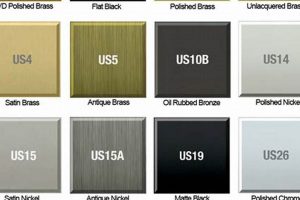
A comprehensive compilation outlines all selected materials, fixtures, and equipment chosen for a building’s interior. This document specifies aspects such as product names, manufacturers, colors, sizes, quantities, and installation locations. An example might include a listing for wall paint specifying the brand, color code, finish (e.g., matte, eggshell), and the rooms in which it will be applied. Similarly, flooring selections would detail the material type, dimensions, manufacturer, and specific installation area. It serves as a vital communication tool among designers, contractors, and clients.
The purpose of meticulously documenting these selections is to ensure accuracy and consistency throughout the construction or renovation process. It minimizes errors, reduces delays, and helps maintain budgetary control. Historically, these lists were maintained manually, often leading to discrepancies and misinterpretations. Modern software solutions have significantly improved the accuracy and efficiency of this documentation, leading to better project outcomes and client satisfaction.
With a foundational understanding established, subsequent sections will delve into the specific components typically included, methods for effective creation and management, the role of technology in streamlining the process, and best practices for successful implementation throughout a project’s lifecycle. These elements are crucial for any well-executed project.
Guidance for Effective Material Specification
The meticulous compilation of material specifications is crucial for successful execution of any interior project. Adherence to these guidelines will enhance clarity, reduce errors, and ultimately contribute to a superior finished product.
Tip 1: Thoroughly Document All Selections. Each material, fixture, and piece of equipment must be precisely cataloged, including manufacturer, model number, color code, dimensions, and any other relevant specifications. This reduces ambiguity and ensures accurate procurement.
Tip 2: Integrate Drawings and Specifications. The documentation should directly reference architectural drawings and reflected ceiling plans. Clear callouts on the drawings link specific materials to their intended locations, preventing misinterpretations.
Tip 3: Specify Installation Requirements. Beyond the product itself, detail the installation methods, substrate preparation, and any special considerations. For example, if a particular adhesive is required for flooring, this must be clearly indicated.
Tip 4: Include Budgetary Information. Incorporate the unit cost and total cost for each item. This allows for efficient cost tracking and proactive management of potential budget overruns.
Tip 5: Establish a Revision Control System. Maintain a clear record of all changes and updates made to the material specifications. This ensures that everyone is working with the most current information and minimizes the risk of errors due to outdated documents.
Tip 6: Verify Availability and Lead Times. Confirm the availability of all selected materials and understand their lead times. This proactive step prevents delays that can significantly impact project timelines.
Tip 7: Obtain Samples and Approvals. Secure physical samples of all materials and obtain client approval before finalizing the document. This ensures that the selected items meet the client’s expectations and aesthetic preferences.
Diligent application of these recommendations ensures accuracy, promotes effective communication, and contributes to streamlined project execution. The result is a project completed on time, within budget, and to the highest standards.
The next phase will explore the tools and technologies that can further optimize material management and specification processes.
1. Material specifications

Material specifications constitute a foundational element of a comprehensive interior design finish schedule. The schedule, in essence, serves as a centralized repository for all material-related data, with material specifications acting as the detailed entries that populate this database. Without comprehensive and accurate material specifications, the schedule lacks the requisite granularity to effectively guide procurement, installation, and budgetary control. The specifications provide a detailed description of each selected item, encompassing attributes such as manufacturer, product name, color, size, finish, quantity, and installation location. A poorly defined specification, for example, failing to indicate the correct sheen of paint, could result in the application of an unsuitable finish, impacting the aesthetic and functional performance of the space. Likewise, an inaccurate quantity calculation could lead to material shortages, causing project delays and increased costs.
Consider the case of selecting tiles for a bathroom renovation. The material specification within the interior design finish schedule would not only identify the tile’s manufacturer and product line but also its specific dimensions, material composition (e.g., porcelain, ceramic, stone), slip resistance rating, and recommended grout type. This level of detail ensures that the correct product is ordered, installed according to industry best practices, and fulfills its intended function within the bathroom environment. Furthermore, the specification would delineate the precise quantity of tiles required, accounting for waste and cut pieces, to prevent over- or under-ordering. Therefore, robust material specifications directly contribute to the successful execution of the design concept, mitigating risks associated with incorrect product selection or inadequate material quantities.
In summary, material specifications are indispensable components of the interior design finish schedule, providing the necessary detail to ensure accurate procurement, proper installation, and effective budgetary oversight. The quality and completeness of these specifications directly impact the project’s outcome, underscoring the importance of meticulous documentation and diligent verification. The ongoing challenge lies in maintaining up-to-date information on available products and ensuring that all stakeholders have access to the most current version of the schedule. By prioritizing accuracy and clarity in material specifications, project teams can minimize errors, reduce delays, and deliver superior results.
2. Room allocation

Room allocation, within the context of an interior design finish schedule, represents the systematic assignment of specific finishes to individual rooms or areas within a project. It’s a critical step in ensuring design consistency, managing material quantities, and facilitating efficient installation.
- Precise Material Assignment
Room allocation enables designers to specify distinct finishes for different spaces based on functional requirements, aesthetic considerations, and budgetary constraints. For example, a bathroom might require water-resistant flooring and durable paint, while a living room might feature hardwood flooring and a more decorative wall finish. Explicit room allocation within the schedule prevents materials intended for one space from being mistakenly installed in another.
- Quantity Calculation and Procurement
By clearly linking finishes to specific rooms, the schedule facilitates accurate quantity takeoffs. This is essential for procuring the correct amount of materials, minimizing waste, and avoiding costly reorders. For instance, the schedule would delineate the square footage of flooring required for each bedroom, allowing for precise ordering and reducing the likelihood of material shortages during installation.
- Installation Sequencing and Coordination
Room allocation informs the installation sequence and helps coordinate the work of different trades. The schedule provides a clear roadmap for installers, indicating which finishes should be applied in each area and in what order. This is particularly important in complex projects with multiple trades working simultaneously, ensuring that finishes are installed correctly and efficiently.
- Budget Tracking and Cost Control
The allocation of finishes to specific rooms enables detailed budget tracking and cost control. By assigning a cost to each finish and linking it to a particular space, project managers can monitor spending on a room-by-room basis, identifying potential budget overruns and making adjustments as needed. This level of granularity provides greater financial transparency and helps ensure that the project stays within budget.
In conclusion, room allocation is not merely a matter of labeling spaces; it is an integral part of the interior design finish schedule that directly impacts material procurement, installation coordination, budgetary control, and ultimately, the successful execution of the design intent. Without a well-defined room allocation strategy, projects are susceptible to errors, delays, and cost overruns.
3. Budget allocation

Budget allocation forms a critical and inseparable element of an interior design finish schedule. The schedule serves not only as a detailed inventory of selected materials but also as a financial roadmap, guiding expenditure across various finish elements. Without careful budgetary planning integrated into the schedule, projects risk cost overruns, compromises in design quality, and potential delays stemming from insufficient funding. An effectively managed budget allocation provides a framework for informed decision-making, ensuring that material selections align with both aesthetic goals and financial constraints. For instance, if a project’s overall budget is limited, the schedule might prioritize more cost-effective flooring options in secondary areas to allow for higher-end tile selections in key spaces like bathrooms or entryways. This strategic allocation ensures that resources are deployed where they have the greatest impact, maximizing value and design impact within budgetary limitations.
The practical implications of integrating budget allocation into the finish schedule extend beyond initial material selection. The schedule also facilitates ongoing cost monitoring throughout the construction or renovation process. By tracking actual expenditures against planned allocations for each finish element, project managers can identify potential cost variances early on and take corrective action to maintain budgetary control. Furthermore, a detailed budget allocation within the schedule enables effective value engineering, allowing designers and contractors to explore alternative materials or installation methods that can reduce costs without sacrificing quality or design integrity. For example, if the cost of a specified natural stone countertop exceeds the allocated budget, the schedule might prompt a search for alternative engineered stone products that offer a similar aesthetic at a lower price point. This proactive approach ensures that the project remains financially viable while adhering to the original design vision.
In conclusion, budget allocation is not merely an ancillary consideration but rather an integral component of a comprehensive interior design finish schedule. It provides a structured framework for financial planning, facilitates informed decision-making, and enables ongoing cost monitoring throughout the project lifecycle. Challenges often arise in accurately estimating material costs and accounting for potential contingencies. Therefore, thorough research, realistic pricing, and a well-defined contingency plan are essential for successful budget allocation within the finish schedule. The link between budgetary planning and material specification is foundational to a well-executed interior design project.
4. Installation details

Installation details are an indispensable component of a comprehensive interior design finish schedule. These details bridge the gap between material selection and project execution, ensuring that finishes are applied correctly and according to the designer’s intent. Without clear and thorough installation specifications, the potential for errors, delays, and compromised design outcomes increases significantly.
- Substrate Preparation Requirements
Specific information regarding the preparation of surfaces prior to finish installation is crucial. The finish schedule must clearly outline the necessary steps to ensure proper adhesion and longevity. For example, the schedule should specify if a self-leveling compound is required before installing flooring, or if walls require priming before painting. Omission of these details can lead to premature failure of the finish and costly rework.
- Adhesive and Fastener Specifications
The type of adhesive or fastener used for installation directly impacts the performance and lifespan of the finish. The schedule should identify the precise products to be used, referencing specific manufacturers and product codes. For instance, specifying a particular type of mortar for tile installation or the appropriate screw size for attaching trim is essential. Failure to use the correct adhesive or fastener can result in loose materials, structural instability, and compromised aesthetics.
- Seam Placement and Pattern Matching
For finishes with visible seams or patterns, such as wallpaper, fabric wall coverings, or large-format tiles, the installation schedule must provide detailed guidance on seam placement and pattern matching. This ensures a visually cohesive and aesthetically pleasing result. The schedule might include diagrams illustrating how patterns should align or specify the maximum allowable seam width. Lack of attention to these details can lead to mismatched patterns, unsightly seams, and a diminished overall design quality.
- Protection and Curing Procedures
Many finishes require specific protection or curing procedures after installation to ensure optimal performance. The schedule should outline these procedures, specifying the duration of curing times, the type of protection required, and any environmental conditions that need to be maintained. For example, concrete flooring may require a specific curing compound and a period of protection from foot traffic. Failure to follow these procedures can result in damaged finishes and compromised durability.
The inclusion of comprehensive installation details within the interior design finish schedule serves as a critical safeguard against misinterpretation and improper application of selected finishes. This proactive approach enhances project outcomes by mitigating risks associated with incorrect installation practices and ensuring that the final result aligns with the intended design vision. Furthermore, meticulous documentation facilitates clear communication among all stakeholders, contributing to a streamlined and efficient construction process.
5. Revision tracking

Revision tracking is integral to maintaining the accuracy and reliability of an interior design finish schedule throughout a project’s lifecycle. The finish schedule, by its nature, is a dynamic document subject to modifications driven by factors such as client feedback, unforeseen site conditions, material availability, and budgetary adjustments. Without a robust revision tracking system, the potential for discrepancies and miscommunication among project stakeholders escalates significantly, potentially leading to errors in procurement, installation, and ultimately, compromised design outcomes. Consider a scenario where a specified paint color is discontinued by the manufacturer. The design team must select a replacement, updating the finish schedule accordingly. If this change is not meticulously tracked and communicated, the contractor may proceed with the original, unavailable paint, causing delays and additional expenses. Therefore, effective revision tracking is not merely a procedural formality but a critical mechanism for mitigating risks and ensuring that all parties operate from the most current information.
The practical application of revision tracking extends beyond simply noting changes. A comprehensive system incorporates features such as date-stamped revisions, detailed descriptions of modifications, and clear identification of the individual responsible for each update. Furthermore, the system should facilitate easy access to previous versions of the schedule, allowing stakeholders to trace the evolution of design decisions and understand the rationale behind specific choices. For instance, if a flooring selection is changed due to budgetary constraints, the revision history should document the original selection, the reason for the change, the replacement material, and any associated cost implications. This level of transparency fosters accountability and facilitates informed decision-making. Modern project management software often integrates revision tracking capabilities, providing automated tools for managing and disseminating updates. These tools streamline the process, reduce the risk of human error, and enhance collaboration among project team members.
In summary, revision tracking is an indispensable element of an interior design finish schedule, serving as a vital safeguard against errors, miscommunication, and costly rework. The challenges lie in establishing a consistent and user-friendly system that is rigorously enforced throughout the project. By prioritizing accuracy and transparency in revision tracking, project teams can ensure that the finish schedule remains a reliable and effective tool for guiding the successful execution of the design vision. This rigorous approach transforms the finish schedule from a static document into a dynamic, actively managed resource.
6. Vendor information

Vendor information, when integrated into an interior design finish schedule, provides a critical logistical backbone, streamlining procurement and ensuring accurate product sourcing. It transforms the schedule from a mere list of materials into a actionable document that facilitates efficient project execution.
- Contact Details for Ordering
The inclusion of precise contact information including phone numbers, email addresses, and sales representative names within the finish schedule directly facilitates the ordering process. This reduces the time spent searching for vendor contacts and minimizes the potential for errors during communication. For instance, specifying the dedicated account manager at a tile distributor allows for quicker order processing and resolution of any potential issues, directly impacting project timelines.
- Pricing and Payment Terms
Vendor pricing information integrated into the schedule enables precise cost tracking and budget management. Including details on applicable discounts, shipping costs, and payment terms ensures that the project remains financially viable. For example, noting a volume discount offered by a lighting vendor allows for proactive cost savings when ordering multiple fixtures, ultimately affecting the project’s overall budget.
- Lead Times and Availability
Specifying vendor-provided lead times for each item is crucial for project scheduling. Knowing the estimated delivery date of materials allows for proper sequencing of installation tasks and minimizes the risk of delays. For example, noting a six-week lead time for custom-made cabinetry allows the project manager to plan accordingly, ensuring that the cabinetry arrives on-site when needed, preventing bottlenecks in the construction process.
- Warranty and Support Information
Including warranty details and technical support contacts for each vendor within the finish schedule simplifies post-installation maintenance and troubleshooting. This ensures that any issues arising from material defects or installation errors can be addressed promptly. For instance, providing the contact information for the technical support department of a flooring manufacturer facilitates efficient resolution of any installation-related problems, maintaining the longevity and quality of the finished space.
By incorporating comprehensive vendor data, the interior design finish schedule becomes a more effective tool for coordinating procurement, managing costs, and ensuring project success. The seamless integration of this information streamlines the workflow, reduces the risk of errors, and facilitates efficient communication between the design team, contractors, and vendors. It transforms the schedule into a comprehensive management resource.
Frequently Asked Questions
This section addresses common inquiries regarding interior design finish schedules, providing clarity on their purpose, creation, and utilization within construction projects.
Question 1: What is the primary function of an interior design finish schedule?
The primary function is to serve as a centralized repository for all information pertaining to the finishes selected for an interior space. This includes material specifications, quantities, installation notes, and budgetary considerations.
Question 2: Who is typically responsible for creating an interior design finish schedule?
The responsibility generally falls upon the interior designer or architect leading the project. However, input from contractors and other specialists may be incorporated to ensure accuracy and feasibility.
Question 3: What are the essential components included in an interior design finish schedule?
Essential components typically encompass material specifications, room allocations, budgetary allocations, installation details, revision tracking information, and vendor contact information.
Question 4: How does an interior design finish schedule contribute to cost control?
The schedule facilitates cost control by providing a detailed breakdown of material costs, enabling accurate budget tracking, and facilitating value engineering exercises to identify potential cost savings.
Question 5: What are the potential consequences of an inaccurate interior design finish schedule?
Inaccurate schedules can lead to procurement errors, installation delays, budget overruns, and compromised design integrity, ultimately affecting the project’s overall success.
Question 6: How often should an interior design finish schedule be updated during a project?
The schedule should be updated continuously throughout the project’s lifecycle to reflect any changes in material selections, quantities, or installation methods. Regular updates ensure that all stakeholders are operating with the most current information.
Accurate creation, maintenance, and utilization of the interior design finish schedule enhance the overall process.
With a solid grasp of these frequently asked questions, the subsequent section will explore the application of technology to streamline the process.
Conclusion
The preceding discussion has elucidated the multifaceted nature and critical role of the interior design finish schedule. The document serves as a central coordinating element in any interior design project. Its accuracy directly influences project cost, timeline, and overall quality. Without careful creation, maintenance, and adherence to a properly constructed finish schedule, projects are at risk.
The enduring importance of the interior design finish schedule warrants careful consideration by all stakeholders involved in the built environment. Diligence in its preparation and consistent reference throughout the project lifecycle remain paramount for successful and well-executed interior spaces. Future advancements in technology promise to further refine the creation and management of these schedules, emphasizing the continuing need for expertise in this essential area.