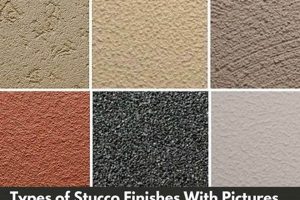
Exterior Insulation and Finish Systems (EIFS) are multi-layered exterior wall claddings used for both residential and commercial buildings. These systems typically consist of an insulation board attached to the substrate, a reinforced base coat applied over the insulation, and a textured protective finish coat. A common example is a building with a stucco-like appearance, but offering enhanced thermal performance compared to traditional stucco.
The adoption of these exterior claddings offers significant advantages, notably improved energy efficiency through continuous insulation, leading to reduced heating and cooling costs. Furthermore, their design flexibility allows for a wide range of aesthetic finishes and architectural details. Historically, these systems gained popularity as building owners sought ways to enhance building performance and achieve unique visual designs.
The subsequent sections will delve into the specific components of this cladding type, installation best practices, performance considerations, and maintenance guidelines.
Essential Considerations for Optimal Exterior Cladding Performance
Ensuring the longevity and performance of exterior cladding requires careful attention to detail throughout the design, installation, and maintenance phases.
Tip 1: Substrate Preparation: Proper substrate preparation is critical. Surfaces must be clean, dry, and structurally sound before the application of any system components. Failure to adequately prepare the substrate can lead to adhesion issues and premature failure.
Tip 2: Insulation Board Attachment: The method of insulation board attachmentadhesive, mechanical fasteners, or a combination thereofmust adhere strictly to the manufacturer’s specifications and local building codes. Incorrect attachment can compromise the system’s thermal performance and structural integrity.
Tip 3: Reinforcement Mesh Embedding: The reinforcing mesh must be fully and uniformly embedded within the base coat. Insufficient embedding depth or inconsistent application can lead to cracking and impact damage.
Tip 4: Proper Curing Time: Allow adequate curing time for the base coat and finish coat, as specified by the manufacturer. Premature exposure to moisture or extreme temperatures can negatively impact the curing process and reduce the system’s durability.
Tip 5: Flashing and Sealant Application: Meticulous flashing and sealant application around windows, doors, and other penetrations are essential to prevent water intrusion. Use compatible materials and ensure proper detailing to maintain a watertight envelope.
Tip 6: Regular Inspections and Maintenance: Implement a regular inspection and maintenance program to identify and address any signs of damage, such as cracks, delamination, or discoloration. Prompt repairs can prevent minor issues from escalating into more significant problems.
Tip 7: Climate Considerations: Choose a system specifically designed for the local climate and anticipated weather conditions. Factors such as temperature fluctuations, humidity levels, and exposure to UV radiation can significantly impact the performance of different formulations.
Adherence to these guidelines is vital for maximizing the benefits of exterior cladding, including enhanced energy efficiency, improved aesthetics, and long-term durability.
The following section will provide a detailed overview of troubleshooting common issues and recommended repair procedures.
1. Thermal Performance

Thermal performance is a critical characteristic of Exterior Insulation and Finish Systems (EIFS), influencing a building’s energy efficiency, occupant comfort, and overall environmental impact. The insulating properties inherent in these systems play a significant role in minimizing heat transfer through the building envelope.
- Continuous Insulation Layer
The continuous insulation (CI) layer, typically composed of expanded polystyrene (EPS) or mineral wool, is a primary determinant of thermal performance. By wrapping the entire building envelope, it minimizes thermal bridging, a phenomenon where heat flows readily through conductive elements like studs. For example, a building clad with an EIFS incorporating a 2-inch thick EPS board can significantly reduce heat loss compared to a traditionally insulated stud wall.
- R-Value and Thermal Resistance
The R-value, a measure of thermal resistance, quantifies an EIFS’s ability to impede heat flow. Higher R-values indicate better insulation performance. The total R-value of an EIFS assembly depends on the insulation type, thickness, and the presence of other components. Increased thermal resistance directly translates to lower energy consumption for heating and cooling.
- Impact on Energy Consumption
The enhanced thermal performance of EIFS contributes to reduced energy consumption, particularly in buildings with large exterior surface areas. Buildings clad with EIFS exhibit lower heating and cooling loads, leading to lower utility bills and a reduced carbon footprint. In climates with extreme temperature variations, the energy savings can be substantial.
- Compliance with Energy Codes
The use of EIFS assists in meeting stringent energy code requirements, such as those outlined in ASHRAE Standard 90.1 and the International Energy Conservation Code (IECC). These codes set minimum insulation levels for building envelopes, and EIFS often provide a cost-effective solution for achieving compliance. Meeting these codes is increasingly important for securing building permits and demonstrating sustainable construction practices.
The integration of continuous insulation, the achievement of high R-values, the reduction in energy consumption, and the facilitation of energy code compliance collectively underscore the vital role of thermal performance in the context of EIFS. The selection of appropriate EIFS materials and installation techniques is crucial for realizing the full benefits of this cladding system.
2. Design Versatility

The design versatility afforded by Exterior Insulation and Finish Systems (EIFS) constitutes a significant advantage, enabling a wide spectrum of aesthetic expressions and architectural styles. This inherent flexibility allows designers to achieve diverse visual effects without compromising the system’s performance characteristics.
- Texture and Finish Options
EIFS offer a virtually unlimited range of textures and finishes, from smooth stucco-like surfaces to coarse, aggregate-embedded appearances. This capability allows for the replication of traditional building materials, such as brick, stone, or wood, at a reduced cost and weight. For instance, an EIFS can be textured to mimic the appearance of limestone cladding, providing a high-end aesthetic without the structural demands and expense of natural stone.
- Color Palette and Customization
The finish coat can be tinted to virtually any color, providing extensive design freedom. Custom color matching is also readily available, allowing designers to precisely achieve desired hues and integrate the building’s faade with its surroundings. For example, a building in a historic district can be clad with an EIFS finished in a color that matches the existing architectural palette, ensuring aesthetic harmony.
- Architectural Detailing and Ornamentation
EIFS can be easily shaped and molded to create intricate architectural details, such as cornices, arches, and quoins. These features can add visual interest and character to a building’s faade. Examples include the use of EIFS to create decorative window surrounds or elaborate entryways, enhancing the building’s overall aesthetic appeal.
- Shape and Form Flexibility
The insulation board can be readily cut and shaped to create curved surfaces, complex geometries, and other non-planar forms. This flexibility allows for the creation of visually striking and unconventional building designs. For example, an EIFS can be used to clad a building with undulating walls or a domed roof, achieving a unique and memorable architectural statement.
These diverse facets of design versatility underscore the adaptability of EIFS, making it a compelling cladding solution for projects requiring both aesthetic appeal and performance benefits. The ability to customize texture, color, detailing, and shape allows architects and designers to realize their creative visions while maintaining the system’s thermal efficiency and durability.
3. Water Resistance

Water resistance is a critical performance attribute of Exterior Insulation and Finish Systems (EIFS), directly impacting a building’s structural integrity, energy efficiency, and long-term durability. The ability of these systems to effectively resist water penetration is essential for preventing moisture-related damage and maintaining a healthy indoor environment.
- Multi-Layered Barrier
The multi-layered construction of EIFS inherently provides a degree of water resistance. The finish coat, base coat with reinforcing mesh, and insulation board act as successive barriers against water intrusion. For example, a properly applied acrylic-based finish coat can repel surface water, preventing it from reaching the underlying layers. This multi-layered approach minimizes the risk of water accumulating within the system.
- Proper Installation and Detailing
Effective water resistance relies heavily on correct installation practices and meticulous detailing, particularly around windows, doors, and other penetrations. Flashing, sealants, and backwraps are crucial for diverting water away from vulnerable areas. An example of proper detailing is the use of continuous sealant beads at window perimeters, preventing water from seeping behind the EIFS. Improper installation is a common cause of water intrusion-related problems.
- Drainage Systems (Water-Managed EIFS)
Some EIFS designs incorporate a drainage cavity behind the insulation board to manage incidental moisture that may penetrate the outer layers. These “water-managed” systems allow water to drain harmlessly away, reducing the risk of prolonged exposure and potential damage. This is analogous to a rainscreen system where an air gap is present.
- Vapor Permeability and Breathability
While water resistance is essential, EIFS must also allow for vapor permeability, enabling moisture vapor to escape from within the wall assembly. This “breathability” prevents the buildup of condensation within the wall cavity, which can lead to mold growth and material degradation. The selection of appropriate materials with suitable vapor permeance characteristics is critical. For example, using a vapor-permeable insulation board allows moisture to diffuse outwards.
These factors collectively highlight the importance of water resistance in EIFS. While the systems inherently offer a degree of protection, proper installation, detailing, and the incorporation of drainage features are crucial for maximizing performance and ensuring the long-term durability of the building envelope. Specifying systems designed for specific climate conditions further enhances resistance to water-related issues.
4. Installation Quality

The long-term performance and durability of Exterior Insulation and Finish Systems (EIFS) are inextricably linked to the quality of their installation. Proper installation is not merely a procedural step; it is a critical determinant of the system’s ability to deliver its intended benefits, including energy efficiency, weather resistance, and aesthetic appeal.
- Substrate Preparation and Adhesion
Thorough substrate preparation is paramount for ensuring adequate adhesion of the insulation board. Surfaces must be clean, dry, and free of contaminants that could compromise the bond. For example, failure to remove loose paint or debris can result in delamination of the EIFS, leading to water intrusion and premature failure. A properly prepared surface provides a solid foundation for the system, maximizing its longevity.
- Reinforcement Mesh Embedding
The reinforcing mesh within the base coat must be fully and uniformly embedded. Insufficient embedding depth or inconsistent application can lead to cracking and impact damage. Consider a scenario where the mesh is visible on the surface of the base coat; this indicates inadequate embedding, leaving the system vulnerable to stress fractures. Proper embedding ensures the system’s structural integrity and resistance to physical damage.
- Flashing and Sealant Application
Meticulous flashing and sealant application around windows, doors, and other penetrations are essential for preventing water intrusion. Improperly installed flashing or sealant gaps can create pathways for water to enter the wall assembly, leading to moisture damage and mold growth. For instance, a lack of backer rod in sealant joints can result in sealant failure and water penetration. Proper detailing maintains a watertight building envelope.
- Curing Times and Environmental Conditions
Adherence to manufacturer-specified curing times for the base coat and finish coat is crucial. Premature exposure to moisture or extreme temperatures can negatively impact the curing process and reduce the system’s durability. Applying the finish coat before the base coat has fully cured can result in adhesion problems and cracking. Respecting curing times ensures the system achieves its intended strength and performance characteristics.
These factors underscore the pivotal role of skilled installation in the success of EIFS. While the inherent properties of the materials contribute to the system’s overall performance, it is the quality of the installation that ultimately determines its long-term effectiveness and resistance to environmental stresses. Attention to detail and adherence to best practices are essential for realizing the full potential of EIFS.
5. Durability Standards

Durability standards are pivotal in evaluating and ensuring the long-term performance of Exterior Insulation and Finish Systems (EIFS). These standards define the criteria for assessing an EIFS’s resistance to environmental factors, physical stresses, and degradation over time, thereby providing a benchmark for quality and reliability.
- ASTM E2098: Standard Specification for EIFS with Drainage
ASTM E2098 establishes the minimum performance requirements for EIFS incorporating a drainage mechanism. This standard includes tests for water penetration resistance, wind load resistance, and impact resistance. Compliance with ASTM E2098 ensures that the EIFS can effectively manage moisture intrusion and withstand typical environmental stresses. For example, the standard dictates the acceptable level of water leakage under specified pressure conditions, simulating wind-driven rain. Failure to meet these criteria indicates a higher risk of water damage and premature deterioration of the EIFS.
- ASTM E2357: Standard Test Method for Determining Air Leakage of Air Barrier Assemblies
ASTM E2357 evaluates the air leakage performance of an air barrier assembly, which is often an integral part of an EIFS. This standard specifies a testing protocol to measure the amount of air that passes through the assembly under various pressure differentials. Adherence to ASTM E2357 helps minimize air infiltration, improving energy efficiency and preventing moisture condensation within the wall cavity. For instance, a low air leakage rate, as defined by the standard, translates to reduced heating and cooling costs for the building. Exceeding the maximum allowable leakage rate signals potential energy losses and increased risk of moisture-related problems.
- ASTM D6947: Standard Practice for the Assessment of Durability of Sprayed Polyurethane Foam
While not specific to all EIFS, ASTM D6947 provides a framework for assessing the durability of sprayed polyurethane foam (SPF) insulation, which can be used in some EIFS applications. This standard outlines procedures for evaluating the foam’s resistance to environmental factors such as UV radiation, temperature fluctuations, and moisture exposure. Meeting ASTM D6947 ensures that the SPF insulation maintains its thermal performance and structural integrity over time. For example, the standard includes tests to measure the change in compressive strength after exposure to elevated temperatures. Significant degradation of the foam’s properties indicates a reduced service life and potential performance issues.
- ICC Evaluation Service (ICC-ES) Reports
ICC-ES reports provide evidence that EIFS products comply with relevant building codes and standards. These reports are based on rigorous testing and evaluation of the product’s performance characteristics. Obtaining an ICC-ES report demonstrates a manufacturer’s commitment to quality and provides assurance to building officials and designers that the EIFS meets specified requirements. For instance, an ICC-ES report may verify that an EIFS has passed fire resistance tests, wind load tests, and water penetration tests. The absence of an ICC-ES report raises concerns about the product’s compliance with applicable codes and its overall reliability.
These durability standards collectively contribute to the overall performance and longevity of EIFS. Compliance with these standards, as verified through testing and certification, is essential for ensuring that EIFS deliver their intended benefits of energy efficiency, weather resistance, and aesthetic appeal over the long term. The selection of EIFS products that meet or exceed these standards is a critical step in achieving durable and sustainable building construction.
6. Cost-Effectiveness
The cost-effectiveness of Exterior Insulation and Finish Systems (EIFS) stems from a combination of factors encompassing initial material and installation expenses, long-term energy savings, and reduced maintenance requirements. The initial cost of EIFS can be competitive with traditional cladding materials such as brick or stucco, particularly when factoring in the continuous insulation benefit inherently provided. The relatively lightweight nature of EIFS components can also lead to reduced structural support requirements in new construction, further offsetting initial costs. The impact resistance can also offer savings. A shopping center owner in a region prone to hail storms reported significantly less damage to their EIFS-clad building compared to adjacent structures with traditional siding, leading to lower repair expenses after such events.
Long-term cost savings are primarily realized through enhanced energy efficiency. The continuous insulation layer of EIFS minimizes thermal bridging, resulting in lower heating and cooling costs throughout the building’s lifespan. For example, a study by the Oak Ridge National Laboratory demonstrated that buildings clad with EIFS can achieve energy savings of up to 40% compared to similar buildings with conventional insulation. Reduced maintenance costs are attributable to the durability of EIFS and its resistance to cracking, fading, and water damage. Properly installed and maintained EIFS can last for decades with minimal upkeep, unlike some cladding materials that require frequent repainting or repair. In coastal regions, buildings with EIFS exhibit greater resistance to salt spray and wind-driven rain compared to wood siding, resulting in lower maintenance costs associated with rot and decay. A university housing complex switched to these systems after experiencing the difference.
In summary, the cost-effectiveness of EIFS extends beyond initial price considerations. By incorporating continuous insulation, reducing energy consumption, and minimizing maintenance needs, EIFS provides a comprehensive value proposition over the building’s lifespan. Challenges associated with improper installation can negate these benefits; therefore, employing qualified and experienced installers is essential. The long-term economic advantages of EIFS, coupled with its design flexibility and environmental benefits, position it as a cost-effective cladding solution for a wide range of building types.
Frequently Asked Questions About Exterior Insulation and Finish Systems (EIFS)
The following addresses common inquiries regarding Exterior Insulation and Finish Systems (EIFS), providing detailed and factual responses.
Question 1: What is the typical lifespan of an EIFS cladding system?
The service life of an EIFS cladding system is influenced by various factors, including installation quality, climate conditions, and maintenance practices. When installed correctly and maintained appropriately, an EIFS can provide durable protection for several decades, often exceeding 30 years. Regular inspections and prompt repairs are essential for maximizing longevity.
Question 2: Are EIFS susceptible to water damage?
While EIFS are designed to resist water penetration, improper installation or detailing can create vulnerabilities. Water intrusion can lead to moisture damage, mold growth, and structural issues. Water-managed EIFS, incorporating drainage cavities, offer enhanced protection against water accumulation. Proper flashing and sealing around penetrations are critical preventative measures.
Question 3: How does EIFS compare to stucco in terms of cost?
The initial material costs of EIFS may be comparable to traditional stucco. However, the continuous insulation provided by EIFS can result in significant long-term energy savings, potentially offsetting the initial investment. The overall cost-effectiveness depends on factors such as climate, building size, and energy consumption patterns.
Question 4: Can EIFS be installed on any type of building substrate?
EIFS can be installed on various substrates, including concrete, masonry, and wood framing. However, proper substrate preparation is crucial for ensuring adequate adhesion and preventing moisture-related problems. The substrate must be clean, dry, and structurally sound before the application of the EIFS.
Question 5: What are the maintenance requirements for EIFS?
EIFS generally requires minimal maintenance. Routine inspections should be conducted to identify any signs of damage, such as cracks or delamination. Prompt repairs of minor issues can prevent them from escalating into more significant problems. Power washing can be used to remove dirt and grime.
Question 6: Are there specific climate considerations for EIFS installation?
Climate conditions can significantly impact EIFS performance. In regions with high humidity or frequent rainfall, water-managed EIFS are recommended. In areas with extreme temperature fluctuations, materials with high thermal expansion coefficients should be avoided. Selecting an EIFS system designed for the specific climate is essential.
In summary, Exterior Insulation and Finish Systems offer a durable and energy-efficient cladding solution when properly installed and maintained. Adherence to best practices and consideration of climate-specific factors are crucial for realizing the full benefits of these systems.
The following section will explore case studies highlighting successful applications of EIFS in diverse building projects.
Conclusion
This exploration has examined the core attributes of the EIFS finish system, encompassing its thermal performance, design flexibility, water resistance, installation considerations, adherence to durability standards, and overall cost-effectiveness. A comprehensive understanding of these elements is essential for informed decision-making in building design and construction. The proper selection, installation, and maintenance of EIFS are critical for realizing its potential benefits.
Continued adherence to industry best practices and rigorous quality control measures are vital for ensuring the long-term performance and sustainability of structures employing the EIFS finish system. Further research and development are needed to optimize material formulations and installation techniques, further enhancing the resilience and energy efficiency of building envelopes in diverse climatic conditions.