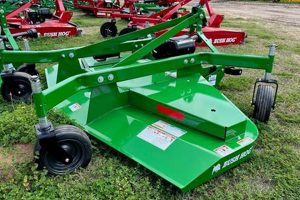
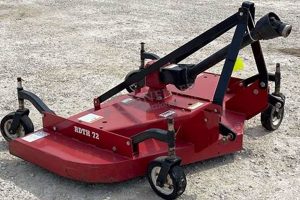
A large-scale, tractor-mounted implement designed for maintaining expansive lawns and grassy areas to a high standard. These units, characterized by their wide cutting width, are engineered to deliver a consistent and level cut across substantial areas. They are frequently employed in the upkeep of golf courses, sports fields, and large estates, where aesthetic appeal and uniform grass height are paramount.
The utilization of such wide-cut machinery offers significant advantages in terms of operational efficiency. By covering a greater surface area in a single pass, the time required for grass maintenance is substantially reduced. This efficiency translates to lower labor costs and reduced fuel consumption, making it a cost-effective solution for managing large properties. Their development is rooted in the increasing demand for efficient turf management solutions in both commercial and residential sectors.
Subsequent sections will delve into the specific features, operational considerations, and maintenance requirements associated with these wide-area mowing systems. Furthermore, a comparative analysis of different models and manufacturers will be presented, providing potential users with the information necessary to make informed purchasing decisions. A discussion of best practices for achieving optimal cutting performance and prolonging the lifespan of the equipment will also be included.
Operating and Maintaining Wide-Cut Mowing Decks
The following tips provide guidance on the optimal operation and maintenance of wide-cut mowing decks, ensuring prolonged equipment life and consistent cutting performance.
Tip 1: Pre-Operational Inspection: Prior to each use, a thorough inspection of the equipment is crucial. Examine blades for sharpness and damage, check belt tension and condition, and verify proper lubrication of all moving parts. Neglecting this step can lead to inefficient cutting and premature component failure.
Tip 2: Consistent Ground Speed: Maintaining a consistent ground speed is essential for achieving a uniform cut. Avoid abrupt changes in speed, especially when operating on uneven terrain. Varying ground speed can result in scalping or uneven grass height.
Tip 3: Overlap Cutting Passes: Overlapping cutting passes by approximately six inches ensures complete coverage and eliminates uncut strips. This practice is particularly important when mowing dense or tall grass.
Tip 4: Regular Blade Sharpening: Sharp blades are paramount for a clean, healthy cut. Dull blades tear the grass, making it susceptible to disease. Blades should be sharpened regularly, typically every 25 to 50 hours of operation, depending on grass type and cutting conditions.
Tip 5: Proper Deck Height Adjustment: Adjusting the deck height to match the desired cutting height and terrain conditions is critical. Lower cutting heights are suitable for smooth surfaces, while higher settings are necessary for uneven ground to prevent scalping.
Tip 6: Timely Belt Replacement: Drive belts are subject to wear and tear and should be replaced at regular intervals. Signs of wear include cracking, fraying, or slipping. Replacing belts proactively prevents equipment downtime and potential damage to other components.
Tip 7: Routine Cleaning: After each use, the underside of the deck should be cleaned to remove accumulated grass clippings and debris. This practice prevents corrosion, improves airflow, and enhances cutting performance.
Adhering to these recommendations will contribute significantly to the longevity and efficiency of the equipment, resulting in improved turf quality and reduced maintenance costs.
The following sections will explore advanced troubleshooting techniques and offer guidance on selecting the appropriate accessories for optimizing the performance of wide-cut mowing decks.
1. Wide Area Coverage

Wide area coverage is a paramount consideration when evaluating the capabilities and suitability of an 8ft finish mower. The expansive cutting width inherent in such equipment directly translates to increased efficiency and reduced operational time. This attribute is particularly relevant for maintaining large properties, sports fields, and golf courses.
- Reduced Pass Requirements
The primary benefit of wide area coverage is the reduction in the number of passes required to mow a given area. An 8ft finish mower, compared to smaller models, can cover significantly more ground in a single pass, minimizing overlap and maximizing productivity. For example, a sports field maintenance crew using an 8ft finish mower will complete the job much faster than with a 6ft model, freeing up resources for other tasks.
- Decreased Operational Time
Reduced pass requirements directly contribute to a decrease in overall operational time. The time saved translates to lower labor costs and reduced fuel consumption, resulting in significant cost savings over time. This is particularly important for large-scale landscaping operations where efficiency is critical.
- Minimized Soil Compaction
Fewer passes across the terrain mean reduced soil compaction. Excessive soil compaction can hinder grass growth and negatively impact the overall health of the turf. The wide area coverage of an 8ft finish mower helps minimize this issue, promoting healthier and more resilient grass.
- Improved Surface Uniformity
The ability to cover large areas quickly and efficiently contributes to a more uniform finish. Consistent cutting height across the entire area results in a visually appealing and professionally maintained landscape. This is especially important for applications where aesthetics are a priority, such as golf course fairways and upscale residential properties.
The advantages associated with wide area coverage underscore the practical value of an 8ft finish mower. Its ability to efficiently maintain expansive areas while minimizing operational costs and promoting healthy turf makes it a valuable asset for a variety of landscaping applications. Considering the relationship between coverage and operational needs is crucial in determining the right mower for a specific task.
2. Precise Cutting Height

Precise cutting height is a critical determinant in the performance and application of an 8ft finish mower. It directly affects turf health, aesthetic quality, and the overall suitability of the equipment for various landscaping needs. The ability to consistently maintain a desired cutting height across a wide area is a primary advantage of these mowers.
- Scalping Prevention
Maintaining a consistent cutting height minimizes the risk of scalping, particularly on uneven terrain. Scalping occurs when the mower blades cut too low, exposing the soil and damaging the grass plants. An 8ft finish mower equipped with accurate height adjustment mechanisms can prevent scalping by maintaining a uniform cutting height, even over undulations in the ground. For example, on a golf course fairway, a precise cutting height ensures a consistent playing surface and avoids unsightly bare patches.
- Turf Health and Density
The cutting height significantly influences the health and density of the turf. Mowing too low can weaken the grass plants, making them susceptible to disease and weed infestation. Conversely, mowing too high can promote excessive thatch buildup. An 8ft finish mower, when set to the appropriate cutting height for the grass species and growing conditions, promotes healthy root development, dense growth, and improved overall turf quality. For example, Kentucky bluegrass thrives when mowed at a height of 2.5 to 3 inches, and an 8ft finish mower can consistently maintain this height across a large area.
- Aesthetic Appeal
Precise cutting height is essential for achieving a visually appealing and manicured lawn or turf surface. A consistent cutting height creates a uniform appearance, enhancing the overall aesthetic quality of the landscape. An 8ft finish mower, with its ability to maintain a consistent cutting height over a wide area, is ideal for creating the smooth, even surface desired on golf courses, sports fields, and high-end residential properties. Irregular cutting heights can result in a patchy, unprofessional look, diminishing the visual appeal of the landscape.
- Adaptability to Different Turf Types
Various grass species have optimal cutting heights. An 8ft finish mower with a wide range of adjustable cutting heights enables it to be used effectively on a variety of turf types. For instance, Bermuda grass, commonly used on southern golf courses, requires a lower cutting height than fescue grass, which is more prevalent in cooler climates. An 8ft finish mower, adjustable to accommodate the needs of each grass type, is a versatile tool for maintaining diverse landscapes.
In summary, precise cutting height is an integral feature of an 8ft finish mower, directly impacting turf health, aesthetic appeal, and overall performance. The ability to consistently maintain the desired cutting height across a wide area is what distinguishes these mowers from smaller, less sophisticated equipment. The proper selection and adjustment of cutting height are critical to achieving optimal results in any landscaping application.
3. Tractor Horsepower Needs

The relationship between tractor horsepower and an 8ft finish mower is a critical consideration for effective operation and optimal performance. Matching the power of the tractor to the demands of the mower is essential to prevent equipment strain, ensure a clean cut, and maximize efficiency. Insufficient horsepower leads to reduced cutting quality and potential damage to both the tractor and the mower, whereas excessive power can result in unnecessary fuel consumption and increased operational costs.
- Mower Weight and Size
The physical size and weight of an 8ft finish mower directly influence the required horsepower. Larger mowers require more power to lift, maneuver, and maintain consistent cutting speed, particularly on uneven terrain. A heavier mower places a greater load on the tractor’s hydraulic system and engine, necessitating adequate horsepower to operate effectively. For instance, a lighter 8ft finish mower designed for residential use will typically require less horsepower than a heavier-duty model intended for commercial applications.
- Cutting Conditions
The condition of the grass being mowed significantly impacts horsepower demands. Dense, tall, or wet grass requires more power to cut than short, dry grass. Similarly, mowing on inclines increases the load on the tractor’s engine. In challenging cutting conditions, a tractor with insufficient horsepower will struggle to maintain consistent blade speed, resulting in a choppy, uneven cut. A golf course maintenance crew mowing wet fairway grass early in the morning will require a tractor with significantly more horsepower than one mowing dry grass on level ground.
- Terrain and Maneuverability
The terrain on which the mower is operated also affects horsepower requirements. Hilly or uneven terrain places greater demands on the tractor’s engine and hydraulic system, requiring more power to maintain consistent speed and maneuverability. Similarly, frequent turning and tight corners can increase horsepower needs. Operating an 8ft finish mower on a steeply sloped property necessitates a tractor with sufficient power to safely navigate the terrain and maintain control.
- PTO Horsepower Rating
The Power Take-Off (PTO) horsepower rating is a crucial specification when matching a tractor to an 8ft finish mower. The PTO transmits power from the tractor’s engine to the mower’s blades. It’s critical to ensure that the tractor’s PTO horsepower rating meets or exceeds the mower’s requirements. Undersizing the PTO horsepower can lead to reduced cutting performance, overheating, and potential damage to the PTO shaft or mower gearbox. Consult the mower’s specifications to determine the recommended PTO horsepower range and select a tractor accordingly.
In summary, the optimal tractor horsepower for an 8ft finish mower is determined by a combination of factors including the mower’s weight and size, cutting conditions, terrain, and PTO horsepower rating. Selecting a tractor with adequate horsepower is essential for ensuring efficient operation, a clean cut, and long-term equipment reliability. Careful consideration of these factors will help to maximize productivity and minimize operational costs. Understanding these nuances is pivotal for effective asset management and equipment maintenance, especially with large implements designed for widespread use.
4. Maintenance Requirements

Maintenance requirements represent a crucial aspect of owning and operating an 8ft finish mower. The expansive size and intricate mechanical components inherent in these machines necessitate a rigorous maintenance schedule to ensure optimal performance, longevity, and safety. Neglecting these requirements can lead to costly repairs, reduced efficiency, and potential hazards.
- Blade Sharpening and Balancing
Regular blade sharpening and balancing are essential for achieving a clean, even cut and preventing excessive vibration. Dull blades tear the grass, leading to increased susceptibility to disease and an unsightly appearance. Unbalanced blades cause vibration, which can damage spindles, bearings, and other critical components. Sharpening should occur every 25-50 hours of operation, depending on the type of grass and operating conditions. Balancing ensures that the weight distribution is uniform, minimizing vibration and prolonging the life of the mower. Failing to maintain sharp, balanced blades results in subpar cutting quality and increased equipment wear.
- Belt Inspection and Replacement
The drive belts that transfer power from the engine to the blades are subject to wear and tear. Regular inspection is crucial to identify signs of cracking, fraying, or slippage. Worn belts can slip, reducing cutting efficiency and potentially causing damage to other components. Belts should be replaced according to the manufacturer’s recommendations or when any signs of wear are detected. A broken belt can bring operations to a standstill, highlighting the importance of preventative replacement.
- Lubrication of Moving Parts
Proper lubrication of all moving parts, including spindles, bearings, and pivot points, is critical for reducing friction, preventing wear, and ensuring smooth operation. A consistent lubrication schedule, using the recommended type of grease, is essential for maintaining the longevity and efficiency of the 8ft finish mower. Neglecting lubrication can lead to premature component failure and costly repairs. Grease fittings should be identified and lubricated at regular intervals, as specified in the owner’s manual.
- Deck Cleaning and Corrosion Prevention
Accumulated grass clippings and debris on the underside of the mower deck can trap moisture, leading to corrosion and reduced airflow. Regular cleaning is essential for preventing rust and maintaining optimal cutting performance. The deck should be thoroughly cleaned after each use, and any signs of corrosion should be addressed promptly. Applying a rust preventative coating can further protect the deck from the elements. Neglecting deck cleaning can result in accelerated deterioration and reduced lifespan of the mower.
These facets of maintenance are interconnected and contribute to the overall reliability and performance of the 8ft finish mower. A proactive approach to maintenance, adhering to the manufacturer’s recommendations, will minimize downtime, reduce repair costs, and ensure a consistent, high-quality cut. The investment in routine maintenance is an investment in the longevity and value of the equipment.
5. Operational Efficiency

Operational efficiency, when considered in conjunction with an 8ft finish mower, denotes the maximization of output relative to input resources. This encompasses factors such as time, labor, fuel consumption, and maintenance costs. A focus on optimizing these factors is paramount for businesses and individuals seeking to manage large-scale turf maintenance operations effectively.
- Reduced Labor Hours
The expanded cutting width of an 8ft finish mower directly correlates to a reduction in the labor hours required to maintain a given area. Compared to smaller mowers, fewer passes are needed to achieve complete coverage, thereby decreasing the amount of time personnel spend operating the equipment. This reduction allows for reallocation of labor resources to other landscaping tasks, improving overall productivity. For example, a grounds crew maintaining a sports complex can complete the mowing of multiple fields in significantly less time, allowing them to address irrigation, fertilization, or field repairs.
- Minimized Fuel Consumption
Although an 8ft finish mower typically requires a larger tractor, the overall fuel consumption per unit area can be lower compared to using smaller mowers to cover the same expanse. The reduced number of passes translates directly to less time spent operating the tractor, leading to fuel savings. This efficiency is particularly noticeable in large-scale applications such as golf courses and parks. A single 8ft finish mower can often replace multiple smaller units, resulting in a net decrease in total fuel usage across the operation. Furthermore, newer models often incorporate fuel-efficient engine designs, further enhancing these savings.
- Streamlined Workflow
The integration of an 8ft finish mower into a turf management operation can streamline the workflow by reducing the complexity of equipment deployment and maintenance. Managing a single, larger mower is often simpler than coordinating multiple smaller units. This simplification extends to maintenance scheduling, parts inventory, and operator training. A centralized approach to equipment management improves logistical efficiency and minimizes the potential for delays or errors. For instance, a landscape company can centralize its mowing operations around a limited number of large mowers, reducing the need for a large fleet of smaller, less efficient units.
- Optimized Maintenance Schedule
While the maintenance requirements of an 8ft finish mower are substantial, the optimized workflow can lead to efficiencies in scheduling and execution. Performing routine maintenance on a single unit can be less time-consuming than servicing multiple smaller mowers. A well-defined maintenance schedule, encompassing tasks such as blade sharpening, lubrication, and belt replacement, ensures that the mower operates at peak performance and minimizes the risk of unexpected breakdowns. This proactive approach to maintenance contributes to long-term cost savings and increased equipment uptime.
The facets of operational efficiency, as they pertain to the 8ft finish mower, underscore the importance of considering the broader context of turf management operations. While the initial investment in a larger mower may be higher, the long-term benefits in terms of reduced labor, fuel consumption, and streamlined workflow can result in significant cost savings and improved overall productivity. Evaluating these factors is crucial for making informed decisions regarding equipment selection and resource allocation.
6. Uniform Grass Finish

The achievement of a uniform grass finish is a primary objective in many turf management applications, and the selection and proper operation of an 8ft finish mower directly influence the attainment of this goal. A uniform finish is characterized by consistent grass height, a lack of scalping or streaking, and an aesthetically pleasing appearance. The following facets explore the relationship between the 8ft finish mower and its impact on achieving a consistent and visually appealing result.
- Consistent Cutting Height Across Width
An 8ft finish mower is designed to maintain a consistent cutting height across its entire width. This is essential for preventing streaking or unevenness in the finished surface. The mower deck must be level and properly adjusted to ensure that all blades are cutting at the same height. Variations in blade height, even small ones, can result in visible differences in the length of the grass, creating a non-uniform appearance. For example, on a golf course fairway, consistent cutting height ensures a predictable ball roll and a visually appealing playing surface.
- Overlap Consistency and Coverage
Achieving a uniform finish necessitates consistent overlap between mowing passes. Overlapping each pass ensures that no areas are missed and prevents the formation of uncut strips. The operator must maintain a steady course and consistent overlap to achieve a seamless appearance. Factors such as wind, terrain, and operator skill can affect overlap consistency. For instance, mowing on a windy day may require a greater degree of overlap to compensate for drift. Proper training and attention to detail are critical for ensuring consistent coverage and preventing visible lines in the finished turf.
- Blade Sharpness and Condition
The sharpness and condition of the mower blades are critical for achieving a clean, uniform cut. Dull blades tear the grass, resulting in frayed ends and an uneven appearance. Sharp blades, on the other hand, cleanly slice the grass, promoting healthy growth and a consistent finish. Regular blade sharpening and replacement are essential maintenance practices. The blades must also be properly balanced to prevent vibration, which can lead to uneven cutting. A well-maintained set of blades is fundamental to achieving a professional-quality finish.
- Ground Speed and Terrain Following
Maintaining a consistent ground speed and ensuring proper terrain following are essential for achieving a uniform cut. Varying ground speed can result in inconsistent cutting height, while poor terrain following can lead to scalping or unevenness. The operator must adjust the ground speed to match the terrain and grass conditions. Mowers equipped with features such as floating decks or independent suspension systems can better adapt to uneven terrain, helping to maintain a consistent cutting height. Skillful operation and the appropriate equipment features are necessary for achieving a uniform finish on varying landscapes.
These factors are interdependent and collectively contribute to the attainment of a uniform grass finish. The 8ft finish mower, when properly maintained and operated, provides the means to achieve this objective efficiently and effectively. Understanding and addressing these facets is crucial for landscape professionals and groundskeepers seeking to create visually appealing and high-quality turf surfaces. The impact of these efforts is directly reflected in the aesthetic appeal and playability of the finished area.
7. Landscape Aesthetics

Landscape aesthetics, concerning the visual appeal and overall beauty of outdoor spaces, are directly influenced by turf management practices. The 8ft finish mower plays a significant role in shaping these aesthetics, providing a tool for achieving a refined and visually pleasing environment. The machine’s capabilities extend beyond simple grass cutting, impacting the perceived quality and value of landscapes.
- Creating Uniformity and Order
The 8ft finish mower, through its wide cutting width and precise height adjustment, contributes to uniformity and order within a landscape. A consistent grass height across a large area creates a sense of neatness and visual harmony. This uniformity is especially important in formal gardens, commercial properties, and manicured lawns, where a polished appearance is valued. The mower’s capacity to maintain this consistent aesthetic reduces visual clutter and promotes a sense of tranquility. Consider the example of a corporate campus where a precisely maintained lawn conveys professionalism and attention to detail.
- Enhancing Property Value
Well-maintained landscapes significantly increase property value, and the 8ft finish mower can play a part in achieving such upkeep efficiently. A pristine lawn, free of scalping and uneven patches, enhances curb appeal and makes a positive impression on potential buyers or clients. The perceived value of a property is often linked to the quality of its landscaping, and the 8ft finish mower contributes to a manicured appearance that can increase perceived worth. For example, a residential property with a flawlessly maintained lawn, as a direct result of using high-quality equipment, commands a higher market price.
- Defining Landscape Features
An 8ft finish mower can be employed to define and accentuate landscape features. By carefully mowing around trees, shrubs, and flower beds, the equipment helps to create visual contrast and highlight specific elements of the design. A well-defined edge between the lawn and other landscape features adds visual interest and emphasizes the deliberate nature of the design. Consider the application within a botanical garden, where varied mowing heights and patterns draw visitors attention to specific plant collections and curated scenery.
- Promoting a Sense of Well-being
The visual appeal of a well-maintained landscape contributes to a sense of well-being and relaxation. A meticulously mown lawn creates a sense of order and tranquility, providing a welcoming and inviting space for recreation and relaxation. The absence of visual distractions, such as uneven grass or weeds, allows individuals to focus on the natural beauty of the environment. Parks and recreational areas, maintained with equipment ensuring visual quality, offer urban respite and promote community well-being.
In conclusion, landscape aesthetics are directly influenced by the tools and techniques employed in turf management. The 8ft finish mower provides the capability to create a visually appealing and well-maintained landscape, contributing to property value, defining landscape features, and promoting a sense of well-being. The use of such equipment represents an investment in the aesthetic quality and overall value of the outdoor environment. Understanding and leveraging these relationships is crucial for landscape professionals and property owners alike.
Frequently Asked Questions
The following section addresses common inquiries regarding the operation, maintenance, and application of the 8ft finish mower. The information presented is intended to provide clarity and promote informed decision-making.
Question 1: What is the minimum tractor horsepower recommended for operating an 8ft finish mower?
The minimum tractor horsepower required to operate an 8ft finish mower depends on several factors, including the mower’s weight, terrain conditions, and grass density. As a general guideline, a tractor with a PTO horsepower rating of at least 35 horsepower is recommended. However, for challenging conditions or heavier mowers, a tractor with 40 or more PTO horsepower may be necessary. Consult the mower’s specifications for the manufacturer’s recommended horsepower range.
Question 2: How often should the blades on an 8ft finish mower be sharpened?
The frequency of blade sharpening depends on the type of grass being mowed, the presence of abrasive materials (such as sand or rocks), and the number of hours the mower is used. As a general rule, blades should be sharpened every 25 to 50 hours of operation. However, if the mower is used in abrasive conditions or the blades appear dull, sharpening may be required more frequently. Regular inspection of the blades is essential for determining the appropriate sharpening schedule.
Question 3: What type of terrain is best suited for an 8ft finish mower?
An 8ft finish mower is best suited for relatively flat and even terrain. Uneven terrain can cause scalping and uneven cutting, reducing the quality of the finished cut. Mowers equipped with features such as floating decks or independent suspension systems can better adapt to minor undulations in the ground. However, for severely uneven terrain, a smaller, more maneuverable mower may be a more appropriate choice.
Question 4: What is the optimal cutting height for an 8ft finish mower?
The optimal cutting height depends on the type of grass being mowed and the desired appearance. As a general guideline, most cool-season grasses, such as Kentucky bluegrass and fescue, thrive at a cutting height of 2.5 to 3 inches. Warm-season grasses, such as Bermuda grass and Zoysia grass, typically require a lower cutting height of 1 to 2 inches. Consult resources specific to the grass type for more precise recommendations. Adjust the mower’s cutting height to suit the specific needs of the turf.
Question 5: How should an 8ft finish mower be stored during the off-season?
Proper storage is essential for prolonging the life of an 8ft finish mower. Before storage, the mower should be thoroughly cleaned to remove grass clippings and debris. The blades should be sharpened and balanced, and all moving parts should be lubricated. The fuel tank should be filled with fuel stabilizer to prevent fuel degradation. The mower should be stored in a dry, sheltered location to protect it from the elements. Following these steps helps to ensure that the mower is in good condition when it is needed again.
Question 6: What are the key safety precautions to observe when operating an 8ft finish mower?
Safety is paramount when operating any type of mowing equipment. Always wear appropriate personal protective equipment, including eye protection and hearing protection. Before operating the mower, thoroughly inspect the area for obstacles such as rocks, branches, or debris. Never operate the mower near bystanders or pets. Always disengage the blades and shut off the engine before performing any maintenance or adjustments. Familiarize oneself with all safety features and operating instructions outlined in the owner’s manual.
This FAQ section provides a foundation for understanding the operational and maintenance considerations associated with the 8ft finish mower. Adhering to these guidelines will contribute to the safe and efficient utilization of this equipment.
The next article section will delve into troubleshooting common issues and providing solutions to address specific operational challenges.
Concluding Remarks on Wide-Cut Mowing Equipment
This exploration has provided a comprehensive understanding of the 8ft finish mower, encompassing its operational characteristics, maintenance requirements, and impact on turf management. From its ability to efficiently cover large areas to its role in shaping landscape aesthetics, the significance of this equipment has been underscored. The discussion has covered a spectrum of topics, highlighting the importance of matching tractor horsepower, ensuring precise cutting height, and adhering to a rigorous maintenance schedule. The benefits of a uniform grass finish and streamlined workflow were also examined, further emphasizing the value proposition of these machines.
The 8ft finish mower represents a significant investment in both equipment and operational efficiency. Its effective deployment requires a thorough understanding of its capabilities and limitations. Continued advancements in technology and design promise further improvements in performance and sustainability. Consequently, ongoing research and proper adherence to best practices remain critical for maximizing the value and minimizing the environmental impact of wide-cut mowing equipment in the future.
![Buy Premium Finishing Mower for Sale - [Brand] Edition | Best Final Touch: Elevate Your Projects with Professional Finishing](https://bestfinaltouch.com/wp-content/uploads/2025/12/th-628-300x200.jpg "Buy Premium Finishing Mower for Sale - [Brand] Edition Best Final Touch: Elevate Your Projects with Professional Finishing")