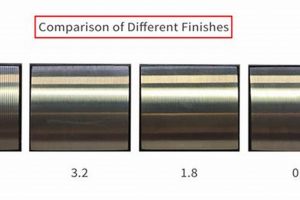
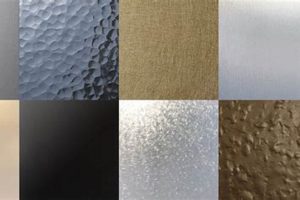
The practice involves enhancing the surface of metal components through controlled processes to achieve specific functional and aesthetic properties. This encompasses a range of techniques, including plating, coating, polishing, and etching, each designed to alter the metal’s characteristics. A practical application is found in aerospace engineering, where components require durable and corrosion-resistant finishes to withstand harsh operational environments.
These specialized surface treatments are critical for improving durability, wear resistance, and corrosion protection of metallic parts. Historically, surface treatment methods have evolved from rudimentary techniques to sophisticated processes involving advanced chemical and electrochemical methods. This evolution has significantly impacted industries requiring high-performance materials, leading to extended product lifecycles and improved overall performance.
Subsequent sections will delve into the specific techniques employed, the quality control measures implemented, and the diverse applications across various industries. Understanding these facets is essential for appreciating the role surface treatment plays in modern manufacturing and engineering.
Surface Enhancement Best Practices
Achieving optimal results requires adherence to specific guidelines throughout the treatment process. Attention to detail and rigorous quality control are paramount.
Tip 1: Material Preparation: Ensure the metal substrate is thoroughly cleaned and free of contaminants. Surface imperfections, such as scratches or burrs, should be addressed prior to any coating or plating process. This is crucial for proper adhesion and a uniform finish.
Tip 2: Process Control: Maintain precise control over process parameters, including temperature, chemical concentrations, and immersion times. Deviations can significantly impact the final outcome, leading to inconsistencies in coating thickness and finish quality.
Tip 3: Proper Fixturing: Employ appropriate fixturing techniques to ensure uniform exposure of all surfaces to the treatment solution. Improper fixturing can result in uneven coating and potential defects.
Tip 4: Bath Maintenance: Regularly monitor and maintain the chemical composition of plating and coating baths. Replenish chemicals as needed and remove any contaminants that may accumulate. Consistent bath chemistry is essential for consistent results.
Tip 5: Rinsing Procedures: Implement thorough rinsing procedures between each process step to remove residual chemicals. Inadequate rinsing can lead to corrosion or other surface defects.
Tip 6: Quality Assurance: Implement a comprehensive quality assurance program that includes regular inspections and testing of finished parts. Coating thickness, adhesion, and corrosion resistance should be verified to ensure compliance with specifications.
Tip 7: Documentation and Traceability: Maintain detailed records of all processing steps, including material preparation, process parameters, and quality control results. This documentation provides traceability and facilitates troubleshooting in the event of any issues.
Adherence to these best practices contributes to improved component performance, extended lifespan, and reduced risk of failures. Precise execution and diligent monitoring are key factors.
The following sections will elaborate on specific techniques and applications, providing a deeper understanding of the field.
1. Adhesion Strength

Adhesion strength, in the context of treated metal surfaces, represents the force required to separate a coating or plating from the underlying substrate. This characteristic is fundamentally linked to the overall efficacy of applied surface treatments. Poor adhesion results in premature coating failure, rendering the treatment ineffective. The selection of appropriate pre-treatment processes, such as cleaning and etching, is crucial for establishing a strong bond. For example, in the manufacturing of medical implants, robust adhesion of biocompatible coatings is paramount to prevent delamination, which could lead to adverse patient reactions. Therefore, consistent and quantifiable adhesion is not merely a desirable attribute but a necessity for ensuring the longevity and reliability of the final product.
Several testing methods are employed to assess adhesion strength, including pull-off tests, scratch tests, and tape tests. Each method provides a different perspective on the integrity of the bond between the coating and the metal. The specific test chosen depends on the application and the expected stresses the component will encounter. For instance, the aerospace industry utilizes stringent pull-off tests to verify the adhesion of protective coatings on aircraft components, ensuring resistance to extreme environmental conditions and mechanical stresses during flight. Regular monitoring and meticulous documentation of test results are essential for maintaining consistent quality and identifying potential process deviations that could compromise adhesion.
In summary, adhesion strength is a critical performance metric directly influenced by the precision and control exerted during the entire surface treatment process. It impacts the durability and functionality of finished products across numerous industries. Addressing challenges in achieving optimal adhesion requires a comprehensive understanding of surface chemistry, process parameters, and testing methodologies. By prioritizing adhesion strength, manufacturers can significantly enhance the reliability and lifespan of metal components, thereby mitigating the risk of failures and reducing overall maintenance costs.
2. Corrosion Resistance

Corrosion resistance is a fundamental performance criterion directly influenced by specific metal surface treatments. The ability to withstand degradation due to environmental factors, such as moisture, chemicals, and extreme temperatures, is critical in various industrial applications. These surface treatments aim to provide a barrier between the metal substrate and corrosive elements.
- Passivation Layer Formation
Passivation creates a thin, inert oxide layer on the metal surface. This layer effectively blocks further oxidation, preventing rust and other forms of corrosion. Stainless steel, for example, relies on chromium to form a self-healing passivation layer. In the context of surface treatments, induced passivation can be achieved through controlled chemical processes, extending the lifespan of components exposed to corrosive environments.
- Protective Coatings
Coatings, such as paints, polymers, or metallic platings, act as a physical barrier between the metal and the environment. These coatings are specifically formulated to resist chemical attack and abrasion. An example is the application of epoxy coatings to protect steel structures in marine environments from saltwater corrosion. The effectiveness of these coatings depends on their adhesion, impermeability, and resistance to degradation by UV radiation and other environmental factors.
- Galvanic Protection
Galvanic protection employs a sacrificial metal that corrodes preferentially, protecting the underlying substrate. Zinc plating on steel is a common example. The zinc corrodes before the steel, preventing the steel from rusting. This principle is utilized in various applications, from automotive components to offshore structures, where long-term corrosion protection is paramount.
- Inhibitors
Inhibitors are chemical substances added to the environment surrounding the metal to slow down the corrosion process. These inhibitors can interfere with the electrochemical reactions involved in corrosion. For instance, adding chromates to cooling water systems can inhibit corrosion in metal pipes. However, due to environmental concerns, alternative, less toxic inhibitors are increasingly being used.
The choice of surface treatment to enhance corrosion resistance depends on the specific metal, the intended application, and the environmental conditions. Each method provides a different level of protection and has its own set of advantages and limitations. Proper surface preparation, precise process control, and regular maintenance are essential for maximizing the effectiveness of corrosion-resistant treatments. These applications ensure components are fit for purpose and prevent premature failure due to environmental factors.
3. Dimensional Accuracy
Dimensional accuracy, concerning metal components, denotes the conformity of manufactured parts to specified dimensions and tolerances. In the context of precision surface treatment, maintaining or even enhancing dimensional accuracy is often a critical objective. Surface modification processes can inadvertently alter component dimensions, necessitating careful control and monitoring.
- Material Deposition Effects
Plating or coating processes that add material to a metal surface inherently affect dimensions. The thickness and uniformity of the deposited layer must be precisely controlled to avoid exceeding allowable tolerances. For instance, in the production of precision gears, excessive plating can interfere with proper meshing, leading to operational failure. Therefore, understanding and managing material deposition is essential for preserving dimensional integrity.
- Etching and Material Removal Considerations
Conversely, etching processes remove material from the surface, impacting dimensions. Selective etching, used to create microstructures or remove surface defects, requires careful control to prevent excessive material removal, which could compromise structural integrity or functional performance. A common example is the manufacture of microfluidic devices, where precise etching is necessary to create channels with specific dimensions. Variations in etching rates can lead to deviations from the designed dimensions, affecting device performance.
- Heat Treatment and Distortion Mitigation
Heat treatments, often employed to enhance material properties, can induce dimensional changes due to thermal expansion and contraction. These changes can result in distortion or warping of the component. Precise control of temperature and cooling rates is necessary to minimize these effects. For example, in the production of aircraft engine components, heat treatments are used to improve strength and fatigue resistance, but they must be carefully managed to prevent dimensional distortions that could compromise engine performance.
- Post-Treatment Machining and Finishing
In some cases, surface treatments are followed by machining or grinding operations to restore dimensional accuracy. This approach is particularly useful when surface treatments inevitably alter dimensions. Precision grinding, for example, can be used to remove excess material after plating, ensuring that the final component meets the specified tolerances. This combination of surface treatment and machining allows for the simultaneous achievement of desired surface properties and dimensional precision.
The interplay between dimensional accuracy and surface treatment processes highlights the need for integrated manufacturing strategies. Optimal results require careful selection and control of surface treatments, combined with appropriate pre- and post-treatment processes. This integrated approach ensures that metal components meet both functional and dimensional requirements, leading to improved performance and reliability across a range of applications.
4. Surface Hardness

Surface hardness, a measure of a material’s resistance to localized plastic deformation, is a critical performance characteristic directly influenced by precision metal finishing processes. Surface treatments such as case hardening, nitriding, and hard chrome plating are employed to increase the hardness of metal surfaces, enhancing their resistance to wear, abrasion, and indentation. The effectiveness of these treatments depends on precise control of process parameters and the selection of appropriate techniques for the specific application. For example, in the automotive industry, components such as gears and crankshafts undergo surface hardening to improve their durability and extend their service life. Achieving the desired surface hardness necessitates careful control of temperature, time, and chemical composition during the treatment process. Inconsistent or inadequate surface hardness can lead to premature failure of components, resulting in increased maintenance costs and reduced product reliability. Therefore, surface hardness is not merely a desirable attribute but a critical functional requirement in many engineering applications.
The correlation between specific treatments and resulting hardness levels enables engineers to tailor component properties to meet specific operational demands. For instance, shot peening, a cold working process, increases surface hardness by inducing compressive residual stresses, enhancing fatigue resistance in aircraft components. Ion implantation modifies the near-surface composition of materials, creating hard and wear-resistant layers without altering the bulk properties of the substrate. The practical applications extend beyond improved wear resistance; increased surface hardness can also enhance corrosion resistance by creating a more impervious barrier against environmental factors. The accurate assessment and control of surface hardness, through techniques such as Vickers and Rockwell hardness testing, are thus essential components of a comprehensive quality control strategy.
In summary, surface hardness is a pivotal characteristic enhanced through precise metal finishing techniques, directly impacting the performance and lifespan of metal components. Understanding and controlling the factors that influence surface hardness are critical for ensuring product reliability and optimizing manufacturing processes. Challenges arise in balancing hardness improvements with other material properties, such as ductility and toughness. Future advancements in metal finishing aim to address these challenges by developing innovative treatments that provide superior surface hardness without compromising other desirable material attributes.
5. Aesthetic Appeal
Aesthetic appeal, in the realm of metal finishing, transcends mere visual enhancement; it represents a crucial factor influencing product perception, brand identity, and market value. Precision in achieving desired visual characteristics is paramount, requiring controlled processes and expertise.
- Surface Smoothness and Reflectivity
Surface treatments significantly impact smoothness and reflectivity, which contribute directly to visual appeal. Polishing, buffing, and specialized coatings can create mirror-like finishes or matte textures, depending on the intended aesthetic. For instance, in consumer electronics, a smooth, reflective surface conveys quality and sophistication, while in architectural applications, a brushed or matte finish might be preferred for its understated elegance. Achieving consistent surface smoothness requires precise control over process parameters and careful selection of finishing techniques. Inconsistencies in smoothness or reflectivity can detract from the perceived value of the product and damage brand reputation.
- Color Consistency and Uniformity
Color consistency and uniformity are essential for maintaining brand identity and creating a visually appealing product. Anodizing, powder coating, and painting are common methods for adding color to metal surfaces. The challenge lies in achieving consistent color across batches and maintaining color fidelity over time. Automotive manufacturers, for example, require precise color matching across different components to ensure a cohesive visual appearance. Variations in color can indicate quality control issues and lead to customer dissatisfaction. Thus, rigorous color management and quality control procedures are necessary to ensure color consistency and uniformity in metal finishing processes.
- Texture and Patterning
Texture and patterning can add depth and visual interest to metal surfaces. Etching, laser engraving, and mechanical texturing are techniques used to create a variety of surface patterns. These patterns can enhance grip, reduce glare, or simply add a decorative element. In the firearms industry, textured surfaces are often used to improve grip and handling. In architectural applications, textured metal panels can create visually striking facades. Controlling the depth, spacing, and uniformity of textures requires specialized equipment and expertise. Inconsistent or poorly executed textures can detract from the overall aesthetic appeal of the product.
- Defect-Free Finishes
Aesthetic appeal is directly linked to the absence of surface defects, such as scratches, dents, and blemishes. Precision metal finishing aims to create surfaces that are free of these imperfections. Careful handling, proper surface preparation, and meticulous quality control are essential for achieving defect-free finishes. In the luxury goods industry, where aesthetics are paramount, even minor imperfections can be unacceptable. The cost of rework or rejection due to surface defects can be significant, highlighting the importance of preventing these issues through rigorous process control and quality assurance measures.
The integration of aesthetic considerations into metal finishing processes underscores a broader emphasis on product design and customer experience. These factors underscore the integral role of achieving desired visual characteristics. In this context, precision plays a key role in surface quality that directly influences market perception and valuation. By carefully managing factors like surface smoothness, color consistency, texture, and defect control, producers enhance both the aesthetic and the commercial value of their products.
6. Material Compatibility

Material compatibility is a cornerstone of effective metal finishing, directly impacting the success and longevity of any applied treatment. The electrochemical properties of the base metal and the finishing material must be carefully considered to prevent adverse reactions, such as galvanic corrosion or hydrogen embrittlement. For instance, applying a nickel coating directly to an aluminum substrate can lead to rapid corrosion in the presence of an electrolyte due to the significant difference in their electrochemical potentials. Therefore, selecting compatible materials and employing appropriate barrier layers or pre-treatments are essential for ensuring durable and reliable finishes.
The importance of material compatibility extends beyond preventing corrosion. It also influences the adhesion, hardness, and overall performance of the finished product. Some coating materials may not bond effectively to certain metals, resulting in poor adhesion and premature failure. For example, attempting to apply a powder coating designed for steel directly to magnesium alloys without proper surface preparation can lead to cracking and delamination of the coating. Precision metal finishing demands a thorough understanding of the mechanical and chemical properties of both the base metal and the finishing material. This knowledge is crucial for optimizing process parameters, such as temperature, pressure, and chemical concentrations, to achieve the desired outcome without compromising the integrity of the substrate or the finish.
In summary, material compatibility is a critical determinant of success in metal finishing. Ignoring this factor can lead to catastrophic failures, increased costs, and compromised product performance. By prioritizing material selection, surface preparation, and process control, manufacturers can ensure that metal finishing processes enhance rather than degrade the properties of the base material, resulting in durable, reliable, and aesthetically pleasing products. Addressing challenges associated with material compatibility requires ongoing research, rigorous testing, and adherence to industry best practices.
7. Uniformity of Finish

Uniformity of finish, a critical attribute in precision metal finishing, significantly impacts both the aesthetic appeal and functional performance of treated components. The consistency of surface characteristics achieved through processes is paramount in applications where appearance, corrosion resistance, or tribological properties are essential.
- Thickness Control
Precise thickness control is fundamental to uniformity of finish. Variations in coating or plating thickness can lead to inconsistent performance and visual defects. For example, in electroplating, maintaining a uniform current density across the component surface is crucial for achieving a consistent deposit thickness. Deviation from the target thickness can result in uneven corrosion protection or altered mechanical properties. This precision requires meticulous monitoring of process parameters and advanced control systems.
- Color Consistency
Color consistency is particularly important in applications where aesthetic appeal is paramount. Achieving uniform color across multiple components or batches requires precise control of coating composition, application parameters, and curing conditions. In the automotive industry, variations in paint color can lead to noticeable differences between body panels, diminishing the perceived quality of the vehicle. Sophisticated color matching systems and rigorous quality control procedures are necessary to ensure color consistency and meet stringent industry standards.
- Surface Texture
Uniformity of surface texture is essential for applications where friction or wear resistance are critical. Controlled surface roughness can improve lubrication, reduce friction, and enhance the wear resistance of components. For example, in the manufacturing of bearings, consistent surface texture is crucial for achieving optimal performance and extending the service life of the bearing. Precision machining and surface treatment techniques are employed to create uniform textures and ensure consistent tribological properties.
- Defect Minimization
Minimizing surface defects, such as scratches, pits, and inclusions, is crucial for achieving a uniform finish. Surface imperfections can compromise the aesthetic appeal, corrosion resistance, and mechanical properties of the component. Careful handling, proper surface preparation, and optimized process parameters are essential for preventing defects. In the aerospace industry, rigorous inspection and non-destructive testing are employed to detect and eliminate surface defects that could compromise the structural integrity of aircraft components.
The pursuit of uniformity of finish requires expertise, advanced equipment, and stringent quality control measures. Surface treatment processes demand consistency, precision and rigorous quality assurance. These efforts ensure that treated metal components meet both functional and aesthetic requirements, enhancing performance and reliability across diverse applications.
Frequently Asked Questions
The following addresses common inquiries regarding surface treatment, offering objective insights into the processes and their implications.
Question 1: What distinguishes surface treatment from other manufacturing processes?
Surface treatment specifically alters the surface properties of a material without changing its bulk composition. Unlike machining or casting, which shape the entire component, surface treatment focuses on enhancing specific characteristics such as corrosion resistance, hardness, or aesthetic appeal.
Question 2: How is corrosion resistance evaluated after surface treatment?
Corrosion resistance is typically evaluated using standardized tests such as salt spray testing (ASTM B117) or electrochemical impedance spectroscopy (EIS). These methods simulate corrosive environments and measure the rate of material degradation, providing quantifiable data on the effectiveness of the surface treatment.
Question 3: What are the typical dimensional changes associated with plating processes?
Dimensional changes depend on the thickness of the deposited layer and the specific plating process. Electroless plating, for example, generally results in more uniform thickness compared to electroplating. Manufacturers should account for these changes in their design specifications and implement appropriate process controls to maintain dimensional accuracy.
Question 4: How does surface roughness influence the adhesion of coatings?
Surface roughness plays a critical role in coating adhesion. A roughened surface provides a larger surface area for mechanical interlocking, enhancing the bond between the coating and the substrate. However, excessive roughness can create stress concentrations and reduce the overall strength of the bond. Optimal surface roughness is typically achieved through controlled grit blasting or chemical etching.
Question 5: What factors contribute to inconsistencies in color uniformity after painting or powder coating?
Inconsistencies in color uniformity can arise from variations in coating thickness, application technique, curing temperature, and substrate preparation. Precise control over these factors, along with proper mixing and handling of coating materials, is essential for achieving consistent color results.
Question 6: What are the environmental considerations associated with metal finishing processes?
Metal finishing processes can generate hazardous waste, including heavy metals and organic solvents. Responsible manufacturers implement waste treatment and recycling programs to minimize environmental impact. The use of environmentally friendly alternatives, such as water-based coatings and trivalent chromium plating, is increasingly encouraged.
These FAQs provide a general overview of essential considerations. Consult with surface treatment specialists for application-specific guidance.
The subsequent section will explore emerging trends and innovations.
Conclusion
This exploration has illuminated the multifaceted nature of processes, underscoring the critical influence on material properties, durability, and functionality. The accuracy of treatment processes is crucial, with surface treatment techniques directly impacting the long-term durability, performance, and visual characteristics of manufactured components. The preceding sections have detailed specific treatment methods, quality control parameters, and considerations of material compatibility with uniformity of the finished metal.
Given the demanding requirements in industrial processes, sullivan precision metal finishing emphasizes that diligent execution and adherence to standards are not optional; they are essential for ensuring reliability. As technology advances, further innovation in surface engineering and sustainable practices will be paramount in enhancing performance and responsible production. To explore more applications of surface finish, additional resources are available for expanded research and information.