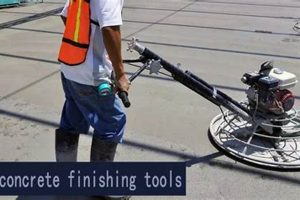
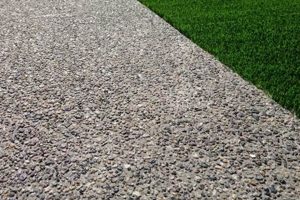
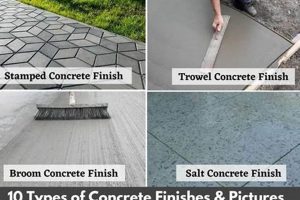
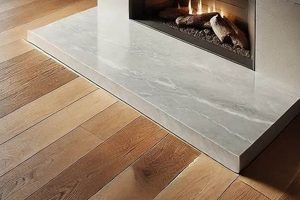
This specialized surface treatment results in a smooth, dense, and visually appealing hardened cement-based material. The process typically involves meticulous placement, consolidation, and curing techniques, often incorporating specialized equipment like power trowels and surface hardeners. For instance, a floor in a high-end retail space might receive this treatment to achieve a polished, durable, and aesthetically pleasing surface.
This refined treatment is valued for its enhanced durability, reduced permeability, and improved resistance to wear and staining. The aesthetic appeal is significant, providing a sleek, modern look. Historically, achieving such quality required extensive manual labor; however, modern advancements in materials and equipment have streamlined the process, making it more efficient and cost-effective. This surface enhances the value and longevity of structures while often decreasing necessary maintenance costs.
The following discussion will delve into the specific techniques employed to achieve this level of quality, along with a consideration of the various applications and potential challenges associated with its implementation. Further information includes detailing the material requirements, equipment specifications, and quality control measures necessary for a successful project.
Achieving Superior Concrete Surface
The following guidelines are crucial for attaining a high-quality hardened cement-based material surface. Careful attention to these aspects is vital for ensuring durability, aesthetics, and long-term performance.
Tip 1: Precise Mixture Design: The cement mixture should be formulated with appropriate water-cement ratios and admixtures. A well-designed mix optimizes workability, reduces segregation, and minimizes shrinkage, leading to a denser and less porous final product. For example, incorporating a water-reducing admixture can enhance workability without increasing the water-cement ratio.
Tip 2: Strategic Consolidation Techniques: Thorough consolidation is essential for removing entrapped air. Employ vibration techniques appropriate for the mixture and the dimensions of the pour. Insufficient consolidation results in honeycombing and reduced strength, while over-vibration can lead to segregation.
Tip 3: Skilled Placement Practices: Place the mixture uniformly and avoid cold joints. Pouring in manageable layers and staggering joints prevents weaknesses. Proper slope and drainage considerations during placement are also critical for long-term performance in exterior applications.
Tip 4: Effective Curing Methods: Maintain adequate moisture content during the curing process. Cover the surface with wet burlap, plastic sheeting, or use curing compounds to prevent premature drying and cracking. The duration of curing should adhere to industry standards and project specifications.
Tip 5: Surface Preparation Is Key: Before applying any coatings or sealants, ensure the surface is clean, dry, and properly prepared. Remove any laitance, debris, or contaminants through grinding or other appropriate methods. Proper preparation ensures optimal adhesion and longevity of applied treatments.
Tip 6: Implement Early Protection: It is crucial to protect the surface from damage after placement and during the curing process. Protective barriers should be installed to prevent damage and ensure the integrity of the treated surface.
Tip 7: Quality Control and Testing: Implement rigorous quality control measures throughout the process. Regularly test the mixture for slump and air content, and conduct compressive strength tests on hardened samples. Quality control testing ensures project meets specific design and functionality requirements.
Adhering to these recommendations results in a durable and visually appealing hardened cement-based material surface, enhancing its service life and reducing maintenance requirements. The resulting surface provides greater structural integrity and aesthetic appeal to structures.
The subsequent section will delve deeper into the material selection and advanced treatment options for further enhancing the performance and aesthetic qualities of this surface treatment.
1. Materials Composition

The composition of the cement mixture is a primary determinant in achieving a specific high-quality hardened cement-based material surface. Variations in constituent materials directly impact the mixture’s workability, strength, durability, and aesthetic qualities. For example, a mix utilizing supplementary cementitious materials like fly ash or slag can reduce permeability and increase resistance to sulfate attack, crucial factors for longevity. The careful selection and proportioning of cement, aggregates, water, and admixtures is not simply a procedural step; it is the foundation upon which a superior hardened cement-based material surface is built.
Furthermore, the choice of aggregate size and gradation significantly influences the finish characteristics. A well-graded aggregate distribution minimizes voids, leading to a denser, more uniform surface that is less prone to blemishes and imperfections. The inclusion of specific admixtures, such as air-entraining agents or superplasticizers, can enhance freeze-thaw resistance and improve workability, respectively. The application of these mix design principles is evident in architectural where a specific color or texture is desired; pigment additives and specialty aggregates like marble chips are incorporated to achieve the desired aesthetic effect.
In summary, the precise control over material selection and proportioning is essential for achieving a refined, high-performance hardened cement-based material surface. Understanding the interrelationship between materials composition and desired performance characteristics allows for informed mix designs that optimize both the aesthetic and structural integrity. Failure to address material composition is certain to compromise the finished surface, affecting long-term durability and appearance. Therefore, it is critical to the successful treatment and longevity of cement-based surfaces.
2. Precise Placement

The successful execution of a high-quality hardened cement-based material surface is fundamentally linked to the accuracy and care taken during its placement. Achieving the desired finish is not merely a matter of proper mixture design and curing; it demands a meticulous approach to the actual pouring and distribution of the material.
- Layering Techniques
Strategic layering is vital for minimizing cold joints and ensuring uniform consolidation. Successive layers must be placed while the previous layer is still plastic to achieve proper bonding. In large slabs, this might involve pouring in a checkerboard pattern to manage shrinkage and thermal stresses. The failure to adhere to this can result in surface cracking and delamination.
- Controlled Discharge
The rate and method of discharging material directly impact surface consistency. Utilizing equipment such as concrete pumps or conveyors to ensure a continuous, uniform flow is crucial, especially in large-scale projects. Strategic placement reduces the likelihood of segregation and air entrapment. For instance, in elevated decks, a crane-operated bucket ensures minimal disturbance during discharge.
- Formwork Integrity
Formwork quality is non-negotiable for a uniform finish. It must be structurally sound, watertight, and properly aligned to prevent deformation or leakage during the pour. The interior surfaces should be treated with a release agent to facilitate easy stripping and minimize surface imperfections. A warped or poorly sealed form will invariably lead to surface irregularities.
- Elevation Management
Maintaining accurate elevation control throughout the placement process is essential for achieving a level and smooth surface. Laser leveling equipment and skilled technicians are required to ensure the final surface conforms to design specifications. Deviation from specified elevation tolerances can lead to ponding issues and uneven wear patterns.
The connection between these carefully executed placement methods and the resultant refined surface is undeniable. Each step contributes to the overall quality, impacting its durability, aesthetics, and resistance to surface defects. When applied correctly, precise placement techniques ensure that the potential inherent within a well-designed mixture is fully realized in the final hardened surface.
3. Thorough Consolidation

Thorough consolidation is an indispensable process in achieving a high-quality hardened cement-based material surface. It directly influences the density, strength, and overall aesthetic appeal of the finished product. Inadequate consolidation compromises the surface’s integrity, rendering the cement mixture vulnerable to various forms of deterioration.
- Elimination of Air Voids
Consolidation effectively removes entrapped air voids from the mixture. These voids weaken the cement structure, making it more susceptible to cracking and reducing its compressive strength. Techniques like vibration force air pockets to the surface, resulting in a denser and more durable hardened product. For example, bridge decks subjected to heavy traffic require dense, void-free structures achieved through rigorous consolidation practices to withstand applied stresses.
- Maximizing Cement Paste Contact
Proper consolidation maximizes contact between the cement paste and aggregate particles. This intimate contact is essential for achieving optimal bond strength, which is fundamental to the structural performance of the hardened material. Without adequate consolidation, the cement paste may not fully coat the aggregate, leading to a weaker bond and reduced overall strength. Structures in seismic zones exemplify the importance of this facet, as the structural integrity relies on a strong bond to withstand shear forces.
- Enhancing Surface Appearance
Consolidation significantly contributes to the visual aesthetics of the hardened surface. It facilitates the movement of finer cement particles to the surface, creating a smoother and more uniform texture. This reduces the occurrence of surface blemishes, such as honeycombing or aggregate exposure, resulting in a visually appealing finish. Architectural elements exemplify this. Precise consolidation in these areas contributes to smooth surfaces and clean lines.
- Increasing Density and Durability
Effective consolidation increases the density and reduces the permeability. This minimizes the ingress of water and other deleterious substances, such as chlorides, which can cause corrosion of reinforcing steel and deterioration. Structures in marine environments illustrate this aspect, where exposure to saltwater necessitates a dense, impermeable mixture achieved through thorough consolidation to prevent corrosion.
The interplay between these facets clearly illustrates that thorough consolidation is not merely a procedural step but a critical factor in creating a superior hardened cement-based material surface. Its contribution to density, strength, aesthetics, and durability is paramount, ensuring the long-term performance and visual appeal of structures across various applications.
4. Effective Curing

Effective curing is an indispensable step in achieving a hardened cement-based material surface of superior quality. The process of curing, which involves maintaining adequate moisture and temperature conditions, directly impacts the hydration of cement particles. This hydration is fundamental to the development of strength, durability, and the minimization of surface defects, all critical attributes of a high-grade surface. Premature drying can lead to surface cracking, reduced strength, and increased permeability, compromising the integrity and aesthetic appeal of the final product. In contrast, a well-executed curing regime promotes full hydration, resulting in a denser, more durable, and visually refined surface. For instance, when constructing large concrete slabs for industrial flooring, consistent moisture control is crucial to prevent shrinkage cracking and ensure a smooth, level surface suitable for heavy equipment.
Different curing methods exist, each suited to specific conditions and project requirements. Ponding involves covering the surface with water, while wet coverings, such as burlap or cotton mats, provide a continuous source of moisture. Membrane-forming curing compounds create a barrier that reduces moisture loss through evaporation. Steam curing accelerates the hydration process in precast concrete elements, allowing for faster production cycles. The selection of the appropriate curing method depends on factors such as ambient temperature, humidity, wind speed, and the size and shape of the pour. Regardless of the chosen method, the goal remains the same: to maintain optimal moisture and temperature levels for a sufficient duration to ensure complete hydration and a structurally sound, aesthetically pleasing finish. For example, in the construction of exposed architectural concrete elements, careful consideration of the curing method is essential to minimize surface discoloration and maintain uniform color.
In summary, effective curing is not merely a procedural step but a vital component in realizing the full potential of a hardened cement-based material surface. Proper moisture and temperature control during hydration are critical for maximizing strength, minimizing defects, and ensuring the long-term durability and aesthetic quality of the final product. The consequences of inadequate curing can be severe, leading to costly repairs and a compromised structure. Therefore, meticulous attention to curing techniques is essential for achieving a surface that meets the highest standards of performance and appearance.
5. Surface Preparation

Surface preparation is a critical precursor to achieving a high-quality hardened cement-based material surface. Inadequate preparation compromises the adhesion of coatings, sealants, or overlays, leading to premature failure and aesthetic deficiencies. The correlation between surface preparation and the final finish is direct: the degree of meticulousness in preparation dictates the success of subsequent surface treatments. For instance, the application of a high-performance epoxy coating on a floor requires thorough grinding to remove laitance and contaminants, ensuring optimal bonding. Neglecting this step results in delamination and a substandard finish.
The preparation process typically involves several stages, each targeting specific surface defects. Grinding removes surface imperfections, while shot blasting etches the surface to enhance mechanical adhesion. Chemical cleaning removes oils, grease, and other contaminants that impede bonding. The choice of preparation method depends on the existing condition of the cement and the requirements of the specified treatment. In the restoration of historic structures, careful surface preparation is paramount to preserving the integrity of the original surface while providing a suitable substrate for protective coatings. This demands a balance between removing deteriorated material and avoiding damage to sound material.
The impact of thorough surface preparation on the longevity and performance of a refined hardened cement-based material surface cannot be overstated. By addressing surface imperfections and contaminants, proper preparation creates a sound foundation for achieving optimal adhesion, durability, and aesthetics. Understanding the practical significance of this process is essential for ensuring that the final product meets the required standards of quality and performance, thereby reducing the need for costly repairs and maintenance in the long term. The process of surface preperation creates a direct cause and effect with quality, cost, and time spent on the project.
6. Skilled Technique

The attainment of a hardened cement-based material surface hinges significantly on the proficiency and expertise applied throughout its creation. Skilled technique encompasses a range of competencies, from material selection to precise execution, each contributing directly to the quality and longevity of the final product. Mastery in these areas distinguishes a surface of exceptional caliber from one that merely meets basic requirements.
- Material Proportioning Precision
Achieving the desired properties in a cement mixture necessitates precise proportioning of constituent materials. An experienced technician understands the nuances of aggregate gradation, water-cement ratios, and the judicious use of admixtures. For example, a skilled technician recognizes that varying the type and amount of a superplasticizer can dramatically affect the mixture’s workability and final density, essential for intricate architectural elements. Improper proportioning can lead to segregation, cracking, and reduced strength.
- Consolidation Dexterity
Effective consolidation, often achieved through vibration, requires a delicate touch and keen awareness. A skilled operator knows how to apply vibration without over-consolidating, which leads to segregation, or under-consolidating, which results in entrapped air voids. This is particularly critical in complex formwork where visual assessment is limited. The skilled use of internal vibrators in deep sections allows consolidation that is out of reach without their use. Proficiency ensures a dense, homogeneous surface, free from defects.
- Surface Finishing Artistry
The final appearance of the hardened surface depends heavily on the skill of the finisher. Mastery of techniques like troweling, floating, and brooming is essential for achieving the desired texture and smoothness. A skilled finisher recognizes the ideal timing for each technique, considering factors such as temperature, humidity, and cement type. Skilled finishers can prevent blemishes such as swirl marks, uneven coloring, and dusting, ensuring a refined final surface.
- Curing Methodology Competence
Implementing effective curing strategies requires a thorough understanding of cement chemistry and environmental conditions. A skilled technician selects the appropriate curing methodwater curing, membrane curing, or steam curingbased on project specifications and site constraints. They also recognize the importance of maintaining consistent moisture levels and preventing thermal shock during the curing process, preventing cracking and ensuring optimal hydration. A failure to properly hydrate results in surface cracking and low strength.
In essence, the creation of a hardened cement-based material surface transcends mere adherence to specifications; it demands the application of seasoned skill and practiced judgment. The competence of the technician influences every aspect of the process, from mixture design to surface finishing, ultimately determining the final quality and longevity of the hardened material. Skill provides a higher level of care.
Frequently Asked Questions
This section addresses common inquiries regarding a high-quality hardened cement-based material surface. The responses are intended to provide clear and concise information for those seeking a deeper understanding of this surface finish.
Question 1: What constitutes a “Class A” designation in cement-based material surfaces?
The “Class A” designation typically signifies a level of quality exceeding standard finishes. It implies rigorous adherence to specific standards, including smoothness, levelness, and minimal surface defects. This classification ensures structural integrity and high-performance of the surface.
Question 2: What specific properties differentiate it from other cement-based material finishes?
Differentiating factors include enhanced density, reduced permeability, and increased resistance to abrasion and staining. A Class A finish often incorporates specialized admixtures and curing techniques to achieve superior durability and aesthetics.
Question 3: In what applications is a specialized surface treatment most beneficial?
This treatment is particularly advantageous in high-traffic areas, environments subject to chemical exposure, and applications where visual appeal is paramount. Examples include retail spaces, laboratories, and architectural concrete features.
Question 4: What are the typical steps involved in achieving a surface of exceptional caliber?
Key steps encompass meticulous mixture design, precise placement, thorough consolidation, effective curing, and proper surface preparation. Each stage requires skilled execution and rigorous quality control to ensure the desired outcome.
Question 5: What are the potential challenges in achieving this type of surface?
Potential challenges include managing shrinkage cracking, preventing surface discoloration, and maintaining consistent quality across large areas. Addressing these challenges requires careful planning and skilled craftsmanship.
Question 6: How does the cost of such surfaces compare to standard cement-based material finishes?
While initial costs may be higher due to specialized materials and labor, the long-term benefits often outweigh the investment. Enhanced durability, reduced maintenance, and improved aesthetics contribute to a lower total cost of ownership.
Understanding these key aspects provides a solid foundation for appreciating the value and applications of a refined hardened cement-based material surface.
The subsequent section will explore the environmental considerations associated with the production and maintenance of these specialized surfaces.
Conclusion
This exploration has detailed the exacting processes and considerations necessary to achieve a “class a concrete finish”. From precise material selection and proportioning to skilled placement, consolidation, curing, and surface preparation, each step critically influences the final outcome. The quality of such a surface is not accidental; it is the result of meticulous planning, skilled execution, and rigorous quality control.
Understanding the principles and practices outlined herein is essential for those seeking to specify or implement this refined treatment. The investment in knowledge and expertise is a prerequisite for realizing the full potential of this superior finish, ensuring both its aesthetic appeal and long-term structural integrity. Further research and adherence to industry best practices are strongly encouraged to maintain excellence in cement-based material applications.