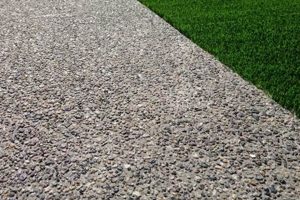
A specific architectural treatment creates a unique texture on precast concrete elements. This method involves embedding aggregates, such as granite, quartz, or glass, into the surface during the casting process. Upon curing, the surrounding cement matrix is removed, revealing the embedded materials and providing a visually appealing and durable surface. For example, large precast panels utilized in building facades can achieve a distinctive aesthetic through this technique, contrasting with standard smooth concrete finishes.
This surface treatment offers several advantages. It enhances the aesthetic appeal of concrete structures, providing a wide range of design options through variations in aggregate type, size, and color. The resulting exposed aggregate finish also increases the slip resistance of surfaces, making it suitable for pedestrian areas. Historically, similar techniques have been employed to mimic natural stone, offering an economical alternative while retaining concrete’s structural integrity. The durability of the resulting surface contributes to the long-term performance and reduces maintenance requirements.
The following sections will delve into the specifics of aggregate selection, casting methodologies, surface treatment processes, and applications. Furthermore, a discussion of cost considerations and comparisons with alternative finishing techniques will provide a comprehensive overview of the topic. The environmental aspects of this surface treatment will also be considered.
Key Considerations for Achieving Optimal Results
The successful implementation of this concrete finishing method hinges on meticulous planning and execution. These tips outline critical factors that impact the final aesthetic and performance.
Tip 1: Aggregate Selection: The choice of aggregate significantly affects the final appearance. Consider the aggregate’s color, size, shape, and durability. Testing a small-scale sample is crucial to assess the visual impact and ensure compatibility with the cement matrix.
Tip 2: Formwork Preparation: Proper formwork preparation is paramount. Clean and thoroughly oiled forms are essential to prevent adhesion and ensure a smooth concrete surface around the exposed aggregate.
Tip 3: Cement Mix Design: The cement mix design should be carefully formulated to complement the chosen aggregate. Factors such as water-cement ratio and the use of admixtures can impact the ease of aggregate exposure and the overall strength of the concrete.
Tip 4: Aggregate Distribution: Uniform distribution of the aggregate within the form is vital for a consistent appearance. Techniques such as pre-placing the aggregate or using specialized vibratory equipment can aid in achieving uniform distribution.
Tip 5: Surface Retardation: The application of a surface retarder controls the cement hydration at the surface, allowing for easier removal of the surface paste to expose the aggregate. Selecting the appropriate retarder strength and application rate is essential.
Tip 6: Exposure Techniques: Various techniques, including water blasting, abrasive blasting, and chemical etching, can be used to remove the surface paste. The chosen method should be carefully controlled to avoid damaging the aggregate or creating an uneven surface.
Tip 7: Curing Process: Proper curing is crucial for the concrete’s strength and durability. Maintaining consistent moisture levels and temperature during the curing process helps prevent cracking and ensures optimal hydration of the cement.
Adhering to these guidelines optimizes the aesthetic appeal, durability, and longevity of precast concrete elements using this specialized finishing process.
The subsequent sections will address cost implications and comparisons with alternative finishing techniques.
1. Aggregate Selection

Aggregate selection is a pivotal decision in the process, directly influencing the aesthetic character, performance characteristics, and overall cost of the finished concrete surface. The chosen aggregate becomes a prominent visual element, dictating the color, texture, and reflective properties of the finished surface.
- Aesthetic Impact
The type of aggregate selected profoundly impacts the aesthetic outcome. Options range from natural materials like granite, quartz, and river rock, offering a varied palette of colors and textures, to manufactured aggregates such as recycled glass, which can introduce unique visual elements and promote sustainability. The size, shape, and color consistency of the aggregate are critical considerations for achieving the desired appearance.
- Durability and Performance
Beyond aesthetics, the aggregate contributes significantly to the durability and performance of the finished surface. Harder, more durable aggregates, such as granite or basalt, enhance the concrete’s resistance to abrasion, impact, and weathering. The aggregate’s resistance to freeze-thaw cycles and chemical attack is crucial for ensuring the long-term integrity of the concrete, particularly in harsh environmental conditions.
- Workability and Compatibility
The selection of aggregate must also consider its impact on the workability of the concrete mix. The aggregate’s shape and surface texture influence the mix’s consistency and flowability, affecting placement and consolidation. Compatibility between the aggregate and the cement matrix is essential to prevent alkali-silica reaction (ASR), a chemical reaction that can cause cracking and deterioration of the concrete.
- Cost Considerations
Aggregate selection significantly impacts the overall cost. Locally sourced, readily available aggregates are generally more economical than specialty or imported materials. The cost of aggregate processing, such as crushing, screening, and washing, also contributes to the overall expense. Balancing aesthetic preferences, performance requirements, and budgetary constraints is a critical aspect of the selection process.
In conclusion, the strategic selection of aggregate is fundamental to achieving a high-quality finish. Carefully considering factors such as aesthetics, durability, workability, and cost ensures a visually appealing, structurally sound, and economically viable concrete surface. Its visual, structural, and financial implications underscore its essential role within the larger surface treatment technique.
2. Mix Design

The formulation of the concrete mix is a critical determinant of the success of architectural concrete surface treatments. This is because the mix design directly influences several key factors crucial to achieving the desired aesthetic and durable outcome. Aggregate distribution, cement paste characteristics, and workability are all controlled by the proportions and composition of the mix. For example, a mix with insufficient cement paste may lead to difficulties in retaining the selected aggregates on the surface during casting, resulting in an uneven or incomplete finish. Similarly, improper water-cement ratios can affect the strength and color consistency of the concrete matrix surrounding the exposed aggregate.
The selection of appropriate admixtures also plays a significant role. Water-reducing admixtures can improve workability without increasing the water-cement ratio, thereby enhancing the concrete’s strength and durability. Retarding admixtures, specific to achieving this surface finish, control the hydration of the cement paste on the surface, allowing for its subsequent removal to reveal the embedded aggregates. Air-entraining agents may be used to improve the concrete’s resistance to freeze-thaw cycles, particularly in regions with harsh climates. An example of careful mix design application can be seen in precast panels for architectural facades, where consistent color and aggregate distribution are essential for visual harmony. Any deviation in the mix design can lead to noticeable variations in the finished product, impacting the overall design intent.
In summary, the mix design is not merely a background element but an integral component for achieving high-quality concrete surface treatments. Optimizing the mix design, through careful selection of materials and appropriate use of admixtures, is essential for ensuring consistent aggregate distribution, adequate strength, and long-term durability. Neglecting this aspect can lead to aesthetic imperfections, structural weaknesses, and ultimately, a failure to realize the desired architectural vision. Therefore, a thorough understanding of mix design principles is paramount for anyone involved in producing high-quality concrete surfaces.
3. Formwork Preparation

Formwork preparation is intrinsically linked to the successful execution and final quality of architectural concrete. It provides the mold within which the concrete is cast, directly influencing the surface texture, dimensional accuracy, and aesthetic characteristics of the hardened product. When employing a top cast finish, where aggregates are intentionally exposed to create a textured surface, the integrity of the formwork becomes even more critical. Any imperfections, inconsistencies, or inadequacies in the formwork will invariably be reflected in the final surface, potentially compromising the desired architectural effect. For instance, improperly sealed formwork can lead to cement paste leakage, resulting in unsightly blemishes and a reduction in the intended aggregate exposure.
Consider the production of precast concrete panels featuring an exposed aggregate finish for a building facade. If the formwork is not meticulously cleaned and oiled, the concrete may adhere to the form, causing damage during demolding and resulting in an uneven aggregate distribution. Furthermore, the formwork’s stability is crucial for maintaining precise dimensions and preventing distortions in the finished panel. In cases where intricate patterns or complex geometries are incorporated into the finish, specialized formwork with exacting tolerances is essential. The selection of appropriate formwork materials, such as timber, steel, or fiberglass, must be carefully considered based on the project’s specific requirements and the desired surface finish.
In summary, formwork preparation is not merely a preliminary step but an indispensable element in achieving a high-quality architectural concrete surface. It is directly responsible for defining the shape, texture, and overall appearance of the finished product. Careful attention to detail during formwork construction, cleaning, and sealing is essential to mitigate potential defects and ensure the successful realization of the intended design. Recognizing the causal relationship between formwork quality and the final concrete surface allows for proactive measures to be implemented, ultimately leading to superior aesthetic outcomes and enhanced structural performance.
4. Retarder Application
The strategic application of surface retarders is a pivotal process in achieving the desired aesthetic characteristics. These chemical agents, applied to the formwork before concrete placement, selectively delay the hydration of the cement paste at the surface. This controlled retardation allows for the subsequent removal of the unhardened surface layer, revealing the embedded aggregates. The efficacy of this process hinges on several factors, including the retarder’s chemical composition, application rate, and the prevailing environmental conditions. Over-application can result in excessive surface removal, while insufficient application may lead to difficulty in exposing the aggregate. For example, in the production of architectural panels, an inconsistent retarder application would result in uneven aggregate exposure, creating visual inconsistencies across the panel surface.
Different types of retarders are available, each suited to specific concrete mix designs and desired exposure depths. Sugar-based retarders are often used for shallow exposure, while more potent chemical retarders are employed for deeper reveals. The selection of the appropriate retarder is further influenced by the aggregate type and size. Larger aggregates typically require a deeper exposure, necessitating a stronger retarder. Furthermore, the timing of the surface removal process is crucial. Removing the surface paste too early may dislodge the aggregates, while delaying the process may render the surface too hard to remove effectively. The method of removal, typically involving water blasting or brushing, must also be carefully controlled to avoid damaging the exposed aggregates.
In conclusion, retarder application is an integral and nuanced aspect. Its proper execution is indispensable for realizing the intended aesthetic and textural qualities. Mastery of this technique involves a thorough understanding of retarder chemistry, concrete mix design, and surface removal methodologies. The ultimate goal is to consistently achieve uniform aggregate exposure, enhancing the visual appeal and durability of concrete structures. Imperfect application can compromise the aesthetic, potentially necessitating costly corrective measures, emphasizing the necessity of careful planning and skilled execution in every architectural project involving exposed aggregate concrete.
5. Exposure Method

The exposure method represents a critical step in the fabrication of surfaces, directly influencing the final aesthetic and performance characteristics. This process entails the removal of the cement paste layer from the concrete surface, thereby revealing the embedded aggregates. The selected exposure technique must effectively remove the paste without damaging the aggregates or compromising the integrity of the concrete matrix. Several methods exist, each with its advantages and limitations, and the choice is dictated by factors such as the desired degree of aggregate exposure, the type of aggregate used, and the project’s budgetary constraints. For example, water blasting, a common technique, utilizes high-pressure water jets to erode the surface paste, offering a relatively controlled and cost-effective approach. However, it may not be suitable for deeply embedded aggregates or particularly hardened cement paste.
Alternative methods, such as abrasive blasting, employ abrasive particles propelled by compressed air to achieve a more aggressive surface removal. This is often used for deeper exposures or to create a textured surface on harder aggregates. However, abrasive blasting requires specialized equipment and skilled operators to prevent damage to the aggregate and surrounding concrete. Chemical etching, involving the application of acidic solutions to dissolve the cement paste, presents another option. This method offers a uniform exposure but necessitates careful handling and disposal of chemicals. The selection of an appropriate exposure method also hinges on the size and orientation of the precast elements. For large, horizontal surfaces, mechanical grinding or polishing may be employed to achieve a consistent and aesthetically pleasing finish. Proper execution of the exposure process is paramount for achieving the intended design. Improper or uneven exposure can result in an inconsistent appearance and reduced durability, compromising the overall quality.
In summary, the exposure method constitutes a crucial component in achieving architectural goals. Selection is a critical decision with long-term consequences for the final product. The appropriate methodology must align with the project’s aesthetic goals, technical requirements, and budgetary parameters. Thorough planning and skilled execution are essential for ensuring that the exposed aggregate surface meets the desired performance and aesthetic standards, ultimately enhancing the architectural value of the structure. Understanding the interdependencies of this process and other mix design elements creates opportunities for superior architectural outcomes.
6. Curing Process
The curing process exerts a significant influence on the final quality and durability of precast concrete elements. Hydration, the chemical reaction between cement and water, requires specific moisture and temperature conditions for optimal strength development and reduced permeability. When surface treatments are incorporated, such as in architectural concrete where aggregates are exposed, the curing process becomes even more critical. Inadequate curing can lead to surface cracking, dusting, or efflorescence, detracting from the intended aesthetic. For instance, if a precast concrete panel with an exposed aggregate finish is allowed to dry out too quickly, the surface paste may shrink and crack, obscuring or dislodging the embedded aggregates. The hydration is also impacted which impact the overall durability of the building elements and structure.
Proper curing methods, such as water curing, membrane curing, or steam curing, must be selected based on environmental conditions, concrete mix design, and project specifications. Water curing, which involves continuously wetting the concrete surface, provides the most effective hydration but may not be practical for all applications. Membrane-forming curing compounds, which seal the surface to prevent moisture loss, offer a more convenient alternative. Steam curing, commonly used in precast plants, accelerates the hydration process and increases early strength development, crucial for efficient production. The selected curing method must maintain sufficient moisture levels and prevent extreme temperature fluctuations, especially during the early stages of hydration. Failure to do so can compromise the integrity of the surface, leading to aesthetic defects and reduced service life.
In summary, the curing process constitutes an essential element in the successful production of precast concrete. Proper attention to moisture and temperature control during hydration is paramount for achieving the desired aesthetic qualities, durability, and long-term performance. In architectural projects, the curing regime must be carefully tailored to the specific requirements of the finish and the environmental conditions. Understanding the causal relationship between curing practices and concrete performance allows for proactive measures to be implemented, ultimately leading to enhanced aesthetic outcomes and increased structural longevity. This integrated approach emphasizes that curing isn’t merely a final step; it’s a critical element influencing outcomes.
Frequently Asked Questions Regarding Top Cast Finish Concrete
The following addresses common inquiries and misconceptions surrounding this architectural concrete finishing technique.
Question 1: What distinguishes this finish from standard concrete surfaces?
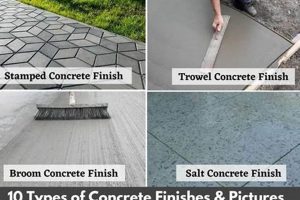
Standard concrete surfaces typically exhibit a smooth or broom-finished texture. This method, conversely, involves exposing embedded aggregates, resulting in a textured surface with enhanced aesthetic appeal and slip resistance.
Question 2: What types of aggregates are suitable for use in this finishing technique?
A wide range of aggregates can be employed, including natural materials such as granite, quartz, and river rock, as well as manufactured options like recycled glass. The selection depends on the desired aesthetic, durability requirements, and budgetary constraints.
Question 3: What factors contribute to the cost of a project using this surface treatment?
Cost drivers include the type and availability of the selected aggregates, the complexity of the casting process, labor expenses, and the level of surface preparation required to achieve the desired exposure.
Question 4: How does this finishing technique affect the durability and maintenance requirements of concrete structures?
The exposed aggregate surface generally enhances durability by increasing abrasion resistance. Maintenance typically involves periodic cleaning to remove dirt and debris, preserving the aesthetic appeal.
Question 5: Are there specific environmental considerations associated with this construction process?
Environmental considerations include the sourcing of aggregates, the disposal of waste materials generated during surface preparation, and the potential use of recycled aggregates to promote sustainability.
Question 6: How does the selection of a surface retarder impact the final outcome?
The choice of surface retarder directly influences the depth of aggregate exposure. Selecting the appropriate retarder strength and application rate is essential for achieving the desired visual effect without compromising the structural integrity.
This finishing technique enhances the aesthetics and functionality of concrete surfaces. Its successful implementation requires careful planning, material selection, and execution. Understanding these fundamental questions facilitates informed decision-making.
The subsequent discussion will explore case studies exemplifying its application in diverse architectural projects.
Top Cast Finish Concrete
This exploration has clarified the multifaceted nature of architectural concrete, highlighting its capacity to enhance both aesthetic appeal and structural performance. Meticulous attention to material selection, mix design, formwork preparation, retarder application, exposure methods, and curing processes directly influences the longevity and visual impact of structures employing this technique. These steps, when executed with precision, demonstrate the potential of concrete to transcend conventional applications, becoming a versatile and visually striking building material.
Continued refinement of these construction practices will undoubtedly unlock further possibilities in concrete design. Engineers, architects, and construction professionals must prioritize a comprehensive understanding of its properties to maximize its benefits. Its future lies in its ability to balance aesthetic expression with functional requirements, ensuring its continued relevance in contemporary architecture and infrastructure development.