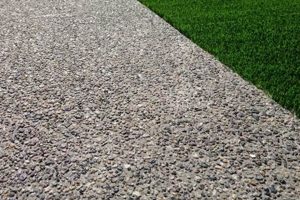
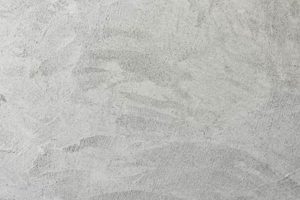
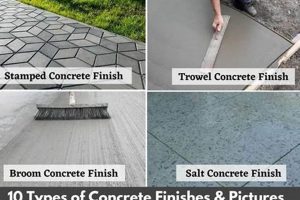
A decorative treatment applied to freshly poured concrete, this technique involves embedding salt crystals into the surface. As the concrete cures, the salt dissolves, leaving behind small, textured pits. The result is a unique, non-slip surface with an aesthetic appeal that resembles natural stone. This method offers a relatively inexpensive way to enhance the appearance and functionality of concrete surfaces.
The resulting surface provides increased traction, making it a practical choice for walkways, patios, and pool decks. Beyond safety, the textured surface also imparts a distinctive visual character, offering an alternative to smoother, more uniform concrete finishes. Its use dates back several decades, gaining popularity as a cost-effective and easily implemented decorative option. The method provides an attractive and durable surface, thereby increasing value of properties.
The following sections will delve into the specific techniques used to achieve this type of texture, exploring variations in application, suitable salt types, and considerations for long-term maintenance. The subsequent discussion aims to provide a thorough understanding of the process and its potential applications.
Tips for Achieving a Quality Salted Concrete Finish
Achieving a successful outcome requires careful attention to detail during each stage of the process.
Tip 1: Concrete Mix Consistency: Maintain a consistent concrete mix throughout the pour. Variations in water content or aggregate distribution will lead to uneven salt absorption and an inconsistent final texture.
Tip 2: Salt Selection: Opt for coarse, granular salt. Finer salt may dissolve too quickly, leading to a less pronounced texture. Avoid iodized salt, as it can discolor the concrete.
Tip 3: Timing of Salt Application: Apply the salt crystals when the concrete has reached its initial set but is still pliable. This allows the salt to embed properly without sinking too deeply or being brushed away too easily.
Tip 4: Even Salt Distribution: Utilize a seed spreader or similar tool to ensure uniform distribution of the salt across the surface. Avoid clumping, as this will result in concentrated pitting.
Tip 5: Controlled Dissolution: After the concrete has cured sufficiently (typically 24-48 hours), gently wash the surface to dissolve the salt. Avoid using excessive water pressure, as this can damage the fresh concrete.
Tip 6: Thorough Rinsing: Ensure all residual salt is removed from the surface. Remaining salt can attract moisture and lead to efflorescence, a white, powdery deposit, on the concrete.
Tip 7: Sealing the Surface: After the concrete has fully cured (typically 28 days), consider applying a concrete sealer to protect the finish and enhance its durability. Choose a sealer appropriate for exterior concrete surfaces.
Adhering to these guidelines maximizes the likelihood of achieving a visually appealing, durable, and slip-resistant surface.
The subsequent sections will cover specific applications of this decorative concrete technique, exploring different design options and addressing common troubleshooting scenarios.
1. Texture

The defining characteristic of a surface treated with the salt embedding method is its texture. This outcome is not merely aesthetic; it is an integral component of the final product, directly influencing both its functional properties and visual appeal. The process deliberately introduces irregularities, creating a profile that deviates significantly from the smooth, planar surface typically associated with standard concrete finishes. The degree of this textural change is governed by several controllable factors, including the size and type of salt crystals used, the timing of salt application, and the subsequent method of dissolution. A more aggressive texture, achieved with larger salt granules, for instance, results in a higher coefficient of friction, making it suitable for areas prone to wetness, such as pool decks or exterior walkways. Conversely, a more subtle texture, obtained with finer salt, offers an enhanced visual appeal without significantly altering the surface’s smoothness, ideal for interior applications where slip resistance is less critical.
The interplay between the texture and the concrete mix itself is also critical. A weaker concrete mix may be more susceptible to over-etching during the salt dissolution process, resulting in an excessively rough surface that compromises its long-term durability. In contrast, a high-strength concrete mix may resist the salt’s dissolving action, leading to an insufficient texture. Furthermore, the aggregate type within the concrete mix influences the final aesthetic of the surface. Exposed aggregate can complement the texture, creating a natural, stone-like appearance. Consider, for example, the difference between using a gray aggregate versus a brown aggregate; the former providing a more modern, industrial look and the latter evoking a warmer, more rustic feel. Therefore, careful consideration of the aggregate type can effectively enhance the desired aesthetic outcome of texture surface concrete.
In summary, texture is a fundamental attribute intrinsically linked to the essence. This texture is not accidental; it is intentionally engineered to achieve both functional and aesthetic objectives. Understanding the variables that control texture, and their interrelationship with other materials and processes, is crucial for realizing successful implementation. Moreover, the potential for challenges, such as over-etching or insufficient texture, highlights the need for careful planning and execution. The resulting surface, when properly executed, provides a visually appealing and functionally superior alternative to conventional concrete finishes.
2. Salt type

The selection of salt is a critical determinant in achieving the desired aesthetic and functional properties. The characteristics of the salt directly influence the texture, durability, and overall appearance.
- Granule Size and Texture Profile
Coarse salt granules create a more pronounced, rugged texture. This is suitable for outdoor applications, enhancing slip resistance. Finer salt granules yield a subtler, more refined texture, often preferred for interior surfaces. The size and shape of the salt crystals directly correlate with the depth and character of the resulting pits.
- Salt Composition and Concrete Compatibility
Avoid using iodized salt. Iodine can react with the concrete, leading to discoloration and potential weakening of the surface. Sodium chloride (common table salt) is generally acceptable, but purer forms, such as rock salt, minimize the risk of unwanted chemical reactions. The chemical composition affects not only color stability but also the longevity of the concrete.
- Solubility and Dissolution Rate
The rate at which the salt dissolves impacts the final texture. Faster-dissolving salts create a more uniform, less defined texture. Slower-dissolving salts, particularly in humid environments, may require more extended rinsing to fully remove residue, preventing efflorescence. The humidity of the curing environment is correlated with dissolution rate.
- Color and Surface Aesthetics
While most salt is white, some varieties have a natural tint. This subtle coloration can transfer to the concrete, influencing the overall aesthetic. Experimentation may be necessary to determine the precise effect of a particular salt type on the concrete’s final color. The surface, after the treatment, reveals a nuanced visual character unique to the salt used.
The nuances of salt selection extend beyond mere cost considerations. The type of salt employed significantly impacts the end result, demanding careful evaluation of its properties and potential interaction with the specific concrete mix. Successfully matching salt to the intended application is a key factor in achieving a durable and visually appealing surface with a textured concrete finish.
3. Application

The process of embedding salt crystals into fresh concrete directly dictates the resulting aesthetic and functional characteristics. The manner of application, including timing, distribution density, and embedding technique, exerts a significant influence over the final texture, durability, and slip resistance. Improper application can negate the benefits of carefully selected concrete mixes and salt types, resulting in an uneven, aesthetically displeasing, and structurally compromised surface. For example, applying the salt too early, when the concrete is excessively wet, causes the crystals to sink too deeply, leading to minimal surface pitting and a negligible textural effect. Conversely, delaying application until the concrete has significantly hardened impedes proper embedding, resulting in loosely adhered salt that is easily dislodged, rendering the desired finish unrealized.
The uniformity of salt distribution is equally crucial. Uneven distribution leads to inconsistent texture, creating areas of excessive roughness alongside regions of insufficient treatment. Techniques such as broadcasting the salt with a mechanical spreader or hand-seeding followed by light tamping ensure consistent coverage. Furthermore, the method of embedding the salt impacts the final appearance. Pressing the crystals lightly into the concrete surface ensures proper adhesion without overly compacting the surrounding material. Over-compaction diminishes the intended texture, while insufficient embedding compromises the long-term integrity of the salt-treated layer. Consider the application on a large commercial patio: a skilled professional would employ a calibrated spreader to guarantee even salt coverage, followed by careful hand-tamping in hard-to-reach corners, to provide a visually uniform and safe walking surface.
In summary, the application phase represents a critical juncture in the creation process, bridging the selection of materials with the realization of a desired outcome. Correct timing, uniform distribution, and appropriate embedding techniques are indispensable for achieving a visually appealing, durable, and slip-resistant. Understanding the nuances of the process, combined with careful execution, transforms a simple concept into a functional and aesthetically pleasing enhancement for concrete surfaces. Improper execution, conversely, compromises the integrity and appearance of the finish, underscoring the significance of expertise in the application of salt concrete finishes.
4. Curing

The curing process plays a pivotal role in determining the long-term performance and aesthetic qualities of a concrete surface that incorporates embedded salt. Proper hydration of the cementitious materials is essential for developing the concrete’s compressive strength and durability. Premature drying, or inadequate moisture retention, can lead to cracking, reduced strength, and an increased susceptibility to surface deterioration, thereby compromising the intended benefits of the textured finish. Conversely, maintaining adequate moisture during the curing phase promotes complete hydration, resulting in a denser, more impermeable concrete matrix that resists the ingress of water and chlorides. This resistance is particularly important in environments subject to freeze-thaw cycles or exposure to deicing salts, where the textured surface is inherently more vulnerable to damage.
The dissolution of the embedded salt crystals during curing creates surface voids, the size and distribution of which depend on the salt type and application method. The newly exposed concrete within these voids is particularly susceptible to damage if the curing process is compromised. For example, rapid evaporation from the void surfaces can lead to shrinkage cracking, diminishing the aesthetic value and potentially weakening the surface. Therefore, employing proper curing techniques, such as covering the concrete with wet burlap or using a curing compound, is paramount for ensuring the integrity of the finish. In practice, a commercial project might utilize a spray-applied curing compound designed to create a waterproof membrane, effectively sealing the concrete surface and preventing premature moisture loss during the critical early stages of hydration. This ensures proper strength development and minimizes the risk of surface defects.
In summary, curing is not merely a procedural step but an integral factor influencing the success of the process. It directly affects the concrete’s strength, durability, and resistance to environmental stressors. Proper curing minimizes the risk of cracking and surface deterioration, safeguarding the intended functionality and aesthetic appeal. Addressing the challenges associated with maintaining adequate moisture during this phase is essential for realizing the full potential and ensuring the long-term performance of textured concrete finishes.
5. Durability
The long-term performance, or durability, of a concrete surface that incorporates embedded salt is inextricably linked to the execution of the process and the environmental conditions to which the surface is exposed. While the process imparts a unique aesthetic and enhanced slip resistance, it also introduces inherent vulnerabilities that can compromise its lifespan if not properly addressed. The primary concern stems from the surface voids created by the dissolving salt crystals. These voids, while contributing to the desired texture, also increase the surface area exposed to moisture, chlorides, and freeze-thaw cycles, all of which can accelerate deterioration. For instance, in regions with frequent freezing temperatures, water trapped within the voids can expand upon freezing, exerting pressure that leads to cracking and spalling. Similarly, exposure to deicing salts, common in colder climates, introduces chloride ions that can penetrate the concrete matrix, corroding the reinforcing steel and further weakening the structure. Thus, while the finish offers an immediate benefit in terms of traction and appearance, its long-term viability hinges on mitigating these potential durability issues.
Mitigation strategies center on proper material selection, meticulous application, and the implementation of preventative maintenance measures. High-quality concrete mixes with low water-cement ratios and appropriate air entrainment enhance the concrete’s resistance to freeze-thaw damage. The use of sealers designed to repel water and chlorides provides an additional layer of protection, slowing the ingress of harmful substances and extending the lifespan of the surface. Regular cleaning to remove accumulated dirt, debris, and deicing salts is also essential for preventing surface deterioration. Consider a coastal walkway exposed to both saltwater spray and frequent pedestrian traffic. Without proper sealing and regular cleaning, the surface will quickly degrade, exhibiting signs of cracking, scaling, and discoloration. However, with the implementation of a comprehensive maintenance plan, the same walkway can maintain its aesthetic appeal and structural integrity for decades.
In summary, the process can provide a visually appealing and functional surface. Its long-term durability is contingent upon careful consideration of material selection, application techniques, and ongoing maintenance practices. While the finish inherently increases vulnerability to environmental stressors, proactive mitigation strategies can effectively extend its lifespan and ensure its continued performance. Understanding the interplay between the finish and its surrounding environment is essential for realizing the full potential of this concrete treatment and avoiding costly repairs or replacements.
6. Aesthetics

Aesthetics, pertaining to the appreciation of beauty and visual appeal, is a significant factor in the selection and application of textured concrete. The unique visual character imparted by this technique offers an alternative to conventional, smoother concrete finishes, influencing the overall ambiance of a space.
- Textural Variation and Visual Interest
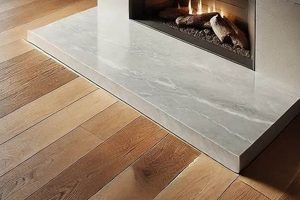
The level of textural variation directly impacts the aesthetic appeal. A coarser salt yields a more rugged, rustic appearance suitable for exterior applications such as patios and walkways, creating a natural, stone-like ambiance. Conversely, finer salt provides a more subtle texture, lending a refined aesthetic suitable for interior floors or decorative walls. The ability to tailor the texture allows for a customized visual effect, enhancing the overall design scheme of the environment. For example, a museum might employ a lightly textured finish to create a sophisticated and understated backdrop for its exhibits.
- Color and Light Interaction
The textured surface influences how light interacts with the concrete. The uneven surface creates shadows and highlights, adding depth and dimension to the material. This effect can be accentuated by the selection of concrete pigments or stains. A darker stain, for instance, emphasizes the texture by creating greater contrast between the high and low points of the surface. This interplay of light and shadow contributes to a more dynamic and visually engaging surface compared to a smooth, uniform finish. An art gallery might use strategic lighting to accentuate the finish, creating an inviting and visually stimulating environment.
- Integration with Surrounding Landscape/Architecture
The aesthetic success relies on its harmonious integration with the surrounding environment. The finish can be chosen to complement the architectural style of a building or the natural features of a landscape. A rustic texture might be well-suited for a traditional farmhouse, while a more refined texture might better complement a modern, minimalist structure. Careful consideration of the surrounding elements ensures that the concrete finish enhances the overall aesthetic coherence of the space. In a public park, the finish could be selected to echo the natural textures of the surrounding rock formations, creating a seamless transition between the built and natural environments.
- Perception of Value and Quality
The finish conveys a sense of craftsmanship and attention to detail, elevating the perceived value and quality of the space. The textured surface is often viewed as a more sophisticated and upscale alternative to standard concrete finishes. This perception can be particularly important in commercial settings, where the aesthetic appeal of a space can influence customer perceptions and brand image. For example, a high-end retail store might utilize to create an impression of luxury and exclusivity.
These facets of aesthetics demonstrate its integral role in the overall appeal and value. It is not merely a surface treatment but a design element that contributes significantly to the visual character and ambiance of a space. The ability to customize the texture, color, and integration with the surrounding environment allows for a wide range of aesthetic possibilities, making it a versatile and desirable choice for both residential and commercial applications. Successfully implementing this finish requires a keen understanding of design principles and the ability to create a harmonious balance between functionality and visual appeal.
Frequently Asked Questions
This section addresses common inquiries and clarifies misconceptions surrounding the use of salt to create a textured surface.
Question 1: Is the introduction of salt detrimental to the long-term structural integrity of the concrete?
When executed properly with appropriate salt types and thorough rinsing, the process does not significantly compromise the concrete’s structural integrity. However, improper salt selection (e.g., iodized salt) or inadequate rinsing can lead to surface discoloration and potential weakening.
Question 2: What types of salt are best suited for achieving optimal results?
Coarse, non-iodized rock salt is generally recommended. The larger crystal size creates a more pronounced texture. Iodized salt should be avoided due to the risk of discoloration. Experimentation with different salt types is encouraged to achieve specific aesthetic outcomes.
Question 3: How does the timing of salt application impact the final finish?
The optimal time for salt application is when the concrete has reached its initial set but remains pliable enough for the salt crystals to embed properly. Applying salt too early can result in the crystals sinking too deep. Applying it too late prevents proper adhesion.
Question 4: Is sealing the concrete surface necessary after the salt treatment?
Sealing is highly recommended. A quality concrete sealer protects the surface from water penetration, chloride intrusion, and freeze-thaw damage, extending the lifespan and preserving the aesthetic appeal of the textured finish.
Question 5: What maintenance procedures are required to preserve the appearance and durability?
Regular cleaning to remove dirt, debris, and deicing salts is essential. Periodic resealing is also recommended to maintain the protective barrier against environmental damage. Promptly address any cracks or surface damage to prevent further deterioration.
Question 6: Can this method be applied to existing concrete surfaces?
It is primarily intended for use with freshly poured concrete. Replicating the effect on existing concrete is challenging and may require specialized techniques such as acid etching or mechanical abrasion, with less predictable results.
In summary, achieving a successful and durable relies on careful material selection, precise application, proper curing, and consistent maintenance. These FAQs provide a foundational understanding of key considerations.
The subsequent section will explore real-world examples of successful projects, showcasing the versatility and aesthetic potential.
Conclusion
The preceding discussion has explored the various facets of the decorative concrete treatment. From material selection and application techniques to curing processes and durability considerations, it is evident that achieving a successful outcome requires a comprehensive understanding of the process. The aesthetic appeal and functional benefits, particularly slip resistance, make it a valuable option for a range of applications. However, the inherent vulnerabilities associated with the textured surface necessitate careful planning and diligent execution to ensure long-term performance.
Ultimately, informed decision-making and adherence to best practices are essential for realizing the full potential. Further research and ongoing evaluation of performance in diverse environments will continue to refine the understanding of its capabilities and limitations, solidifying its role in the landscape of decorative and functional concrete finishes. Continued responsible application will ensure that it remains a viable option for architects, engineers, and contractors seeking to enhance both the aesthetic and functional properties of concrete surfaces.