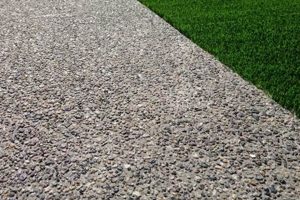
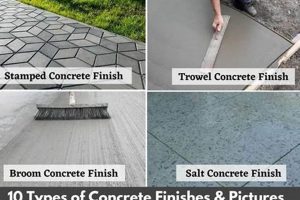
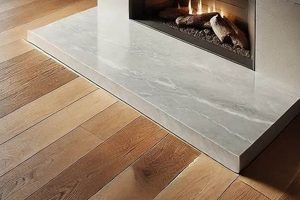
A highly polished concrete surface achieved through extensive power troweling is known for its smooth, reflective quality. This finishing technique involves multiple passes with a power trowel, often commencing when the concrete has begun to set and continuing until a sheen appears. The prolonged troweling densifies the surface, closing pores and creating a hard, wear-resistant finish. This results in a sleek appearance often desired for interior floors and surfaces.
The benefits of this concrete treatment extend beyond aesthetics. Its durability reduces maintenance costs over the lifespan of the floor. The reflective surface can improve ambient lighting, potentially lowering energy consumption. Historically, this method was employed to create durable and visually appealing flooring in industrial and commercial settings, and has gained popularity in residential applications for its modern appeal and ease of cleaning.
The subsequent sections will delve into the specific application methods, material considerations, cost analysis, and potential challenges associated with achieving a successful and long-lasting polished concrete surface. This includes a discussion of the importance of proper curing techniques and the selection of appropriate sealants to maintain the finish’s integrity and appearance over time.
Achieving Optimal Results
The creation of a superior polished concrete surface requires meticulous attention to detail throughout the entire process, from initial concrete placement to final sealing. The following tips highlight critical aspects for achieving a durable and aesthetically pleasing outcome.
Tip 1: Concrete Mix Design is Crucial: The composition of the concrete mix significantly impacts the final appearance and performance. A carefully selected aggregate, combined with appropriate cement content and admixtures, facilitates proper densification and reduces the risk of surface defects. Consult with a concrete specialist to determine the ideal mix design for the intended application.
Tip 2: Timing of Troweling is Paramount: The success hinges on initiating the process at the optimal time in the concrete’s setting process. Beginning too early can lead to surface damage, while starting too late prevents adequate densification. Experienced finishers should assess the concrete’s condition and adjust their techniques accordingly.
Tip 3: Employ Proper Troweling Techniques: Multiple passes with a power trowel, utilizing progressively finer blades, are essential for achieving a smooth, reflective surface. Overlapping each pass and varying the trowel speed and pressure ensures uniform densification and minimizes imperfections. Avoid excessive troweling, which can lead to burning or discoloration.
Tip 4: Curing is Essential for Durability: Proper curing is vital to ensure the concrete achieves its full strength and minimizes cracking. Employing methods such as wet curing, curing compounds, or plastic sheeting to maintain moisture content for the recommended duration is critical for long-term performance.
Tip 5: Consider the Ambient Conditions: Temperature and humidity significantly affect the concrete’s setting and curing process. High temperatures can accelerate setting, requiring adjustments to troweling techniques. Adequate ventilation is necessary to prevent moisture buildup and ensure proper curing.
Tip 6: Surface Preparation Before Sealing: Before applying a sealant or protective coating, the surface must be thoroughly cleaned and prepared. Removing any contaminants, such as dust, debris, or curing compounds, ensures proper adhesion and optimal performance of the sealant.
Tip 7: Select the Appropriate Sealant: Choosing the right sealant depends on the intended use and environmental conditions. Options include penetrating sealers, topical coatings, and epoxy-based systems. Consider factors such as abrasion resistance, chemical resistance, and UV stability when making a selection.
Adhering to these guidelines provides a foundational framework for achieving a polished concrete surface that is both aesthetically pleasing and functionally durable. Each step contributes to the overall quality and longevity of the finished product.
The following sections will address common problems encountered during the application process and offer solutions for mitigating these issues, ensuring a successful outcome.
1. Densification

Densification is a primary objective in achieving a quality surface. The process directly impacts the concrete’s strength, durability, and aesthetic properties, ultimately determining the success and longevity of the finish.
- Reduction of Porosity
The primary goal of densification is to minimize the inherent porosity of concrete. Through repeated troweling, surface pores are closed, reducing pathways for moisture and contaminants. This lessened permeability significantly enhances resistance to freeze-thaw cycles and chemical intrusion, preventing premature deterioration. For example, concrete floors in industrial settings, subjected to heavy traffic and potential spills, benefit greatly from reduced porosity.
- Increased Surface Hardness
Densification strengthens the surface layer of the concrete, making it more resistant to abrasion and impact. The compressive action of power trowels compacts the cement matrix, creating a harder, more durable surface. This is particularly relevant in high-traffic areas, where a hardened surface minimizes wear and tear, prolonging the lifespan of the floor. The increased hardness also reduces dust generation, contributing to a cleaner environment.
- Enhancement of Reflectivity
As the concrete surface is densified, it becomes smoother and more reflective. The troweling process creates a polished surface that reflects light, enhancing the aesthetic appeal of the floor. This increased reflectivity can also reduce the need for artificial lighting, contributing to energy savings. A highly reflective surface creates a brighter, more visually appealing space.
- Improved Bond with Sealants
A densified surface provides a more uniform and receptive base for sealants and coatings. The reduced porosity and increased surface hardness improve the bond between the concrete and the protective layer, enhancing the sealant’s performance and extending its lifespan. This ensures that the sealant effectively protects the concrete from staining, chemical attack, and other forms of damage. A strong bond prevents peeling, flaking, and other forms of sealant failure.
The multifaceted benefits of densification underscore its importance in achieving a polished concrete floor. The enhanced durability, improved aesthetics, and increased sealant performance contribute to a surface that is both visually appealing and functionally sound. Proper densification is, therefore, a critical step in ensuring the long-term success and value of the concrete installation.
2. Smoothness

Smoothness is an intrinsic characteristic of surfaces, directly resulting from the meticulous application of the technique. This specific technique employs repeated power troweling to flatten and refine the concrete surface, effectively eliminating imperfections and irregularities. The resultant smoothness is not merely aesthetic; it is a direct consequence of the densification process, which reduces surface porosity and creates a uniform plane. The degree of achieved smoothness determines the reflective quality of the surface and its ease of maintenance. For instance, a highly polished floor exhibits superior smoothness, minimizing the accumulation of dirt and facilitating effortless cleaning.
The relationship between technique and smoothness is further exemplified in industrial applications. In manufacturing facilities, surfaces are favored for their resistance to wear and ease of sanitation. The smooth, non-porous surface minimizes the adhesion of contaminants, simplifying cleaning protocols and maintaining a hygienic environment. Similarly, in retail spaces, a smooth floor provides an elegant and welcoming aesthetic, while also withstanding the constant foot traffic. The ability to achieve the desired level of smoothness is dependent on factors such as the concrete mix design, the timing of troweling, and the skill of the finisher.
In conclusion, smoothness is not just an incidental outcome of the method; it is a fundamental aspect of its value and functionality. The degree of smoothness achieved directly impacts the surfaces performance, influencing its durability, maintenance requirements, and aesthetic appeal. While achieving optimal smoothness can present challenges related to material consistency and technique, the resulting benefits in terms of long-term performance and visual appeal underscore the importance of this characteristic.
3. Durability

The method of surface treatment described as “burn finish concrete” enhances the inherent durability of concrete through several mechanisms. Primarily, the intensive troweling process compacts the surface, reducing porosity and increasing density. This densification minimizes the ingress of water, chemicals, and other substances that can contribute to degradation. The resulting surface is significantly more resistant to abrasion, impact, and freeze-thaw cycles, extending the lifespan of the concrete structure. In industrial settings, for instance, floors treated with this method withstand the constant wear and tear from heavy machinery and vehicular traffic, significantly reducing the need for frequent repairs or replacements. This enhanced durability translates to lower long-term maintenance costs and increased operational efficiency.
Moreover, the increased density achieved through this finishing process makes the concrete less susceptible to dusting, a common issue in untreated or poorly finished concrete surfaces. Dusting occurs when the surface layer of the concrete weakens and releases fine particles into the air. By creating a harder, more compact surface, burnishing reduces dusting, thereby improving indoor air quality and reducing the need for constant cleaning. This is particularly beneficial in environments where hygiene and cleanliness are paramount, such as hospitals or food processing facilities. The enhanced durability, therefore, contributes to a healthier and more sustainable environment.
In summary, the durability conferred by this finishing technique is a critical factor in its value proposition. The enhanced resistance to abrasion, impact, chemical attack, and freeze-thaw cycles extends the lifespan of concrete structures, reducing maintenance costs and improving operational efficiency. While proper execution of the finishing process is essential to achieve the desired level of durability, the long-term benefits are significant and contribute to the overall sustainability of concrete construction. The challenges associated with achieving optimal durability are mitigated by adherence to established best practices and the use of appropriate materials and equipment.
4. Reflectivity

The connection between reflectivity and this finishing method is direct and significant. The extended power troweling process employed in achieving the finish compacts the concrete surface, reducing microscopic irregularities and creating a smoother plane. This smooth surface, in turn, enhances its ability to reflect light. The degree of reflectivity achieved is directly proportional to the level of refinement attained during the troweling process; more extensive troweling results in a more reflective surface. In practical terms, a floor finished with this method can improve ambient lighting conditions within a space, reducing the need for artificial illumination and lowering energy consumption. The reflective quality also contributes to a perception of spaciousness and cleanliness. For instance, retail environments frequently utilize highly reflective concrete floors to showcase merchandise and create a visually appealing atmosphere.
The importance of reflectivity extends beyond purely aesthetic considerations. In industrial settings, enhanced reflectivity can improve visibility, increasing safety for workers operating machinery or navigating the facility. This is particularly relevant in environments with limited natural light. Moreover, the reflective surface simplifies maintenance by making it easier to identify spills, debris, and other contaminants, facilitating more efficient cleaning. The level of reflectivity can be further customized through the application of sealants and coatings designed to enhance or modify the surface’s reflective properties. For example, epoxy coatings can provide a high-gloss finish that significantly increases reflectivity, while matte sealants can reduce glare in environments where excessive reflection is undesirable.
In conclusion, reflectivity is an integral component of surfaces. It is a direct consequence of the finishing process and contributes significantly to the aesthetic appeal, functionality, and safety of spaces where it is employed. Understanding the relationship between finishing techniques and reflectivity allows for the creation of concrete surfaces tailored to specific performance requirements and design objectives. While achieving optimal reflectivity requires skilled workmanship and careful attention to detail, the benefits associated with improved lighting, enhanced aesthetics, and increased safety make it a worthwhile consideration in many applications. The challenges in achieving uniform reflectivity can be addressed through proper concrete mix design, meticulous troweling techniques, and the selection of appropriate sealants and coatings.
5. Maintenance

The maintenance requirements for surfaces are generally lower compared to other flooring options, representing a significant advantage of this construction method. The dense, non-porous surface created by the finishing process resists staining and the penetration of liquids, simplifying cleaning procedures. Routine maintenance typically involves sweeping or vacuuming to remove loose debris, followed by damp mopping with a neutral pH cleaner. The frequency of cleaning depends on the level of traffic and the nature of the environment; however, daily or weekly cleaning is usually sufficient for most residential and commercial applications. Unlike carpets, which require frequent deep cleaning or replacement, and some tile surfaces that can stain easily, a surface remains relatively easy to maintain.
Periodic maintenance may include the application of a concrete sealer or wax to protect the surface and enhance its shine. The need for resealing depends on the type of sealant used and the level of wear and tear the floor experiences. Some sealants can last for several years, while others may require reapplication annually. The use of walk-off mats at entrances can minimize the amount of dirt and grit tracked onto the floor, reducing the need for frequent cleaning and extending the lifespan of the sealer. In industrial settings, where floors are subjected to heavier use and potential chemical spills, the maintenance regimen may involve specialized cleaning products and equipment designed to remove tough stains and protect the surface from damage. Preventative measures, such as prompt spill cleanup, also contribute to reduced maintenance needs.
In conclusion, the ease of maintenance associated with a surface is a direct result of the densified, non-porous nature of the finished surface. Routine cleaning procedures are simple and effective, and periodic resealing is typically the only additional maintenance required. The long-term cost savings associated with reduced maintenance, coupled with the floor’s durability and aesthetic appeal, contribute to its overall value proposition. While certain environments may require more intensive maintenance protocols, the inherent resistance to staining and damage makes it a practical and cost-effective flooring solution for a wide range of applications.
6. Installation
The success of achieving a durable and aesthetically pleasing concrete surface is fundamentally linked to the quality of the installation process. Unlike some surface treatments that can be applied post-construction, this specific finish requires integration into the concrete placement and curing phases. A poorly executed concrete pour, inadequate consolidation, or improper curing can irrevocably compromise the final finish, regardless of the skill employed during troweling. For instance, if the concrete mixture is not adequately vibrated during placement, air pockets can form, leading to surface imperfections that are difficult or impossible to rectify through troweling alone. Therefore, installation represents a foundational element, directly impacting the outcome of the finishing process.
The timeline of installation is also critical. The finishing stage, involving the repetitive passes with a power trowel, must be initiated at the precise moment when the concrete has achieved sufficient initial set but remains workable. Beginning too early can lead to surface tearing and discoloration, while delaying the process reduces the ability to achieve proper densification and smoothness. This timing is influenced by factors such as ambient temperature, humidity, and the concrete mix design, requiring experienced finishers to assess the concrete’s condition and adjust their techniques accordingly. Consider the example of a large warehouse floor; improper timing of the burnishing process could result in uneven surface hardness and reflective properties across the expanse of the floor, compromising its functionality and aesthetic appeal. Furthermore, inadequate protection during the curing phase can lead to cracking, staining, or other surface defects, negating the benefits of meticulous troweling.
In summary, the quality of surface is inextricably linked to the comprehensive execution of the installation process. From concrete placement and consolidation to the timing and technique of troweling, each step directly influences the final outcome. Proper installation is not merely a preliminary stage; it is an integral component that determines the durability, aesthetic appeal, and long-term performance of the finished concrete surface. Addressing the inherent challenges associated with achieving consistent and high-quality installation requires skilled craftsmanship, adherence to best practices, and a thorough understanding of the factors influencing concrete behavior. The success of any surface ultimately depends on the diligence and expertise applied during the entire installation process.
Frequently Asked Questions About burn finish concrete
This section addresses common inquiries concerning burn finish concrete, providing concise answers to ensure a clear understanding of this construction technique.
Question 1: What exactly is burn finish concrete?
Burn finish concrete refers to a highly polished concrete surface achieved through extensive power troweling. The process compacts the surface, reducing porosity and creating a smooth, reflective finish.
Question 2: Is burn finish concrete suitable for outdoor applications?
While typically employed indoors, burn finish concrete can be used outdoors if appropriately sealed and protected from the elements. However, exposure to harsh weather conditions may accelerate wear and tear.
Question 3: How durable is burn finish concrete compared to other flooring options?
Burn finish concrete is highly durable due to its density and resistance to abrasion. When properly installed and maintained, it can withstand heavy traffic and last for many years.
Question 4: What are the primary maintenance requirements for burn finish concrete?
Maintenance typically involves sweeping or vacuuming to remove debris, followed by damp mopping with a neutral pH cleaner. Periodic resealing may be necessary to maintain the surface’s shine and protect it from stains.
Question 5: Can burn finish concrete be customized with colors or patterns?
Yes, burn finish concrete can be customized through the addition of integral color pigments or the application of stains or dyes after the finishing process. Patterns can also be created using stencils or saw cuts.
Question 6: What factors influence the cost of burn finish concrete installation?
The cost is influenced by factors such as the size of the area, the complexity of the design, the concrete mix design, labor costs, and the type of sealant used.
Burn finish concrete offers a durable and aesthetically pleasing flooring solution with relatively low maintenance requirements. Its suitability for specific applications depends on factors such as environmental conditions and desired aesthetic outcomes.
The subsequent section will explore case studies of successful burn finish concrete installations, highlighting the versatility and benefits of this construction technique in various settings.
burn finish concrete
This article has explored the technical aspects, advantages, and practical considerations associated with burn finish concrete. The discussion encompassed the process of achieving a highly polished surface, emphasizing the importance of concrete mix design, timing, and proper execution. Durability, reflectivity, and ease of maintenance were identified as key benefits, contributing to the long-term value and appeal of this flooring solution. The significance of proper installation and the potential for customization through colors and patterns were also underscored.
As a construction technique, burn finish concrete presents a compelling alternative to traditional flooring options, offering a balance of aesthetic appeal, durability, and cost-effectiveness. The success of this method hinges on meticulous planning, skilled craftsmanship, and a thorough understanding of the factors influencing concrete behavior. Future advancements in concrete technology and finishing techniques may further enhance the performance and versatility of burn finish concrete, solidifying its position as a viable and sustainable choice for a wide range of applications.