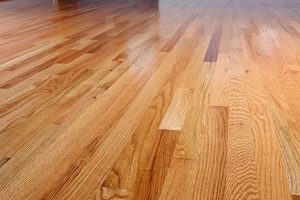
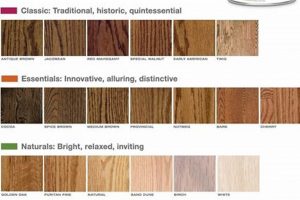
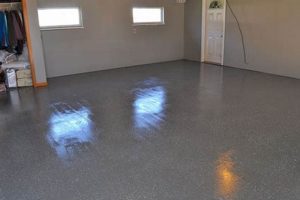
A durable and protective coating applied to wooden surfaces, particularly floors, this material provides a clear, resilient layer that enhances the wood’s natural beauty while safeguarding it from wear and tear. As an example, after sanding a hardwood floor, a contractor might apply three coats to create a tough, glossy surface resistant to scratches and spills.
Its significance lies in its ability to extend the lifespan of wood flooring by shielding it from moisture, impacts, and daily use. Historically, less durable finishes required frequent reapplication. However, advancements in this coating technology have resulted in products offering long-lasting protection and requiring less maintenance, which translates to cost savings and improved aesthetics over time.
The subsequent sections will delve into the various types available, application techniques, maintenance recommendations, and considerations for choosing the optimal coating for specific flooring needs. Furthermore, this discussion will include insights regarding VOC content, environmental impact, and safety precautions.
Essential Application & Maintenance Strategies
Proper use and care will maximize its protective and aesthetic benefits. Following these guidelines ensures longevity and a professional-quality result.
Tip 1: Thoroughly Prepare the Surface: Prior to application, ensure the wood surface is completely clean, dry, and free of dust, dirt, wax, or existing finishes. Sanding to a smooth, even surface is crucial for proper adhesion and a uniform appearance. Failure to do so may result in imperfections and premature wear.
Tip 2: Select the Appropriate Type: Different formulations offer varying levels of durability, sheen, and VOC content. Water-based options are generally lower in VOCs and dry more quickly, while oil-based versions often provide greater durability and a warmer tone. Choose based on the specific flooring type, traffic level, and environmental considerations.
Tip 3: Apply Thin, Even Coats: Multiple thin coats are preferable to a single thick coat. Thick coats can lead to bubbles, slow drying times, and an uneven finish. Use a high-quality applicator and maintain a wet edge to prevent lap marks. Allow each coat to dry completely according to the manufacturer’s instructions before applying the next.
Tip 4: Maintain Proper Ventilation: Adequate ventilation is essential during application and drying to minimize exposure to potentially harmful fumes and facilitate proper curing. Open windows and use fans to circulate air. Wear appropriate respiratory protection, especially when working in confined spaces.
Tip 5: Screen Between Coats: Lightly abrade the surface between coats with a fine-grit sanding screen to remove any imperfections and ensure proper adhesion of subsequent layers. Vacuum thoroughly after screening to remove all dust particles.
Tip 6: Allow Sufficient Curing Time: The finish requires adequate curing time to fully harden and achieve its maximum durability. Avoid heavy traffic or placing furniture on the floor until the recommended curing period has elapsed. Consult the manufacturer’s specifications for specific curing times.
Tip 7: Use Appropriate Cleaning Products: Clean regularly with a pH-neutral wood floor cleaner specifically designed for surfaces treated with it. Avoid harsh chemicals, abrasive cleaners, and excessive water, as these can damage the coating and dull the finish.
Tip 8: Consider a Maintenance Coat: Over time, even the most durable finish will show signs of wear. Applying a maintenance coat every few years can rejuvenate the surface and prolong the lifespan of the flooring. Before applying a maintenance coat, thoroughly clean and lightly abrade the existing finish.
Adhering to these guidelines will result in a durable, aesthetically pleasing, and long-lasting floor. Proper application and maintenance are critical investments in the value and longevity of the flooring.
The next section will address troubleshooting common problems and advanced techniques for achieving optimal results.
1. Durability

The ability of a coating to withstand wear, impact, and chemical exposure directly determines the longevity and appearance of wood flooring. The inherent durability of the selected finish dictates how well the floor resists scratches, dents, stains, and the effects of daily traffic.
- Abrasion Resistance
This refers to the finish’s ability to withstand friction from foot traffic, furniture movement, and cleaning. Higher abrasion resistance translates to fewer scratches and a longer lifespan for the coating. For example, finishes intended for commercial spaces or homes with pets require superior abrasion resistance compared to those used in lightly trafficked areas. Measured by tests like the Taber Abraser test, the results quantify its ability to withstand surface wear.
- Impact Resistance
The capability to withstand sudden impacts without chipping, cracking, or denting is crucial for protecting the wood beneath. Homes with children or a high potential for dropped objects require finishes with high impact resistance. A dropped heavy object, like a cast-iron pan, can cause significant damage to a floor with inadequate impact resistance, leading to costly repairs. This is often tested using a falling weight test.
- Chemical Resistance
This characteristic describes the finish’s ability to resist damage from spills, cleaning agents, and other chemicals. Finishes with good chemical resistance prevent staining and discoloration from common household substances like vinegar, alcohol, or cleaning solutions. In kitchens and dining areas, where spills are more likely, chemical resistance is particularly important. Standards, like those established by ASTM International, define test methods and performance criteria for chemical resistance.
- Flexibility
Wood expands and contracts with changes in humidity and temperature. A durable floor finish must possess sufficient flexibility to accommodate these movements without cracking or peeling. Finishes that lack flexibility become brittle and prone to failure, especially in environments with fluctuating humidity levels. This is particularly important for wider planks and engineered wood floors where movement may be more pronounced.
The interconnectedness of these aspects directly impacts the long-term performance. Choosing a finish that balances abrasion resistance, impact resistance, chemical resistance, and flexibility is paramount for ensuring a durable and aesthetically pleasing wood floor. Understanding these properties allows informed decisions that optimize floor longevity and minimize maintenance requirements, thus realizing a greater return on the initial investment.
2. Application Technique

The method of applying a protective coating to wood flooring significantly influences the finish’s appearance, durability, and overall performance. Proper technique ensures the coating adheres correctly, forms a uniform layer, and provides optimal protection. Improper application, conversely, can lead to a range of problems, including uneven sheen, bubbling, peeling, and premature wear.
- Surface Preparation
Meticulous surface preparation is paramount. The floor must be thoroughly cleaned, sanded to the appropriate grit level, and free of any contaminants, such as dust, wax, or existing finishes. Inadequate preparation compromises adhesion, resulting in peeling or blistering. For example, if old wax residue remains on the floor, it will prevent the coating from bonding properly, leading to an uneven and easily damaged surface.
- Application Method
The chosen application method, whether brush, roller, or applicator pad, directly impacts the finish quality. Each method requires specific techniques to ensure an even coat without streaks, bubbles, or overlaps. For instance, using the incorrect nap length on a roller can lead to uneven distribution and an unacceptable texture. A trained professional understands the nuances of each method and selects the most appropriate one based on the finish type and floor characteristics.
- Environmental Conditions
Temperature and humidity levels during application and drying significantly affect the curing process. Extreme temperatures or high humidity can impede proper drying, leading to a soft, tacky finish that is susceptible to damage. The manufacturer’s specifications for optimal environmental conditions must be strictly adhered to. Failure to do so can compromise the coating’s durability and longevity.
- Number of Coats and Drying Time
Applying the correct number of coats, with adequate drying time between each, is essential for achieving the desired level of protection and aesthetics. Insufficient coats provide inadequate protection, while excessive coats can lead to clouding or cracking. Allowing each coat to fully dry according to the manufacturer’s instructions is crucial for proper curing and bonding between layers. Rushing the process can result in a compromised finish that is prone to premature failure.
In conclusion, the application process is not merely a matter of applying a liquid coating. It demands careful attention to detail, adherence to best practices, and a thorough understanding of the interaction between the applied material and the wood substrate. Neglecting any of these facets can compromise the integrity of the coating and diminish its ability to protect and enhance the wood flooring effectively. Professional application, characterized by expertise and meticulous execution, is a key determinant of the floor’s long-term performance and visual appeal.
3. Sheen Level

The sheen level of a wood floor finish, a direct attribute of the selected protective coating, profoundly impacts both the aesthetic character and perceived cleanliness of the flooring. This attribute, typically measured on a scale ranging from matte to high gloss, dictates the amount of light reflected by the surface, thereby influencing the room’s overall brightness and the visibility of imperfections. A high-gloss finish, for instance, reflects a significant amount of light, creating a bright and potentially opulent appearance. However, this heightened reflectivity also amplifies the visibility of dust, scratches, and other surface irregularities, necessitating more frequent cleaning. Conversely, a matte finish absorbs more light, resulting in a softer, more subdued appearance that is effective at concealing minor imperfections. Therefore, the choice of sheen level represents a trade-off between aesthetic preference and practical maintenance considerations. For example, a busy family household might opt for a satin or semi-gloss finish, striking a balance between light reflection and ease of maintenance, while a formal dining room might benefit from the elegance of a higher gloss finish, albeit with the understanding that more diligent cleaning will be required.
The selection of an appropriate sheen level also relates to the architectural style and intended use of the space. Contemporary designs often favor matte or low-sheen finishes to create a minimalist and understated ambiance. Traditional or formal settings, on the other hand, may benefit from the richer, more reflective qualities of a higher gloss finish. Furthermore, the sheen level can influence the perceived color of the wood. High-gloss finishes tend to deepen the color, while matte finishes can soften it. This interplay between sheen and color should be carefully considered to achieve the desired aesthetic outcome. To illustrate, consider two identical hardwood floors, one finished with a matte coating and the other with a high-gloss coating. The floor with the matte finish might appear to have a lighter, more natural tone, while the high-gloss floor might appear richer and more saturated in color. This difference is due to the way each finish interacts with light and reflects it back to the observer.
In conclusion, the sheen level of a wood floor finish is a crucial design element that must be carefully considered in relation to the intended use of the space, the desired aesthetic effect, and the practical demands of maintenance. The selection of an appropriate sheen level is not merely a matter of personal preference; it is a critical decision that can significantly impact the overall appearance, durability, and ease of maintenance of the wood flooring. Challenges in selecting the appropriate sheen level often arise from a lack of awareness of the trade-offs involved, highlighting the importance of informed decision-making and professional guidance in achieving optimal results. This element is intrinsically linked to all aspects of finish selection and performance.
4. Drying Time
The duration required for a polyurethane coating to fully cure and harden on a wood floor exerts a profound influence on project timelines, coating durability, and the overall quality of the finished surface. Insufficient drying time, whether caused by environmental factors or premature traffic, can lead to a compromised finish exhibiting softness, tackiness, and increased susceptibility to scratches, dents, and chemical damage. Conversely, appropriate drying time ensures complete solvent evaporation, cross-linking of the polymer chains, and the development of a robust, protective layer. For example, a water-based formulation typically exhibits shorter drying times compared to an oil-based counterpart, which directly impacts the feasibility of multi-coat applications within a single day. Ignoring manufacturer specifications regarding drying time may necessitate costly rework due to finish imperfections and performance deficits.
Variations in ambient temperature and humidity levels significantly affect the rate of solvent evaporation and polymer cross-linking. High humidity retards the drying process, potentially extending it by several hours or even days. Similarly, low temperatures can slow down the chemical reactions essential for curing, resulting in a weaker, more vulnerable finish. This is practically significant in regions with fluctuating climate conditions, where contractors must carefully monitor and adjust environmental controls to ensure optimal drying conditions. Applying the finish during periods of high humidity or low temperature without compensating for these factors can result in a finish that never fully hardens, leading to premature wear and requiring complete re-sanding and re-application.
In summary, proper management of drying time is critical for maximizing the benefits and longevity of a polyurethane wood floor finish. The challenges posed by varying environmental conditions and formulation differences necessitate adherence to manufacturer guidelines and proactive monitoring of the curing process. Accurate assessment and management of drying parameters are essential for achieving a durable, aesthetically pleasing, and long-lasting protective layer on the wood floor. Addressing these factors proactively safeguards the flooring investment and minimizes the risk of costly repairs and premature wear.
5. VOC Content

Volatile Organic Compounds (VOCs) represent a critical component in the selection and application of polyurethane wood floor finishes. These compounds, released as gases from certain solids or liquids, directly impact both environmental and human health. In the context of these finishes, VOC content refers to the concentration of organic chemicals that evaporate during and after application, contributing to indoor air pollution and potentially causing respiratory irritation, headaches, and other adverse health effects. The higher the VOC content, the greater the potential for these negative impacts. For instance, traditional oil-based finishes often possess significantly higher VOC levels compared to water-based alternatives, leading to stronger odors and longer periods of off-gassing. Regulatory bodies, such as the Environmental Protection Agency (EPA), establish guidelines and limits on VOC emissions to mitigate these risks.
The choice of finish with lower VOC content translates directly to improved indoor air quality and reduced environmental impact. Water-based formulations, often marketed as “low-VOC” or “zero-VOC,” are increasingly preferred due to their reduced emissions and milder odor. However, it is crucial to examine product labels and technical data sheets carefully, as “low-VOC” does not necessarily equate to “VOC-free.” While offering environmental and health benefits, lower VOC finishes may present trade-offs in terms of durability or application characteristics. For example, some water-based finishes may require more coats to achieve comparable protection to traditional oil-based finishes. Furthermore, specific application techniques and environmental controls, such as adequate ventilation, become even more critical to ensure proper curing and minimize any residual VOC emissions. The availability of certifications from organizations like GreenGuard provide assurance of a product’s adherence to stringent VOC emission standards.
Understanding and managing VOC content is therefore paramount when selecting and applying polyurethane wood floor finishes. The decision-making process should involve careful consideration of the trade-offs between VOC levels, durability, application requirements, and the specific needs of the environment in which the finish will be used. Compliance with regulatory standards and the adoption of best practices for application and ventilation are essential to minimize potential health and environmental risks. While challenges remain in achieving comparable performance with low-VOC options, ongoing advancements in finish technology are continually improving the availability and effectiveness of environmentally responsible choices, supporting both human well-being and sustainable building practices.
6. Water Resistance
Water resistance is a critical performance characteristic directly influencing the suitability and longevity of polyurethane coatings on wood flooring. Its effectiveness determines the degree to which the finish protects the underlying wood from moisture damage, preventing warping, staining, and degradation. Failure to provide adequate water resistance can lead to costly repairs and premature floor replacement.
- Permeability and Film Integrity
The inherent permeability of the coating and the integrity of the applied film dictate the rate at which moisture penetrates to the wood substrate. Formulations with tightly cross-linked polymer structures and minimal porosity exhibit superior water resistance. For example, a poorly applied finish with microscopic cracks or pinholes allows water to seep through, leading to localized swelling and discoloration of the wood. The quality of the application, including the number of coats and surface preparation, directly affects film integrity.
- Hydrophobic Properties
The degree to which the polyurethane finish repels water is crucial in preventing surface absorption and staining. Hydrophobic coatings create a barrier that causes water to bead up and roll off the surface, minimizing contact time and potential for penetration. For instance, a water-based finish modified with hydrophobic additives offers enhanced protection against spills and moisture exposure compared to a standard formulation. This property is particularly important in areas prone to spills, such as kitchens and bathrooms.
- Joint and Seam Protection
The effectiveness of the finish in sealing joints and seams between flooring boards is essential for preventing water from seeping into the subfloor. Inadequate sealing at these points allows moisture to accumulate, leading to warping, mold growth, and structural damage. Proper application techniques, including the use of flexible sealants in conjunction with the finish, are necessary to create a watertight barrier. Improperly sealed seams are often the entry point for water damage following spills or leaks.
- Resistance to Water Vapor Transmission
The coating’s ability to resist the transmission of water vapor from below the floor is vital in preventing moisture-related problems in humid environments. Finishes with low water vapor transmission rates minimize the risk of cupping, buckling, and adhesive failure caused by moisture migrating through the subfloor. This is particularly important in basements or on concrete slabs where moisture levels may be elevated. Applying a moisture barrier prior to installation can further enhance protection against water vapor transmission.
The interplay of these factors determines the overall water resistance of a polyurethane wood floor finish. Selecting a formulation with appropriate permeability, hydrophobic properties, and sealing capabilities, coupled with meticulous application techniques, ensures long-term protection against water damage. The initial investment in a high-quality, water-resistant finish is often offset by reduced maintenance costs and prevention of costly repairs, underscoring the economic value of prioritizing water resistance in wood floor protection.
7. Maintenance Needs

The connection between maintenance requirements and polyurethane-coated wood flooring is direct and consequential. The choice of finish type, application quality, and traffic volume directly influence the required maintenance schedule and intensity. Neglecting proper upkeep leads to premature wear, diminished aesthetic appeal, and ultimately, costly refinishing or replacement. For example, a high-traffic hallway coated with a single layer of standard polyurethane necessitates more frequent cleaning and recoating compared to a low-traffic bedroom finished with multiple layers of a more durable, commercial-grade product. The specific cleaning products and methods employed also directly impact the coating’s longevity and appearance. Harsh chemicals or abrasive cleaning tools degrade the protective layer, accelerating wear and potentially causing discoloration. Therefore, understanding the maintenance needs inherent to a particular installation is critical for preserving the floor’s integrity and maximizing its lifespan.
Specific maintenance procedures vary depending on the sheen level and traffic patterns. High-gloss finishes, while aesthetically appealing, require more frequent cleaning to remove visible dust and scratches. Conversely, matte finishes are more forgiving in terms of concealing minor imperfections but may require specialized cleaning products to prevent dulling. Regular sweeping or vacuuming is essential to remove abrasive particles that can scratch the finish. Damp mopping with a pH-neutral cleaner formulated for polyurethane-coated floors is recommended for removing dirt and grime. Avoid excessive water, which can seep into seams and cause warping. Recoating with a fresh layer of polyurethane every few years, depending on wear, extends the floor’s lifespan and restores its luster. Strategic placement of rugs and mats in high-traffic areas minimizes wear and reduces the frequency of recoating.
In summary, proactive and informed maintenance is paramount for safeguarding polyurethane-protected wood flooring. Ignoring or neglecting these requirements leads to a cascade of negative effects, diminishing both the floor’s appearance and its structural integrity. The long-term success and value of a wood floor investment depend significantly on consistent and appropriate maintenance practices. Understanding the interplay between finish type, traffic volume, cleaning methods, and recoating schedules empowers homeowners and facility managers to effectively preserve their flooring for years to come.
Frequently Asked Questions
This section addresses common inquiries regarding polyurethane coatings applied to wood flooring, providing clarity on essential aspects of selection, application, and maintenance.
Question 1: What are the primary differences between water-based and oil-based polyurethane wood floor finishes?
Water-based formulations generally exhibit lower VOC content, faster drying times, and reduced odor compared to oil-based counterparts. Oil-based finishes, however, often provide enhanced durability and a warmer, amber tone.
Question 2: How can the durability of a polyurethane wood floor finish be maximized?
Proper surface preparation, application of multiple thin coats, use of high-quality products, and regular maintenance are crucial for maximizing durability. Avoiding harsh chemicals and abrasive cleaning methods also contributes to longevity.
Question 3: What sheen level is most appropriate for a high-traffic area?
Lower sheen levels, such as matte or satin, are generally recommended for high-traffic areas due to their ability to conceal scratches and scuffs more effectively than high-gloss finishes.
Question 4: How does humidity affect the drying time of polyurethane wood floor finishes?
High humidity levels impede the evaporation of solvents, thereby extending drying times. Maintaining adequate ventilation and temperature control is essential to ensure proper curing.
Question 5: Is it necessary to screen between coats of polyurethane?
Lightly abrading the surface between coats with a fine-grit sanding screen promotes adhesion and removes imperfections, resulting in a smoother, more uniform finish.
Question 6: How often should a polyurethane wood floor finish be recoated?
Recoating frequency depends on traffic volume and wear patterns. Inspect the finish regularly for signs of damage, such as scratches or dullness. A maintenance coat is typically recommended every 3-5 years in residential settings.
These responses provide a foundational understanding of key considerations for polyurethane wood floor finishes. Adherence to best practices ensures optimal performance and longevity.
The subsequent section will explore advanced techniques and troubleshooting strategies for specific flooring challenges.
Concluding Remarks on Polyurethane Wood Floor Finish
This exploration has underscored the multifaceted nature of polyurethane wood floor finish. Its selection, application, and maintenance represent critical decisions impacting the longevity, aesthetics, and indoor environmental quality of any space. The nuances of VOC content, drying times, sheen levels, and durability characteristics demand careful consideration and informed choices.
Ultimately, a well-executed polyurethane wood floor finish constitutes a significant investment, providing enduring protection and enhancing the inherent beauty of wood flooring. A thorough understanding of these materials empowers informed decision-making, ensuring optimal performance and realizing the full potential of this protective and decorative element in residential and commercial settings. Prudent selection and diligent upkeep translate to long-term value and sustained aesthetic appeal.