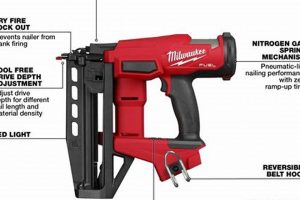
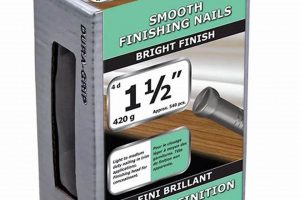
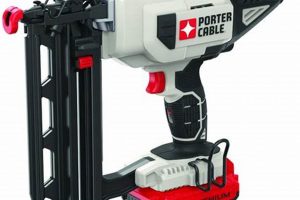
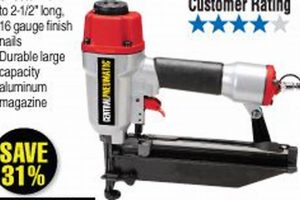
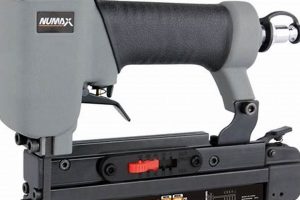
This pneumatic tool, designed for driving fasteners into wood, utilizes collated nails of a specific diameter. These nails, measured at 0.072 inches, are heavier and stronger than those used in smaller gauge nailers. An example application includes attaching thicker trim and molding where a more robust hold is necessary, such as baseboards or door casings.
Its significance lies in the balance it provides between holding power and minimal visibility. The larger nail size offers increased strength compared to smaller-gauge counterparts, reducing the likelihood of splitting or loosening. Simultaneously, the relatively small head size allows for easier concealment with wood filler or paint, resulting in a cleaner, more professional appearance. Historically, this type of fastener was often manually driven; the pneumatic version greatly improves efficiency and reduces user fatigue.
The subsequent discussion will delve into specific applications, optimal usage techniques, safety considerations, and a comparison with other similar tools, providing a complete understanding of its capabilities and limitations within the broader spectrum of woodworking and construction tasks.
Expert Guidance for Optimal Performance
Employing best practices enhances the effectiveness and longevity of this tool and ensures quality results.
Tip 1: Air Pressure Regulation: Adhere to the manufacturer’s recommended air pressure settings. Excessive pressure can lead to nail penetration beyond the desired depth, while insufficient pressure may result in incomplete drives.
Tip 2: Proper Nail Selection: Use only collated nails that are specifically designed for use with a 15-gauge model. Using incompatible nails can cause jams, misfires, and potential damage to the tool.
Tip 3: Consistent Depth Adjustment: Utilize the depth adjustment feature to achieve a consistent nail depth. Prior to commencing a project, test the setting on a scrap piece of material to ensure proper penetration without excessive countersinking.
Tip 4: Regular Maintenance: Periodically lubricate the tool with pneumatic tool oil, following the manufacturers instructions. This practice helps maintain smooth operation and extends the life of the tool.
Tip 5: Secure Workpiece: Properly secure the workpiece to prevent movement during nail driving. Unstable materials can lead to inaccurate nail placement and potential injury.
Tip 6: Consistent Angle: Maintain a consistent angle between the tool and the workpiece. Varying the angle can result in angled nail drives or surface damage.
Tip 7: Cleanliness: Regularly clean the tool’s nose and nail magazine to remove debris and prevent jams. A clean tool operates more efficiently and reliably.
Adherence to these guidelines will yield more consistent and professional results while maximizing the tool’s lifespan. Proper use of this tool involves understanding its specific requirements and limitations.
The subsequent sections will discuss common troubleshooting scenarios and advanced techniques for utilizing this tool in a variety of applications.
1. Applications

The utility of a 15-gauge finish nailer is defined by the specific applications for which it is best suited. The gauge and resultant size of the nail it drives dictate its optimal use cases. Its moderate size provides a balance between holding power and minimizing the visibility of the fastener, leading to a neat, finished appearance.
- Trim Carpentry
This represents a primary application. Installing window casings, door frames, and baseboards requires secure attachment without overly large nail holes. The 15-gauge fastener provides sufficient holding power for these lighter materials while remaining relatively easy to conceal.
- Cabinetry
Assembling cabinets, particularly attaching face frames and moldings, benefits from the fastener’s ability to provide a strong, yet discreet, hold. This minimizes the need for extensive filling and sanding prior to finishing, streamlining the construction process.
- Furniture Building
In furniture construction, the 15-gauge nailer is suitable for attaching decorative elements, drawer fronts, and other non-structural components. The balance between holding power and minimal visibility makes it preferable over coarser fasteners that could detract from the finished product’s aesthetic.
- Paneling Installation
Installing wood paneling often requires a fastener that can secure the material without causing significant surface damage. A 15-gauge nailer effectively fulfills this requirement, allowing for concealed fastening and a professional-looking installation.
These applications showcase the versatility of this tool in finish work. The specific choice of application should always be guided by the material being used, the desired level of holding power, and the aesthetic requirements of the project. Improper application can lead to compromised structural integrity or an unsatisfactory finished appearance.
2. Air Pressure

Air pressure is a critical operational parameter for a pneumatic 15-gauge finish nailer. It directly influences the tool’s ability to consistently and effectively drive nails to the desired depth without causing damage to the workpiece or the tool itself. Maintaining the correct air pressure is paramount for optimal performance and safety.
- Optimal Operating Range
Most 15-gauge finish nailers operate within a specified air pressure range, typically between 70 and 120 pounds per square inch (PSI). The manufacturer’s recommendations should be strictly adhered to. Deviating from this range can lead to malfunctions or inconsistent results. Operating below the minimum pressure may result in nails not being fully driven, while exceeding the maximum can cause the tool to overdrive nails or even damage internal components.
- Impact on Nail Depth
The air pressure directly affects the depth to which the nail is driven into the material. Higher pressure results in deeper penetration, while lower pressure results in shallower penetration. This relationship necessitates careful adjustment of the air pressure based on the density of the material being fastened. Softer woods require lower pressure to prevent overdriving, while harder woods require higher pressure to ensure complete penetration.
- Consistency and Reliability
Maintaining a stable and consistent air pressure is essential for reliable operation. Fluctuations in air pressure can lead to inconsistent nail depths, resulting in an unprofessional finish. An air compressor with adequate capacity and a regulator that can maintain a constant pressure is crucial. Furthermore, ensuring that the air hose is free of kinks or leaks will contribute to stable air pressure delivery.
- Safety Considerations
Operating a 15-gauge finish nailer at excessive air pressure poses a significant safety risk. Over-pressurization can lead to the tool malfunctioning, potentially causing nails to be ejected with greater force or the tool itself to fail. Always wear appropriate safety gear, including eye protection, and follow the manufacturer’s safety guidelines when operating the tool.
Therefore, understanding and diligently managing air pressure is fundamental to the safe and effective use of a 15-gauge finish nailer. Paying close attention to the pressure settings and ensuring a stable air supply will contribute to consistent results, prolong the life of the tool, and minimize the risk of accidents.
3. Nail Length

The selection of appropriate nail length is a crucial determinant in the effective and safe operation of a 15-gauge finish nailer. The nail length must be carefully matched to the thickness of the materials being joined to ensure adequate holding power without compromising the structural integrity or aesthetic finish of the project.
- Material Thickness and Penetration Depth
The general rule dictates that a nail should penetrate at least two-thirds of the thickness of the receiving material. For example, when attaching a -inch trim board to a solid wood substrate, the selected nail should be at least 1 inches in length. Insufficient penetration results in a weak joint prone to failure, while excessive length can cause the nail to protrude through the back of the material, creating a safety hazard and detracting from the finished appearance.
- Adjusting for Material Density
Wood density significantly influences nail holding power. Softer woods, such as pine or fir, require longer nails to achieve the same level of security as shorter nails in denser hardwoods like oak or maple. When working with composite materials like MDF (Medium Density Fiberboard), which offer relatively poor nail retention, it may be necessary to use a longer nail than would typically be required for a solid wood of the same thickness.
- The Role of Nail Shank Design
While length is a primary consideration, the design of the nail shank also impacts its holding power. Smooth-shank nails rely solely on friction for retention, while barbed or ring-shank nails provide a mechanical interlock with the wood fibers. When greater holding power is required, such as when securing trim to a surface that will experience significant stress, a longer nail with a barbed or ringed shank is advisable, assuming the 15-gauge nailer can accommodate it.
- Nail Length and Tool Compatibility
A 15-gauge finish nailer has a limited range of acceptable nail lengths, typically ranging from 1 inch to 2 inches. Attempting to use nails outside of this range can cause jams, misfires, and potential damage to the tool. Prior to starting a project, verify that the nailer is compatible with the selected nail length and diameter. Exceeding length parameters not only risks malfunction but may also void any existing warranties.
In summary, the judicious selection of nail length is paramount when utilizing a 15-gauge finish nailer. Balancing the need for adequate penetration with the constraints imposed by material thickness, density, and tool compatibility ensures a secure, aesthetically pleasing, and safe finished product.
4. Wood Density

The effectiveness of a 15-gauge finish nailer is intrinsically linked to the density of the wood into which the fasteners are being driven. Wood density, measured as mass per unit volume, dictates the resistance encountered by the nail during penetration. This, in turn, affects the necessary air pressure and the resultant holding power of the fastener. Higher density woods, such as maple or oak, require greater force to drive the nail to the desired depth. Conversely, lower density woods, like pine or fir, offer less resistance, and therefore, require lower air pressure to prevent overdriving. Incorrect assessment of wood density can lead to either insufficient penetration, resulting in a weak joint, or over-penetration, causing unsightly surface damage and potentially compromising the structural integrity of the piece. For example, driving a 2-inch nail into soft pine at the same pressure used for hardwood could cause the nail head to sink too deeply, marring the surface and reducing the holding strength.
Understanding this relationship is practically significant in achieving consistent and professional results. Adjusting the air pressure setting on the nailer based on the wood type being used is crucial. Many experienced carpenters will test the nailer on a scrap piece of the same material before beginning the main project to dial in the correct pressure. This ensures that the nails are driven to the proper depth without damaging the surrounding wood. Furthermore, the choice of nail length should also be considered in conjunction with wood density. Denser woods may not require as long of a nail to achieve the same level of holding power as less dense woods. When working with a combination of different wood densities, it may be necessary to adjust the air pressure or switch to a different nail length to accommodate the variations. Failure to account for these factors will result in subpar workmanship.
In conclusion, wood density represents a critical variable in the successful utilization of a 15-gauge finish nailer. The challenge lies in accurately assessing the wood density and making the appropriate adjustments to air pressure and nail length. Ignoring this connection can lead to compromised structural integrity, aesthetic flaws, and potential rework, all of which underscore the importance of understanding the interplay between wood density and the performance of this tool. Further exploration of specific wood species and their corresponding density values would provide even greater insight into optimizing the use of finish nailers.
5. Tool Maintenance
Consistent and appropriate tool maintenance is paramount for the reliable and extended operation of any pneumatic tool, including the 15-gauge finish nailer. Neglecting routine maintenance procedures can lead to diminished performance, increased risk of malfunction, and a reduced lifespan for the tool, ultimately impacting project quality and efficiency.
- Lubrication of Internal Components
Regular lubrication of the internal components, particularly the O-rings and cylinder, is critical. Pneumatic tools rely on compressed air for operation, and the friction generated by moving parts can cause wear and tear. Applying a few drops of pneumatic tool oil through the air inlet before each use helps to minimize friction, prevent corrosion, and maintain smooth operation. Neglecting this step can lead to air leaks, reduced power, and eventual failure of the tool’s internal mechanisms. For instance, in high-volume trim carpentry, lack of lubrication can cause a 15-gauge nailer to jam frequently, significantly slowing down the workflow and potentially damaging the workpiece.
- Air Compressor Maintenance and Clean Air Supply
The quality of the compressed air supplied to the nailer directly impacts its performance and longevity. Moisture and debris in the air line can cause rust, corrosion, and clogging of the tool’s internal components. Draining the air compressor tank regularly to remove accumulated water and using an in-line air filter/dryer are essential practices. A clogged filter can restrict airflow, reducing the nailer’s power and causing inconsistent nail depth. In humid environments, this is particularly important as moisture buildup in the air lines can rapidly degrade the internal components of a 15-gauge nailer, requiring costly repairs or replacements.
- Cleaning and Inspection of the Nail Magazine
The nail magazine, which holds the collated nails, is susceptible to accumulating dust, debris, and nail fragments. This accumulation can cause jams, misfeeds, and damage to the nailer’s feeding mechanism. Regularly cleaning the magazine with compressed air and inspecting it for any signs of damage or wear is crucial. A bent or damaged magazine can prevent the nails from feeding properly, leading to frustration and wasted time. For example, if wood dust accumulates in the magazine of a 15-gauge nailer used for installing trim, it can cause the nails to misfire, leading to inaccurate nail placement and potential damage to the trim pieces.
- Checking and Replacing Worn Parts
Over time, certain parts of the nailer, such as the driver blade, bumper, and O-rings, will wear out and require replacement. Regularly inspecting these parts for signs of wear, such as cracks, deformation, or leaks, is essential for maintaining the tool’s performance and preventing breakdowns. A worn driver blade, for example, can cause the nailer to misfire or to bend the nails during driving. Replacing worn parts promptly ensures that the nailer continues to operate efficiently and reliably. Neglecting to replace these components in a timely manner may result in significant tool damage requiring costly repairs or complete tool replacement.
These maintenance procedures, when performed consistently, ensure the continued reliable performance of a 15-gauge finish nailer, prolonging its lifespan and minimizing downtime. The investment of time and resources in proper tool maintenance is directly correlated to improved efficiency, project quality, and reduced overall costs associated with tool repairs and replacements. Ignoring maintenance can lead to avoidable malfunctions which impact project timelines and overall expense.
6. Safety Protocol

Adherence to stringent safety protocols is not merely a recommendation, but a necessity when operating a 15-gauge finish nailer. The tool’s inherent power and potential for projectile hazards demand strict compliance with established safety guidelines to mitigate the risk of injury.
- Eye Protection
The consistent use of ANSI-approved safety glasses or goggles is non-negotiable. Finish nailers can eject nails or debris at high velocity, posing a significant threat to eyesight. Standard eyewear is insufficient; impact-resistant lenses are crucial to preventing eye injuries. Examples include shattered nails due to knots in the wood or ricocheting fasteners off hard surfaces. The potential for permanent vision impairment necessitates unwavering adherence to this protocol.
- Hearing Protection
Prolonged exposure to the noise generated by pneumatic tools can lead to irreversible hearing damage. Earplugs or earmuffs with a sufficient Noise Reduction Rating (NRR) should be worn consistently when operating a 15-gauge finish nailer for extended periods. The cumulative effect of noise exposure, even at moderate levels, can result in gradual hearing loss, highlighting the importance of proactive hearing protection measures.
- Workpiece Security
Properly securing the workpiece is crucial to preventing accidents. Unstable materials can shift during nail driving, leading to inaccurate nail placement, tool slippage, and potential injury. Clamps, vises, or other suitable work-holding devices should be employed to ensure the workpiece remains stationary throughout the nailing process. The instability of a workpiece is the most common factor leading to hand injuries from using finish nailers.
- Tool Maintenance and Inspection
Regular inspection and maintenance of the finish nailer are integral to safety. Damaged or malfunctioning tools pose a heightened risk of accidents. Before each use, the tool should be inspected for loose fasteners, damaged hoses, and proper operation of the safety mechanisms. A damaged safety contact tip can prevent the tool from firing correctly, potentially leading to unintentional nail discharge. Neglecting these pre-operational checks increases the likelihood of tool failure and subsequent injury.
These multifaceted safety protocols are indispensable for the safe and effective use of a 15-gauge finish nailer. Consistent adherence to these guidelines minimizes the risk of injury, promotes a safe working environment, and contributes to the longevity of the tool itself. Furthermore, familiarity with the tool’s operating manual and a thorough understanding of its safety features are paramount for responsible operation.
7. Drive Depth

Drive depth, the extent to which a nail penetrates a workpiece, is a critical parameter directly influencing the performance and aesthetics achieved with a 15-gauge finish nailer. Insufficient drive depth results in protruding nail heads, compromising the structural integrity of the joint and creating an unprofessional appearance. Conversely, excessive drive depth, or overdriving, can damage the surface of the material, leaving unsightly depressions around the nail head. The 15-gauge finish nailer’s effectiveness hinges on the ability to consistently achieve the optimal drive depth for a given application.
Achieving the appropriate drive depth requires careful consideration of several factors, including the air pressure setting on the nailer, the hardness of the wood being fastened, and the length of the nails being used. Most 15-gauge finish nailers are equipped with a depth adjustment mechanism, allowing the user to fine-tune the drive depth to compensate for variations in material density and nail length. For example, when attaching soft pine trim, a lower air pressure and shallower depth setting would be required compared to attaching hardwood trim with the same nail length. Consistent drive depth results in a seamless finish, where nail heads are flush with the surface or slightly countersunk, allowing for easy concealment with wood filler and paint. This is particularly important in applications such as installing crown molding or intricate trim work, where a flawless finish is paramount.
Mastery of drive depth adjustment is therefore a fundamental skill for anyone utilizing a 15-gauge finish nailer. The capacity to assess the properties of the material, select the appropriate nail length, and calibrate the tool to achieve consistent and precise drive depth ensures both structural integrity and aesthetic quality. Improper drive depth leads to rework, material waste, and potentially compromised structural integrity. Proper control and understanding of drive depth are integral to unlocking the full potential of the tool.
Frequently Asked Questions about 15-Gauge Finish Nailers
The following section addresses common inquiries regarding the application, operation, and maintenance of 15-gauge finish nailers.
Question 1: What differentiates a 15-gauge finish nailer from other types of nailers?
A 15-gauge finish nailer utilizes nails that are 0.072 inches in diameter. This gauge offers a balance between holding power and minimizing visible nail holes, distinguishing it from heavier-gauge framing nailers and lighter-gauge brad nailers.
Question 2: What are the primary applications for a 15-gauge finish nailer?
Common applications include installing trim, crown molding, baseboards, cabinetry, and furniture assembly. Its versatility stems from its ability to provide adequate holding power without excessively marring the finished surface.
Question 3: What type of air compressor is required for a 15-gauge finish nailer?
Most 15-gauge finish nailers operate efficiently with a small to medium-sized air compressor capable of delivering between 70 and 120 PSI. The compressor should have sufficient capacity to maintain consistent pressure during prolonged use.
Question 4: What safety precautions should be observed when using a 15-gauge finish nailer?
Essential safety measures include wearing eye protection, utilizing hearing protection in noisy environments, securing the workpiece, and ensuring the tool is properly maintained and free of defects.
Question 5: How is nail depth adjusted on a 15-gauge finish nailer?
Most models feature a depth adjustment mechanism, typically a dial or knob, that allows the user to control the depth to which the nails are driven. Proper adjustment is crucial to prevent overdriving or underdriving the nails.
Question 6: What maintenance procedures are recommended for a 15-gauge finish nailer?
Regular maintenance includes lubricating the tool with pneumatic oil, draining the air compressor tank to remove moisture, cleaning the nail magazine, and inspecting for worn or damaged parts.
Understanding these key aspects contributes to the safe, effective, and consistent utilization of 15-gauge finish nailers.
The subsequent section will explore advanced techniques and troubleshooting tips to optimize the performance of this tool.
Conclusion
This exploration of the finish nailer 15 gauge has detailed its applications, operational parameters, maintenance requirements, and essential safety protocols. The analysis has underscored the nuanced balance it offers between holding power and aesthetic considerations, making it a versatile tool in diverse woodworking and construction tasks.
Mastery of the finish nailer 15 gauge necessitates diligent adherence to best practices, careful consideration of material properties, and a steadfast commitment to safety. Continued refinement of skills and a thorough understanding of this tool’s capabilities will contribute to superior workmanship and enhanced professional outcomes.