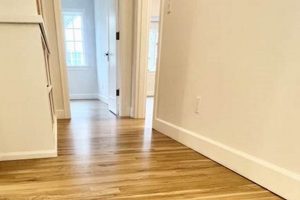
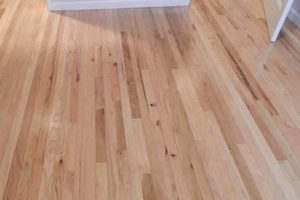
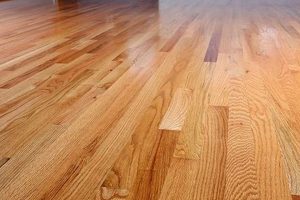
A protective coating designed for wooden surfaces, specifically floors, offers a durable layer that shields against wear and tear. This specialized treatment provides a clear, resilient surface, enhancing the natural beauty of the underlying wood. As an example, this coating can be applied to hardwood flooring in residential or commercial settings to prolong its lifespan and maintain its aesthetic appeal.
The application of such a product results in increased resistance to scratches, scuffs, and water damage, significantly reducing the need for frequent repairs or replacements. This contributes to long-term cost savings and minimizes disruption. Historically, maintaining wood floors involved arduous waxing and polishing routines; modern coatings provide a low-maintenance alternative, simplifying upkeep while offering superior protection.
The subsequent sections will delve into specific application techniques, drying times, available sheen levels, and recommended maintenance procedures for this type of floor finish. Further discussion will address environmental considerations and compliance with relevant industry standards.
Application & Maintenance Tips
Optimal results when utilizing a premium wood floor coating necessitate adherence to specific guidelines. These practices ensure a durable and aesthetically pleasing finish.
Tip 1: Surface Preparation: Thoroughly clean and sand the wooden surface before application. Any residual debris or imperfections will compromise the final finish. For example, vacuuming and using a tack cloth are recommended after sanding.
Tip 2: Environmental Conditions: Maintain consistent temperature and humidity levels during application and drying. Fluctuations can affect the curing process and lead to an uneven surface. The ideal range is typically between 65-75F with relative humidity between 40-60%.
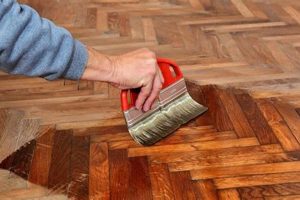
Tip 3: Application Technique: Apply thin, even coats using a high-quality applicator. Avoid pooling or overlapping, as this can result in streaking or uneven sheen. Utilize a microfiber applicator or a T-bar applicator for optimal distribution.
Tip 4: Recoat Timing: Adhere to the manufacturer’s recommended recoat window. Applying subsequent coats too early or too late can compromise adhesion and durability. Typically, a recoat is applied within 2-4 hours of the previous coat, depending on environmental conditions.
Tip 5: Curing Time: Allow sufficient curing time before subjecting the floor to heavy traffic or furniture placement. Premature use can damage the newly applied finish. Full curing typically takes 72 hours.
Tip 6: Maintenance Practices: Implement a regular cleaning regimen using pH-neutral cleaning solutions specifically designed for wood floors. Avoid abrasive cleaners or excessive water exposure. Dust mopping is recommended regularly.
Tip 7: Protective Measures: Utilize felt pads under furniture legs to prevent scratches and indentations. Consider area rugs in high-traffic zones to further protect the floor finish.
By following these guidelines, a long-lasting and attractive wood floor finish is achievable. Proper application and maintenance are crucial for maximizing the lifespan and aesthetic appeal of the coated surface.
The article will now proceed to explore the various sheen levels available and their impact on the overall appearance of the wood floor.
1. Durability

The characteristic of durability directly influences the long-term performance and overall value of a wood floor coating. Withstanding daily wear, including foot traffic, furniture movement, and incidental impacts, is paramount. A product lacking robust durability will necessitate more frequent repairs or recoating, increasing maintenance costs and inconvenience. For example, in a high-traffic commercial setting such as a retail store, a coating with insufficient durability would quickly exhibit scratches, scuffs, and a diminished aesthetic appearance. Conversely, a coating formulated for high durability maintains its protective properties and aesthetic appeal over extended periods.
Durability is achieved through specific formulation techniques, including the selection of high-quality resins and additives that provide resistance to abrasion, chemicals, and ultraviolet (UV) light. The application process also plays a crucial role; proper surface preparation and adherence to recommended application techniques are essential for achieving the coating’s full durability potential. Failure to properly prepare the substrate or apply the coating in accordance with manufacturer specifications can significantly reduce its lifespan and resistance to wear. A real-world example involves a homeowner neglecting to properly sand a wood floor prior to applying the coating; the resulting finish is prone to premature peeling and chipping, regardless of the product’s inherent durability.
In conclusion, the durability of a wood floor finish is a critical determinant of its overall performance and lifecycle cost. Selecting a product specifically designed for high durability, combined with meticulous attention to surface preparation and application techniques, is essential for achieving a long-lasting and aesthetically pleasing result. Ignoring this aspect can lead to increased maintenance expenses and a shortened lifespan for the coated wood floor.
2. Application Ease

The characteristic of application ease is a significant factor influencing the adoption and successful implementation of any wood floor finish. A product’s ease of application directly impacts labor costs, project completion time, and the likelihood of achieving a professional-quality result, even for users with limited experience. When considering finishes for wooden floors, the ease of application becomes a key determinant.
- Viscosity and Self-Leveling
The viscosity of a coating influences how smoothly it spreads across the wood surface. A product with optimal viscosity will self-level, minimizing brush strokes and creating a uniform finish. If the viscosity is too high, it may be difficult to spread evenly, resulting in ridges and imperfections. If it is too low, it may run or sag, leading to an uneven coat. For instance, a coating that self-levels readily will require less effort to achieve a smooth, professional-looking surface, even for less experienced applicators.
- Open Time and Workability
Open time refers to the period during which the coating remains workable, allowing for seamless blending of sections and correction of minor imperfections. A longer open time provides more flexibility, particularly for larger projects or when working in warmer temperatures. Limited open time can lead to visible lap marks and an uneven appearance. An extended open time will ensure that overlaps blend seamlessly, avoiding visible lines or variations in sheen.
- Foaming and Air Release
The tendency of a coating to foam during application can significantly affect the final finish. Entrapped air bubbles can create imperfections and compromise the clarity of the coating. A product with good air release properties will allow these bubbles to dissipate quickly, resulting in a smooth, clear finish. The final appearance is noticeably cleaner and more professional.
- Cleanup Requirements
The ease with which the application equipment can be cleaned is another practical consideration. Coatings that require harsh solvents for cleanup can be more time-consuming and costly to maintain. Water-based coatings, which can be cleaned with soap and water, offer a more convenient and environmentally friendly option. Simple cleanup procedures reduce the time spent on maintenance and minimize the use of potentially harmful chemicals.
These facets collectively contribute to the overall application ease of any wood floor coating. Selecting a product with favorable characteristics in terms of viscosity, open time, air release, and cleanup requirements can significantly simplify the application process and increase the likelihood of achieving a high-quality, professional-looking finish. Failure to consider these factors can lead to increased labor costs, extended project timelines, and a less satisfactory final result.
3. Sheen Options

The availability of varying sheen levels is a critical aspect of wood floor coatings, directly influencing the final aesthetic and functional properties of the finished surface. The selection of an appropriate sheen is dependent on factors such as the desired visual effect, the amount of natural light in the room, and the level of traffic the floor will endure.
- Matte Sheen
Matte finishes exhibit the lowest level of reflectivity, offering a natural, understated appearance that minimizes the visibility of imperfections and scratches. This makes them particularly suitable for high-traffic areas or environments where a subtle, non-reflective surface is desired. For example, a matte finish in a rustic-style home would complement the natural wood grain and create a warm, inviting atmosphere.
- Satin Sheen
Satin finishes provide a moderate level of reflectivity, striking a balance between a natural appearance and enhanced durability. They offer a slightly more polished look than matte finishes while still concealing minor imperfections. A satin sheen is often selected for residential applications where a balance between aesthetics and practicality is desired.
- Semi-Gloss Sheen
Semi-gloss finishes exhibit a higher level of reflectivity, providing a more polished and contemporary appearance. They are generally more resistant to staining and easier to clean than matte or satin finishes, making them suitable for kitchens and bathrooms. The reflective nature of a semi-gloss finish can also brighten a room by reflecting natural and artificial light.
- Gloss Sheen
Gloss finishes offer the highest level of reflectivity, creating a dramatic, high-end look. They are the most durable and easiest to clean of all sheen levels but also highlight imperfections more readily. A gloss finish might be chosen for a formal dining room or a high-end retail space where a sophisticated, polished appearance is desired.
The selection of the appropriate sheen for any wood floor coating depends on carefully balancing aesthetic preferences with practical considerations. Each sheen level offers unique advantages and disadvantages in terms of appearance, durability, and maintenance requirements, making the informed selection of sheen a crucial step in the wood floor finishing process. This is extremely relevant for Bona Mega, as it offer various sheen option for its customers.
4. Drying Time

The drying time of a wood floor finish is a critical parameter that significantly impacts project timelines, workflow management, and the overall success of the application. The duration required for a coating to fully cure influences when the treated area can be returned to service, directly affecting both residential and commercial environments.
- Impact on Project Scheduling
The drying time of a wood floor finish dictates the overall project schedule. Longer drying times necessitate extended periods of restricted access to the coated area, which can be disruptive in both residential and commercial settings. For instance, a flooring project in a retail store with a prolonged drying time could result in significant revenue losses due to business interruption. Selecting a finish with a shorter drying time allows for a faster project turnaround and minimizes downtime.
- Influence of Environmental Conditions
Ambient temperature and humidity levels exert a considerable influence on the drying time of wood floor coatings. High humidity and low temperatures can significantly prolong the curing process, while warmer and drier conditions generally accelerate it. For example, applying a water-based finish in a humid environment may extend the drying time beyond the manufacturer’s specified range. Controlled environmental conditions, such as the use of dehumidifiers or heaters, may be necessary to optimize the drying process in certain situations.
- Effect of Film Thickness
The thickness of the applied coating film directly affects the drying time. Thicker coats require longer to dry and cure completely, increasing the risk of solvent entrapment and surface imperfections. Applying multiple thin coats, as opposed to a single thick coat, generally promotes faster and more uniform drying. Thin coats allows to dry easily compare to thich coats which has moisture trapped inside it.
- Recoat Windows and Adhesion
The drying time influences the recoat window, which is the period within which subsequent coats of finish can be applied to ensure proper inter-coat adhesion. Applying additional coats before the previous coat has fully dried can compromise adhesion and lead to premature failure of the finish. Adhering to the manufacturer’s recommended recoat window is crucial for achieving a durable and long-lasting finish. If the drying time is too short or too long, then the coat wont have a proper bond.
These facets collectively highlight the critical role of drying time in the application and performance of wood floor finishes. Understanding and managing the factors that influence drying time is essential for optimizing project timelines, minimizing disruption, and ensuring the long-term durability and aesthetic appeal of the coated wood floor. For example, the drying time for various wood floor finished can be a crucial factor to consider. Choosing the best product will save you both time and money. Drying time is an important characteristic.
5. Maintenance

The longevity and aesthetic appeal of wood floors coated with finishes directly correlate with consistent and appropriate maintenance practices. This relationship highlights maintenance as an integral component, not an afterthought, in preserving the investment in a high-quality floor finish. For instance, neglecting regular cleaning allows abrasive particles to accumulate on the surface, leading to scratches and a dull appearance over time. Conversely, a proactive maintenance routine mitigates these effects, prolonging the lifespan of the finish and maintaining its visual characteristics. This cause-and-effect dynamic underscores the necessity of understanding proper maintenance protocols. A real-world example is evident in commercial environments; stores with diligent maintenance schedules exhibit significantly better floor appearance compared to those with infrequent or improper cleaning methods.
Effective maintenance entails a multi-faceted approach. Regular dust mopping or vacuuming removes loose dirt and debris. Periodic cleaning with pH-neutral cleaning solutions, specifically formulated for wood floors, eliminates surface contaminants without damaging the finish. The use of walk-off mats at entrances reduces the amount of dirt tracked onto the floor, minimizing abrasive wear. Avoiding harsh chemicals, abrasive cleaning tools, and excessive moisture prevents damage and extends the life of the coating. Furthermore, prompt spill cleanup prevents staining and potential water damage. Practical application of these measures ensures that the protective qualities and the aesthetic characteristics are maintained for an extended period.
In summary, the effective maintenance practices are essential for maximizing the return on investment in wood floor coatings. Consistent cleaning, proper product selection, and preventative measures are crucial for preserving the finish’s protective qualities and aesthetic characteristics. Neglecting maintenance accelerates wear and necessitates premature refinishing, whereas a proactive approach ensures long-term durability and visual appeal. Adhering to these practices offers the most cost-effective means of preserving the beauty and integrity of a wood floor.
Frequently Asked Questions
This section addresses common inquiries regarding application, performance, and maintenance of a wood floor coating. The information provided aims to offer clarity and assist in achieving optimal results.
Question 1: What surface preparation is required prior to application?
Proper surface preparation is essential. The wood floor must be thoroughly sanded to remove any existing finish, contaminants, or imperfections. After sanding, the surface should be vacuumed and wiped with a tack cloth to ensure it is clean and free of dust.
Question 2: What is the recommended application method?
Thin, even coats are crucial. Application can be achieved using a high-quality microfiber roller or applicator pad. Overlapping and pooling should be avoided. The product must be applied in the direction of the wood grain.
Question 3: What factors influence the drying time?
Drying time is affected by ambient temperature, humidity levels, and film thickness. Lower temperatures and higher humidity will prolong drying. Applying thin coats will accelerate the process. Adequate ventilation is also beneficial.
Question 4: What cleaning products are suitable for maintenance?
Only pH-neutral cleaning solutions specifically designed for wood floors should be used. Abrasive cleaners, harsh chemicals, and excessive water should be avoided. Regular dust mopping is also recommended.
Question 5: How does the finish resist wear and tear?
The product is formulated with durable resins that provide resistance to scratches, scuffs, and stains. However, protective measures, such as felt pads under furniture legs, are recommended to further minimize wear.
Question 6: What is the expected lifespan of a properly applied finish?
The lifespan varies depending on traffic levels and maintenance practices. Under normal residential conditions and with proper care, the finish can provide protection and maintain its appearance for several years.
These responses provide guidance on various aspects of using a wood floor coating. Adherence to recommended procedures will contribute to a satisfactory outcome and prolonged floor protection.
The following section will explore comparative analysis of different wood floor coatings.
Conclusion
The preceding analysis has elucidated critical facets pertaining to wood floor coatings, specifically the attributes, application, and maintenance of Bona Mega wood floor finish. Key aspects examined encompass durability, application ease, sheen options, drying time, and maintenance protocols. Each characteristic influences the final outcome and longevity of the coated surface.
Ultimately, informed decision-making regarding floor protection necessitates a comprehensive understanding of these elements. Further research and adherence to industry best practices are encouraged to ensure optimal performance and a sustained aesthetic value for wood flooring installations. The commitment to diligent maintenance and correct application techniques will guarantee the preservation of both the protective and visual attributes of the floor finish for years to come.