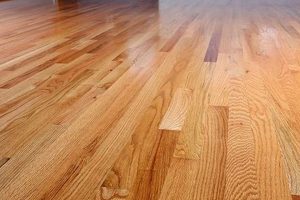
The application of a protective, durable coating to wooden surfaces, specifically floors, utilizing a synthetic resin composed of polymerized organic units joined by carbamate links, enhances the substrate’s resistance to abrasion, moisture, and chemical damage. This process involves preparing the floor surface, applying several coats of the substance, and allowing adequate drying time between each coat.
This method significantly extends the lifespan of wooden flooring, preserving its aesthetic appeal and minimizing maintenance requirements. Historically, other materials were used for floor protection, but modern resin formulations provide superior durability and ease of application, leading to widespread adoption in both residential and commercial settings. The resulting surface is both visually appealing and functionally robust.
The subsequent sections will delve into specific aspects, including preparation techniques, application methods, different product types, safety precautions, and troubleshooting common issues encountered during the coating procedure. The proper selection and application of coating materials are paramount for achieving a lasting and satisfactory result.
Tips for Optimal Results
Achieving a professional-grade surface necessitates meticulous attention to detail and adherence to established best practices. The following recommendations aim to guide the user through key stages, promoting a durable and visually appealing outcome.
Tip 1: Thoroughly Prepare the Surface: Sanding the wood floor to a uniform smoothness is critical. Progress through progressively finer grits of sandpaper, concluding with a grit appropriate for the wood species. Vacuum and tack-cloth the surface to remove all dust and debris.
Tip 2: Select the Appropriate Product: Consider the floor’s expected traffic level and desired sheen. Water-based formulations offer lower VOCs and faster drying times, while oil-based products generally provide greater durability and a warmer tone.
Tip 3: Apply Thin, Even Coats: Avoid applying the coating too thickly. Multiple thin coats are preferable to a single heavy coat, minimizing the risk of drips, bubbles, and uneven drying. Use a high-quality applicator designed for the specific product being used.
Tip 4: Maintain Proper Ventilation: Adequate ventilation is crucial to facilitate drying and minimize exposure to potentially harmful vapors. Ensure proper airflow throughout the work area, adhering to manufacturer safety guidelines.
Tip 5: Allow Sufficient Drying Time: Strictly adhere to the manufacturer’s recommended drying times between coats and before allowing foot traffic. Premature use can damage the newly applied finish.
Tip 6: Screen Between Coats: Lightly screening the floor between coats with a fine-grit screen (e.g., 220-grit) can help smooth out imperfections and ensure proper adhesion of subsequent coats. Vacuum and tack-cloth the floor after screening.
Tip 7: Consider the Ambient Conditions: Temperature and humidity can significantly affect drying times and the overall quality of the final surface. Ideally, apply in moderate temperatures and low humidity, if possible, or adjust your methods to suit the prevailing conditions.
Implementing these techniques contributes significantly to the longevity, aesthetics, and overall value of the coated wood floor. Consistent application of best practices yields professional-quality results.
The subsequent discussion will address common troubleshooting scenarios and provide guidance on addressing specific challenges that may arise during the floor coating procedure.
1. Surface Preparation

Surface preparation is a foundational element in the successful application of a polymeric protective layer on wooden flooring. Inadequate preparation invariably leads to compromised adhesion, premature coating failure, and an unsatisfactory aesthetic outcome. The process typically involves the removal of existing finishes, contaminants, and imperfections through mechanical abrasion, such as sanding, followed by thorough dust removal. The resultant surface profile must be uniformly smooth and free from any substances that could impede the chemical bond between the wood and the coating.
The cause-and-effect relationship is direct: a poorly prepared surface directly causes adhesion failures, peeling, blistering, and uneven sheen. For instance, if residual wax remains on the floor prior to coating, the protective layer will not properly adhere, leading to eventual delamination. Conversely, a properly prepared surface ensures a strong mechanical and chemical bond, maximizing the coating’s durability and lifespan. The correct grit sequence during sanding is also critical. Starting with too fine a grit may not effectively remove the old finish, while starting with too coarse a grit may leave deep scratches that are difficult to remove.
In conclusion, surface preparation is not merely a preliminary step but an integral component of the overall coating system. The investment of time and effort in meticulous surface preparation yields a significantly enhanced final product, characterized by superior adhesion, durability, and aesthetic appeal. Neglecting this crucial phase will inevitably result in diminished performance and increased maintenance costs over the long term. Therefore, proper preparation of surfaces must be considered the most important ingredient in ensuring a floor looks as beautiful as can be.
2. Product Selection

The selection of the appropriate formulation directly dictates the performance and longevity of floors treated with polymeric coatings. Careful consideration of several factors is paramount to ensuring optimal results and preventing premature coating failure. The choice must align with the intended use, environmental conditions, and desired aesthetic qualities of the finished surface.
- Type of Polyurethane
Water-based formulations offer lower volatile organic compounds (VOCs) and faster drying times, suitable for environments where odor and quick turnaround are priorities. Oil-based formulations generally provide greater durability, a warmer tone, and enhanced resistance to abrasion, making them suitable for high-traffic areas. The choice between these affects both application and long-term maintenance.
- Sheen Level
The desired sheen, ranging from matte to high-gloss, influences the aesthetic appearance and perceived durability. Matte finishes conceal scratches and imperfections more effectively but may require more frequent cleaning. High-gloss finishes provide a more reflective surface, enhancing the perceived depth of the wood grain, but are more susceptible to visible scratches and require meticulous surface preparation.
- Solid Content
The solid content refers to the percentage of non-volatile material in the formulation. Higher solid content typically translates to fewer coats required to achieve the desired film thickness and greater durability. However, formulations with high solid content may be more viscous and require specialized application techniques.
- Additives and Modifiers
Certain formulations incorporate additives or modifiers to enhance specific properties, such as UV resistance, scratch resistance, or flexibility. UV inhibitors prevent yellowing and fading due to sunlight exposure, while scratch-resistant additives improve the coating’s ability to withstand abrasion. Understanding the specific needs of the floor environment informs the selection of appropriate additives.
These elements collectively determine the suitability of a particular product for a specific wood floor coating application. Incorrect product selection leads to issues such as poor adhesion, inadequate protection, and an undesirable final appearance. Therefore, a thorough assessment of requirements and a careful review of product specifications are essential for achieving a durable and aesthetically pleasing floor surface. Ignoring the attributes of any selection factor is to invite avoidable issues with a project.
3. Application Technique

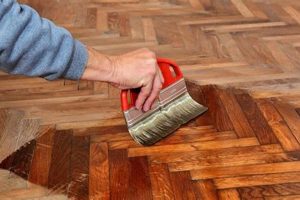
The method employed to apply a coating has a profound impact on the final quality and longevity of floors protected with polymeric materials. The technique directly influences the uniformity of the protective layer, the absence of surface imperfections, and the overall aesthetic outcome. Improper application, regardless of the quality of the product itself, will invariably lead to diminished performance and potential coating failure. For instance, using an inappropriate applicator, such as a low-quality brush or roller, can result in uneven coating thickness, brush marks, or the introduction of air bubbles. Similarly, applying excessive pressure during application can lead to the formation of ridges or lap marks.
The selection of the appropriate applicator is paramount. High-quality brushes, specifically designed for the product being used, ensure smooth and even distribution. Microfiber rollers provide a virtually lint-free application and are suitable for larger surface areas. The technique itself necessitates maintaining a consistent wet edge, overlapping each stroke by approximately 50% to prevent visible lap marks. Proper application also requires maintaining a consistent pace and avoiding overworking the material, as excessive brushing or rolling can introduce air bubbles and disrupt the settling process. Environmental factors, such as temperature and humidity, also impact the application. High humidity can extend drying times and increase the risk of blushing or clouding. High temperatures can cause the material to dry too quickly, leading to lap marks and poor adhesion.
In conclusion, the method of applying a floor coating is a critical determinant of its ultimate success. Diligent adherence to best practices, including the selection of appropriate applicators, maintaining a consistent wet edge, and controlling environmental factors, will yield a durable, aesthetically pleasing, and long-lasting floor surface. Neglecting the application technique can negate the benefits of even the highest-quality product, resulting in costly repairs and premature coating failure. Thus, mastering the application technique is vital for professionals and homeowners to improve the quality of their floors.
4. Drying Time
Drying time is a critical parameter in the successful application of polymeric coatings to wooden flooring. It represents the duration required for the applied substance to transition from a liquid state to a solid, cured film, thereby developing its protective and aesthetic properties. Inadequate attention to this factor can lead to significant performance issues and compromised durability.
- Environmental Factors
Temperature and humidity exert a substantial influence on the evaporation rate of solvents within the coating. Elevated temperatures accelerate evaporation, potentially leading to premature surface drying and trapping of solvents beneath the surface, which may result in bubbling or clouding. Conversely, high humidity retards evaporation, prolonging the drying time and increasing the risk of dust contamination or the formation of a hazy finish. Manufacturers’ recommended drying times are typically based on standard environmental conditions (e.g., 70F and 50% relative humidity); deviations from these conditions necessitate adjustments to the drying schedule.
- Film Thickness
The thickness of the applied coating layer directly correlates with the drying time. Thicker films require extended drying periods to allow for complete solvent evaporation and crosslinking of the polymeric chains. Applying excessive material in a single coat, in an attempt to expedite the process, invariably leads to prolonged drying times and an increased risk of surface defects. Multiple thin coats, rather than a single thick coat, are generally recommended to promote uniform drying and minimize the potential for issues.
- Product Formulation
Water-based formulations generally exhibit shorter drying times compared to oil-based formulations due to the faster evaporation rate of water compared to organic solvents. However, water-based coatings may require longer curing times to achieve full hardness and durability. The specific formulation of the coating, including the type and concentration of solvents, catalysts, and other additives, significantly influences its drying characteristics. Always consult the manufacturer’s technical data sheet for specific drying time recommendations.
- Ventilation
Proper ventilation is crucial during the drying process. Adequate airflow promotes the evaporation of solvents, facilitating faster and more uniform drying. Inadequate ventilation can lead to prolonged drying times, increased VOC concentrations, and an elevated risk of surface defects. Ensuring proper airflow throughout the work area is essential for achieving optimal results and maintaining a safe working environment. Open windows and the use of fans are typical ventilation methods.
Optimal drying time is therefore a function of several interacting variables. Failure to appropriately manage these factors during the coating of wood floors can result in a wide range of undesirable outcomes, including soft or tacky surfaces, trapped solvents, and impaired durability. Adherence to manufacturer specifications and meticulous attention to environmental conditions are critical for achieving a durable and aesthetically pleasing final surface.
5. Layer Thickness

The thickness of each applied layer is a critical determinant of the overall performance and longevity of floors finished with polymeric resins. An inadequate layer thickness compromises the protective qualities of the coating, rendering the substrate vulnerable to abrasion, moisture, and chemical attack. Conversely, excessive layer thickness can impede proper curing, leading to a soft, tacky finish prone to damage. The intended use of the floor, the specific properties of the polyurethane formulation, and the substrate’s characteristics must all be considered when determining the optimal layer thickness.
The consequences of deviating from the recommended layer thickness are significant. Insufficient thickness fails to provide adequate protection against daily wear and tear. For example, in a high-traffic area, a thin coating will quickly wear through, exposing the wood beneath and necessitating premature recoating. Overly thick layers, on the other hand, can trap solvents, resulting in a finish that remains soft and susceptible to dents and scratches long after the expected curing period. These issues can lead to costly repairs and a shortened lifespan for the floor. Proper application involves applying multiple thin, even coats, allowing each layer to fully cure before applying the next. This approach ensures optimal adhesion and durability.
In summary, managing layer thickness is crucial in the process. Precise adherence to manufacturer specifications, coupled with careful application techniques, is essential for achieving a durable, aesthetically pleasing, and long-lasting surface. Neglecting this critical aspect undermines the benefits of using a polymeric resin, resulting in compromised performance and potential coating failure. Therefore, close attention must be paid to this element to secure a superior outcome.
6. Ventilation

Adequate ventilation is a critical, often underestimated, component of wood floor coating procedures using polymeric resins. Insufficient airflow directly impedes the evaporation of solvents released from the applied material during the drying and curing process. This can lead to several adverse outcomes, including prolonged drying times, increased concentrations of volatile organic compounds (VOCs) within the work area, and the formation of surface defects in the final coating. The relationship between ventilation and a successful outcome is therefore causative and directly proportional; reduced airflow directly correlates with increased risk of complications.
Real-world examples illustrate this connection. In confined spaces with minimal air circulation, solvents can become trapped within the coating, resulting in a soft, tacky finish that remains susceptible to damage long after the expected curing period. Furthermore, elevated VOC concentrations pose health risks to individuals working in the area, potentially causing respiratory irritation, headaches, and other adverse effects. Proper ventilation, achieved through open windows, the use of exhaust fans, or a combination of both, facilitates the removal of these solvents, promoting a faster, more uniform curing process and minimizing health hazards. The practical significance of this understanding lies in the ability to proactively mitigate these risks, ensuring a durable, aesthetically pleasing, and safe finished floor.
Therefore, implementing effective ventilation strategies is not merely a precautionary measure but an essential element of best practice in the application of polymeric coatings to wooden floors. Neglecting this aspect can negate the benefits of even the highest-quality materials and skilled application techniques. While challenges may arise in achieving optimal ventilation in certain environments, the prioritization of airflow remains paramount for ensuring a successful and safe floor coating outcome. The broader implications extend to environmental responsibility through the minimization of VOC emissions and the protection of worker health and safety.
7. Sanding
Sanding serves as the foundational step in the process of applying a polymeric protective layer to wood flooring. Its primary function is to prepare the substrate by removing imperfections, old finishes, and contaminants that would otherwise impede adhesion and compromise the overall quality of the coating. The success of the final application is directly contingent upon the thoroughness and precision of this preparatory phase. A properly sanded surface provides a uniform profile, enabling the polymeric material to bond effectively and create a durable, long-lasting protective layer.
The choice of sanding grit and technique is critical. Progressing through a series of progressively finer grits ensures a smooth, even surface. For instance, if a floor retains an old, thick finish, a coarser grit (e.g., 36- or 40-grit) is necessary to initially remove the existing material. Subsequent passes with finer grits (e.g., 80-, 100-, or 120-grit) refine the surface, eliminating scratches and creating a suitable profile for the polymeric coating to adhere to. Failure to adequately sand the floor can result in issues such as peeling, blistering, or uneven sheen. The presence of residual contaminants, such as wax or grease, can also inhibit adhesion, leading to premature coating failure. Proper dust removal, typically achieved through vacuuming and tack-clothing, is essential to prevent these issues.
In conclusion, sanding is not merely a preliminary step but an indispensable component of the process. Its impact on adhesion, durability, and aesthetics is undeniable. While labor-intensive, the investment in time and effort during this preparatory phase yields significant returns in terms of the final product’s quality and longevity. Effective sanding, therefore, is essential when coating wood floors with polymeric materials.
Frequently Asked Questions
The following addresses commonly encountered queries concerning the application of polymeric coatings to wooden floors, offering clarity on established best practices and expected outcomes.
Question 1: What is the expected lifespan of a polymeric protective layer on a wood floor?
The lifespan is variable and depends on factors such as traffic volume, the type of material used, and the quality of application. Generally, a properly applied system can last from 5 to 10 years in residential settings.
Question 2: Can polymeric coatings be applied over existing finishes?
Generally, this is not recommended. The existing finish must be completely removed through sanding to ensure proper adhesion. Application over an incompatible finish can lead to peeling and other issues.
Question 3: What is the difference between water-based and oil-based polymeric coatings?
Water-based formulations are characterized by lower VOCs, faster drying times, and a clearer appearance. Oil-based formulations offer enhanced durability, a warmer tone, and greater resistance to abrasion.
Question 4: How many coats of polymeric coating are typically required?
Typically, three coats are recommended for optimal protection and durability. The first coat serves as a sealer, while subsequent coats build film thickness and provide the final protective layer.
Question 5: What safety precautions should be taken during the application process?
Adequate ventilation is crucial to minimize exposure to potentially harmful vapors. Protective eyewear, gloves, and a respirator are recommended to prevent skin and respiratory irritation.
Question 6: How long should one wait before walking on a newly coated floor?
The duration depends on the specific product used and environmental conditions. Generally, light foot traffic can be permitted after 24 hours, but full curing may take several days. Refer to the manufacturer’s specifications for precise drying times.
In summary, the effective application of polymeric coatings on wooden floors hinges on adherence to established guidelines and a thorough understanding of the materials and processes involved.
The next section will discuss the environmental considerations associated with selecting and applying these coatings.
Conclusion
This exploration has detailed critical aspects involved in properly coating wood floors with polymeric resins. Surface preparation, product selection, application technique, drying time considerations, layer thickness control, ventilation necessities, and sanding best practices were each analyzed. Adherence to these principles constitutes the foundation for durable, aesthetically pleasing, and safe outcomes. The information presented provides a framework for understanding the complexities inherent in the process and mitigating potential issues.
Successful application hinges on informed decision-making and rigorous execution. With proper execution, a coating extends the lifespan of wood floors, enhances their visual appeal, and contributes to a healthier indoor environment. Diligence in understanding the intricacies discussed herein is paramount for achieving optimal results and realizing the full potential of this method.