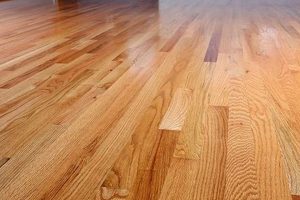
The selection of a final protective layer for wood flooring involves several sheen levels, each offering distinct aesthetic and functional characteristics. Two commonly considered options present a subtle variation in reflectivity: one presents a low-luster appearance, often described as velvety, while the other delivers a moderate shine, reflecting more light but remaining below a high-gloss presentation. These types of coatings influence not only the visual impact of the floor but also its perceived texture and maintenance requirements. An example would be choosing between a finish that minimizes the visibility of scratches and scuffs versus one that highlights the wood grain with a brighter, cleaner look.
The appropriate choice significantly impacts the room’s overall ambiance. Lower reflective surfaces contribute to a warmer, more relaxed feel, effectively concealing minor imperfections and offering ease of upkeep. Surfaces exhibiting a medium degree of reflection introduce brightness and a sense of enhanced cleanliness, although they may require more diligent cleaning to maintain their polished appearance. Historically, preferences have shifted based on prevailing design trends, evolving from matte finishes in rustic settings to shinier surfaces indicative of formality and luxury. Understanding these differences is crucial for achieving the desired outcome and ensuring long-term satisfaction with the flooring investment.
Therefore, a detailed examination of these coatings, considering factors such as light reflection, durability, maintenance, and aesthetic considerations, is essential to making an informed decision. This exploration will delve into the specific attributes of each type, providing a clear comparison to guide the selection process for a residential or commercial space.
Considerations for Choosing Wood Floor Sheen
Selecting the appropriate sheen for wood floor finishing requires careful consideration of various factors to achieve the desired aesthetic and functional outcome.
Tip 1: Assess Ambient Lighting: Rooms with ample natural light may benefit from lower-sheen coatings to minimize glare and reflections. Conversely, darker rooms may require higher sheen levels to enhance brightness.
Tip 2: Evaluate Traffic Levels: In high-traffic areas, matte or lower-sheen surfaces can effectively conceal scratches and scuffs, reducing the need for frequent maintenance. Medium-sheen surfaces, while visually appealing, may exhibit wear more readily.
Tip 3: Match Decor Style: Integrate the selected finish with the existing or planned interior design. Lower-sheen options often complement rustic or traditional aesthetics, while medium-sheen finishes suit more contemporary or formal styles.
Tip 4: Account for Maintenance Preferences: Lower-sheen floors are generally easier to clean and maintain, as they tend to hide dirt and imperfections. Medium-sheen floors necessitate more frequent cleaning to preserve their luster and avoid the appearance of smudges.
Tip 5: Sample Before Committing: Before applying any finish across the entire floor, test samples in an inconspicuous area to observe the sheen level under different lighting conditions and assess its compatibility with the wood species.
Tip 6: Understand the Impact on Texture: Lower reflective surfaces tend to emphasize the natural texture of the wood grain, while medium reflective surfaces may create a smoother, more uniform appearance.
Tip 7: Consider Room Size: In smaller rooms, higher sheen can make the space feel larger and more open by reflecting light. Larger rooms can handle lower sheen levels without feeling closed off.
Careful consideration of these factors will facilitate an informed decision, resulting in a wood floor finish that complements the space, meets functional requirements, and aligns with personal preferences.
This guidance provides a basis for a more detailed exploration of the finishing process and specific product characteristics, ensuring a successful and satisfying outcome.
1. Reflectivity

Reflectivity, in the context of wood floor finishes, quantifies the degree to which a surface reflects incident light. The choice between satin and semi-gloss finishes directly dictates the level of reflectivity achieved. A satin finish, characterized by lower reflectivity, diffuses light, resulting in a matte appearance that minimizes glare and conceals surface imperfections. Conversely, a semi-gloss finish exhibits a higher degree of reflectivity, creating a shinier surface that enhances the wood grain and brightens the room. This difference in reflectivity is a fundamental component of the aesthetic and functional distinctions between these two finishes. For example, in a room with large windows and ample natural light, a satin finish may be preferred to reduce glare, while in a dimly lit hallway, a semi-gloss finish could enhance brightness. Understanding this cause-and-effect relationship between finish type and reflectivity is crucial for selecting the appropriate flooring option.
The practical significance of reflectivity extends beyond mere aesthetics. Higher reflectivity can contribute to perceived cleanliness, as brighter surfaces tend to highlight dust and debris, prompting more frequent cleaning. Conversely, lower reflectivity can make a floor appear cleaner for longer, even when not perfectly maintained. Furthermore, the level of reflectivity can influence the perceived size of a room. Higher reflectivity can create the illusion of more space by bouncing light around the room, while lower reflectivity can create a warmer, more intimate atmosphere. Consider a retail environment: a semi-gloss floor might be chosen to create a bright, inviting atmosphere, drawing customers in and showcasing products, while a museum might opt for a satin finish to minimize glare and prevent distractions from the exhibits.
In summary, the connection between reflectivity and the selection of wood floor finishes is a critical consideration. The interplay of light and surface properties determines the final appearance and functional characteristics of the flooring. While aesthetic preferences play a significant role, understanding the practical implications of different reflectivity levels is essential for making an informed decision. However, achieving the desired level of reflectivity is not without its challenges. Factors such as the wood species, the application technique, and the quality of the finish itself can all influence the final outcome. Therefore, professional consultation and careful product selection are paramount to achieving optimal results.
2. Durability

The durability of a wood floor finish is directly influenced by its sheen level, particularly when comparing satin and semi-gloss options. While the chemical composition of the finish itself is a primary factor, the surface characteristics inherent to each sheen level contribute significantly to wear resistance. Satin finishes, due to their lower reflectivity, tend to conceal minor scratches and scuffs more effectively than semi-gloss finishes. This inherent concealment provides a perceived advantage in high-traffic areas, as imperfections are less readily visible, extending the perceived lifespan of the finish. The practical effect is that a floor finished with a satin coating may maintain a more uniform appearance over time, even with comparable levels of wear, reducing the frequency of refinishing or recoating. Consider a commercial setting, such as a retail store; a satin finish on the flooring would likely mask the daily wear and tear from foot traffic more effectively than a semi-gloss finish, preserving the floor’s visual appeal for a longer duration.
However, the apparent advantage of satin finishes in concealing wear should not be misinterpreted as superior inherent strength. Both satin and semi-gloss finishes can be formulated with similar levels of abrasion resistance. The key distinction lies in how they display wear. Semi-gloss finishes, with their higher reflectivity, accentuate surface imperfections, making even minor scratches readily apparent. This heightened visibility necessitates more diligent maintenance and potentially more frequent recoating to maintain a pristine appearance. A residential example would be a household with pets; while both satin and semi-gloss floors may experience scratches from pet claws, the scratches will be more noticeable on a semi-gloss surface, potentially requiring earlier intervention to address the aesthetic impact. Furthermore, the choice of cleaning products and techniques can significantly affect the durability of both finishes; abrasive cleaners, for instance, can dull a semi-gloss finish over time, reducing its reflectivity and exacerbating the visibility of imperfections.
In conclusion, durability in wood floor finishes is a multifaceted concept influenced by both the intrinsic properties of the coating and its sheen level. While satin finishes offer a practical advantage in concealing wear and maintaining a uniform appearance, semi-gloss finishes require more careful maintenance to preserve their aesthetic appeal. The appropriate choice depends on a balance of aesthetic preferences, traffic levels, maintenance capabilities, and expectations regarding long-term appearance. Addressing the challenges of wear and tear necessitates a comprehensive approach, encompassing both the selection of a suitable finish and the implementation of proper maintenance practices. Understanding this interplay is critical for ensuring the longevity and visual appeal of wood flooring investments.
3. Maintenance

The ongoing care required to preserve the appearance and integrity of wood flooring is intrinsically linked to the chosen finish. Satin and semi-gloss finishes present distinct maintenance profiles, demanding tailored approaches to ensure longevity and aesthetic satisfaction.
- Cleaning Frequency
Semi-gloss finishes, owing to their higher reflectivity, tend to reveal dust, dirt, and footprints more readily than satin finishes. Consequently, surfaces with a semi-gloss coating often necessitate more frequent cleaning to maintain a pristine appearance. This is particularly relevant in high-traffic areas where daily cleaning may be required to prevent a buildup of visible debris. Satin finishes, conversely, offer a degree of concealment, potentially allowing for less frequent cleaning without sacrificing perceived cleanliness.
- Product Selection
The choice of cleaning products is crucial for both satin and semi-gloss finishes, but the sensitivity to harsh chemicals differs. Semi-gloss finishes can be more susceptible to dulling from abrasive cleaners, leading to a reduction in reflectivity and a compromised appearance. Therefore, pH-neutral cleaning solutions specifically formulated for wood floors are generally recommended. While satin finishes may exhibit slightly more resilience to certain cleaning agents, the use of appropriate, non-abrasive products remains essential to prevent damage and maintain the integrity of the finish.
- Scratch Visibility and Repair
Both finish types are susceptible to scratches, but their visibility differs. Scratches on a semi-gloss finish are often more apparent due to the reflective surface highlighting the imperfection. Addressing these scratches may require more aggressive repair techniques, such as buffing and re-coating. Satin finishes, with their matte appearance, tend to camouflage minor scratches. This can reduce the need for immediate repair, but larger scratches will still necessitate attention to prevent further damage to the wood.
- Long-Term Maintenance Strategies
Long-term maintenance strategies should account for the inherent characteristics of each finish. For semi-gloss floors, regular waxing or polishing may be required to maintain the desired level of shine and provide a protective layer against wear. Satin finishes typically do not require waxing, as this can alter the intended matte appearance. Instead, focusing on consistent cleaning and the prompt repair of any significant damage is paramount. Both finish types benefit from periodic re-coating to replenish the protective layer and extend the lifespan of the flooring.
The maintenance requirements associated with satin and semi-gloss wood floor finishes directly influence the long-term cost and effort involved in preserving the flooring’s aesthetic appeal. While semi-gloss finishes offer a visually striking surface, they necessitate a higher degree of diligence in cleaning and maintenance. Satin finishes, with their more forgiving nature, provide a practical alternative for those seeking a balance between visual appeal and ease of care. Ultimately, the choice should align with the owner’s preferences, lifestyle, and willingness to commit to the required maintenance regimen.
4. Aesthetics
The aesthetic impact of wood flooring is substantially determined by the selected finish, specifically the choice between satin and semi-gloss sheens. This selection transcends mere surface treatment; it fundamentally shapes the visual character of a room, influencing the perception of space, light, and overall design cohesion. The causal relationship is direct: the chosen finish dictates the degree to which the wood grain is highlighted, the level of light reflection achieved, and the visibility of imperfections, all of which contribute to the overarching aesthetic. For instance, a room aiming for a rustic or understated elegance often benefits from a satin finish, which mutes the wood’s natural grain and offers a subtle, diffused light reflection. Conversely, a space seeking a more contemporary or formal ambiance might opt for a semi-gloss finish, which accentuates the wood grain and provides a brighter, more polished appearance. This choice is important because the flooring serves as a foundation for the entire interior design, and a mismatch between the finish and the intended aesthetic can disrupt the overall harmony of the space.
Real-world examples abound. Consider a modern art gallery: a semi-gloss finish might be chosen to enhance the visual impact of the artwork and create a sense of spaciousness and sophistication. In contrast, a cozy library might utilize a satin finish to foster a sense of warmth, relaxation, and intimacy. The practical significance of this understanding extends to resale value and long-term satisfaction. A well-chosen finish can enhance a property’s appeal and contribute to a positive emotional response from potential buyers or occupants. A poorly chosen finish, however, can detract from the property’s overall value and create a sense of visual discord. Furthermore, the aesthetic impact of the finish is not static; it evolves over time as the floor experiences wear and tear. A satin finish, for example, may retain its aesthetic appeal for longer periods due to its ability to conceal minor imperfections, while a semi-gloss finish may require more frequent maintenance to preserve its original luster.
In summary, the aesthetic considerations surrounding wood floor finishes are paramount to achieving a cohesive and visually pleasing interior. The choice between satin and semi-gloss sheens carries significant implications for light reflection, grain definition, and the overall ambiance of the space. While personal preferences play a role, understanding the principles of design and the functional characteristics of each finish is essential for making an informed decision. The challenge lies in balancing aesthetic desires with practical considerations such as maintenance requirements and durability. Therefore, careful planning and professional consultation are highly recommended to ensure a successful outcome that enhances the beauty and value of the property.
5. Light Exposure
The quantity and quality of light incident upon wood flooring significantly interact with the selected finish, influencing its perceived appearance and longevity. Differentiating between satin and semi-gloss options requires careful consideration of a space’s light exposure characteristics.
- Glare and Reflection
Semi-gloss finishes, characterized by higher reflectivity, can produce significant glare in areas with intense direct sunlight. This glare can obscure the wood grain and create visual discomfort. Satin finishes, with their diffuse light reflection, minimize glare, providing a more comfortable viewing experience in brightly lit spaces. For example, a sunroom with expansive windows may benefit from a satin finish to mitigate glare, whereas a hallway with minimal natural light could utilize a semi-gloss finish to enhance brightness.
- Fade Resistance
Prolonged exposure to ultraviolet (UV) radiation can cause fading or discoloration in both wood and the finish. While UV-resistant finishes are available, the sheen level can influence the perceived effect. Semi-gloss finishes, due to their reflective properties, may exhibit fading more noticeably than satin finishes. The reflective surface accentuates any color changes, making them more apparent to the observer. Conversely, the matte surface of a satin finish tends to mask minor fading, providing a degree of visual resilience against UV damage.
- Imperfection Amplification
Direct sunlight can amplify the visibility of imperfections on wood flooring. Scratches, dents, and variations in the wood grain are often more pronounced under intense lighting conditions. Semi-gloss finishes, with their highly reflective surfaces, exacerbate this effect, highlighting even minor flaws. Satin finishes, with their diffuse light reflection, tend to minimize the visibility of imperfections, creating a smoother, more uniform appearance, even under bright light.
- Color Perception
Light exposure can alter the perceived color of wood flooring. The intensity and angle of light can influence how the finish interacts with the wood’s natural pigments, creating variations in hue and saturation. Semi-gloss finishes, with their ability to reflect light directly, may exhibit more dramatic color shifts under different lighting conditions. Satin finishes, with their diffuse light reflection, tend to provide a more consistent color appearance, regardless of the light source. This is important to note in areas with varied or fluctuating light sources like retail stores or homes that get a lot of natural sunlight throughout the day.
Understanding the interplay between light exposure and the characteristics of satin and semi-gloss wood floor finishes is essential for making informed decisions. While aesthetic preferences play a role, considering the practical implications of light interaction is crucial for ensuring long-term satisfaction and preserving the visual integrity of wood flooring investments.
6. Traffic Level

The anticipated volume of foot traffic is a critical determinant in the selection of wood floor finishes. High-traffic areas necessitate finishes that offer both durability and the ability to conceal wear, while low-traffic zones allow for a wider range of aesthetic choices without the same demands on resilience.
- Abrasion Resistance
High-traffic areas, such as hallways and entryways, subject flooring to significant abrasion from foot traffic, footwear, and tracked-in debris. Satin finishes, while not inherently more abrasion-resistant than semi-gloss, excel at concealing minor scratches and scuffs that inevitably occur. This concealment reduces the perceived wear and extends the period before refinishing becomes necessary. In contrast, the reflective surface of a semi-gloss finish tends to highlight such imperfections, making them more noticeable and potentially requiring more frequent maintenance or refinishing.
- Maintenance Demands
Floors in high-traffic zones require more frequent cleaning to remove dirt and grit that can exacerbate wear. The lower reflectivity of a satin finish allows for some leniency in cleaning frequency, as minor soiling is less readily apparent. Semi-gloss finishes, however, demand more diligent cleaning to maintain their luster and avoid a dull, worn appearance. The increased maintenance burden associated with semi-gloss in high-traffic areas can be a significant consideration for homeowners or business owners.
- Long-Term Appearance
Over time, heavy foot traffic can degrade the surface of any wood floor finish. Satin finishes, by virtue of their ability to mask imperfections, tend to maintain a more uniform appearance over the long term in high-traffic areas. Semi-gloss finishes, while initially offering a more polished look, can develop a patchwork of worn and polished areas as traffic patterns etch into the surface. This uneven wear can detract from the floor’s aesthetic appeal and necessitate more comprehensive restoration efforts.
- Finish Type Compatibility
Certain wood floor finishes are inherently better suited to high-traffic environments. Polyurethane finishes, known for their durability and resistance to abrasion, are a common choice for areas with heavy foot traffic. The selection of a satin or semi-gloss sheen should be made within the context of the finish type’s overall performance characteristics. For example, a high-quality polyurethane finish with a satin sheen can provide an optimal balance of durability, wear concealment, and ease of maintenance in a high-traffic area.
Therefore, the assessment of traffic levels is integral to the decision-making process when choosing between satin and semi-gloss wood floor finishes. The need to balance aesthetics with practical considerations of durability and maintenance is paramount. Prioritizing long-term appearance and minimizing maintenance demands are key factors in ensuring a successful flooring installation that withstands the rigors of daily use.
Frequently Asked Questions
The following addresses common inquiries concerning the selection and maintenance of satin and semi-gloss wood floor finishes.
Question 1: Is one finish inherently more durable than the other?
No. Durability primarily depends on the finish’s composition (e.g., polyurethane, oil-based) and the number of coats applied. Satin finishes often appear more durable because their lower reflectivity conceals scratches and scuffs more effectively than semi-gloss.
Question 2: Which finish is easier to clean and maintain?
Satin finishes generally require less frequent cleaning as they hide dirt and imperfections better. Semi-gloss finishes necessitate more diligent cleaning to maintain their luster and avoid a dull appearance. Both require pH-neutral cleaners formulated for wood floors.
Question 3: How does light exposure impact the choice of finish?
In areas with high natural light, satin finishes minimize glare. Semi-gloss finishes can create excessive glare in brightly lit rooms. UV-resistant finishes are recommended to prevent fading, regardless of sheen level.
Question 4: Does the sheen level affect the perceived size of a room?
Yes. Semi-gloss finishes reflect more light, potentially making smaller rooms appear larger and more open. Satin finishes absorb more light, creating a warmer, more intimate atmosphere that may be more suitable for larger spaces.
Question 5: Which finish is better for high-traffic areas?
Satin finishes are often preferred in high-traffic areas due to their ability to conceal scratches and scuffs. However, proper maintenance, including regular cleaning and occasional re-coating, is crucial for both satin and semi-gloss finishes in these areas.
Question 6: Can the sheen level be changed after the floor is finished?
Yes, although it requires sanding down the existing finish and applying a new topcoat with the desired sheen level. This process can be labor-intensive and should be performed by a qualified professional.
In summary, the optimal choice between satin and semi-gloss wood floor finishes depends on a balance of aesthetic preferences, traffic levels, lighting conditions, and maintenance considerations. No single finish is universally superior; careful evaluation of these factors is essential.
The following section provides insight into the application techniques and professional recommendations associated with wood floor finishing.
Concluding Remarks on Wood Floor Finishes
The preceding exploration of the characteristics inherent to wood floor finishes of differing sheen levels serves to underscore the importance of informed decision-making. The nuances of light reflection, durability, maintenance requirements, and aesthetic impact delineate the practical implications of selecting either a satin or semi-gloss coating. The interplay of these factors dictates the long-term performance and visual appeal of the installed flooring.
Ultimately, the selection process necessitates a comprehensive evaluation of individual needs and environmental context. Consulting with qualified professionals and considering long-term maintenance commitments remain crucial steps in ensuring a successful outcome. A proper selection safeguards the investment and preserves the enduring beauty of wood flooring.