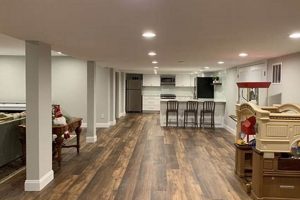
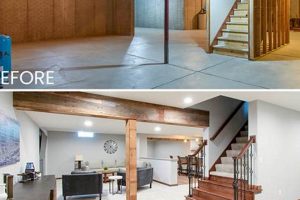
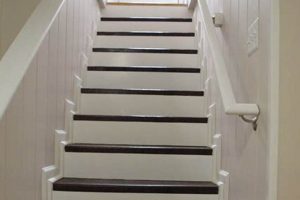
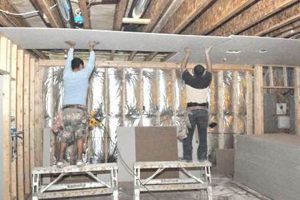
The completion of a lower-level space transforms it from a raw, often utilitarian area into a habitable extension of the home. This process involves specific improvements that render the space suitable for living, working, or recreational activities. This typically entails addressing structural, mechanical, and aesthetic considerations to create a comfortable and compliant environment.
The benefits of completing a lower level extend beyond mere increases in square footage. It significantly elevates property value, provides versatile space adaptable to changing needs, and offers enhanced functionality for homeowners. Historically, utilizing this area was primarily for storage and utilities, but modern practices increasingly recognize its potential as a valuable addition to the living space.
The key elements to completing the task include ensuring proper insulation, installing finished flooring and walls, addressing lighting and ventilation needs, and complying with local building codes regarding egress and safety. The following sections will explore these considerations in greater detail, offering a comprehensive understanding of the requirements for achieving a completed lower-level living space.
Essential Considerations
The comprehensive completion of a lower level necessitates careful attention to several critical factors to ensure functionality, safety, and long-term value. The following tips provide essential guidance.
Tip 1: Moisture Management: Implement a robust waterproofing system to mitigate moisture intrusion. This may involve interior or exterior sealing, drainage improvements, and the installation of a vapor barrier.
Tip 2: Structural Integrity: Address any structural issues, such as cracks in the foundation or inadequate support, before commencing finishing work. Consult a structural engineer if necessary.
Tip 3: Code Compliance: Adhere strictly to local building codes and regulations regarding egress windows, ceiling height, electrical wiring, and fire safety. Permits and inspections are generally required.
Tip 4: Insulation Strategy: Utilize appropriate insulation materials to improve energy efficiency and maintain consistent temperatures. Closed-cell spray foam or rigid foam board are often recommended for their moisture resistance.
Tip 5: Ventilation Considerations: Ensure adequate ventilation to prevent the accumulation of moisture and odors. Install an exhaust fan in the bathroom and consider a dehumidifier to control humidity levels.
Tip 6: Lighting Design: Plan the lighting layout carefully to maximize illumination and create a comfortable ambiance. Incorporate a combination of ambient, task, and accent lighting.
Tip 7: Flooring Selection: Choose flooring materials that are resistant to moisture and can withstand potential water damage. Engineered wood, tile, and epoxy coatings are suitable options.
Diligent adherence to these recommendations contributes to a finished product that is both aesthetically pleasing and structurally sound, providing a comfortable and valuable addition to the home.
The subsequent sections will delve into specific construction techniques and design considerations to further enhance the overall outcome.
1. Waterproofing

Waterproofing stands as a fundamental prerequisite in the completion of a lower level, directly influencing its habitability and longevity. Without adequate protection against moisture intrusion, the structural integrity and usability of the space are severely compromised.
- Foundation Sealing
Properly sealing the foundation walls is paramount to prevent water from penetrating the concrete. This can be achieved through the application of waterproof coatings or membranes to the exterior or interior surfaces. Failure to seal the foundation leads to dampness, mold growth, and structural deterioration.
- Drainage Systems
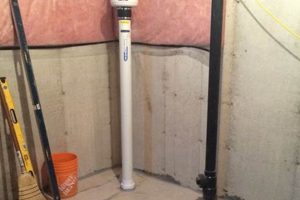
Effective drainage systems redirect water away from the foundation. This includes exterior systems like French drains and interior systems like sump pumps. Inadequate drainage results in hydrostatic pressure buildup against the foundation walls, increasing the risk of leaks and flooding.
- Vapor Barriers
Installing vapor barriers on the interior walls and floors prevents moisture from migrating through the concrete and causing condensation. Without a vapor barrier, humidity levels in the completed lower-level space can become elevated, promoting mold growth and discomfort.
- Egress Window Wells
Egress window wells, which provide an escape route in case of emergency, must be properly drained to prevent water accumulation. Poorly drained window wells can become a source of leaks and contribute to moisture problems. Covers and proper grading are essential to ensure effective drainage.
The implementation of comprehensive waterproofing measures is not merely an optional enhancement but an essential component in achieving a completed lower-level space. Neglecting these precautions will ultimately undermine the investment and compromise the long-term viability of the space. Proper waterproofing is crucial for preventing structural damage, promoting a healthy environment, and ensuring the usability of the completed lower-level area.
2. Insulation
Effective insulation is inextricably linked to completing a lower-level space, transforming it from a cold, damp area into a comfortable and usable extension of the home. Insulation serves as a thermal barrier, mitigating heat transfer between the interior and exterior environments. This is critical in below-grade spaces, which tend to be cooler due to their proximity to the earth. Without proper insulation, a completed lower-level area will be energy-inefficient, uncomfortable, and prone to condensation and mold growth. For example, inadequately insulated walls can result in significant heat loss during winter, increasing heating costs, and fostering an environment conducive to mold in the summer due to condensation from warm, humid air meeting cold surfaces.
The type of insulation employed significantly impacts its effectiveness. Closed-cell spray foam, for instance, provides a high R-value and effectively seals air leaks, making it a popular choice for lower-level applications. Rigid foam board also offers good insulation properties and moisture resistance. Fiberglass batts, while a less expensive option, are susceptible to moisture damage and may not be as effective in sealing air gaps. Proper installation is as crucial as the material selection; gaps or compressions in the insulation will reduce its thermal performance. The practical significance of understanding these nuances lies in creating a space that is not only comfortable but also energy-efficient and healthy.
In summary, insulation plays a vital role in what makes a basement finished by regulating temperature, preventing moisture accumulation, and improving energy efficiency. Challenges often arise from selecting the appropriate insulation type and ensuring correct installation. Failing to prioritize insulation can negate the other improvements made to the space, resulting in a less-than-optimal outcome. The broader theme underscores the necessity of viewing each element, including insulation, as an integral part of a comprehensive strategy to transform a raw area into a functional and comfortable living space.
3. Code Compliance

Adherence to local building codes is not merely a regulatory requirement; it is an intrinsic component of completing a lower-level area in a manner that ensures safety, legality, and long-term value. Code compliance dictates numerous aspects of the project, from structural integrity and egress to electrical and plumbing installations. Failure to comply can result in rejected permits, costly rework, or, more seriously, pose a risk to the occupants’ safety. For instance, a completed lower-level space lacking adequate egress windows might trap occupants in the event of a fire, underscoring the practical significance of code-mandated safety measures.
Code compliance dictates the required ceiling height, the size and location of egress windows, and the specifications for electrical wiring and plumbing. These regulations aim to prevent structural failures, fire hazards, and health risks. Consider a scenario where a homeowner, unaware of code requirements, installs electrical wiring without proper grounding. This oversight could lead to electrical shocks or fires, jeopardizing the safety of the residents and potentially invalidating insurance coverage. Similarly, non-compliant plumbing can result in leaks, water damage, and health hazards due to contamination.
The process of completing a lower level to code often involves obtaining permits and undergoing inspections by local authorities. These steps are crucial for verifying that the work meets the established standards and ensuring that the space is safe and habitable. Ultimately, code compliance forms the bedrock of a finished lower-level space, influencing not only its legality but also its safety and value. Neglecting these regulations can lead to significant legal and financial ramifications, highlighting the paramount importance of understanding and adhering to local building codes throughout the completion process.
4. Egress

The presence of adequate egress is a fundamental component in determining the completion status of a lower-level area. Egress refers to the provision of a safe and reliable means of exiting the space in the event of an emergency, such as a fire. The absence of proper egress directly contradicts the principles of habitable living space and consequently prevents a lower level from being considered finished.
- Egress Windows
Egress windows are specifically designed to be large enough for occupants to escape and for emergency personnel to enter. Minimum size requirements are dictated by local building codes and typically involve a minimum net clear opening area, width, and height. A lower-level room lacking an egress window does not meet the standard for a finished living area. For example, a bedroom constructed in a lower level must have an egress window to be considered a legal bedroom.
- Egress Doors
Alternatively, a code-compliant exterior door can serve as a means of egress. This door must lead directly to the outside and be readily accessible. The required dimensions and hardware specifications, such as the type of latch and the swing direction, are outlined in building codes. A narrow, difficult-to-open door that leads to an enclosed area does not satisfy egress requirements.
- Window Wells
When egress windows are located below grade, a window well is required to provide sufficient space for escape. These wells must be of a certain size to allow for unimpeded access to the window. Furthermore, many codes mandate that window wells have a means of escape, such as a ladder or steps, if the well depth exceeds a certain measurement. A window well that is too small or lacks a means of escape does not meet egress standards.
- Obstruction-Free Path
Egress is not solely defined by the presence of a window or door; it also necessitates a clear and unobstructed path to that exit. Any barriers, such as furniture, storage items, or locked doors, that impede access to the egress point render the exit non-compliant. A completed lower-level space must maintain a clear and direct route to the designated egress point at all times.
The integration of these egress components is crucial in defining what makes a basement finished, providing both life safety and compliance with regulatory standards. Each element contributes to a comprehensive egress strategy that ensures occupants can safely evacuate the space in the event of an emergency. Without these measures, a lower-level area remains an unfinished space, unsuitable for habitation.
5. Finishing
The term “finishing,” when applied to the completion of a lower-level space, encompasses the aesthetic and functional elements that transform a structurally sound but raw area into a habitable and comfortable living environment. Finishing is, therefore, a critical determinant in what defines a completed lower-level space. Without adequate finishing, a lower level may possess the necessary structural components, insulation, and code compliance, but lack the liveability expected of a finished area. For instance, exposed concrete walls and floors, while structurally sound, do not constitute a finished living space. The cause-and-effect relationship is direct: incomplete or absent finishing directly results in an unfinished lower level.
Finishing includes a diverse range of tasks, such as installing drywall, painting walls, laying flooring, installing trim, and adding lighting fixtures. The choice of materials and the quality of workmanship significantly impact the perceived value and functionality of the completed lower-level space. For example, selecting moisture-resistant flooring and paint is crucial for preventing damage and maintaining air quality in a below-grade environment. Similarly, thoughtful lighting design enhances the ambiance and functionality of the space, addressing the unique challenges of limited natural light in lower levels. The practical application of this understanding involves careful planning and execution of the finishing process, tailored to the specific needs and conditions of the lower-level space. Choosing appropriate flooring, wall coverings, and lighting improves aesthetics and enhances durability and moisture resistance.
In summary, finishing serves as the culminating phase in the process of completing a lower-level area. It transforms a structurally sound, but otherwise raw, space into a functional and aesthetically pleasing extension of the home. The omission of comprehensive finishing renders the area unusable as a living space, thereby negating the other efforts undertaken. The inherent challenge lies in balancing aesthetic preferences with practical considerations, such as moisture management and durability. Prioritizing quality finishing, encompassing both materials and workmanship, is essential for achieving a completed lower-level space that is both comfortable and enduring.
Frequently Asked Questions
The following addresses common inquiries regarding the process and requirements for achieving a completed lower-level area. These responses aim to clarify the key factors that contribute to a fully habitable and code-compliant space.
Question 1: Does simply painting the walls and adding carpet constitute a “finished” lower-level area?
No, merely applying paint and installing carpet does not, in and of itself, constitute a completed lower-level space. Essential elements such as proper insulation, code-compliant egress, and moisture management must be addressed to meet the definition of a finished area.
Question 2: Is a permit required to complete a lower-level area?
In the majority of jurisdictions, permits are indeed required to complete a lower-level area. These permits ensure that the work adheres to local building codes and standards, particularly regarding safety and structural integrity. Contacting the local building department is imperative to ascertain specific permit requirements.
Question 3: What is the significance of egress windows in the context of a completed lower-level space?
Egress windows provide a vital means of escape in the event of an emergency, such as a fire. Building codes typically mandate the presence of egress windows in all habitable rooms of a completed lower-level area, ensuring occupant safety. These windows must meet minimum size and accessibility requirements.
Question 4: How does insulation contribute to the completion of a lower-level space?
Insulation is essential for maintaining a comfortable temperature, reducing energy consumption, and preventing moisture-related problems, such as condensation and mold growth. Appropriate insulation materials and installation techniques are critical for achieving a habitable and energy-efficient completed lower-level space.
Question 5: What measures should be taken to address potential moisture issues in a lower-level area?
Addressing moisture concerns is paramount in the completion of a lower-level space. Proper waterproofing, including foundation sealing, drainage systems, and vapor barriers, is essential to prevent water intrusion and maintain a dry and healthy environment. A dehumidifier may also be necessary.
Question 6: Does adding a bathroom to a completed lower-level space necessitate any specific considerations?
The addition of a bathroom introduces specific requirements, including proper plumbing connections, ventilation, and compliance with accessibility standards. The plumbing must be correctly tied into the home’s waste and water systems, and ventilation is crucial for preventing moisture buildup. Furthermore, accessibility considerations may be required to comply with building codes.
These answers provide a foundational understanding of the key considerations involved in achieving a completed lower-level space. A comprehensive approach, addressing structural, safety, and aesthetic factors, is essential for creating a valuable and habitable addition to the home.
The next section will address common design choices to maximize the usability of the completed lower-level area.
What Makes a Basement Finished
The preceding sections have meticulously examined what makes a basement finished, encompassing structural integrity, code compliance, safety measures, and aesthetic considerations. The process involves not merely cosmetic improvements but a comprehensive transformation adhering to specific standards. Waterproofing, insulation, egress provisions, and adherence to building codes are non-negotiable elements. Furthermore, the finishing touches, including drywall, flooring, and lighting, must create a functional and livable space.
The decision to complete a lower-level space represents a significant investment, and the understanding of these requirements is paramount. Homeowners and contractors must prioritize code compliance and structural integrity to ensure the safety and longevity of the completed area. The transformation of a lower-level space from a raw, unfinished area into a habitable extension of the home requires diligence and meticulous planning, ultimately contributing to enhanced property value and expanded living space.