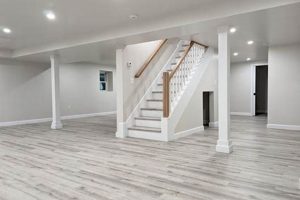
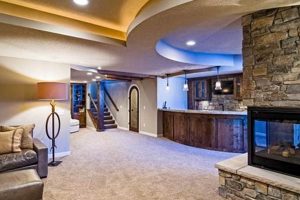
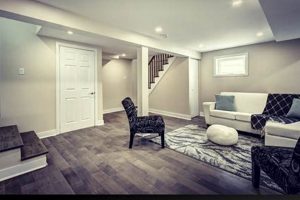
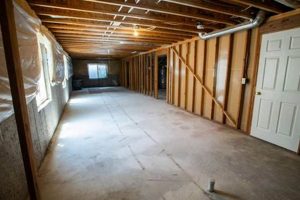
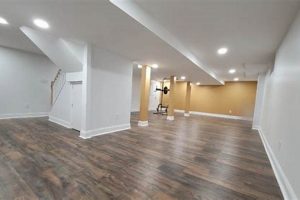
The arrangement of space within a completed lower level of a residence is a critical design consideration. This encompasses the organization of rooms, hallways, and utility areas following the completion of structural and cosmetic enhancements such as framing, insulation, drywalling, and flooring. An example includes designating specific zones for entertainment, recreation, storage, and guest accommodations within the lower level.
A well-considered spatial configuration maximizes the utility and value of this often-underutilized area of a home. Optimal design enhances livability, potentially increasing property value and addressing diverse needs, from creating dedicated home offices to recreational areas. Historically, this space was primarily relegated to storage or utility functions, but evolving lifestyles have spurred a trend toward transforming these areas into fully integrated extensions of the living space.
Subsequent sections will delve into various approaches to planning the lower level, exploring factors influencing the selection of specific room arrangements, including considerations for lighting, egress, and compliance with local building codes. Furthermore, discussions will address popular design styles and strategies for effectively managing moisture and optimizing the use of available square footage.
Planning Considerations for Optimizing Lower-Level Space
Effective utilization of the lower level requires careful pre-planning and design consideration. Adhering to sound principles ensures a functional and aesthetically pleasing outcome.
Tip 1: Prioritize Functionality. Clearly define the intended uses of the space. Distinguish between zones for relaxation, work, exercise, or guest accommodations. This determination directly influences room sizing and adjacencies.
Tip 2: Optimize Natural and Artificial Illumination. Maximize natural light penetration through strategically placed windows or light wells. Supplement with layered artificial lighting, including ambient, task, and accent lighting, to achieve desired illumination levels in all areas.
Tip 3: Address Moisture Mitigation. Prioritize waterproofing measures to prevent water intrusion and mold growth. Proper sealing of foundation walls and installation of a vapor barrier are essential for maintaining a dry and healthy environment.
Tip 4: Adhere to Building Codes and Regulations. Ensure strict compliance with local building codes, particularly those pertaining to egress windows, ceiling height requirements, and fire safety regulations. Consult with a qualified building inspector to confirm adherence.
Tip 5: Incorporate Ample Storage Solutions. Integrate storage solutions to minimize clutter and maximize usable space. Utilize built-in shelving, closets, and concealed storage compartments to maintain an organized environment.
Tip 6: Consider Soundproofing Measures. Implement soundproofing materials and techniques to minimize noise transmission between the lower level and the rest of the residence. This is particularly important for home theaters, music rooms, or play areas.
Tip 7: Plan for Adequate Ventilation. Ensure sufficient airflow throughout the area to prevent stale air and promote healthy indoor air quality. Consider incorporating a dedicated ventilation system or integrating into the existing HVAC system.
These planning insights contribute to a well-designed and functional lower-level space, increasing home value and enhancing quality of life.
The following sections will explore specific design styles and implementation strategies for achieving desired aesthetic and functional outcomes.
1. Spatial Zoning

Spatial zoning, as it relates to the arrangement of a residence’s lower level, is a critical determinant of functionality and usability. It involves the strategic division of space into distinct areas, each dedicated to a specific purpose. The absence of a well-defined spatial plan results in a disjointed and inefficient arrangement, negating the potential benefits of a finished lower level. For example, a lower level intended for both a home office and a recreational area requires a deliberate separation of these zones to minimize noise distractions and maintain a professional environment within the workspace. Poor planning may result in these zones overlapping, diminishing the utility of both.
The implementation of effective spatial zoning necessitates careful consideration of the intended uses of the lower level. This process dictates the placement of walls, doorways, and pathways, optimizing the flow of movement between different areas. In a residence with children, for instance, a play area may be positioned adjacent to a family room, allowing for parental supervision while maintaining a degree of separation. Similarly, a guest suite should be located in a more private area, minimizing disruption to the main living spaces. The successful integration of these zones is crucial for maximizing the value and utility of the lower level.
In conclusion, spatial zoning serves as a foundational element in transforming a lower level into a functional and aesthetically pleasing extension of the primary living space. Proper planning ensures the efficient allocation of space, facilitating the integration of diverse activities and catering to the unique needs of the occupants. Overlooking the importance of spatial zoning can lead to a poorly organized and underutilized lower level, undermining the investment in finishing the space. Therefore, meticulous planning of spatial zones is paramount for a successful lower-level conversion.
2. Egress Compliance

Egress compliance represents a fundamental safety requirement that directly influences design considerations. The completion of the lower level of a residence necessitates adherence to local building codes regarding emergency exits. The presence of habitable space mandates the provision of at least one code-compliant egress window or door, enabling occupants to escape safely in the event of a fire or other emergency. Failure to comply with these regulations can result in significant penalties, including the rejection of construction permits and potential legal liabilities in case of injury or loss of life.
The placement and dimensions of egress windows are governed by specific criteria, including minimum opening area, sill height, and operability requirements. These criteria are designed to ensure that individuals, including children and those with mobility impairments, can easily access and utilize the egress window during an emergency. For example, a window well may be necessary to meet the sill height requirement if the lower level is partially or fully below grade. Similarly, specific hardware must be installed to allow the window to open fully and remain open without obstruction. Practical application necessitates meticulous planning during the design phase to accommodate these requirements while optimizing spatial organization.
The integration of egress considerations into the design requires collaboration between architects, contractors, and local building inspectors. Adherence to these regulations not only ensures the safety of occupants but also contributes to the overall value and marketability of the residence. Overlooking this vital aspect can jeopardize the legality and safety of the finished lower level, resulting in significant financial and personal consequences. Therefore, prioritizing egress compliance throughout the planning and construction phases is imperative.
3. Moisture Management

Effective moisture management is paramount when considering the arrangement of space. The inherent subterranean nature of lower levels predisposes them to elevated humidity and potential water intrusion, requiring proactive strategies to mitigate these risks and ensure the longevity and habitability of the finished space.
- Foundation Waterproofing
Foundation waterproofing serves as the primary defense against water penetration. This involves the application of a waterproof membrane to the exterior of the foundation walls, preventing groundwater from seeping into the structure. Improper or absent waterproofing can lead to hydrostatic pressure buildup, resulting in leaks and structural damage. The arrangement of interior walls and flooring must account for potential access for future repairs or inspections of the waterproofing system.
- Interior Drainage Systems
Interior drainage systems complement exterior waterproofing by collecting and diverting water that infiltrates the foundation. This typically involves the installation of a perimeter drain along the foundation walls, which channels water to a sump pump for removal. The placement of the drainage system must be carefully considered in relation to the design, ensuring it does not interfere with the functionality of finished spaces while providing effective water management. For example, planning a bathroom installation needs to consider the location of drainage and its effect on the plumbing.
- Vapor Barriers
Vapor barriers are essential for controlling moisture diffusion through walls and floors. These barriers reduce the amount of water vapor that can penetrate building materials, preventing condensation and mold growth. Proper installation of a vapor barrier is crucial in all walls and floors, as any gaps or tears can compromise its effectiveness. The choice of flooring materials must be compatible with the installation of a moisture barrier. Failure to address water vapor will contribute to structural damage overtime.
- Dehumidification and Ventilation
Even with comprehensive waterproofing and vapor barrier measures, maintaining a low humidity level is crucial. Dehumidification and ventilation systems remove excess moisture from the air, preventing mold growth and creating a comfortable indoor environment. The placement of these systems needs to be carefully considered to ensure efficient air circulation without causing drafts or compromising the aesthetic of the space. Furthermore, integrating a ventilation system will remove air contaminates.
The integration of comprehensive moisture management strategies is not merely a preventative measure, but a fundamental requirement for a successful long-term renovation project. A carefully considered design that accounts for these factors will protect the investment, ensure a healthy living environment, and preserve the value of the residence. Failing to account for moisture management will decrease structural integrity.
4. Lighting Integration

The incorporation of illumination into the structural organization is a pivotal factor in determining the usability and aesthetic appeal. As a subterranean area typically lacking natural light sources, strategic placement of lighting fixtures is essential to replicate the atmosphere of above-ground living spaces. The careful planning of ambient, task, and accent lighting contributes significantly to the overall ambiance and functionality. A poorly illuminated lower level can feel claustrophobic and unwelcoming, while a well-lit space enhances the perception of spaciousness and comfort. For instance, recessed lighting combined with strategically positioned lamps can transform a dark, unused area into a comfortable home theater or a functional home office.
Various methods can be employed, each with specific advantages. Recessed lighting offers a clean, minimalist aesthetic and provides uniform illumination. Track lighting allows for directional lighting, highlighting specific architectural features or artwork. Under-cabinet lighting enhances visibility in kitchenettes or bar areas. The choice of lighting fixtures and their placement must consider the specific activities to be performed in each zone. For example, brighter task lighting is necessary in a workspace, while softer ambient lighting is more suitable for a relaxation area. The selection of appropriate color temperatures is also critical, as warm lighting creates a cozy atmosphere while cool lighting provides a more energetic ambiance.
Effective integration is therefore not merely about illuminating the space but about creating a cohesive and functional environment. Challenges such as low ceilings and the absence of natural light require innovative solutions, such as the use of light-colored paint and reflective surfaces to maximize the diffusion of light. By carefully considering the various lighting options and their placement, it is possible to transform a dark, underutilized area into a bright, inviting, and functional extension of the home. The value of the investment depends on an illuminating the area.
5. Structural Integrity

The maintenance of structural integrity is a paramount concern when considering design alterations to the lower level of a residence. Any modification to the existing structural elements requires careful evaluation to ensure that the overall stability of the building is not compromised.
- Load-Bearing Walls
The removal or alteration of load-bearing walls necessitates reinforcement to transfer the load to other structural components. Failure to properly support these loads can result in structural failure, including sagging floors or ceilings, and, in severe cases, collapse. An accurate assessment of load paths and the installation of appropriate support beams or columns are essential for maintaining structural stability during any modifications.
- Foundation Modifications
Any excavation or alteration to the foundation requires careful attention to prevent soil erosion and potential instability. Underpinning may be required to support adjacent structures or to increase the depth of the foundation. Improper excavation can undermine the foundation, leading to cracks, settling, and potential structural damage. The design must consider soil type, water table levels, and the proximity of neighboring structures.
- Floor Joist Systems
The installation of new plumbing, electrical, or HVAC systems often requires cutting or drilling through floor joists. Excessive notching or drilling can weaken the joists, compromising their load-carrying capacity. Reinforcement with sister joists or steel plates may be necessary to maintain structural integrity. The placement and size of any penetrations must be carefully planned to minimize weakening the joist system.
- Egress Window Openings
Creating egress window openings in the foundation requires careful consideration of the surrounding structure. The removal of foundation material can weaken the wall, potentially leading to cracking or collapse. Proper reinforcement with lintel beams or concrete headers is essential to distribute the load around the opening and maintain structural stability. The size and placement of the opening must be carefully planned to minimize stress concentrations.
The preservation of structural integrity during design implementation is not merely a matter of compliance with building codes; it is a fundamental requirement for ensuring the safety and longevity of the residence. Engaging qualified structural engineers and experienced contractors is crucial to ensure that any modifications are performed safely and in accordance with established engineering principles. Failure to adequately address these concerns can have severe consequences, potentially endangering the occupants and diminishing the value of the property.
Frequently Asked Questions
The subsequent section addresses common inquiries regarding spatial organization of a completed lower-level area, providing concise and authoritative responses.
Question 1: What is the optimal ceiling height for a lower-level area to maximize comfort and comply with building codes?
The generally accepted minimum ceiling height is 7 feet (84 inches). However, local building codes may stipulate varying requirements. Higher ceilings contribute to a more spacious and comfortable environment. Consult local authorities for specific regulations.
Question 2: What considerations are paramount when planning for egress windows in a subterranean space?
Egress windows must meet specific dimensional requirements, including minimum opening area, width, and height. The sill height from the floor should not exceed a prescribed limit. The window must be easily operable from inside without requiring special tools or knowledge. Compliance with local building codes is mandatory.
Question 3: How can one effectively mitigate moisture issues in a below-grade environment to ensure long-term habitability?
Effective moisture management strategies include exterior waterproofing, interior drainage systems, vapor barriers, and dehumidification. Ensure proper grading of the surrounding landscape to divert water away from the foundation. Regularly inspect and maintain these systems to prevent water intrusion and mold growth.
Question 4: What is the recommended approach for soundproofing a lower-level area to minimize noise transmission to the upper floors?
Employ soundproofing techniques such as installing resilient channels, using sound-dampening insulation, and incorporating solid-core doors. Seal all gaps and cracks in walls and ceilings. Consider using sound-absorbing materials for flooring and wall coverings to minimize reverberation.
Question 5: How can one maximize natural light in a below-grade space lacking direct sunlight?
Maximize natural light penetration by installing larger egress windows and light wells. Use light-colored paint and reflective surfaces to amplify the available light. Consider installing solar tubes or skylights to bring in direct sunlight. Strategic placement of mirrors can also enhance light diffusion.
Question 6: What factors should be considered when determining the placement of support columns within a below-grade space?
Support columns are critical structural elements and must be strategically placed to carry the load from the upper floors. Consult with a structural engineer to determine the optimal location and size of columns. Minimize obstruction to traffic flow and consider aesthetic integration within the space.
These FAQs provide foundational guidance for approaching the spatial organization. Further research and consultation with qualified professionals are encouraged for project-specific applications.
The subsequent section will delve into specific design styles and considerations for completing the space.
Finished Basement Layout
The preceding discussion has explored fundamental considerations pertaining to efficient and effective spatial arrangement. These include structural integrity, egress compliance, moisture management, lighting integration, and spatial zoning. Each aspect requires meticulous planning and execution to ensure a safe, functional, and aesthetically pleasing living environment.
Thoughtful implementation of these principles maximizes the utility and value. The future of residential design will continue to emphasize the importance of these subterranean areas as integral components of modern living spaces. The knowledge presented herein should empower homeowners and design professionals to approach design with confidence and competence.