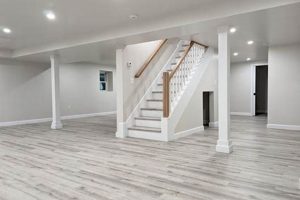
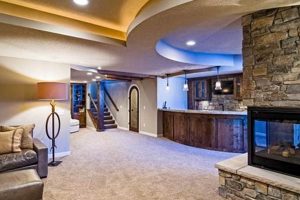
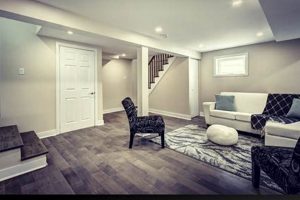
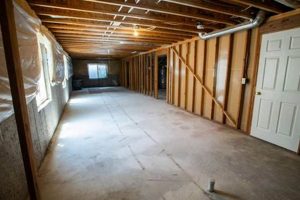
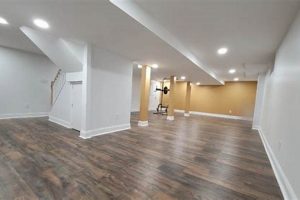
The process of transforming an unfinished subterranean level in Lehi into a usable, aesthetically pleasing, and functional space involves several key stages. This undertaking typically includes framing, insulation, electrical and plumbing work, drywall installation, and the application of various finishes to create rooms suitable for living, recreation, or storage. Successful execution requires careful planning, adherence to local building codes, and the utilization of skilled tradespeople.
Completing these lower levels enhances property value, expands livable square footage, and provides opportunities to customize the space to meet specific homeowner needs. Historically, these areas were often relegated to mere storage or utility functions, but modern techniques and materials now allow for comfortable, inviting, and highly functional living areas. These transformed spaces offer versatility, serving as home theaters, gyms, extra bedrooms, or home offices, thereby significantly improving the homeowner’s overall quality of life.
The subsequent sections will delve into the specific considerations for planning, budgeting, design choices, and contractor selection, all crucial for achieving a successful outcome in this home improvement endeavor. Further discussion will encompass aspects like moisture control, lighting strategies, and soundproofing options relevant to this type of project.
Essential Considerations for Lehi Basement Finishing
The following guidelines offer critical advice for homeowners considering the completion of their subterranean levels in Lehi. Adherence to these suggestions will contribute to a successful project, minimizing potential issues and maximizing the long-term value of the investment.
Tip 1: Comprehensive Planning: A detailed plan, including architectural drawings and specifications, is paramount. This should incorporate space utilization, electrical and plumbing layouts, and egress considerations to meet safety standards.
Tip 2: Code Compliance: Strictly adhere to all local building codes and permit requirements. Inspections are essential to ensure structural integrity, fire safety, and proper ventilation within the finished space.
Tip 3: Moisture Mitigation: Implement robust waterproofing measures to prevent moisture intrusion. This may include interior and exterior sealant applications, French drains, and sump pump installation to protect against water damage and mold growth.
Tip 4: Effective Insulation: Install adequate insulation to maintain consistent temperatures and reduce energy consumption. Consider spray foam insulation for superior thermal performance and moisture resistance.
Tip 5: Professional Contractor Selection: Engage a licensed and insured contractor with demonstrable experience in similar projects. Verify references and review portfolios to assess their capabilities and reputation.
Tip 6: Lighting Design: Plan for adequate and appropriate lighting. Incorporate a combination of ambient, task, and accent lighting to create a functional and aesthetically pleasing environment.
Tip 7: Budget Allocation: Establish a realistic budget and allocate funds for each phase of the project, including contingency for unforeseen expenses. Obtain multiple quotes and compare material costs to optimize value.
Careful consideration of these points will significantly increase the likelihood of a satisfactory and cost-effective outcome. Prudent preparation and execution are crucial for realizing the full potential of these underground spaces.
The next section will address the crucial aspect of selecting the right materials to achieve a durable and aesthetically pleasing result within these spaces.
1. Planning
Effective subterranean transformation in Lehi necessitates meticulous planning as its foundational element. Without a comprehensive strategy, the potential for cost overruns, code violations, and functional inadequacies increases substantially. Planning dictates the scope of the project, defining spatial layout, utility integration, and material selection. It also serves as a preemptive measure against unforeseen structural or environmental challenges inherent to below-grade construction. For example, a properly planned layout will account for egress windows, ensuring compliance with fire safety regulations, while a poorly conceived plan may overlook this critical safety requirement, leading to costly rework or even project failure.
Detailed plans enable accurate cost estimation and budgeting, preventing the depletion of resources mid-project. These blueprints also serve as a communication tool between the homeowner, architect, and contractor, ensuring a unified understanding of the project’s objectives and facilitating smoother execution. Consider the scenario where a homeowner desires a home theater with specific acoustical properties; detailed planning allows for the incorporation of soundproofing materials and strategic speaker placement from the outset, whereas ad-hoc modifications during construction would likely compromise performance and increase expenses.
In summation, diligent planning is not merely a preliminary step but an integral component of a successful home improvement endeavor. It acts as a safeguard against potential pitfalls, promotes efficient resource allocation, and ensures the finished space aligns with the homeowner’s vision and adheres to all applicable regulations. Neglecting this phase can result in a compromised outcome, undermining the overall value and functionality of the finished space.
2. Regulations

Adherence to local building codes and regulations is a non-negotiable aspect of any subterranean improvement project in Lehi. These regulations, established by the city and various governing bodies, dictate minimum standards for safety, structural integrity, and habitability. Failure to comply with these regulations can result in significant consequences, ranging from project delays and costly rework to legal penalties and the inability to obtain necessary occupancy permits. The regulations are in place to protect the health, safety, and welfare of residents, ensuring that any completed space meets established benchmarks for fire safety, ventilation, egress, and structural soundness. A common example involves egress windows; Lehi building codes specify minimum dimensions and accessibility requirements for these windows in any habitable room, ensuring occupants have a viable escape route in case of fire. Non-compliance necessitates corrective action, potentially involving structural modifications, leading to increased expenses and delayed occupancy.
The regulatory landscape extends beyond basic building codes. It also encompasses zoning ordinances, which may restrict specific uses of the space, and environmental regulations related to moisture mitigation and radon reduction. A thorough understanding of these diverse regulations is crucial before commencing any work. This often involves consulting with local building officials, obtaining the necessary permits, and working with licensed contractors familiar with Lehi-specific requirements. Moreover, some regulations may require professional inspections at various stages of the construction process, ensuring that the work adheres to the approved plans and meets code standards. Ignoring these inspections can lead to the discovery of non-compliant work later, requiring demolition and reconstruction.
In conclusion, navigating the complex web of regulations is an integral part of transforming an unfinished lower level into a functional living space in Lehi. While the process may seem daunting, compliance is essential for ensuring the long-term safety, value, and legality of the improvement. Engaging professionals familiar with local regulations and prioritizing code compliance from the outset are crucial steps for mitigating risks and achieving a successful project outcome. Disregarding regulatory requirements can invalidate the entire project and render the space uninhabitable, underscoring the practical significance of this understanding.
3. Waterproofing

Waterproofing is an indispensable element of any successful “lehi basement finishing” project due to the region’s unique geological and hydrological conditions. Lehi, situated near the Utah Lake, experiences fluctuating water tables and soil compositions that increase the risk of hydrostatic pressure against subterranean foundations. This pressure can force water through porous concrete and cracks, leading to moisture accumulation, mold growth, and structural damage. Consequently, neglecting proper waterproofing measures during the finishing phase compromises the integrity and habitability of the transformed area. The causal relationship is clear: inadequate waterproofing precipitates moisture-related problems, while robust waterproofing mitigates these risks, ensuring a dry and healthy living environment. A real-life example would be a finished space in Lehi experiencing efflorescence on its concrete walls due to untreated moisture intrusion, highlighting the detrimental effects of neglecting waterproofing.
Effective waterproofing strategies for this type of project in Lehi encompass several layers of protection. These include exterior foundation coatings, interior sealant applications, French drain systems to redirect water away from the foundation, and the installation of sump pumps to actively remove any accumulated water. The selection of appropriate waterproofing materials is critical, requiring careful consideration of soil conditions, groundwater levels, and local climate patterns. Furthermore, proper installation techniques are equally important. For example, the improper application of a sealant can create weak points, allowing water to penetrate and negate the intended protection. Regular inspections and maintenance of the waterproofing systems are also essential to ensure their continued effectiveness. A case study of a properly waterproofed space would demonstrate long-term structural integrity, mold-free conditions, and sustained indoor air quality, confirming the value of proactive waterproofing measures.
In conclusion, waterproofing is not merely an optional add-on but a fundamental requirement for “lehi basement finishing.” The challenges posed by Lehi’s environmental context necessitate a comprehensive and proactive approach to moisture management. By prioritizing effective waterproofing techniques and materials, homeowners can safeguard their investment, enhance the longevity of their finished areas, and create healthy and comfortable living spaces. The practical significance of this understanding lies in the prevention of costly repairs, the maintenance of property value, and the preservation of the well-being of occupants. Neglecting it can lead to a multitude of problems, ultimately undermining the entire home improvement effort.
4. Insulation
Insulation is a pivotal consideration in “lehi basement finishing,” directly impacting energy efficiency, comfort levels, and overall indoor air quality. Proper insulation strategies are essential for transforming subterranean spaces into habitable and functional areas, mitigating temperature fluctuations and moisture-related issues common in below-grade environments.
- Thermal Performance and Energy Efficiency
Adequate insulation minimizes heat transfer through the foundation walls and ceilings, maintaining consistent temperatures year-round. This reduces reliance on heating and cooling systems, leading to significant energy savings and lower utility bills. For example, an uninsulated space loses heat rapidly during winter, forcing heating systems to work harder, whereas a properly insulated space retains warmth, requiring less energy to maintain a comfortable temperature. This aspect is especially relevant in Lehi due to seasonal temperature variations.
- Moisture Control and Mold Prevention
Effective insulation helps regulate temperature and minimize condensation on surfaces. Condensation can lead to moisture buildup, creating a breeding ground for mold and mildew, which pose health risks and compromise air quality. Closed-cell spray foam insulation, for example, provides both thermal insulation and a vapor barrier, preventing moisture from penetrating the walls and fostering mold growth. In improperly insulated settings, condensation often forms on cooler walls during warmer months, leading to visible mold and musty odors.
- Sound Dampening and Noise Reduction
Insulation materials possess sound-dampening properties, reducing the transmission of noise between floors and from outside sources. This contributes to a quieter and more peaceful living environment, particularly beneficial in multi-story homes or those located near busy streets. Fiberglass batt insulation, for instance, effectively absorbs sound waves, reducing noise levels and creating a more tranquil space. A finished space without proper sound insulation may experience significant noise intrusion from upstairs activities or external traffic.
- Code Compliance and Fire Safety
Many local building codes mandate specific insulation R-values for exterior walls and ceilings, ensuring minimum energy efficiency and fire safety standards are met. Certain insulation materials also exhibit fire-resistant properties, slowing the spread of flames and providing occupants with more time to escape in the event of a fire. Compliance with these regulations is essential for obtaining necessary permits and ensuring the safety of the residents. Some types of insulation are treated with fire retardants to increase their resistance to combustion.
In conclusion, insulation plays a multifaceted role in “lehi basement finishing,” extending beyond mere temperature regulation. It serves as a crucial component in creating a comfortable, healthy, and energy-efficient living space. The selection of appropriate insulation materials and proper installation techniques are paramount for maximizing these benefits and achieving a successful and sustainable outcome.
5. Contractors
Engaging qualified contractors is a critical determinant of success in any “lehi basement finishing” project. The complexity inherent in these projects necessitates specialized knowledge and skills to ensure code compliance, structural integrity, and aesthetic satisfaction. The selection of appropriate professionals directly influences the project’s timeline, budget, and ultimate outcome.
- Licensing and Insurance
Verifying a contractor’s licensing and insurance is paramount for mitigating risk. Licensing ensures that the contractor has met minimum competency standards and is authorized to perform construction work within Lehi. Insurance, specifically liability and workers’ compensation coverage, protects homeowners from financial responsibility in the event of property damage or on-site injuries. Employing an unlicensed or uninsured contractor can expose homeowners to significant legal and financial liabilities.
- Experience and Expertise
Prior experience in similar subterranean transformation projects is a valuable indicator of a contractor’s capabilities. Experienced contractors possess a thorough understanding of common challenges associated with these projects, such as moisture mitigation, foundation issues, and code compliance specific to below-grade construction. A contractor with a proven track record can anticipate potential problems and implement effective solutions, minimizing delays and cost overruns. Reviewing portfolios and obtaining references provides insights into a contractor’s past performance.
- Communication and Project Management
Effective communication and project management skills are essential for a smooth and efficient project. A competent contractor will maintain open communication channels with the homeowner, providing regular updates on progress, addressing concerns promptly, and effectively managing subcontractors. Strong project management ensures that the project stays on schedule and within budget, minimizing disruptions to the homeowner’s daily life. Poor communication can lead to misunderstandings, delays, and dissatisfaction.
- Permitting and Code Compliance
Navigating the permitting process and ensuring adherence to local building codes are crucial aspects of “lehi basement finishing.” A knowledgeable contractor will be familiar with Lehi’s specific code requirements and will handle the necessary paperwork and inspections. This minimizes the risk of code violations, which can result in costly rework and delays. Furthermore, a contractor with a strong understanding of code compliance ensures that the finished space meets all safety and habitability standards.
The selection of appropriate contractors is therefore a fundamental decision in “lehi basement finishing.” Due diligence in verifying qualifications, assessing experience, and evaluating communication skills is essential for ensuring a successful project. Engaging a reputable and qualified contractor mitigates risks, maximizes value, and ensures that the finished space meets the homeowner’s expectations and complies with all applicable regulations.
6. Lighting
Illumination plays a critical role in “lehi basement finishing,” extending beyond mere visibility. Effective lighting design transforms subterranean spaces from potentially dim and unwelcoming areas into bright, functional, and aesthetically pleasing environments. It addresses inherent challenges related to limited natural light, influencing mood, perceived space, and overall usability.
- Ambient Lighting and General Illumination
Ambient lighting provides overall illumination within the finished area, creating a foundation for other lighting layers. It replaces the absence of natural light, establishing a sense of openness and preventing the feeling of confinement. Recessed lighting, track lighting, and strategically placed ceiling fixtures are common methods for achieving even ambient illumination. A lack of adequate ambient lighting can result in a space that feels small, dark, and uninviting, detracting from its usability and comfort.
- Task Lighting and Functional Areas
Task lighting focuses on illuminating specific areas for particular activities, such as reading, working, or preparing food. Under-cabinet lighting in a kitchenette, desk lamps in a home office, or pendant lights over a workbench are examples of task lighting solutions. Proper task lighting reduces eye strain and enhances safety in these functional zones. Inadequate task lighting can make it difficult to perform tasks efficiently and safely, leading to frustration and potential accidents.
- Accent Lighting and Architectural Enhancement
Accent lighting highlights architectural features, artwork, or decorative elements, adding depth and visual interest to the finished area. Spotlights, wall sconces, and strategically placed LED strips can emphasize unique features and create a more sophisticated atmosphere. Accent lighting contributes to the overall aesthetic appeal of the space and enhances its perceived value. Without accent lighting, a space can appear flat and uninspired.
- Color Temperature and Psychological Effects
The color temperature of light, measured in Kelvin (K), significantly influences mood and ambiance. Warmer color temperatures (2700K-3000K) create a cozy and relaxing atmosphere, suitable for living rooms and bedrooms, while cooler color temperatures (4000K-5000K) promote alertness and focus, appropriate for home offices and work areas. Selecting the appropriate color temperature for each zone is crucial for creating a functional and comfortable environment. Improper color temperature selection can lead to eye strain, fatigue, and an overall sense of unease.
In “lehi basement finishing,” thoughtful lighting design is indispensable for overcoming the limitations of subterranean spaces and creating environments that are both functional and aesthetically pleasing. The strategic integration of ambient, task, and accent lighting, coupled with careful consideration of color temperature, transforms these areas into valuable living spaces, enhancing property value and improving the overall quality of life.
7. Budgeting

Establishing a comprehensive budget is paramount for the successful execution of any “lehi basement finishing” project. This financial plan dictates the scope of the undertaking, influences material selection, and governs contractor negotiations, thereby directly impacting the final outcome.
- Initial Assessment and Cost Estimation
The initial step involves a detailed assessment of the space, encompassing measurements, existing infrastructure, and desired features. This informs a preliminary cost estimate, accounting for materials, labor, permits, and potential contingencies. A realistic cost estimate prevents underfunding and minimizes the likelihood of project delays or compromises. Overlooking this step often leads to significant budget overruns as unforeseen expenses arise.
- Material Selection and Cost-Benefit Analysis
Material selection represents a significant portion of the overall budget. Choices must balance aesthetic preferences with durability, functionality, and cost-effectiveness. A cost-benefit analysis should be conducted for each material option, considering long-term maintenance costs and energy efficiency. Opting for less expensive, lower-quality materials may result in premature wear and tear, necessitating costly replacements in the future, thereby negating initial savings.
- Contractor Bids and Negotiation
Obtaining multiple bids from qualified contractors is essential for securing competitive pricing and ensuring transparency. A detailed review of each bid should focus on the scope of work, material specifications, and payment schedule. Negotiation with contractors can yield significant savings, but it is crucial to prioritize experience, reputation, and code compliance over solely seeking the lowest price. Selecting a contractor solely based on cost may compromise quality and lead to code violations, resulting in expensive remediation.
- Contingency Planning and Unforeseen Expenses
Allocating a contingency fund, typically 10-15% of the total budget, is crucial for addressing unforeseen expenses such as unexpected structural issues, code violations, or material price increases. A well-funded contingency plan provides financial flexibility and prevents project disruptions. Neglecting contingency planning often leads to difficult choices, such as reducing the scope of work or resorting to lower-quality materials, to stay within the original budget.
Budgeting, therefore, is not merely a preliminary step but an ongoing process throughout the “lehi basement finishing” project. Adherence to a well-defined budget, coupled with careful monitoring and proactive management, maximizes value and ensures a successful transformation of the subterranean space.
Frequently Asked Questions About Lehi Basement Finishing
The following questions address common inquiries and misconceptions regarding the completion of subterranean levels in Lehi, Utah.
Question 1: What factors influence the cost of “lehi basement finishing?”
Several variables impact project expenses, including the square footage, complexity of the design, material selections, existing infrastructure (plumbing, electrical), and the extent of necessary moisture mitigation. Furthermore, labor costs vary based on the contractor’s experience and the prevailing market rates.
Question 2: Are permits required for “lehi basement finishing” in Lehi?
Yes. Lehi City mandates building permits for most construction projects, including the completion of subterranean areas. Obtaining permits ensures adherence to local building codes and facilitates inspections to verify structural integrity and safety standards. Failure to secure proper permits can result in fines, project delays, and potential legal repercussions.
Question 3: How can moisture issues be effectively addressed during “lehi basement finishing?”
Robust waterproofing measures are crucial. These include exterior foundation coatings, interior sealants, French drain systems, and sump pump installation. Proper ventilation is also essential to manage humidity levels and prevent mold growth. Regular inspections and maintenance are necessary to ensure the long-term effectiveness of these systems.
Question 4: What type of insulation is recommended for “lehi basement finishing?”
Closed-cell spray foam insulation is often recommended due to its superior thermal performance and moisture resistance. It provides a continuous air barrier, minimizing heat transfer and preventing condensation. Fiberglass batt insulation is an alternative but requires careful installation to avoid moisture accumulation and reduced effectiveness.
Question 5: How do I select a qualified contractor for “lehi basement finishing” in Lehi?
Verify the contractor’s licensing and insurance. Request references and review their portfolio to assess experience with similar projects. Obtain multiple bids and carefully compare the scope of work, material specifications, and payment schedule. Prioritize clear communication, project management skills, and a thorough understanding of local building codes.
Question 6: What are the common challenges encountered during “lehi basement finishing?”
Common challenges include managing moisture, addressing structural issues, ensuring adequate egress, navigating the permitting process, and staying within budget. Proactive planning, meticulous execution, and the engagement of experienced professionals are crucial for mitigating these challenges.
The preceding answers highlight critical aspects of subterranean completion projects in Lehi, emphasizing the importance of planning, code compliance, and professional expertise.
The subsequent discussion will provide a summary of the essential elements for a successful “lehi basement finishing” project.
Lehi Basement Finishing
The preceding analysis has explored critical considerations for “lehi basement finishing,” encompassing planning, regulatory compliance, waterproofing strategies, insulation techniques, contractor selection, lighting design, and budgetary control. Each element significantly contributes to the success and longevity of the project. Neglecting any aspect can compromise the integrity, functionality, and value of the finished space.
Therefore, the transformative process warrants meticulous attention to detail, adherence to established building codes, and the engagement of qualified professionals. A well-executed “lehi basement finishing” project not only enhances property value but also provides a functional and comfortable living environment for years to come. Thoughtful consideration of these insights will contribute to a successful outcome.