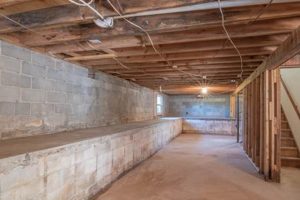
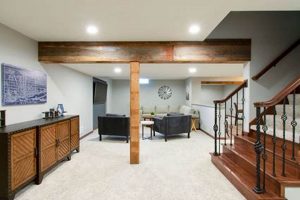
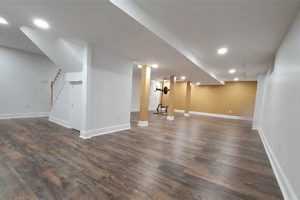
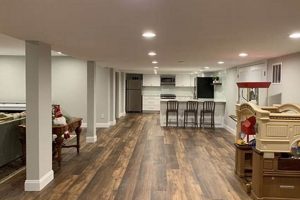
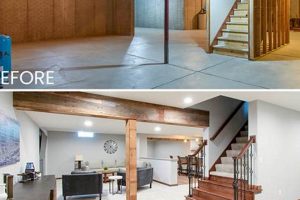
A livable lower level featuring an unfinished ceiling, often referred to as an open ceiling, reveals the structural and mechanical components typically hidden above. This design choice exposes elements such as ductwork, pipes, and floor joists, creating a distinctive aesthetic. For instance, a recreation room in a home might utilize this approach, showcasing painted ductwork as a design feature rather than concealing it with drywall.
This design option offers several advantages. It can maximize headroom, providing a sense of spaciousness in areas where ceiling height is limited. Additionally, it allows for easier access to plumbing and wiring for maintenance and future modifications. Historically, this approach might have been employed primarily for cost savings, but it has evolved into a deliberate stylistic decision valued for its industrial or modern appeal.
The following sections will delve deeper into the various aspects of this design choice, including aesthetic considerations, construction techniques, insulation options, and the potential impact on property value.
Considerations for Open-Ceiling Lower Level Designs
Implementing an open-ceiling design in a finished lower level requires careful planning and execution to achieve both aesthetic appeal and functional performance. The following tips outline key considerations.
Tip 1: Plan the Layout Strategically: Carefully consider the placement of furniture and fixtures in relation to exposed ductwork and pipes. Strategic layout planning minimizes visual clutter and ensures easy access to mechanical systems for maintenance.
Tip 2: Optimize Lighting Design: Exposed ceilings often require a different approach to lighting. Consider track lighting, pendant lights, or strategically placed recessed lights to provide adequate illumination without creating excessive glare or shadows.
Tip 3: Sound Dampening is Crucial: Open ceilings can exacerbate sound transmission. Implement sound-dampening strategies such as acoustic panels, strategically placed rugs, or specialized insulation to minimize noise within the space and reduce sound transfer to other areas of the home.
Tip 4: Coordinate Mechanical Systems: Prioritize a cohesive and visually appealing arrangement of exposed ducts, pipes, and wiring. Painting mechanical systems in a uniform color or strategically grouping them can enhance the overall aesthetic.
Tip 5: Address Insulation Requirements: Exposed ceilings typically have lower insulation values. Install insulation above the floor joists to mitigate heat loss during winter and heat gain during summer, improving energy efficiency and comfort.
Tip 6: Routine Cleaning is Essential: Dust and debris accumulate more readily on exposed ceiling structures. Establish a regular cleaning routine to maintain a clean and polished appearance and prevent the buildup of allergens.
Tip 7: Address Local Building Codes: Ensure compliance with all applicable building codes and regulations related to ceiling height, fire safety, and accessibility before proceeding with construction.
Implementing these strategies ensures a visually appealing and functionally sound finished lower level. Proper planning, lighting design, sound dampening, mechanical coordination, insulation, maintenance, and code compliance are essential for a successful project.
The following section will explore cost considerations and potential return on investment for this type of home improvement project.
1. Aesthetics

The aesthetic dimension of a finished basement featuring an exposed ceiling directly impacts the perceived value and usability of the space. Careful consideration of visual elements is paramount to creating a cohesive and appealing environment.
- Material Selection and Consistency
The choice of materials for the visible structural elements, such as floor joists, ductwork, and pipes, significantly influences the overall aesthetic. Maintaining consistency in material type and finish, whether through painting or a uniform raw material appearance, contributes to a polished and intentional design. For example, uniformly painted black ductwork against a light gray concrete foundation wall creates a modern, industrial aesthetic. Inconsistency in material finishes can result in a cluttered and unrefined appearance, diminishing the perceived value of the finished space.
- Color Palette and Lighting Integration
The color palette employed in a finished basement with an exposed ceiling must harmonize with the exposed structural and mechanical elements. Neutral colors, such as grays, whites, and blacks, often serve as effective backgrounds, allowing the exposed elements to become intentional design features. Strategic lighting integration is equally crucial. Track lighting or pendant lights can be used to highlight specific areas or features of the exposed ceiling, while also providing adequate illumination for the entire space. Poorly planned lighting can result in shadows and visual clutter, detracting from the intended aesthetic.
- Organization and Clutter Management
An exposed ceiling design inherently reveals all structural and mechanical components. Consequently, meticulous organization and clutter management are essential to maintain a visually appealing space. Wiring, pipes, and ductwork should be neatly organized and, where possible, concealed or grouped together. Avoiding excessive clutter around these elements prevents a chaotic and unrefined appearance. Dedicated storage solutions for items typically stored overhead in a traditional basement are necessary to prevent visual obstructions and maintain a clean aesthetic.
- Architectural Style and Cohesion
The architectural style of the exposed ceiling should complement the overall architectural style of the house. A modern home might benefit from a minimalist exposed ceiling design featuring clean lines and industrial materials. A more traditional home might incorporate painted wood joists and carefully concealed wiring to maintain a cohesive aesthetic. Deviating significantly from the home’s overall architectural style can create a jarring and disjointed appearance, reducing the appeal of the finished basement.
In conclusion, the aesthetic success of a finished basement with an exposed ceiling hinges on deliberate planning and careful execution. Consistent material selection, a harmonious color palette, strategic lighting integration, meticulous organization, and architectural cohesion are all essential elements in creating a visually appealing and valuable living space. The absence of attention to these aesthetic details can result in a space that feels unfinished, cluttered, and less desirable.
2. Accessibility

The inclusion of exposed ceiling designs within finished basements significantly impacts accessibility to crucial mechanical, electrical, and plumbing (MEP) systems. Unlike traditional finished ceilings that conceal these components behind drywall or drop ceilings, an exposed ceiling provides direct and unimpeded access for inspection, maintenance, and repair. This direct access translates into reduced labor costs and quicker troubleshooting times, as technicians can readily identify and address issues without the need for demolition or specialized equipment. For example, a homeowner experiencing a plumbing leak in a traditionally finished basement might incur substantial costs associated with cutting into the ceiling to locate and repair the source. Conversely, with an exposed ceiling, the leak can be immediately located and addressed, minimizing damage and repair expenses.
The ease of access facilitated by exposed ceilings also has implications for future modifications or upgrades to a home’s infrastructure. Adding new wiring, rerouting plumbing, or installing advanced HVAC systems becomes significantly less disruptive and costly when components are readily accessible. This flexibility is particularly valuable in older homes where original MEP systems may require frequent updates or replacements. A practical application of this accessibility advantage can be seen in situations where homeowners wish to install smart home technology. Integrating new wiring for lighting control, security systems, or network infrastructure is streamlined with an exposed ceiling, allowing for easier installation and configuration. Moreover, the exposed nature of the systems can serve as a visual aid for homeowners attempting to understand and manage their home’s essential functions.
However, the enhanced accessibility of exposed ceilings also presents certain challenges. The increased visibility of MEP systems necessitates careful organization and aesthetic considerations to avoid a cluttered or visually unappealing appearance. Furthermore, exposed systems are more vulnerable to physical damage, requiring protective measures in high-traffic areas. Despite these challenges, the long-term benefits of improved accessibility, reduced maintenance costs, and increased flexibility make exposed ceilings a valuable consideration for homeowners seeking a practical and adaptable finished basement. By carefully balancing aesthetic considerations with functional requirements, an exposed ceiling can be a significant asset, enhancing both the value and usability of the basement space.
3. Sound Dampening

An exposed ceiling in a finished basement, while aesthetically modern and providing access to utilities, inherently lacks the sound-dampening properties of traditional enclosed ceilings. The absence of materials like drywall or drop ceiling tiles means sound waves reverberate more freely within the space, leading to increased noise levels. This is particularly relevant given the basement’s potential use as a recreational area, home theater, or office, where noise control is paramount. The effect is compounded by the exposed joists and ductwork, which can act as sound conduits, transmitting noise to upper floors.
Effective sound dampening strategies are, therefore, critical for any finished basement with an exposed ceiling. These strategies can include the application of sound-absorbing materials directly to the underside of the floor joists, the installation of acoustic panels on the walls, and the use of dense, sound-reducing insulation between the floor joists above. For example, strategically placed acoustic panels can absorb sound reflections, reducing echo and improving speech intelligibility in a home theater setting. Dense insulation not only improves thermal performance but also helps block the transmission of airborne noise between floors. Additionally, resilient channels can be used to decouple the ceiling from the floor structure above, minimizing impact noise.
In conclusion, the inherent acoustic challenges presented by an exposed ceiling necessitate proactive sound dampening measures to create a comfortable and functional finished basement. Implementing appropriate sound absorption and transmission reduction techniques is essential to mitigate noise reverberation and ensure a peaceful living environment. Failing to address sound dampening can significantly detract from the usability and overall appeal of the space, rendering it less suitable for activities requiring quiet or focused attention.
4. HVAC Integration

Heating, ventilation, and air conditioning (HVAC) integration presents a significant consideration in a finished basement featuring an exposed ceiling. The absence of a traditional ceiling necessitates careful planning to ensure efficient and aesthetically pleasing distribution of conditioned air. Exposed ductwork becomes a visible element of the space, requiring strategic placement and potentially influencing the overall design aesthetic. Improperly integrated HVAC systems can lead to uneven temperature distribution, reduced energy efficiency, and a visually cluttered appearance. For example, large, unpainted duct runs can dominate the visual space, detracting from the finished aesthetic and potentially reducing usable headroom.
Efficient HVAC integration involves several key aspects. First, ductwork should be carefully sized and positioned to provide adequate airflow to all areas of the basement. This may require modifications to the existing HVAC system to account for the specific layout and insulation characteristics of the finished space. Second, consideration should be given to concealing or aesthetically treating exposed ductwork. Options include painting the ductwork to match the surrounding walls or floor, wrapping it in decorative materials, or strategically positioning it to minimize its visual impact. Third, alternative HVAC solutions, such as ductless mini-split systems, can be explored to minimize the need for extensive ductwork and offer more localized temperature control. An example of effective integration would involve utilizing round ductwork painted matte black, carefully positioned along the ceiling joists, complementing an industrial-style design aesthetic while efficiently distributing conditioned air.
In conclusion, successful HVAC integration is essential for creating a comfortable and visually appealing finished basement with an exposed ceiling. Careful planning, strategic ductwork placement, and aesthetic considerations are crucial to achieving optimal performance and minimizing visual clutter. A well-integrated HVAC system not only ensures a comfortable living environment but also enhances the overall value and usability of the finished basement space. Neglecting HVAC integration can result in inefficient climate control, increased energy costs, and a compromised aesthetic, ultimately diminishing the benefits of the exposed ceiling design.
5. Code Compliance

Code compliance is a foundational element of any construction project, particularly relevant for finished basements with exposed ceilings. The absence of a traditional ceiling assembly directly impacts several code requirements concerning fire safety, structural integrity, and egress. For instance, exposed structural members must often meet specific fire-resistance ratings, potentially necessitating the application of fire-retardant coatings or the installation of sprinkler systems. Furthermore, exposed wiring and plumbing require adherence to strict guidelines regarding protection and accessibility to prevent hazards. Failure to comply with these regulations can result in significant penalties, including fines, mandated remediation, and potential legal liabilities.
Specific code provisions address ceiling height, means of egress, and the presence of habitable spaces below grade. An exposed ceiling can maximize available headroom, potentially enabling compliance with minimum height requirements. However, this benefit is contingent upon adherence to all other applicable codes. Egress requirements mandate a clear and unobstructed path to the exterior, which may necessitate specific considerations for the placement of exposed ductwork or other mechanical systems. Moreover, the conversion of a basement into a habitable space often triggers requirements for adequate ventilation, natural light (where feasible), and emergency escape windows or doors. The practical significance of these requirements is underscored by the potential for life-threatening situations, such as fires or carbon monoxide leaks, where code-compliant construction can be the difference between safety and tragedy.
In summary, code compliance is not merely a procedural formality but a critical aspect of ensuring the safety, habitability, and long-term value of a finished basement with an exposed ceiling. Understanding and adhering to relevant codes is paramount, requiring consultation with qualified professionals to navigate the complexities of building regulations and ensure project compliance. The challenges inherent in exposed ceiling designs necessitate a proactive and informed approach to code compliance, minimizing risks and maximizing the benefits of this construction method.
Frequently Asked Questions
The following questions address common concerns and misconceptions regarding finished basements featuring exposed ceilings.
Question 1: Does an exposed ceiling reduce property value?
The impact on property value depends heavily on the execution and overall aesthetic. A well-designed and properly executed exposed ceiling can enhance a home’s appeal, particularly among buyers who appreciate modern or industrial styles. Conversely, a poorly planned or unfinished-looking exposed ceiling can detract from the property’s value.
Question 2: Are exposed ceilings more susceptible to mold growth?
Exposed ceilings themselves are not inherently more prone to mold. However, they offer less insulation than traditional ceilings, potentially leading to condensation on exposed pipes or ductwork if proper moisture control measures are not implemented. Adequate ventilation and insulation are crucial to prevent mold growth in any basement, regardless of ceiling type.
Question 3: Do exposed ceilings increase heating and cooling costs?
Without proper insulation, exposed ceilings can contribute to increased heating and cooling costs due to heat loss in the winter and heat gain in the summer. Insulating above the floor joists or utilizing spray foam insulation can mitigate these effects and improve energy efficiency.
Question 4: Is an exposed ceiling more difficult to clean?
Exposed ceilings do require more frequent cleaning than traditional ceilings, as dust and debris can accumulate on exposed surfaces. However, regular dusting with a vacuum or duster can effectively maintain cleanliness.
Question 5: Are there specific building codes that apply to exposed ceilings in finished basements?
Yes, local building codes typically address ceiling height, fire safety, and the protection of exposed wiring and plumbing. Consultation with a building inspector or qualified contractor is recommended to ensure compliance with all applicable regulations.
Question 6: Can an exposed ceiling be easily converted to a traditional finished ceiling?
Converting an exposed ceiling to a traditional finished ceiling is generally feasible, but it requires additional construction work and expense. The complexity and cost will depend on the existing structure and the desired finish.
Proper planning, execution, and maintenance are essential to maximize the benefits and minimize the drawbacks of finished basements with exposed ceilings.
The next section will provide a conclusion, summarizing the key considerations for this design choice.
Conclusion
The preceding analysis has explored various facets of a finished basement with exposed ceiling. This design choice presents a unique set of advantages and challenges. The benefits include enhanced accessibility to mechanical systems, increased headroom, and a distinctive aesthetic. However, considerations such as sound dampening, HVAC integration, and code compliance require careful attention. The success of such a project hinges on meticulous planning, informed decision-making, and professional execution.
Ultimately, the decision to incorporate an exposed ceiling in a finished basement should be grounded in a thorough understanding of its implications. The information provided serves to empower homeowners and contractors to approach this design with informed awareness, fostering successful outcomes and maximizing the potential of this increasingly popular approach. Further investigation of local building codes and professional consultation are advisable prior to commencing any such renovation.