



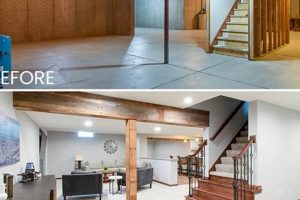
The concept involves transforming an unfinished lower level into a functional and aesthetically pleasing space through methods that prioritize affordability. This may include utilizing reclaimed materials, opting for DIY projects, and focusing on essential improvements rather than high-end finishes. For example, painting concrete floors instead of installing expensive flooring or using drop ceilings can significantly reduce expenses.
Finishing an underutilized area within a dwelling increases livable square footage, adding value to the property. Thoughtful execution of these economical strategies offers a viable path to expanding a home’s usability and enhancing its market value without incurring substantial debt. Historically, homeowners often sought alternative solutions to renovations during times of economic constraint, fostering innovation in budget-friendly approaches.
The following sections will detail specific strategies for achieving a functional and attractive finished lower level while maintaining budgetary control, covering topics such as planning, material selection, and DIY project options.
Strategies for Economical Lower Level Renovation
The following guidance provides insights into completing a basement finishing project while adhering to strict budgetary constraints.
Tip 1: Develop a Comprehensive Plan: Prior to commencing any physical work, create a detailed plan that includes precise measurements, a room layout, and a prioritized list of needs versus wants. This reduces the likelihood of costly changes mid-project.
Tip 2: Salvage and Repurpose Materials: Explore options for sourcing materials from architectural salvage yards, online marketplaces, or even leftover construction materials from other projects. Reusing items such as doors, windows, or lumber can significantly reduce material costs.
Tip 3: Prioritize Essential Upgrades: Focus initial efforts on addressing fundamental requirements such as insulation, moisture control, and electrical or plumbing work. These are crucial for a habitable and safe space.
Tip 4: Opt for DIY Solutions Where Possible: Undertake tasks such as painting, drywall installation, or basic carpentry if skills permit. Numerous online resources provide instruction and guidance, helping minimize labor expenses.
Tip 5: Select Cost-Effective Flooring Options: Rather than installing high-end flooring, consider alternatives like painting concrete floors, using interlocking rubber tiles, or installing inexpensive laminate flooring. These options offer both aesthetic appeal and durability at a lower price point.
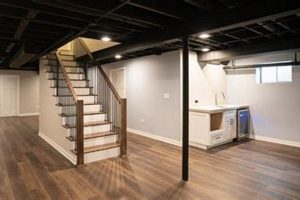
Tip 6: Utilize Open Ceilings: Rather than installing a traditional suspended ceiling, consider leaving the joists exposed and painting them a uniform color. This offers an industrial aesthetic while also saving on material and installation costs.
Tip 7: Efficient Lighting Strategies: Employ energy-efficient LED lighting to minimize long-term energy consumption. Incorporate natural light sources where feasible to reduce the need for artificial illumination during daylight hours.
Implementing these cost-conscious strategies provides a foundation for completing a lower level renovation project successfully while managing expenses effectively and improving the property’s value.
The next section will address maintaining a lower level, to protect your investment after the renovation is complete.
1. Strategic Planning

Strategic planning is fundamental to the success of any project, particularly when budgetary constraints are a primary concern. In the context of achieving a functional and aesthetically pleasing lower level within a defined financial framework, meticulous pre-planning is not merely advisable, but essential.
- Budget Allocation
A strategic plan necessitates a detailed budget allocation that differentiates between essential and discretionary expenses. This includes a thorough assessment of material costs, labor requirements, and potential unforeseen expenditures. An effective budget prioritizes core infrastructural improvements (e.g., moisture control, electrical work) before aesthetic enhancements, ensuring the long-term habitability and value of the space. Deviation from a carefully constructed budget can quickly escalate costs and compromise the overall project feasibility.
- Spatial Design Optimization
Strategic spatial design involves maximizing the utility of the available square footage while minimizing structural alterations. This requires a careful consideration of the intended function of the finished lower level (e.g., recreation room, home office, guest suite) and a layout that optimizes traffic flow and natural light. By thoughtfully planning the layout, unnecessary demolition or reconfiguration can be avoided, resulting in substantial cost savings. Consideration of existing plumbing and electrical infrastructure is paramount in minimizing costly rerouting or additions.
- Material Sourcing and Selection
Strategic planning incorporates the proactive identification of cost-effective material sourcing options. This may involve exploring architectural salvage yards, online marketplaces, or bulk purchasing options to secure materials at reduced prices. The selection of materials should prioritize durability and functionality over high-end aesthetics, ensuring a balance between cost and long-term performance. Furthermore, a well-defined material list minimizes waste and reduces the risk of overspending on unnecessary or unsuitable items.
- Phased Project Implementation
A strategic approach may involve implementing the finishing project in phases, focusing initially on essential tasks such as insulation and moisture control. This phased approach allows for better budget management and enables homeowners to address critical issues before proceeding with less urgent improvements. By breaking down the project into manageable stages, homeowners can also leverage DIY skills to complete certain tasks, reducing reliance on costly professional labor.
The interconnected nature of these facets underscores the critical role of strategic planning in realizing economical lower level finishing outcomes. The absence of a comprehensive plan increases the risk of budget overruns, design inefficiencies, and compromises in the quality and longevity of the finished space. Therefore, a diligent and well-executed strategic plan constitutes the cornerstone of any successful and affordable lower level transformation.
2. Material Repurposing

Material repurposing, the practice of utilizing existing materials in new ways, is a cornerstone strategy for achieving economical lower level renovations. This approach directly addresses the need for cost reduction without necessarily sacrificing aesthetic appeal or functionality.
- Cost Reduction Through Salvage
Salvaging materials from demolition sites, online marketplaces, or even one’s own property can drastically reduce material expenses. For example, reclaimed lumber can be used for framing, shelving, or decorative accents. Similarly, salvaged doors or windows can be integrated into the design, providing character and reducing the need for new purchases. This practice directly translates to significant cost savings when compared to purchasing new materials at retail prices.
- Environmental Sustainability
Repurposing materials contributes to environmental sustainability by reducing waste and minimizing the demand for new resources. Diverting materials from landfills reduces the environmental impact associated with manufacturing new products. In the context of completing a lower level, this aligns with a growing interest in eco-friendly renovation practices and can enhance the value proposition of the finished space.
- Unique Design Aesthetic
Repurposed materials often possess unique characteristics and historical significance that cannot be replicated with new products. This can add character and visual interest to the finished lower level, creating a distinctive aesthetic. For example, using reclaimed brick for an accent wall or repurposing vintage fixtures can infuse the space with personality and charm, elevating the overall design without significant financial investment.
- Reduced Labor Costs
In some cases, utilizing repurposed materials can lead to reduced labor costs. For example, using reclaimed pallets for wall paneling or furniture construction can be a relatively simple DIY project that requires minimal specialized skills. This can significantly lower the cost of labor compared to hiring professionals for more complex construction tasks.
The integration of material repurposing into the planning and execution phases of a lower level finishing project enables homeowners to achieve significant cost savings while embracing environmentally sustainable practices and cultivating a unique design aesthetic. These interconnected benefits underscore the value of material repurposing as a key strategy in the pursuit of affordable and aesthetically pleasing completed lower levels.
3. DIY Execution

DIY execution directly correlates with affordable lower level renovation, presenting a viable path to diminish overall project costs. The causal relationship is straightforward: increased self-performance reduces reliance on professional labor, which often constitutes a significant portion of the total budget. Successful implementation necessitates a realistic assessment of skills and capabilities. Projects requiring specialized knowledge, such as electrical work or structural modifications, should remain within the purview of licensed professionals. Conversely, tasks like painting, drywall installation (with proper preparation), and basic carpentry offer considerable opportunities for homeowner participation.
The importance of DIY execution manifests in quantifiable savings. For example, a homeowner installing their own insulation, following established guidelines and safety protocols, eliminates labor expenses that could amount to several thousand dollars, depending on the area’s size and complexity. Selecting cost-effective material options, such as unfaced fiberglass batts, further augments these savings. Similarly, installing laminate flooring, a relatively straightforward DIY project, can result in substantial cost reduction compared to professional installation of hardwood or tile. Numerous online resources and home improvement guides provide detailed instructions and support, empowering homeowners to confidently undertake such projects. Careful planning, meticulous execution, and adherence to safety standards are paramount to achieving successful outcomes.
A balanced approach, selectively applying DIY execution to suitable tasks, maximizes the potential for cost savings without compromising the structural integrity or safety of the finished lower level. This targeted strategy, coupled with thorough research and adherence to building codes, allows homeowners to achieve economical renovation outcomes while ensuring a habitable and aesthetically pleasing space. Strategic integration of DIY efforts becomes a significant driver of achieving lower level finishing goals within a limited budget, ultimately enhancing the property’s value and utility.
4. Efficient Layout

Efficient layout design is a critical element within economical lower level finishing strategies. A well-conceived layout minimizes material waste, reduces the need for extensive structural modifications, and optimizes the use of available space. The direct consequence of inefficient planning is often higher material costs, increased labor expenses, and a less functional finished space. Prioritizing layout efficiency during the initial planning stages contributes directly to the project’s overall cost-effectiveness. For example, a layout that minimizes the need for relocating plumbing or electrical systems results in significant savings. Similarly, designing the space to effectively utilize natural light reduces the reliance on artificial lighting, thereby lowering energy costs.
Practical application involves thoroughly assessing the existing structure and identifying opportunities to maximize the use of space without resorting to complex or expensive alterations. Consider a homeowner who intends to create a home office and recreational area. An efficient layout would strategically position these zones to minimize noise transmission and maximize natural light in the office area, while also ensuring sufficient space for recreational activities. This might involve using existing support columns as natural dividers or incorporating built-in storage solutions to optimize space utilization. Additionally, careful selection of furniture and fixtures that are appropriately scaled for the space contributes to a more functional and aesthetically pleasing environment without requiring structural changes.
In summary, efficient layout planning is not merely an aesthetic consideration; it is a fundamental cost-saving measure in lower level finishing. Minimizing structural alterations, maximizing the use of existing utilities, and optimizing space utilization through strategic design choices directly reduce material and labor costs. Furthermore, a well-designed layout enhances the functionality and livability of the finished space, thereby increasing its overall value. Overcoming the challenge of limited space requires careful planning and a willingness to explore creative design solutions that prioritize both efficiency and affordability.
5. Essential Upgrades

The relationship between “essential upgrades” and strategies for affordable lower level finishing is one of interdependence. Essential upgrades, encompassing structural integrity, moisture control, and adherence to building codes, constitute the bedrock upon which any successful and cost-effective project is built. Neglecting these core elements in pursuit of immediate cost savings invariably leads to higher long-term expenses associated with repairs, remediation, and potential safety hazards. As an example, skipping proper waterproofing measures can lead to mold growth, necessitating costly remediation and potential health risks.
Prioritizing essential upgrades within a limited budget requires careful resource allocation and strategic decision-making. This might involve postponing purely aesthetic enhancements in favor of addressing critical infrastructural needs. For example, selecting a more affordable flooring option to allocate funds towards improved insulation or upgrading outdated electrical wiring is a pragmatic approach. Compliance with building codes is non-negotiable, as deviations can result in fines, legal liabilities, and the potential for requiring costly rework. Securing the structural soundness of the lower level, through measures such as foundation repair or reinforcement, is paramount to ensuring the long-term stability and safety of the space. Another example, ensuring proper egress windows are installed for safety reasons, while using repurposed materials in other areas to save costs.
In conclusion, essential upgrades are not merely optional additions to affordable lower level finishing plans but rather integral components that ensure the project’s longevity, safety, and overall value. While pursuing cost-effective solutions, compromising on essential upgrades is counterproductive and ultimately more expensive in the long run. A balanced approach, prioritizing these core elements while making strategic choices in other areas, is the key to achieving a successful and sustainable lower level transformation within budgetary constraints. This strategy protects the investment and increases the home’s overall value.
Frequently Asked Questions
This section addresses common inquiries regarding strategies for achieving functional and aesthetically pleasing lower level finishes while maintaining strict budgetary control. The information provided aims to offer clarity and guidance for informed decision-making.
Question 1: What are the primary factors impacting the cost of finishing a lower level?
The principal determinants include the square footage of the space, the scope of required structural modifications, the selection of materials, and the degree to which the project relies on professional labor versus DIY execution. Pre-existing moisture problems or the need to reroute utilities can also significantly increase expenses.
Question 2: Is it possible to finish a lower level for under \$10,000?
While achievable, completing a comprehensive lower level transformation for under \$10,000 requires a highly strategic approach. This typically involves maximizing DIY labor, utilizing salvaged or repurposed materials, and focusing solely on essential upgrades. The feasibility is also dependent on the size of the space and the absence of pre-existing structural issues.
Question 3: What are the most cost-effective flooring options for a lower level?
Cost-effective options include painting concrete floors, installing interlocking rubber tiles, utilizing inexpensive laminate flooring, or opting for sheet vinyl. These materials offer varying degrees of durability and aesthetic appeal at a lower price point than hardwood or tile.
Question 4: How can moisture problems be addressed economically in a lower level environment?
Economical solutions involve addressing the source of moisture intrusion through exterior grading improvements, installing or repairing gutters and downspouts, and applying waterproof sealant to foundation walls. Interior measures include utilizing a dehumidifier and ensuring adequate ventilation. In severe cases, professional waterproofing may be necessary.
Question 5: What permits are typically required for finishing a lower level?
Permit requirements vary by municipality but generally include building permits for structural modifications, electrical permits for wiring work, and plumbing permits for any plumbing additions or alterations. Contacting the local building department is crucial for ensuring compliance with all applicable codes and regulations.
Question 6: Are open ceilings a viable alternative to traditional suspended ceilings in a lower level?
Open ceilings, where the joists are exposed and painted, represent a cost-effective alternative to traditional suspended ceilings. This approach reduces material and labor costs while offering an industrial aesthetic. Proper insulation and soundproofing measures should be considered to mitigate potential drawbacks related to noise transmission and energy efficiency.
Prioritizing strategic planning, resourcefulness, and a realistic assessment of skills are critical for achieving a successful and affordable lower level transformation. Maintaining a focus on essential upgrades and adhering to building codes ensures the long-term value and safety of the finished space.
The following section will delve into strategies for maintaining the value of a newly finished lower level over time, focusing on preventative measures and proactive maintenance practices.
Conclusion
The preceding examination of “low cost basement finishing ideas” underscores the importance of strategic planning, resourcefulness, and informed decision-making. Effective execution hinges on a balanced approach that prioritizes essential upgrades, maximizes DIY capabilities, and optimizes material utilization. Prudent homeowners recognize that sacrificing quality or safety in pursuit of immediate cost savings is a counterproductive strategy. Instead, they must focus on maximizing value through careful resource allocation and diligent project management.
Successfully implementing economical lower level finishing strategies is not merely about reducing expenses; it is about creating a functional, aesthetically pleasing, and safe living space that enhances the property’s overall value. Homeowners are therefore encouraged to thoroughly research their options, seek professional guidance when necessary, and adhere to all applicable building codes and regulations. The pursuit of affordable lower level transformation should be approached with diligence and a commitment to long-term value creation.
![Define: What Does Finished Basement Mean? [Explained] | Best Final Touch: Elevate Your Projects with Professional Finishing](https://bestfinaltouch.com/wp-content/uploads/2026/05/th-167-300x200.jpg "Define: What Does Finished Basement Mean? [Explained] Best Final Touch: Elevate Your Projects with Professional Finishing")