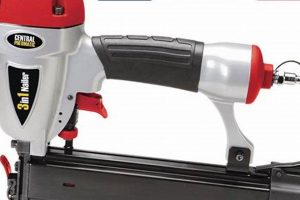
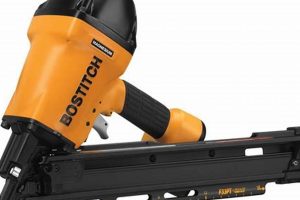
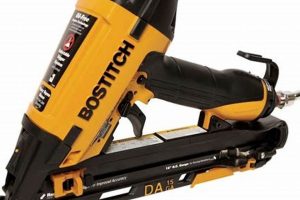
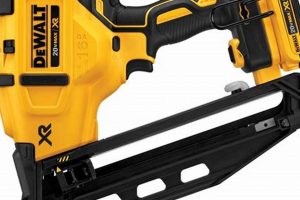
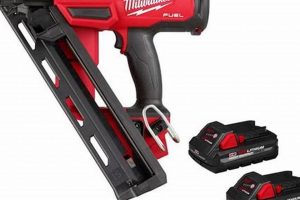
This pneumatic tool drives 15-gauge nails into wood for finishing applications. These tools are used in woodworking and construction for installing trim, molding, cabinetry, and other finish carpentry tasks. The gauge refers to the thickness of the nails it utilizes, a key factor in determining the size of the hole left behind and the holding power of the fastener.
The appeal of such tools lies in their speed and efficiency compared to manual hammering. They enable professionals and hobbyists alike to complete projects faster and with greater precision, reducing the likelihood of surface damage to the workpiece. Over time, these pneumatic fastening systems have improved in terms of power, ergonomics, and features, contributing to increased productivity and reduced user fatigue on job sites and in workshops.
The following sections will delve into the specific features, applications, considerations, and maintenance of pneumatic 15-gauge nailers for optimal performance and longevity. Understanding these aspects is critical for anyone seeking to leverage the benefits of this tool effectively.
Essential Usage Tips
Optimal performance and extended lifespan necessitate adhering to best practices for operating pneumatic 15-gauge nailers. The following guidelines promote safe and efficient utilization of this tool.
Tip 1: Select the Correct Nail Length: Prior to operation, ensure the nail length is appropriate for the workpiece thickness. Using nails that are too long can result in protruding nail points, while nails that are too short may compromise holding power.
Tip 2: Adjust Depth of Drive: Fine-tune the depth of drive setting to achieve a flush nail placement without damaging the surrounding material. Test the setting on a scrap piece of the workpiece to ensure optimal results.
Tip 3: Maintain Consistent Air Pressure: Adhere to the manufacturer’s recommended air pressure range. Inconsistent air pressure can lead to inconsistent nail depths and potential tool malfunctions.
Tip 4: Utilize Safety Glasses and Hearing Protection: Always wear appropriate personal protective equipment, including safety glasses and hearing protection, to mitigate the risk of injury from flying debris or loud noise.
Tip 5: Lubricate Regularly: Ensure proper lubrication by adding a few drops of pneumatic tool oil to the air inlet before each use. This practice extends the tool’s lifespan and maintains optimal performance.
Tip 6: Clean the Tool Regularly: Periodic cleaning removes dust and debris, preventing jams and ensuring smooth operation. Disconnect the air supply and wipe down the tool with a clean cloth after each use.
Tip 7: Store Properly: When not in use, store the tool in a dry, clean environment, away from extreme temperatures and humidity. This prevents corrosion and extends the tool’s lifespan.
Implementing these tips ensures efficient, safe, and reliable operation of a 15-gauge pneumatic nailer, contributing to professional-quality results and maximizing the tool’s service life.
The subsequent section will explore common troubleshooting scenarios and maintenance procedures, further enhancing the user’s understanding and mastery of this essential tool.
1. Fastener Compatibility

Fastener compatibility is a fundamental consideration when utilizing a 15-gauge finish nailer. This characteristic dictates the range of nail sizes and types that the tool can reliably drive, directly impacting its versatility and effectiveness in diverse finishing applications. Understanding these specifications is crucial for preventing tool malfunction and ensuring optimal performance.
- Nail Gauge and Length
A 15-gauge finish nailer is specifically designed for 15-gauge nails, which have a defined diameter. The tool will also have a specified range of acceptable nail lengths, typically expressed in inches. Exceeding these length limits can cause jams or damage the internal mechanisms. The gauge indicates the thickness of the nails it utilizes, a key factor in determining the size of the hole left behind and the holding power of the fastener.
- Nail Collation Type
Finish nailers use collated nails, meaning the nails are joined together in strips or coils for automatic feeding into the tool. Common collation types include angled strip, straight strip, and coil. A 15-gauge finish nailer is generally designed for a specific collation type. Attempting to use a different collation type can impede feeding and compromise tool function.
- Nail Head Style
Finish nails are available with various head styles, such as a straight finish, slight head, or brad head. While a 15-gauge nailer can accommodate minor variations, significant differences in head size or shape can affect the flushness of the nail placement and overall finish quality. It is important to ensure the head style used is compatible with the intended application and the tools specifications.
Selecting the correct fasteners is critical for proper functioning. When using a 15-gauge finish nailer, adherence to the specified nail gauge, length range, and collation type is essential for preventing damage and ensuring optimal performance. Failure to observe these fastener compatibility guidelines may lead to tool malfunctions, inconsistent nail placement, and compromised finish quality.
2. Air Pressure Regulation
Air pressure regulation is integral to the operation of a pneumatic 15-gauge finish nailer. The tool relies on compressed air to drive nails into the workpiece. Insufficient pressure results in incomplete nail penetration, leaving nail heads protruding above the surface. Conversely, excessive pressure can lead to overdriving nails, causing surface damage to the material. Both scenarios compromise the quality of the finished product.
Proper air pressure ensures consistent and repeatable results. For instance, installing trim requires nails to be flush with the surface for a seamless appearance. Accurate pressure regulation allows the user to achieve this outcome efficiently. A regulated air supply provides the necessary force to drive nails accurately without causing splitting or marring, especially in delicate wood species. A poorly regulated pressure system can result in wasted materials and increased labor costs due to rework.
In summary, maintaining correct air pressure is crucial for the reliable and effective use of a pneumatic 15-gauge finish nailer. It ensures that nails are driven to the appropriate depth, leading to a high-quality finish and reduced material waste. Understanding the correlation between air pressure and performance contributes significantly to the tool’s overall utility and the user’s ability to achieve professional results.
3. Depth Adjustment
Depth adjustment, an integral feature of many pneumatic 15-gauge finish nailers, significantly impacts the quality and precision of fastening applications. This functionality allows users to control the extent to which nails are driven into various materials, preventing damage to the workpiece and ensuring a professional finish.
- Mechanism and Operation
Depth adjustment mechanisms typically involve a dial or knob located on the nailer’s housing. Rotating this adjustment modifies the force applied to the nail, influencing its final position relative to the surface of the material. The process requires experimentation to ascertain the ideal setting for specific wood densities and nail lengths.
- Material Compatibility
Softer materials, such as pine or MDF, necessitate a shallower nail depth to avoid over-penetration and unsightly blemishes. Conversely, harder materials, like oak or maple, demand greater nail penetration to ensure secure fastening. The ability to adjust the depth accommodates this variation in material properties, preventing nail heads from protruding or sinking too deeply.
- Nail Length Considerations
The length of the nail being used also influences the appropriate depth setting. Longer nails generally require less driving force to achieve adequate penetration, while shorter nails may need a more aggressive setting. Selecting the correct depth in relation to nail length ensures a flush finish without compromising holding power.
- Impact on Finish Quality
Precise depth adjustment is crucial for achieving a professional-quality finish. Overdriving nails creates visible indentations that require filling and sanding, adding time and effort to the project. Underdriving leaves nail heads exposed, detracting from the appearance of the finished piece. Proper depth adjustment minimizes these imperfections, resulting in a clean, seamless look.
Depth adjustment enhances the versatility and performance of pneumatic 15-gauge finish nailers. Accurate calibration of this feature is essential for achieving optimal results across a range of materials and applications, leading to enhanced efficiency and a superior finished product.
4. Safety Mechanisms

The integration of safety mechanisms within a pneumatic 15-gauge finish nailer is not merely a regulatory compliance issue; it represents a critical aspect of user protection and responsible tool design. These mechanisms aim to prevent unintentional nail discharge, minimizing the risk of injury to the operator and bystanders. A primary example is the contact trip mechanism, which necessitates the tool’s nosepiece to be fully depressed against the workpiece before the trigger can activate the nail firing sequence. This prevents accidental firing if the trigger is inadvertently pulled while the tool is not in contact with a surface.
Variations in safety mechanism design exist across different brands and models. Some nailers incorporate sequential actuation, requiring the nosepiece to be depressed before the trigger is pulled, further reducing the risk of accidental discharge. Others feature a lock-out mechanism that disables the firing function when the nail magazine is empty, preventing dry firing and potential damage to the tool. The effectiveness of these mechanisms is contingent upon proper user training and adherence to safety guidelines. For instance, disabling or bypassing the contact trip mechanism significantly increases the risk of injury and negates the tool’s intended safety features.
Understanding the function and limitations of the safety mechanisms embedded within a pneumatic 15-gauge finish nailer is paramount for safe operation. The presence of these features does not eliminate the need for caution and adherence to established safety protocols. Rather, they serve as an additional layer of protection, intended to mitigate the inherent risks associated with high-speed pneumatic fastening. Proper maintenance and regular inspection of these mechanisms are essential to ensure their continued effectiveness. The failure to do so can compromise their functionality and increase the likelihood of accidents.
5. Maintenance Schedule

A consistent maintenance schedule is crucial for preserving the operational integrity and extending the lifespan of any pneumatic tool, including the Bostitch 15 ga finish nailer. Adherence to a structured maintenance plan mitigates the risk of premature wear, malfunctions, and performance degradation, ultimately optimizing the tool’s efficiency and return on investment.
- Daily Lubrication
The daily introduction of pneumatic tool oil into the air inlet is essential for lubricating internal components, reducing friction, and preventing corrosion. Consistent lubrication minimizes wear and tear on critical parts such as the piston, o-rings, and cylinder. Neglecting this task can lead to reduced power, erratic nail firing, and eventual component failure, necessitating costly repairs or replacement.
- Air Compressor Maintenance
The condition of the air compressor directly impacts the performance of the Bostitch 15 ga finish nailer. Draining moisture from the air compressor tank daily prevents the introduction of water into the tool, which can cause corrosion and impede its function. Regularly inspecting and replacing air filters ensures clean, dry air is supplied to the nailer, further minimizing the risk of internal damage.
- Inspection and Cleaning
Periodic inspection of the Bostitch 15 ga finish nailer is necessary to identify potential issues before they escalate. This includes checking for loose screws, damaged hoses, and worn O-rings. Cleaning the tool’s exterior and magazine removes accumulated dust and debris that can obstruct moving parts and compromise performance. A clean and well-maintained tool operates more efficiently and reliably.
- Component Replacement
Certain components of the Bostitch 15 ga finish nailer, such as O-rings, bumpers, and driver blades, are subject to wear and tear over time. Replacing these components according to the manufacturer’s recommendations ensures optimal tool performance and prevents more extensive damage. Ignoring these replacement schedules can lead to cascading failures and render the tool inoperable.
Implementing a comprehensive maintenance schedule, encompassing daily lubrication, air compressor upkeep, regular inspection and cleaning, and timely component replacement, is paramount for maximizing the service life and ensuring the consistent, reliable operation of the Bostitch 15 ga finish nailer. This proactive approach minimizes downtime, reduces repair costs, and ultimately contributes to increased productivity and project efficiency.
6. Application Versatility
Application versatility, regarding a Bostitch 15 ga finish nailer, refers to the breadth of tasks for which the tool can be effectively employed. This versatility contributes significantly to its utility across various woodworking and construction scenarios.
- Trim and Molding Installation
The 15-gauge nailer is frequently utilized for installing trim and molding. Its ability to drive nails with minimal surface impact makes it suitable for delicate decorative elements. Examples include baseboards, crown molding, door and window casings, where a clean, professional finish is paramount.
- Cabinetry Assembly
Cabinet construction benefits from the nailer’s precision and holding power. It is used to assemble cabinet frames, attach face frames, and secure drawer boxes. The 15-gauge nail provides sufficient strength for these joints while leaving a relatively small nail hole that is easily concealed.
- Furniture Construction and Repair
The tool is adaptable to furniture projects, both in new construction and repair work. It can be used to attach decorative elements, reinforce joints, and assemble components. Its maneuverability and controlled firing contribute to precise placement in intricate furniture designs.
- Paneling and Wainscoting
Installing paneling and wainscoting represents another application. The nailer provides a fast and efficient method for securing panels to wall studs or furring strips. Its adjustable depth control minimizes surface damage, ensuring a smooth and aesthetically pleasing result.
The Bostitch 15 ga finish nailer’s adaptability to these diverse applications stems from its balance of power, precision, and manageable size. This versatility positions it as a valuable tool for both professional contractors and serious hobbyists engaged in a range of finishing tasks.
Frequently Asked Questions About Bostitch 15 Ga Finish Nailers
This section addresses common inquiries and misconceptions regarding the operation, maintenance, and application of Bostitch 15 ga finish nailers. These answers aim to provide clarity and enhance understanding for users seeking to maximize the tool’s performance and longevity.
Question 1: What is the optimal air pressure for a Bostitch 15 ga finish nailer?
The recommended air pressure typically ranges from 70 to 120 PSI. The specific pressure should be adjusted based on the hardness of the material being fastened. Consult the tool’s manual for precise recommendations.
Question 2: How frequently should a Bostitch 15 ga finish nailer be lubricated?
Daily lubrication is recommended. Add a few drops of pneumatic tool oil to the air inlet before each use to ensure optimal performance and prevent internal corrosion.
Question 3: What types of nails are compatible with a Bostitch 15 ga finish nailer?
This nailer is designed for 15-gauge finish nails with a specific collation type, typically angled or straight strip. The nail length range is typically between 1-1/4 inches and 2-1/2 inches, depending on the model. Refer to the tool’s manual for exact specifications.
Question 4: What safety precautions should be observed when operating a Bostitch 15 ga finish nailer?
Always wear safety glasses and hearing protection. Ensure the contact trip mechanism is functioning correctly and never disable it. Keep hands and body parts away from the firing zone. Disconnect the air supply when performing maintenance or changing nails.
Question 5: What causes a Bostitch 15 ga finish nailer to jam?
Common causes of jamming include incorrect nail size or type, insufficient air pressure, a dirty or damaged magazine, and worn internal components. Regular cleaning and lubrication can help prevent jams.
Question 6: How can the depth of drive be adjusted on a Bostitch 15 ga finish nailer?
Most models feature a depth adjustment dial or knob located on the tool’s housing. Rotating this adjustment modifies the force applied to the nail, influencing its final position relative to the surface of the material.
Understanding these frequently asked questions contributes to the safe and effective use of the Bostitch 15 ga finish nailer, maximizing its utility and minimizing the risk of operational issues.
The subsequent section will provide a comparative analysis of different Bostitch 15 ga finish nailer models, highlighting their key features and specifications.
Conclusion
This document has explored the multifaceted aspects of the bostitch 15 ga finish nailer, encompassing its functionality, maintenance, safety considerations, and application versatility. Understanding the tool’s capabilities and limitations is essential for optimizing its performance and ensuring user safety. Attention to proper maintenance procedures, including regular lubrication and inspection, is paramount for prolonging its lifespan and preventing costly repairs.
The information presented herein serves as a foundation for informed decision-making regarding the bostitch 15 ga finish nailer. It is incumbent upon users to adhere to established safety protocols and manufacturer guidelines to mitigate the inherent risks associated with pneumatic tools. Continued diligence in these areas will contribute to efficient and safe operation across a spectrum of woodworking and construction applications.