



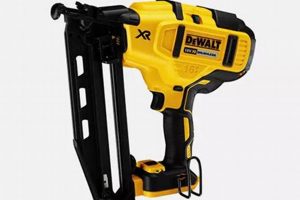
An 18V cordless nail gun, designed for driving finish nails into wood, allows for precise and efficient fastening in woodworking and carpentry applications. These tools eliminate the need for hoses and compressors, providing increased mobility on job sites. A typical application involves attaching trim, molding, or cabinetry components.
Cordless nailers enhance productivity by removing the constraints of pneumatic systems. The portability and ease of use translate to faster project completion times and reduced setup requirements. Historically, pneumatic nailers were the standard, but battery technology advancements have made cordless options a viable and increasingly preferred alternative, offering a balance of power and convenience.
The following sections will delve into specific features, performance metrics, maintenance considerations, and user safety aspects relevant to selecting and operating this type of tool effectively.
Operating Tips for Cordless Finish Nailers
Optimizing performance and longevity requires adherence to proper usage guidelines. The following tips provide essential guidance for maximizing the effectiveness and lifespan of the equipment.
Tip 1: Battery Maintenance: Consistent charging practices are vital. Allow the battery to fully charge before use, and avoid leaving it on the charger for extended periods after it reaches full capacity. This prevents premature battery degradation and ensures optimal power output.
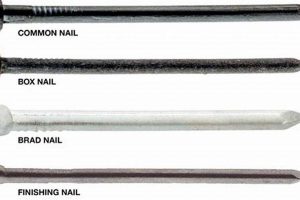
Tip 2: Nail Selection: Using the correct nail size and type is crucial. Refer to the manufacturers specifications for recommended nail gauges and lengths suitable for the specific material being fastened. Using incorrect nails can lead to jams or damage to the tool.
Tip 3: Depth Adjustment: The depth of drive setting must be appropriately adjusted. Perform test drives on a piece of scrap material of similar thickness to the work piece. Adjust the depth until the nail is driven flush with the surface without damaging the surrounding material.
Tip 4: Proper Tool Angle: Maintaining the correct angle is essential for accurate nail placement. Ensure the tool’s nose is flush against the work surface and that the nailer is held perpendicular to the material being fastened. Inconsistent angles can result in angled nail drives or missed targets.
Tip 5: Clearing Jams: Should a nail jam occur, immediately disconnect the battery. Consult the manufacturer’s manual for instructions on clearing jams safely. Avoid using excessive force to remove jammed nails, as this can damage the tool’s internal components.
Tip 6: Regular Cleaning: Regularly clean the tool’s nose and nail magazine to remove dust and debris. A clean tool operates more efficiently and reduces the risk of jams. Use a soft brush or compressed air to remove particulate matter.
Tip 7: Storage Practices: Store the equipment in a dry, climate-controlled environment. Extreme temperatures and humidity can adversely affect battery performance and the tool’s internal mechanisms. A dedicated tool case is recommended for optimal protection.
Adhering to these guidelines will contribute to extended tool life, reduced maintenance, and improved overall operational efficiency.
The subsequent section will address troubleshooting common operational issues and identify potential solutions.
1. Battery Voltage

Battery voltage is a primary determinant of the performance characteristics exhibited by an 18V cordless finish nailer. In this tool, the 18V rating signifies the electrical potential supplied to the motor, directly influencing its torque output and the force with which it can drive nails. Higher voltage enables the tool to consistently and reliably embed nails into hardwoods and dense materials, minimizing the occurrence of jams and misfires.
The 18V battery platforms significance is amplified by the absence of a pneumatic system. With no compressed air to rely on, the battery becomes the sole power source. Consequently, the battery’s capacity, measured in amp-hours (Ah), dictates the tool’s runtime. For instance, a higher Ah rating will permit the user to drive a greater quantity of nails before requiring a recharge. Real-world examples demonstrate the direct correlation between voltage and productivity: a contractor using an 18V model can complete larger trim projects without interruption, whereas a lower-voltage model may necessitate frequent recharging, impeding workflow.
Understanding the role of battery voltage is crucial for informed decision-making. It impacts the tool’s versatility, its ability to handle demanding applications, and the overall efficiency of the work process. A well-maintained, adequately charged 18V battery ensures the finish nailer operates at its peak potential, delivering consistent and dependable results. Conversely, neglecting battery maintenance or opting for a lower-voltage equivalent can compromise performance and increase the likelihood of operational challenges.
2. Nail Gauge

Nail gauge, a critical specification, directly dictates the types of finishing tasks suitable for an 18V cordless finish nailer. This measurement, expressed numerically, indicates the diameter of the nail shank. A higher gauge number corresponds to a thinner nail. For example, an 18-gauge nail is thinner than a 15-gauge nail. The 18V power source of the nailer is optimized for driving specific gauge ranges, ensuring consistent and reliable performance. Using nails outside of this range can cause jams, damage to the tool, or inadequate fastening. The selection of nail gauge is thus governed by the density of the material being fastened and the desired level of aesthetic finish.
The practical implications of nail gauge selection are significant. For delicate trim work, an 18-gauge nail minimizes splitting and leaves a less visible hole, reducing the need for extensive filling and sanding. Conversely, for heavier trim or applications requiring increased holding power, a 15- or 16-gauge nail may be preferable, despite the larger entry point. Failure to consider these factors can result in compromised structural integrity or an unacceptable aesthetic outcome. Contractors, for instance, rely on the correct gauge selection to ensure cabinets are securely fastened and trim is seamlessly integrated.
Understanding the relationship between nail gauge and the nailer’s power capabilities is essential for maximizing efficiency and achieving professional results. Improper gauge selection can lead to tool malfunction and project failure. Therefore, users should consult the manufacturer’s specifications to determine the appropriate nail gauge range for the specific 18V finish nailer model and the intended application, ensuring a balance between fastening strength and aesthetic considerations.
3. Firing Mode

Firing mode is a critical setting on an 18V cordless finish nailer, influencing both the speed and precision of nail deployment. Selecting the appropriate firing mode is contingent upon the specific task at hand, balancing efficiency and accuracy.
- Sequential Firing
Sequential firing requires the user to depress the safety contact tip against the work surface and then pull the trigger for each nail. This mode prioritizes accuracy and is essential for intricate work or when precise nail placement is paramount. A cabinet maker, for instance, would likely use sequential firing when attaching delicate trim pieces to ensure accurate placement and prevent damage to surrounding materials. This mode minimizes the risk of accidental double firing and enhances control.
- Contact Actuation (Bump Firing)
Contact actuation, often referred to as bump firing, allows for rapid nail deployment. With the trigger depressed, nails are fired each time the safety contact tip is bumped against the work surface. This mode significantly increases speed and productivity, making it suitable for repetitive tasks such as installing baseboards or crown molding across extended runs. However, contact actuation demands greater user control and awareness to prevent misfires or inaccurate nail placement.
- Mode Selection Mechanisms
18V finish nailers typically employ a selector switch or dial to toggle between firing modes. This mechanism allows the user to quickly adapt the tool to the specific requirements of the task. A robust and easily accessible selector ensures seamless transitions between modes, preventing delays and enhancing workflow efficiency. The design of the selector should minimize the risk of accidental mode changes during operation.
- Safety Implications
The choice of firing mode has direct safety implications. Sequential firing, while slower, reduces the likelihood of unintended nail discharge, making it a safer option for novice users or in situations where precision is critical. Conversely, contact actuation requires heightened vigilance to prevent accidental firing and potential injury. Proper training and adherence to safety guidelines are essential when using contact actuation mode.
In conclusion, the firing mode selection on an 18V cordless finish nailer significantly impacts its operational efficiency and safety profile. Understanding the nuances of each mode and selecting the appropriate setting for the task at hand is crucial for achieving optimal results and minimizing the risk of accidents. The interplay between firing mode, user skill, and task requirements determines the overall effectiveness of the tool.
4. Depth Adjustment

Depth adjustment is an integral feature of an 18V cordless finish nailer, directly impacting the quality and consistency of fastening. This mechanism allows the user to regulate the extent to which nails are driven into the work surface, preventing over-driving or under-driving and ensuring a flush, professional finish. The effectiveness of this feature is critical for achieving optimal results across various materials and applications.
- Mechanism and Operation
Depth adjustment systems on these tools typically employ a dial or a tool-free mechanism located near the nailer’s nose. Rotation or manipulation of this control adjusts the internal driving mechanism, altering the distance the nail penetrates the material. Users often test the setting on scrap material to ensure proper depth before commencing the primary task. An easily accessible and responsive adjustment mechanism is desirable for efficiency.
- Material Compatibility
Different materials necessitate varying depth settings. Softwoods, such as pine, require less driving force than hardwoods, such as oak or maple. Adjusting the depth to match the material prevents the nail from sinking too deeply into the softwood, marring the surface, or from protruding from the hardwood, creating an unsafe or aesthetically unappealing result. The capacity to fine-tune the depth setting increases the nailer’s versatility.
- Avoiding Damage and Ensuring Secure Fastening
Proper depth adjustment prevents damage to the workpiece and ensures secure fastening. Over-driving can cause surface blemishes, such as dimpling or splitting, while under-driving can compromise the holding power of the nail. Precise depth control is especially important when working with delicate trim or when fastening near edges to prevent splitting or tear-out. The depth adjustment feature plays a pivotal role in achieving the desired balance between aesthetics and structural integrity.
- Impact on Tool Performance and Longevity
Incorrect depth settings can place undue stress on the nailer’s internal components. Attempting to drive nails too deeply into hard materials can strain the motor and firing mechanism, potentially leading to premature wear or failure. Conversely, operating with insufficient depth can result in jams and misfires, also impacting the tool’s performance. Proper depth adjustment not only enhances the quality of the work but also contributes to the tool’s longevity and reliability.
These interconnected aspects of depth adjustment are vital for maximizing the utility and lifespan of an 18V cordless finish nailer. The precise calibration, ease of use, and material compatibility of this feature contribute directly to the user’s ability to achieve consistent, high-quality results across a range of finishing applications. A well-designed depth adjustment system is a hallmark of a professional-grade tool.
5. Air Compressor-Free

The “Air Compressor-Free” characteristic of the Ridgid 18V finish nailer is a fundamental design element defining its operational paradigm and user experience. This feature denotes the nailer’s independence from external pneumatic power sources, eliminating the need for an air compressor, hoses, and associated fittings. The absence of these components directly affects the tool’s portability, setup time, and overall convenience, transforming the workflow for various applications. The immediate effect is enhanced mobility, allowing the user to navigate job sites without the restriction of air hoses. Setup time is significantly reduced, eliminating the steps involved in compressor preparation, hose connection, and pressure calibration. An example is a trim carpenter working in confined spaces or on multiple floors, where the hassle of moving a compressor and managing hoses would severely impede progress.
The “Air Compressor-Free” design choice affects several critical performance aspects. The Ridgid 18V nailer relies exclusively on its battery and internal mechanism to generate the force required for driving nails. This necessitates a robust motor and efficient energy management to deliver adequate power and runtime comparable to pneumatic nailers. Real-world scenarios highlight the advantages: a remodeling project requiring intermittent nail gun use benefits from the nailer’s readiness, as it can be deployed instantly without waiting for a compressor to build pressure. Furthermore, the elimination of the compressor noise is a significant benefit in noise-sensitive environments, such as occupied residences or commercial spaces.
In summary, the “Air Compressor-Free” aspect of the Ridgid 18V finish nailer represents a strategic engineering decision that prioritizes user mobility, convenience, and reduced setup time. While this design necessitates a reliance on battery technology for power, the benefits of enhanced portability and reduced noise pollution often outweigh the need for frequent battery changes. This understanding of the interplay between operational characteristics and design choices is critical for informed tool selection and optimized workflow in various finishing applications.
6. Brushless Motor

The integration of a brushless motor within the Ridgid 18V finish nailer represents a significant engineering decision with cascading effects on tool performance, longevity, and user experience. Unlike traditional brushed motors, a brushless motor eliminates physical contact between brushes and the commutator, reducing friction and wear. This fundamental difference directly translates to increased motor efficiency. More of the battery’s energy is converted into mechanical power, resulting in extended runtime and improved nail-driving capability. A contractor using the nailer for an all-day trim installation will experience fewer battery changes compared to a similar nailer equipped with a brushed motor.
The absence of brushes also reduces maintenance requirements. Brushed motors necessitate periodic brush replacement, a task that introduces downtime and costs. By eliminating this component, the Ridgid 18V finish nailer minimizes maintenance needs, increasing its operational lifespan and reducing the total cost of ownership. Moreover, brushless motors generate less heat during operation. The reduced heat buildup contributes to increased tool durability and reduces the risk of overheating during prolonged use. This is particularly relevant in demanding environments or during high-volume nailing applications. A real-world example can be seen in a construction setting, where the tool is employed continuously throughout the day in warmer weather, minimizing the risk of overheating and extending the tools useful lifespan.
In summary, the inclusion of a brushless motor in the Ridgid 18V finish nailer is a critical factor contributing to its overall performance and value proposition. The increased efficiency, reduced maintenance, and enhanced durability directly benefit the user by providing a more reliable, longer-lasting tool with improved operational characteristics. These factors are critical considerations for professionals and serious DIYers seeking a high-performance cordless finish nailer. The absence of brushes significantly mitigates maintenance needs and contributes to the tool’s reliability in demanding working conditions.
7. Magazine Capacity
Magazine capacity, a key specification of any nailer, defines the number of nails the Ridgid 18V finish nailer can hold before requiring reloading. This aspect significantly impacts workflow efficiency and overall productivity on the job site. A larger capacity reduces downtime associated with frequent reloads, while a smaller capacity may necessitate more frequent interruptions.
- Nail Strip Compatibility
The Ridgid 18V finish nailer’s magazine is designed to accommodate specific nail strip configurations, typically straight or angled. The design ensures proper feeding and minimizes jams. Incorrect nail strip compatibility will impair performance. For instance, using a nail strip with an incompatible angle can cause misfires or damage the tool’s internal feeding mechanism.
- Impact on Productivity
Higher magazine capacity directly correlates with increased productivity in high-volume applications. Consider a trim carpenter installing baseboards across a large room. A larger magazine allows for longer stretches of uninterrupted work, reducing the number of reload cycles and saving valuable time. Conversely, smaller projects may not be significantly affected by magazine capacity.
- Magazine Design and Loading
The design of the magazine influences the ease and speed of reloading. Some Ridgid 18V finish nailer models feature a side-loading or rear-loading magazine, each with its own advantages. A side-loading magazine may allow for faster reloads in tight spaces, while a rear-loading magazine could offer a simpler overall design. The effectiveness of the magazine design depends on the user’s preferences and the specific work environment.
- Weight and Balance Considerations
Magazine capacity can indirectly affect the tool’s weight and balance. A larger magazine, fully loaded, adds weight to the nailer, potentially increasing user fatigue over extended periods. Manufacturers consider this factor when designing the tool, striving to achieve a balance between magazine capacity and overall ergonomics. The user should assess the trade-offs between capacity and comfort based on their individual needs and work patterns.
The magazine capacity of the Ridgid 18V finish nailer is not an isolated feature but rather an integral component that influences the tool’s performance, user experience, and suitability for various applications. Understanding the interplay between magazine capacity, nail strip compatibility, and ergonomic considerations is crucial for maximizing the tool’s effectiveness and minimizing downtime on the job site. Therefore, users should consider these factors when selecting a nailer to align with their project requirements and work habits.
Frequently Asked Questions
This section addresses common inquiries regarding the operation, maintenance, and performance characteristics of the Ridgid 18V cordless finish nailer, offering clear and concise answers to assist users in maximizing its utility.
Question 1: What is the recommended nail size range for the Ridgid 18V finish nailer?
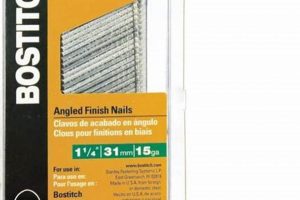
The Ridgid 18V finish nailer typically accepts 15- or 16-gauge finish nails, ranging in length from 1-1/4 inches to 2-1/2 inches. Consult the tool’s manual for precise specifications and compatibility.
Question 2: How frequently should the battery be charged for optimal performance?
The battery should be charged after each use or when a noticeable decrease in power is observed. Allowing the battery to completely deplete before charging can shorten its overall lifespan. Refer to the battery manufacturer’s recommendations for specific charging guidelines.
Question 3: What are the common causes of nail jams and how can they be resolved?
Nail jams can occur due to incorrect nail size, deformed nail strips, or debris accumulation in the nail magazine. Resolving jams typically involves disconnecting the battery, opening the nail magazine, removing the jammed nails, and cleaning the magazine. Refer to the tool manual for detailed instructions and safety precautions.
Question 4: Is the Ridgid 18V finish nailer suitable for both indoor and outdoor applications?
The Ridgid 18V finish nailer can be used in both indoor and outdoor environments, provided it is protected from excessive moisture and extreme temperatures. Prolonged exposure to harsh weather conditions can damage the tool’s electrical components and reduce its operational lifespan.
Question 5: How does the brushless motor contribute to the tool’s overall performance?
The brushless motor enhances the tool’s performance by increasing its efficiency, extending battery runtime, and reducing maintenance requirements. Brushless motors generate less heat and friction, leading to longer tool life and improved power output.
Question 6: What safety precautions should be observed when operating the Ridgid 18V finish nailer?
Safety precautions include wearing appropriate eye protection, keeping hands clear of the nail discharge area, and ensuring the workpiece is securely clamped. Always disconnect the battery before performing maintenance or clearing jams. Consult the tool manual for a comprehensive list of safety guidelines.
This FAQ section provides essential information for users of the Ridgid 18V finish nailer. Adhering to these guidelines promotes safe and efficient operation, extending the tool’s lifespan and ensuring optimal performance.
The following section will focus on advanced troubleshooting techniques and repair considerations.
Ridgid Finish Nailer 18V
The preceding analysis elucidates the multifaceted attributes of the ridgid finish nailer 18v, encompassing its operational characteristics, technological innovations, and practical implications. The discussion spanned battery voltage, nail gauge compatibility, firing mode options, depth adjustment precision, the benefits of an air compressor-free design, the efficiency of a brushless motor, and the impact of magazine capacity. Each element contributes to the tool’s overall performance and suitability for diverse finishing applications.
The selection and diligent maintenance of a ridgid finish nailer 18v should be predicated on a comprehensive understanding of its specifications and intended use. A discerning evaluation of these factors will ensure optimal performance, prolong tool lifespan, and ultimately, yield superior results in any finishing endeavor. Continued advancements in cordless technology promise to further enhance the capabilities and versatility of such tools in the future.
![Nailing It: What Size Finish Nails for Baseboard? [Guide] | Best Final Touch: Elevate Your Projects with Professional Finishing](https://bestfinaltouch.com/wp-content/uploads/2026/04/th-510-300x200.jpg "Nailing It: What Size Finish Nails for Baseboard? [Guide] Best Final Touch: Elevate Your Projects with Professional Finishing")