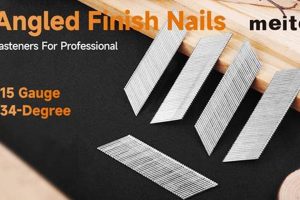
These fasteners are specifically designed for exterior applications where a nearly invisible head is desired, providing a clean and professional look. They are commonly used in attaching trim, molding, and siding to exterior surfaces. The small head minimizes the visibility of the fastener, contributing to a more aesthetically pleasing result. An example includes securing cedar shingles to a home’s facade, where the minimal nail head blends seamlessly with the wood grain.
The utilization of these specialized fasteners is critical in preventing corrosion and ensuring the longevity of exterior projects. Their construction typically involves materials resistant to weather exposure, such as stainless steel or galvanized steel. Historically, less durable fasteners led to premature degradation of exterior elements, necessitating frequent repairs. Employing the correct type ensures structural integrity and reduces long-term maintenance costs. This choice contributes to a more durable and visually appealing final product.
Understanding the different types, appropriate applications, installation techniques, and maintenance considerations associated with these specialized fasteners is essential for achieving optimal results in exterior construction and renovation projects. Selecting the appropriate gauge, length, and material is crucial for both aesthetic appeal and structural performance. The subsequent sections will delve into these critical aspects, providing a detailed guide to their proper use and benefits.
Exterior Finish Nail Application Tips
These tips provide essential guidance for achieving optimal results when utilizing fasteners designed for exterior finish work. Proper application is crucial for both aesthetic appeal and structural integrity.
Tip 1: Select the Appropriate Material: Choose stainless steel or hot-dipped galvanized options for superior corrosion resistance in outdoor environments. This prevents rust and ensures long-term performance.
Tip 2: Use the Correct Nail Length: The fastener should penetrate at least two-thirds of the material being fastened to provide adequate holding power. Calculate the necessary length based on the thickness of the materials.
Tip 3: Employ a Nail Gun with Depth Adjustment: Utilize a nail gun that allows for precise depth control to avoid over-driving the nail and damaging the surrounding wood. Test the setting on a scrap piece before beginning the project.
Tip 4: Consider Pre-Drilling Hardwoods: When working with hardwoods, pre-drilling pilot holes prevents splitting and ensures proper nail placement. This is especially important near edges and corners.
Tip 5: Maintain Consistent Spacing: Maintain uniform spacing between each fastener to achieve a professional look and even distribution of the load. Use a measuring tape or guide to ensure consistent placement.
Tip 6: Inspect for Damage Before Installation: Before use, examine each fastener for any signs of damage or bending. Discard any damaged to prevent application failures.
Tip 7: Stagger Nail Placement: When installing siding or trim boards, stagger nail placement to prevent the wood from splitting along a single line.
Adhering to these guidelines will maximize the effectiveness of specialized fasteners and ensure a durable, aesthetically pleasing, and long-lasting exterior finish.
The following sections will further explore best practices for specific applications and maintenance considerations, contributing to comprehensive understanding and skillful execution.
1. Corrosion Resistance

Corrosion resistance is a paramount consideration when selecting fasteners for exterior applications. The prolonged exposure to environmental elements necessitates the use of materials that can withstand degradation and maintain structural integrity. The performance and longevity of exterior finish work are directly proportional to the fastener’s ability to resist corrosion.
- Material Composition:
The base material significantly impacts resistance. Stainless steel, particularly grades 304 and 316, offers superior protection against rust and oxidation in damp or coastal environments. Hot-dipped galvanized steel provides a protective zinc coating that acts as a barrier against corrosive elements, albeit with a lifespan dependent on the coating thickness. Carbon steel fasteners without adequate protective coatings are unsuitable due to their susceptibility to rapid corrosion.
- Environmental Factors:
The surrounding environment influences the rate of corrosion. Saltwater environments, industrial areas with high levels of airborne pollutants, and regions with acid rain accelerate the corrosion process. Fasteners used in these areas require a higher level of protection, such as stainless steel, to ensure long-term performance. Consider the specific environmental conditions of the installation site when selecting the appropriate material.
- Protective Coatings:
Coatings enhance corrosion resistance. Electro-galvanization offers a thin layer of zinc protection suitable for less demanding exterior applications. Hot-dipped galvanization provides a thicker, more durable coating. Powder coating can add an additional layer of protection and aesthetic appeal, but its primary function is not corrosion resistance. The integrity of the coating is crucial; scratches or chips can compromise its protective capabilities.
- Electrochemical Compatibility:
Dissimilar metals in contact can create galvanic corrosion. Avoid using fasteners made of one metal to attach materials of a different, less noble metal, especially in wet environments. For example, using aluminum fasteners with copper flashing can lead to accelerated corrosion of the aluminum. Selecting compatible materials minimizes the risk of galvanic corrosion and extends the lifespan of the connection.
The careful selection of corrosion-resistant fasteners is a critical step in ensuring the long-term durability and aesthetic appeal of exterior finish work. Failure to consider these factors can result in premature failure, costly repairs, and compromised structural integrity. The initial investment in appropriate, corrosion-resistant fasteners is offset by reduced maintenance and extended service life of the finished project.
2. Head Design

The design of the head is a defining characteristic of fasteners employed in exterior finish work, directly influencing both aesthetic outcome and functional performance. Careful consideration of head type is essential for achieving the desired appearance and ensuring a secure, durable attachment.
- Countersunk Head
This design allows the fastener head to sit flush with or slightly below the surface of the material, creating a smooth, nearly invisible finish. Countersunk heads are preferred when a seamless look is paramount, such as in trim work or siding installation. The tapered shape of the head requires pre-drilling or countersinking the material to prevent damage and ensure proper seating. Example includes wood siding. A smooth surface free from protrusions is achieved.
- Brad Head
Featuring a very small, almost negligible head, brad fasteners offer the least visible option for attaching exterior finish components. Their slender profile minimizes the likelihood of splitting delicate materials, making them suitable for thin trim or molding. The limited head size, however, reduces their holding power, necessitating the use of adhesive or additional fasteners for secure attachment in demanding applications. An example can include applying thin decorative moulding to an exterior door frame.
- Cup Head
These provide a slightly larger bearing surface than countersunk or brad styles, offering increased holding power, particularly in softer materials. While more visible than countersunk varieties, cup heads can still be painted or filled to blend with the surrounding finish. Often used in situations where a balance between holding power and aesthetics is required, such as attaching fascia boards. Cup heads ensure a firm grip without compromising the overall appearance significantly.
- Duplex Head
These are designed with two heads on top of the shank, which will not embed in the material, and it can be easily removed after usage.
The selection of the appropriate head design hinges on the specific requirements of the exterior finish project. Balancing the need for minimal visibility with the demands of structural integrity ensures a successful and aesthetically pleasing outcome. The consideration of these factors, coupled with the correct material choice, ensures the fasteners used contribute positively to the overall appearance and longevity of the exterior finish.
3. Material Composition

The material composition of fasteners fundamentally dictates their suitability for exterior applications, influencing both longevity and performance. The selection of appropriate materials for exterior finish nails is not merely a matter of preference but a crucial engineering decision impacting structural integrity and aesthetic appeal. Inadequate material selection inevitably leads to corrosion, weakening of the joint, and ultimately, premature failure of the exterior finish. For instance, using standard carbon steel nails in a coastal environment results in rapid rusting, staining adjacent materials, and compromising the fastening. The choice, therefore, is a direct cause-and-effect relationship between material and performance.
Exterior finish nails must withstand constant exposure to moisture, temperature fluctuations, and ultraviolet radiation. Stainless steel alloys, such as 304 and 316, provide superior corrosion resistance, making them ideal for harsh environments. Hot-dipped galvanized steel offers a cost-effective alternative, providing a protective zinc coating. However, the thickness of the galvanization is critical; thicker coatings provide extended protection. Copper nails offer aesthetic appeal and inherent corrosion resistance but are typically more expensive and softer than steel. Real-world examples include the use of stainless steel nails in cedar siding installations near the ocean, ensuring decades of reliable performance. In contrast, standard galvanized nails might suffice in drier, less corrosive inland environments.
Understanding the material properties of exterior finish nails is essential for professionals and homeowners alike. Challenges arise when budget constraints lead to the selection of less durable materials, or when the specific environmental conditions are not adequately considered. Ultimately, the investment in high-quality, corrosion-resistant fasteners translates into long-term cost savings by minimizing repairs and replacements. A well-informed choice regarding material composition guarantees not only a visually appealing finish but also a structurally sound and durable exterior that withstands the test of time.
4. Gauge Selection

Gauge selection, referring to the diameter of the fastener’s shank, directly affects the performance and suitability of exterior finish nails. A higher gauge number indicates a thinner nail, while a lower number denotes a thicker nail. The choice of gauge is critical for balancing holding power with the risk of splitting the wood, a common concern in finish applications. Selecting an inappropriate gauge can lead to compromised structural integrity or unsightly damage to the finished surface. For example, using a thick, low-gauge nail on delicate trim can result in splitting and cracking, negating the aesthetic benefits of the finish work.
The appropriate gauge depends on several factors, including the type of wood, the thickness of the materials being joined, and the anticipated load. Softer woods generally require a higher gauge to prevent splitting, while hardwoods can accommodate lower gauges for increased holding power. When attaching thin trim, a higher gauge nail is essential to minimize visible damage. In applications where increased strength is paramount, such as attaching siding, a lower gauge may be necessary. Practical application involves evaluating the specific requirements of each project, considering the material properties and desired outcome to determine the optimal gauge. This consideration extends to the tool being used, as some nail guns are designed for specific gauge ranges.
In summary, proper gauge selection is a critical component of successful exterior finish work. Careful consideration of material properties, load requirements, and desired aesthetics is essential for making an informed decision. Challenges arise when attempting to balance conflicting needs, such as maximizing holding power while minimizing visible damage. However, a thorough understanding of gauge principles allows for effective problem-solving and ensures a durable, aesthetically pleasing, and structurally sound exterior finish.
5. Length Appropriateness

Length appropriateness in exterior finish nail selection is a critical determinant of both structural integrity and aesthetic outcome. The fastener must penetrate sufficiently into the substrate to ensure a secure hold, yet must not extend excessively, potentially compromising the appearance or creating safety hazards. Incorrect length selection directly impacts the longevity and effectiveness of the finish work. A nail that is too short will lack adequate holding power, leading to premature failure of the attachment, while a nail that is too long may protrude through the back of the material, posing a risk of injury or detracting from the visual appeal. For instance, attaching cedar shingles requires a fastener long enough to penetrate the sheathing behind the furring strips, ensuring the shingle remains securely in place. A nail that is too short will allow the shingle to loosen, while an excessively long nail might puncture the vapor barrier.
The recommended length is typically calculated based on the combined thickness of the materials being joined, with an additional allowance for adequate penetration into the underlying structural member. A general rule of thumb suggests that the nail should penetrate at least two-thirds of its length into the receiving material. Factors such as wood density and moisture content also influence the required length. Softer woods necessitate longer nails to achieve sufficient grip, while denser woods may allow for shorter fasteners. In damp environments, the risk of wood expansion and contraction necessitates careful consideration to prevent nail pull-out. Another example lies in attaching exterior trim around windows; a length providing a secure bond to the framing, without piercing the interior wall, is essential for preventing drafts and moisture intrusion.
In summary, length appropriateness is an indispensable component of successful exterior finish nail application. Achieving the correct balance between penetration and protrusion requires a thorough understanding of material properties, environmental factors, and intended application. Overlooking this crucial aspect can result in both structural deficiencies and aesthetic flaws, undermining the overall quality and durability of the exterior finish. Addressing this challenge requires careful measurement, calculation, and a commitment to selecting fasteners that are specifically tailored to the demands of the project, which promotes high-quality, long-lasting results.
6. Application Technique

The application technique directly influences the performance and longevity of exterior finish projects involving specialized fasteners. Improper application diminishes the inherent benefits of even the highest quality materials. Fasteners driven at an angle compromise holding power, potentially leading to the loosening of trim or siding. Overdriving can damage the surrounding wood, creating unsightly blemishes and weakening the joint. Conversely, underdriving leaves the fastener head protruding, presenting both an aesthetic flaw and a potential hazard. The correct application method is, therefore, a prerequisite for achieving the desired aesthetic and structural outcome.
Effective application begins with proper tool selection and setup. Nail guns used for exterior finish work require precise depth adjustment to ensure consistent and accurate fastener placement. Pre-drilling pilot holes, especially in hardwoods or near edges, minimizes the risk of splitting. The angle of the nail gun should be perpendicular to the surface to ensure straight driving and maximize holding strength. Furthermore, the spacing between fasteners should be consistent and appropriate for the material being attached, preventing warping or uneven pressure distribution. An example is when attaching cedar siding. The nail gun setting must be calibrated to avoid over-driving, which can crack the delicate cedar. Proper spacing, typically dictated by building codes, ensures uniform support and prevents cupping or buckling of the siding over time. The adherence to these techniques will preserve the finish appearance.
In summary, the application technique is an inseparable element of exterior finish projects that utilize these specific fasteners. Mastery of this technique necessitates careful attention to detail, precise tool control, and a thorough understanding of material properties. Challenges often arise when working with irregular surfaces or in confined spaces, demanding adaptability and skill. By prioritizing correct application methods, professionals and homeowners alike can ensure durable, aesthetically pleasing, and structurally sound exterior finishes that withstand environmental demands, adding lasting value to the structure.
Frequently Asked Questions
The following questions address common concerns and misconceptions regarding these specialized fasteners, providing clarification and guidance for their appropriate use.
Question 1: What distinguishes these fasteners from standard nails?
These fasteners are designed with specific features, such as smaller head sizes and corrosion-resistant materials, tailored for exterior finish applications where aesthetics and durability are paramount. Standard nails often lack these characteristics.
Question 2: Which materials are best suited for these types of exterior nails?
Stainless steel is preferred for superior corrosion resistance, particularly in coastal environments. Hot-dipped galvanized steel offers a cost-effective alternative for less demanding applications. Material selection depends on the level of environmental exposure.
Question 3: What is the optimal length selection process to avoid damage?
Fastener length should be calculated based on the combined thickness of the materials being joined, ensuring adequate penetration into the substrate without protruding through the back. A general guideline is a minimum penetration of two-thirds of the fastener’s length into the receiving material.
Question 4: Is pre-drilling necessary when using these specialized fasteners?
Pre-drilling pilot holes is advisable, particularly when working with hardwoods or near the edges of materials, to minimize the risk of splitting and ensure proper fastener placement.
Question 5: How does gauge selection impact the final result?
The gauge, or diameter, influences holding power and the likelihood of splitting. Thinner gauges are suitable for delicate trim to prevent damage, while thicker gauges provide increased strength for more demanding applications.
Question 6: What are the essential steps for ensuring proper installation technique?
Proper tool selection, precise depth adjustment on nail guns, perpendicular driving angles, and consistent spacing are crucial. These steps ensure secure attachment, minimize damage, and contribute to a professional finish.
Understanding these key aspects will enable informed decision-making and successful application of these specialized fasteners in various exterior finish projects.
The next section will delve into advanced techniques and troubleshooting tips for challenging applications.
Exterior Finish Nails
This exploration has highlighted the multifaceted nature of “exterior finish nails,” underscoring their vital role in achieving durable and aesthetically pleasing exterior finishes. Critical aspects such as material composition, corrosion resistance, head design, gauge selection, length appropriateness, and application technique demand careful consideration to ensure optimal performance. The consequences of neglecting these factors range from premature failure and costly repairs to compromised structural integrity and aesthetic flaws.
The informed selection and proper application of “exterior finish nails” represents an investment in the long-term integrity and value of any structure. Continued adherence to best practices and a thorough understanding of evolving materials and techniques remain essential for professionals and homeowners alike. Prioritizing quality and precision in fastener selection and application will contribute significantly to the creation of durable, visually appealing, and structurally sound exteriors that withstand the test of time.

![Nailing It: What Size Finish Nails for Baseboard? [Guide] | Best Final Touch: Elevate Your Projects with Professional Finishing](https://bestfinaltouch.com/wp-content/uploads/2026/04/th-510-300x200.jpg "Nailing It: What Size Finish Nails for Baseboard? [Guide] Best Final Touch: Elevate Your Projects with Professional Finishing")