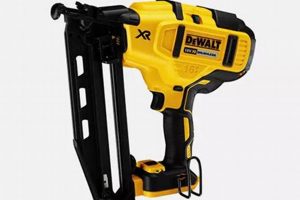
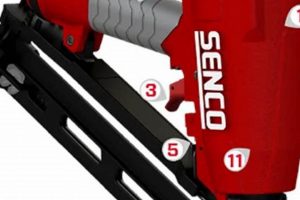
This tool is a specialized type of nail gun designed for driving fasteners into wood with precision and minimal surface damage. Its primary function is to securely attach trim, molding, and other fine woodworking elements in a way that leaves a clean, professional appearance. For example, it is often utilized in installing baseboards, door frames, and decorative panels where the aesthetic outcome is crucial.
The significance of this fastening device lies in its ability to provide a strong, nearly invisible hold. This is particularly advantageous in projects where exposed nail heads would detract from the overall look. Historically, finish carpenters relied on hand-nailing, which was time-consuming and often resulted in inconsistent results. The introduction of pneumatic and cordless versions dramatically improved efficiency and precision, leading to widespread adoption in both professional and DIY settings. The inherent rigidity of this tool is essential for accurate nail placement.
The following sections will delve into the key features of this tool, including its various power sources, nail gauge options, and adjustment settings. Furthermore, we will examine the best practices for utilizing this tool in a variety of applications and discuss factors to consider when selecting the right one for a specific project.
Operation Tips for Enhanced Results
Proper utilization of this tool is essential for achieving optimal results and minimizing potential issues. The following guidelines offer insights into achieving consistent and professional outcomes.
Tip 1: Verify the air pressure or battery charge prior to commencing work. Inconsistent power delivery can lead to improperly set nails. Ensure the tool operates within the manufacturer-specified range.
Tip 2: Select the appropriate nail gauge and length for the material being fastened. Using nails that are too short will compromise holding power, while nails that are too long may protrude through the back of the workpiece.
Tip 3: Adjust the depth-of-drive setting to control the countersinking depth. Experiment with scrap material to achieve the desired finish without damaging the surrounding surface.
Tip 4: Maintain a consistent angle when applying the tool to the work surface. An inconsistent angle can result in angled nail entry, which detracts from the finished appearance and reduces holding strength.
Tip 5: Apply firm, even pressure to the tool during operation. Excessive pressure can cause the tool to sink too deeply into the material, while insufficient pressure may result in nails that are not fully driven.
Tip 6: Implement proper safety precautions, including wearing safety glasses and ear protection. Unintentional nail discharge can cause serious injury.
Tip 7: Clean and lubricate the tool regularly according to the manufacturer’s instructions. Proper maintenance extends the life of the tool and ensures reliable performance.
Adhering to these operational tips can significantly improve the quality and efficiency of projects involving the use of this specialized nail gun. This proactive approach reduces the likelihood of errors and ensures consistent, professional results.
The subsequent sections will further explore the features and usage of this tool, providing a comprehensive overview for both novice and experienced users.
1. Precision
Precision is paramount when utilizing a specialized nail gun for finish work. The quality of the final product hinges directly on the accuracy and consistency with which fasteners are placed. A rigid finish nailer embodies and facilitates this precision through specific design elements and operational characteristics.
- Consistent Nail Placement
The driving mechanism of a high-quality tool of this type is engineered to deliver nails to the same depth and angle repeatedly. This consistency minimizes the risk of protruding nail heads or uneven surfaces, which would necessitate time-consuming corrections and compromise the aesthetic integrity of the finished piece. For example, in crown molding installation, a series of consistently placed nails ensures a seamless and professional appearance.
- Depth-of-Drive Adjustment
The ability to fine-tune the depth to which nails are driven is critical for achieving a flush or slightly countersunk finish without damaging the surrounding material. This adjustment allows the user to adapt the tool to different wood types and thicknesses, ensuring that the fasteners are securely embedded without compromising the structural integrity or aesthetic appearance of the work. An inadequate depth-of-drive setting could lead to nail heads protruding above the surface, detracting from the finish and potentially posing a hazard.
- Nosepiece Design and Visibility
The design of the nosepiece plays a crucial role in precision. A narrow, precisely engineered nosepiece allows for accurate nail placement in tight corners and intricate details. Improved visibility around the point of contact enables the user to see exactly where the nail will be driven, minimizing the chance of errors. Clear sightlines are especially important when working with pre-finished materials, where even slight misplacements can result in visible damage or imperfections.
- Minimized Recoil and Vibration
Excessive recoil and vibration can negatively impact the accuracy of nail placement. A well-designed tool incorporates features to minimize these factors, allowing for more controlled and precise operation. Reduced vibration not only improves accuracy but also reduces user fatigue, enabling sustained precision over extended periods. The design and function of this tool type minimizes recoil and vibration.
In essence, precision in a finish nailer translates directly to a superior quality of work and reduced rework. The features described above highlight the integral role of this attribute in ensuring that the tool performs as expected, delivering professional results with minimal effort and maximum accuracy.
2. Power
Power, in the context of a specialized nail gun, directly influences its capacity to consistently and effectively drive fasteners into diverse materials. Sufficient power ensures nails are set to the appropriate depth, resulting in secure and aesthetically pleasing finishes. The availability and delivery of power are critical determinants of the tool’s performance and suitability for various tasks.
- Pneumatic Power and Consistency
Pneumatic models rely on compressed air to deliver consistent power. This consistency is crucial for repetitive tasks where uniform nail depth is required. For example, when installing baseboards along a long wall, a pneumatic nailer will maintain consistent driving force, minimizing the need for manual adjustments and ensuring a professional-grade finish. Any variance in the air compressor’s output can directly impact the nailer’s performance, underscoring the importance of a stable air supply.
- Cordless Power and Portability
Cordless models, typically powered by rechargeable batteries, offer enhanced portability and freedom of movement. However, their power output can vary depending on battery charge level and the tool’s internal mechanism. A fully charged battery delivers optimal power, enabling the nailer to drive fasteners with force comparable to that of pneumatic models. As the battery depletes, a noticeable reduction in power may occur, potentially leading to incomplete nail sets. Therefore, battery management is paramount for maintaining consistent performance.
- Adjustable Power Settings and Material Compatibility
Many specialized nail guns feature adjustable power settings that allow the user to tailor the driving force to the material being fastened. Softer woods, such as pine, require less power than hardwoods, such as oak. The ability to adjust power settings prevents overdriving or underdriving nails, which can compromise the integrity of the finish. Incorrect power settings can also lead to splitting or cracking of the workpiece, necessitating costly repairs or replacements.
- Impulse Power and Driving Mechanism
Some cordless finish nailers utilize an impulse power system, which employs a small explosion of gas to drive the nail. This system delivers a powerful and consistent driving force, even in dense materials. The design of the driving mechanism is also critical. A well-engineered mechanism ensures efficient transfer of power from the power source to the nail, minimizing energy loss and maximizing driving force. Over time, the mechanism may require maintenance to ensure that it continues to deliver optimal performance.
The power source, whether pneumatic, cordless, or impulse-driven, is an integral factor in the effectiveness of this specialized nail gun. Consistent power delivery, adjustable power settings, and an efficient driving mechanism are essential for achieving professional-grade finishes across a variety of materials. A clear understanding of these power dynamics enables informed tool selection and optimal utilization.
3. Gauge

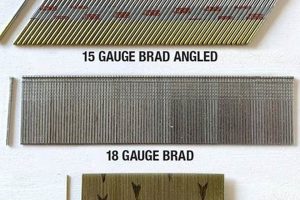
In the context of specialized nail guns for finishing, “gauge” denotes the diameter of the nails that the tool is designed to use. The selection of the appropriate gauge is a critical determinant of the fastener’s holding power and its visibility in the finished product. Therefore, understanding the interplay between nail gauge and the specific application is essential for achieving optimal results.
- 15-Gauge Nails: Sturdiness and Holding Power
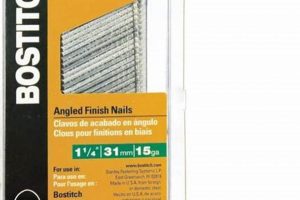
15-gauge nails possess a larger diameter, providing superior holding power. They are often preferred for heavier trim work, such as crown molding or baseboards, where a secure and lasting connection is paramount. However, their larger size also means they leave a more noticeable hole, necessitating filling and touch-up work. For example, securing substantial baseboards to wall studs typically benefits from the increased holding power of 15-gauge nails, minimizing the risk of loosening over time.
- 16-Gauge Nails: Versatility and Balance
16-gauge nails represent a balance between holding power and minimal visibility. They are versatile enough for a wide range of applications, including door and window casings, chair rails, and decorative molding. The slightly smaller diameter compared to 15-gauge nails reduces the size of the entry hole, making them a suitable choice for projects where aesthetics are a primary concern. Their widespread use reflects their ability to provide adequate holding power while minimizing the need for extensive finishing work.
- 18-Gauge Nails (Brad Nails): Minimal Visibility and Delicate Work
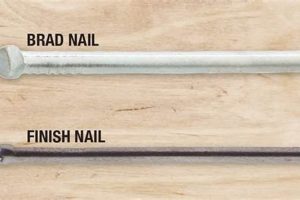
18-gauge nails, also known as brad nails, have the smallest diameter and are designed for delicate trim work where minimal visibility is essential. They are often used for attaching lightweight molding, picture frames, and intricate decorative elements. While they offer minimal holding power compared to larger gauges, their near-invisibility makes them ideal for projects where aesthetics outweigh structural considerations. For example, attaching delicate beadboard trim often warrants the use of 18-gauge nails to preserve the visual appeal of the finished product.
- Considerations for Nail Type and Material
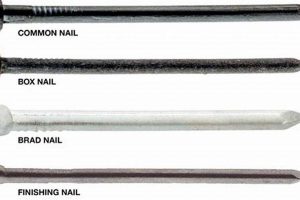
Beyond gauge, the type of nail (e.g., straight, angled, headless) and the material (e.g., steel, stainless steel) further influence the selection process. Angled nails allow access to tight corners, while stainless steel nails provide corrosion resistance in humid environments. Selecting the appropriate nail type and material, in conjunction with the correct gauge, ensures optimal performance and longevity of the finished product. Ignoring these factors can lead to premature failure or aesthetic compromises.
The choice of nail gauge for this specialized nail gun directly impacts the strength and appearance of the finished product. Understanding the characteristics of each gauge and its suitability for different applications is crucial for achieving professional-grade results. Careful consideration of these factors minimizes the risk of selecting an inappropriate nail gauge, ensuring both structural integrity and aesthetic appeal.
4. Material

The term “Material” as it pertains to a specialized nail gun encompasses several critical aspects: the composition of the tool itself, the type of fasteners it utilizes, and, perhaps most significantly, the substrate into which the fasteners are driven. The selection of this fastening tool must be considered in direct relation to the material being worked with. Failure to do so can result in compromised structural integrity, aesthetic imperfections, or even damage to the tool itself. For instance, attempting to drive fasteners designed for softwood into dense hardwood can cause the tool to jam or even fracture. The tool material itself must be robust enough to withstand repeated use and the pressures generated during operation; lower-quality tools may exhibit premature wear or component failure.
The interaction between fastener material and substrate material is equally crucial. Using steel nails in treated lumber, for example, can lead to galvanic corrosion, weakening the joint over time. Conversely, stainless steel fasteners are often recommended for outdoor applications or when working with corrosive materials, but their increased cost must be weighed against the benefits they provide. The density and hardness of the target material will also dictate the appropriate nail length and gauge. Softer materials require longer nails to achieve adequate holding power, while denser materials may necessitate pre-drilling to prevent splitting. Selecting the correct combination of tool, fastener, and substrate material is a prerequisite for achieving a secure and lasting connection.
In summary, the relationship between this tool and the materials involved is multifaceted and essential to successful project outcomes. Understanding the physical properties of both the tool’s components and the materials being joined enables informed decision-making, mitigating potential risks and ensuring both structural soundness and aesthetic appeal. Neglecting these material considerations can lead to significant rework, compromised safety, and ultimately, a failure to achieve the desired finish quality.
5. Angle

The term “angle” assumes significant importance in the context of specialized nail guns, influencing both accessibility and the finished aesthetic of woodworking projects. The tool’s design, particularly the magazine and nosepiece orientation, dictates the angles at which fasteners can be driven. These angular considerations are essential for optimizing the tool’s functionality in diverse applications.
- Straight vs. Angled Magazines
The configuration of the nail magazine directly impacts the tool’s maneuverability in confined spaces. Straight magazines feed nails in a linear fashion, while angled magazines allow the tool to reach into corners and tight spots that would otherwise be inaccessible. For example, installing crown molding flush against a ceiling often necessitates an angled magazine to avoid obstructions. The choice between straight and angled configurations depends on the specific demands of the project.
- Nosepiece Angle and Surface Contact
The angle of the nosepiece, which comes into contact with the work surface, influences the precision of nail placement. A precisely angled nosepiece facilitates consistent nail entry at the desired inclination. This is particularly crucial when attaching trim pieces at specific angles, ensuring a flush and seamless fit. Inaccurate nosepiece angles can lead to misaligned fasteners and compromised structural integrity.
- Applications in Mitered Joints
Mitered joints, frequently encountered in picture frames and decorative moldings, demand precise angular alignment. A specialized nail gun with an angled magazine or adjustable nosepiece enhances the ability to secure mitered joints accurately. The tool’s angular capabilities allow for fasteners to be driven perpendicular to the joint surface, maximizing holding power and minimizing visible imperfections. This is very important in woodworking projects.
- Tool Ergonomics and Operator Positioning
The tool’s overall design, including the handle angle and weight distribution, affects operator comfort and control. An ergonomically designed tool with a comfortable handle angle reduces fatigue and enhances precision, particularly during prolonged use. The angle at which the operator holds the tool also influences the accuracy of nail placement. Proper posture and grip are essential for maintaining control and achieving consistent results.
The interplay between the tool’s design angles and the specific demands of the woodworking project is fundamental to achieving professional-grade results. The ability to access tight spaces, maintain precise surface contact, and accurately align fasteners hinges on a thorough understanding of these angular considerations. Careful selection of a specialized nail gun that caters to the angular requirements of the intended applications is essential for maximizing efficiency and minimizing errors.
6. Fastening
Fastening, in the context of woodworking and construction, represents the process of securely joining two or more materials. The effectiveness of this process directly influences the structural integrity and aesthetic quality of the finished product. Specialized nail guns designed for finish work are instrumental in achieving precise and durable fastening in a variety of applications.
- Secure Material Joining
This tool ensures a robust connection between materials, such as trim, molding, and cabinetry components. It drives fasteners with sufficient force to create a lasting bond, resisting separation due to stress or environmental factors. For example, when installing door casings, the tool’s fastening capability prevents warping or loosening over time, ensuring the door remains securely framed.
- Concealed Fastener Placement
A key advantage of this device is its ability to drive fasteners in a manner that minimizes their visibility. The small-gauge nails leave a minimal entry point, allowing for seamless finishing and a professional aesthetic. This is particularly valuable in applications where exposed nail heads would detract from the overall appearance, such as installing decorative molding or paneling.
- Efficient Project Completion
Compared to manual nailing methods, this specific tool significantly accelerates the fastening process. Its rapid-fire action allows for quick and efficient completion of large-scale projects, reducing labor costs and project timelines. In mass production settings, such as cabinet manufacturing, the tool’s speed and efficiency translate directly into increased output and profitability.
- Versatile Application Across Materials
This device accommodates a range of nail sizes and types, enabling its use with diverse materials, including softwoods, hardwoods, and composite materials. Adjustable depth settings further enhance its versatility, allowing for precise fastening without damaging the surrounding material. This adaptability makes it suitable for a wide array of projects, from delicate trim work to more substantial structural applications.
The facets described above are integral to the functionality of this particular tool. The interplay of these components determines its capacity to achieve secure, aesthetically pleasing, and efficient fastening in a variety of woodworking and construction applications. Ultimately, the tool serves as a critical link in achieving successful project outcomes.
Frequently Asked Questions About Rigid Finish Nailers
This section addresses common inquiries regarding this specific type of nail gun, providing detailed explanations and practical insights for users and potential buyers.
Question 1: What distinguishes a rigid finish nailer from other types of nail guns?
This nailer is specifically designed for precise fastening of trim, molding, and other fine woodworking elements. Its defining characteristics include a smaller gauge nail, typically 15-18 gauge, and the ability to drive nails flush or slightly countersunk without damaging the surrounding material. Other nail guns, such as framing nailers, utilize larger gauge nails and are designed for structural applications.
Question 2: What are the primary power source options for this type of nailer?
This tool is typically available in two power source configurations: pneumatic and cordless. Pneumatic models require a compressed air source, providing consistent power and often lighter tool weight. Cordless models, powered by rechargeable batteries, offer greater portability and freedom of movement. Both options have advantages and disadvantages depending on the specific application and user preferences.
Question 3: What nail gauge is most appropriate for specific finish carpentry tasks?
The appropriate nail gauge depends on the material being fastened and the desired holding power. 15-gauge nails offer the greatest holding power and are suitable for heavier trim work. 16-gauge nails strike a balance between holding power and minimal visibility, making them versatile for various applications. 18-gauge nails (brad nails) are ideal for delicate trim work where minimal visibility is paramount.
Question 4: How is the depth of drive adjusted on a rigid finish nailer, and why is it important?
The depth of drive is typically adjusted via a dial or knob on the tool. This adjustment controls the depth to which the nail is driven into the material. Accurate depth-of-drive settings are crucial for achieving a flush or slightly countersunk finish without damaging the surrounding surface. Inaccurate settings can lead to protruding nail heads or overdriving, both of which compromise the finished appearance.
Question 5: What safety precautions should be observed when operating a rigid finish nailer?
Always wear safety glasses to protect the eyes from flying debris and potential nail ricochets. Ear protection is also recommended to mitigate the noise generated during operation. Ensure the tool is properly maintained and inspected regularly. Never point the tool at oneself or others. Disconnect the air supply or remove the battery when not in use or performing maintenance.
Question 6: How can the lifespan of a rigid finish nailer be extended?
Regular maintenance is essential for extending the lifespan of this tool. This includes cleaning the tool after each use, lubricating moving parts as specified by the manufacturer, and inspecting for wear or damage. For pneumatic models, ensure the air compressor is properly maintained and the air supply is clean and dry. Store the tool in a dry, protected environment when not in use.
The information provided in this FAQ section offers a comprehensive overview of key aspects related to this nailer, enabling informed decisions and optimized usage.
The following sections will further explore advanced techniques and troubleshooting tips for maximizing the tool’s performance and longevity.
Concluding Remarks on the Specialized Nail Gun
This exposition has thoroughly examined this fastening tool, delineating its defining characteristics, operational considerations, and multifaceted applications. The discussion encompassed power sources, gauge options, angular considerations, material compatibility, and essential safety protocols. Understanding these elements is paramount for achieving professional-grade results and maximizing the tool’s lifespan.
The effective implementation of this tool hinges on informed decision-making and adherence to best practices. As technology evolves, further advancements in its design and functionality are anticipated. Continued diligence in proper usage and maintenance will ensure its continued value in woodworking and construction trades. Careful application and maintenance of the rigid finish nailer is crucial.