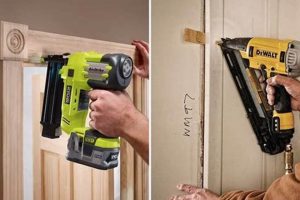
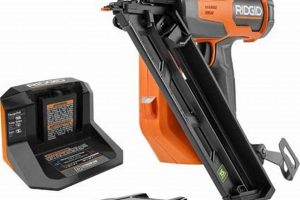
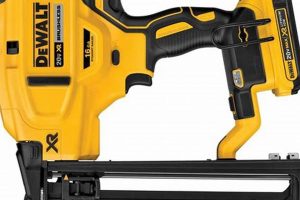
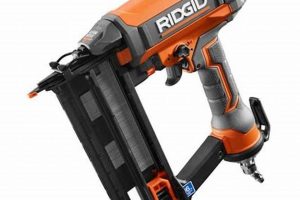
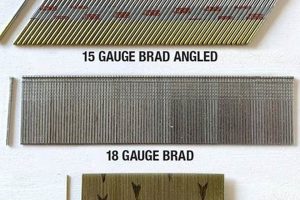
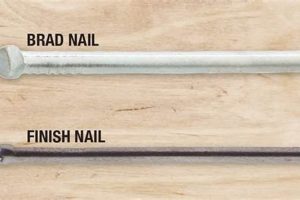
These slender fasteners, typically crafted from steel or a similar metal, measure two inches in length and feature a small, often countersunk, head. Their primary application lies in woodworking and carpentry projects where concealment is paramount. For example, they are commonly employed in attaching trim, molding, and delicate wood components where a minimal visual impact is desired.
The value of these fasteners stems from their ability to provide a secure hold without significantly detracting from the aesthetic appeal of the finished product. Their small head size allows them to be easily concealed with wood filler or paint, resulting in a seamless and professional look. Historically, their use dates back to times when meticulous craftsmanship and attention to detail were highly valued, reflecting a commitment to quality and visual refinement in woodworking projects.
Understanding the specific attributes of these fasteners is essential for selecting the appropriate type for various woodworking applications. Factors such as shank type, material composition, and coating options will influence their performance and suitability for particular projects. The subsequent sections will delve into these critical aspects, providing a comprehensive guide to their effective utilization.
Essential Usage Guidelines
The following recommendations are designed to maximize the effectiveness and longevity of joinery utilizing fasteners of this size and type.
Tip 1: Material Compatibility: Always select a fastener composed of a material appropriate for the wood being used. Employ stainless steel options in environments prone to moisture or when working with naturally acidic wood species to prevent corrosion and discoloration.
Tip 2: Pilot Hole Pre-Drilling: When working with hardwoods or brittle materials, pre-drilling pilot holes, slightly smaller in diameter than the shank, is crucial. This practice minimizes the risk of splitting the wood and ensures accurate placement.
Tip 3: Setting the Head: Employ a nail set to drive the head slightly below the surface of the wood without damaging the surrounding area. This facilitates seamless concealment with wood filler or patching compounds.
Tip 4: Proper Nail Spacing: Maintain consistent spacing between fasteners to ensure even distribution of holding force and prevent localized stress concentrations that could lead to joint failure. Adhere to industry-standard spacing guidelines for the specific application.
Tip 5: Avoiding End Grain Nailing: Nailing directly into end grain provides significantly reduced holding power. Whenever possible, employ alternative fastening methods or reinforce end grain joints with glue and mechanical fasteners that engage face grain.
Tip 6: Consider Coating Options: Evaluate coating options, such as a thin layer of adhesive, to increase holding power in certain applications. These specialty coated options often create stronger bonds as the wood fibers engage with the coating and the fastener.
Employing these techniques will lead to improved joint integrity, increased project longevity, and superior aesthetic results.
The concluding section will summarize the key points discussed and provide guidance for selecting the optimal size and type for specific woodworking endeavors.
1. Gauge and head style

The gauge and head style of these fasteners are critical determinants of their suitability for specific woodworking and carpentry applications. These attributes influence both the structural integrity and the aesthetic outcome of the finished piece, necessitating careful consideration during material selection.
- Gauge and Splitting Potential
The gauge refers to the diameter of the nail shank. A higher gauge indicates a thinner nail. When utilizing these fasteners, a smaller gauge reduces the risk of splitting delicate wood, especially near edges or in brittle species. Conversely, a lower gauge offers increased shear strength but elevates the likelihood of causing wood damage. Selecting an appropriate gauge balances the need for structural support with the preservation of the material’s integrity.
- Head Style and Concealment
The head style dictates how easily the fastener can be concealed after installation. These nails typically feature small, nearly headless designs or slightly countersunk heads. This allows for easy filling with wood putty or patching compounds, creating a seamless surface. The choice of head style directly impacts the final aesthetic appearance of the woodworking project.
- Head Size and Holding Power
A smaller head size is ideal for minimizing visibility, yet a larger head offers greater surface area for resisting pull-through. In applications where structural integrity is paramount, a slightly larger head, even if it requires more extensive concealment, might be preferred. A balance must be struck between aesthetic considerations and structural requirements.
- Compatibility with Nail Guns
If utilizing a pneumatic nail gun for installation, the gauge and head style must be compatible with the tool’s specifications. Mismatched fasteners can lead to jamming or improper setting, compromising the quality of the work. Consulting the nail gun manufacturer’s recommendations ensures appropriate fastener selection for efficient and reliable installation.
The interplay between gauge and head style significantly affects the application of these fasteners. By carefully considering these factors, carpenters and woodworkers can achieve both structural soundness and a visually appealing result, enhancing the overall quality and durability of their projects. For example, a fine-gauge nail with a brad head is suitable for attaching delicate trim, while a slightly thicker gauge with a countersunk head is better for securing sturdier moldings.
2. Material Composition

The material composition of these fasteners directly influences their strength, durability, and suitability for various applications. The selection of an appropriate material is paramount to ensure structural integrity and prevent premature failure or aesthetic degradation of the finished product.
- Steel Alloys and Strength
Steel alloys, commonly used in manufacturing these fasteners, offer varying degrees of hardness and tensile strength. Carbon steel, for example, provides high strength for general woodworking applications. However, without proper surface treatment, it is susceptible to corrosion. The choice of steel alloy must align with the anticipated stress and environmental conditions of the project.
- Stainless Steel and Corrosion Resistance
Stainless steel variants offer superior corrosion resistance, making them ideal for outdoor applications or environments with high humidity. The chromium content in stainless steel forms a passive layer that protects the underlying metal from oxidation. While generally more expensive than carbon steel, stainless steel fasteners significantly extend the lifespan of projects exposed to moisture or corrosive elements.
- Coatings and Surface Treatments
Various coatings and surface treatments can enhance the performance of steel fasteners. Galvanization, through electroplating or hot-dipping, provides a protective zinc layer that inhibits corrosion. Phosphate coatings offer improved paint adhesion, while polymer coatings add lubricity and prevent staining of certain wood species. The selection of a coating should correspond to the specific environmental conditions and aesthetic requirements of the project.
- Brass and Aesthetic Considerations
Brass fasteners, though less common due to their lower strength compared to steel, are utilized in applications where aesthetic appearance is paramount. Brass offers excellent corrosion resistance and a warm, golden hue that complements certain wood species. They are often employed in fine woodworking and antique restoration projects where visual appeal outweighs structural demands.
The material composition of these slender fasteners is a crucial factor that impacts their overall performance. Whether selecting carbon steel for its strength, stainless steel for its corrosion resistance, or brass for its aesthetic qualities, understanding the properties of each material ensures the appropriate fastener is chosen for the specific demands of the project at hand. Ignoring these considerations can lead to structural weaknesses, premature failure, and compromised visual appeal.
3. Shank type (smooth, barbed)

The shank type, specifically whether it is smooth or barbed, fundamentally influences the holding power of a two-inch finishing nail. A smooth shank relies solely on friction between the nail and the surrounding wood fibers to maintain its position. Conversely, a barbed shank features small, angled protrusions along its length. These barbs engage the wood fibers more aggressively, creating a mechanical interlock that significantly increases resistance to pull-out. This difference becomes particularly critical in applications subjected to vibration or cyclical stress.
For instance, consider attaching trim around a door frame. A smooth-shank nail might suffice initially, but repeated door slamming can gradually loosen the fastener. A barbed shank, however, provides a more secure hold, mitigating the risk of the trim detaching over time. Similarly, when securing molding to a wall, the additional grip offered by barbs is advantageous, especially in areas prone to temperature fluctuations that can cause wood expansion and contraction. The choice between smooth and barbed shanks must be guided by an assessment of the expected stress and environmental conditions.
In summary, the selection of shank type for these fasteners is a critical decision with direct implications for joint integrity and long-term performance. While smooth shanks may suffice for light-duty applications, barbed shanks provide a superior level of holding power, enhancing the reliability and longevity of woodworking and carpentry projects subjected to demanding conditions. Overlooking this distinction can lead to premature failure and necessitate costly repairs. Therefore, understanding the trade-offs between smooth and barbed shanks is essential for achieving optimal results.
4. Corrosion Resistance

Corrosion resistance is a pivotal factor in determining the longevity and structural integrity of any woodworking or carpentry project that utilizes metal fasteners. When considering two-inch finishing nails, the ability to withstand corrosive elements directly impacts the aesthetic appeal and functional performance of the finished product.
- Material Selection and Environmental Factors
The choice of material for the fastener is paramount in dictating its resistance to corrosion. Stainless steel, for instance, offers superior protection against rust and oxidation compared to carbon steel. Environmental factors such as humidity, exposure to saltwater, or the presence of chemical pollutants significantly accelerate the corrosion process. Therefore, selecting an appropriate material based on the anticipated environmental conditions is crucial.
- Coatings and Surface Treatments
Various coatings can enhance the corrosion resistance of these fasteners. Galvanization, the process of coating steel with a layer of zinc, provides a barrier that prevents moisture and oxygen from reaching the underlying metal. Other coatings, such as phosphate or polymer-based treatments, offer additional protection and can also improve paint adhesion. These coatings serve as a sacrificial layer, extending the lifespan of the nail in corrosive environments.
- Impact on Structural Integrity
Corrosion weakens the structural integrity of these fasteners over time. Rust and oxidation degrade the metal, reducing its tensile strength and load-bearing capacity. This can lead to joint failure, wood damage, and ultimately compromise the stability of the entire structure. Regular inspection and maintenance are necessary to identify and address corrosion before it leads to significant structural issues.
- Aesthetic Implications
Beyond structural concerns, corrosion can severely impact the aesthetic appeal of woodworking projects. Rust stains can discolor the surrounding wood, detracting from the overall visual quality. Selecting corrosion-resistant fasteners or employing appropriate protective measures helps maintain the appearance of the finished product, preserving its value and appeal over time.
The interplay between material selection, coatings, and environmental factors dictates the corrosion resistance of two-inch finishing nails. Careful consideration of these elements is essential to ensure the long-term performance and aesthetic preservation of woodworking and carpentry endeavors. The investment in corrosion-resistant fasteners often yields significant returns in terms of reduced maintenance, extended lifespan, and sustained visual appeal.
5. Holding Strength
The holding strength of two-inch finishing nails is a critical factor determining their suitability for various woodworking and carpentry applications. This characteristic is directly influenced by several variables, including the nail’s gauge, shank type (smooth or barbed), material composition, and the density of the wood into which it is driven. Insufficient holding strength can lead to joint failure, resulting in weakened structures and compromised aesthetic outcomes. For instance, if these fasteners are used to attach heavy molding to a wall without adequate holding power, the molding may eventually separate, necessitating repairs and potentially causing damage. The relationship between these elements establishes the effectiveness of the connection and the stability of the overall project.
The shank design significantly impacts the holding strength. Smooth-shanked nails rely primarily on friction between the nail surface and the wood fibers, while barbed shanks create a mechanical interlock for increased resistance to pull-out. For applications requiring greater security, such as attaching trim in high-traffic areas or securing components subject to vibration, barbed nails are preferred. The selection of the appropriate shank type, considering the anticipated stress and environmental conditions, is paramount. Furthermore, the material composition of the nail affects its ability to resist bending or breaking under load, directly influencing the joint’s longevity. A nail made from higher-strength steel will offer increased resistance to deformation compared to a nail made from a softer alloy.
In conclusion, the holding strength of two-inch finishing nails is a multifaceted property that must be carefully considered during project planning. Understanding the interplay between nail characteristics and application requirements enables informed decisions regarding fastener selection. Prioritizing adequate holding strength minimizes the risk of structural failure, ensures the durability of the finished product, and contributes to the overall quality of woodworking and carpentry endeavors. Neglecting this consideration can lead to costly repairs, safety hazards, and diminished aesthetic appeal.
6. Application Techniques

Proper application techniques are crucial to maximizing the effectiveness of two-inch finishing nails in woodworking and carpentry projects. The methods employed during installation directly influence the structural integrity, aesthetic outcome, and long-term durability of the finished product. Deviation from established best practices can result in weakened joints, surface damage, and premature failure.
- Pilot Hole Pre-Drilling
Pre-drilling pilot holes, particularly when working with hardwoods or dense materials, mitigates the risk of splitting the wood during nail insertion. The pilot hole should be slightly smaller than the nail’s shank diameter, providing a guide for the nail while reducing stress on the surrounding wood fibers. This technique is essential for preserving the integrity of delicate trim or molding.
- Nail Set Utilization
Employing a nail set to countersink the nail head below the surface of the wood facilitates seamless concealment with wood filler or patching compounds. The nail set should be positioned carefully to avoid damaging the surrounding wood. This technique is critical for achieving a professional finish, particularly in applications where visual aesthetics are paramount.
- Proper Spacing and Alignment
Maintaining consistent spacing between nails ensures even distribution of holding force and prevents localized stress concentrations. Nails should be aligned parallel to the wood grain whenever possible to maximize their resistance to pull-out. Irregular spacing or misalignment can compromise the structural integrity of the joint.
- Appropriate Driving Force
Applying the correct amount of driving force is essential to avoid damaging the wood or bending the nail. Excessive force can cause the nail to bend or shear, while insufficient force can result in a protruding nail head. A balanced approach, often achieved through practice and experience, is necessary for achieving optimal results.
These application techniques collectively contribute to the successful utilization of two-inch finishing nails. Adherence to these guidelines minimizes the risk of structural weaknesses, enhances the aesthetic appeal of the finished product, and ensures the long-term durability of woodworking and carpentry endeavors. Neglecting these principles can compromise the quality and longevity of the project.
Frequently Asked Questions
This section addresses common inquiries regarding the selection, application, and performance of two-inch finishing nails in woodworking and carpentry.
Question 1: What gauge of two-inch finishing nails is most suitable for attaching delicate trim?
A higher gauge (thinner) nail, typically 16 or 18 gauge, is recommended to minimize the risk of splitting delicate wood. This ensures a secure hold without causing visible damage.
Question 2: Are stainless steel two-inch finishing nails necessary for interior projects?
While not always necessary, stainless steel is advisable in areas prone to high humidity or moisture, such as bathrooms or kitchens. This prevents corrosion and unsightly rust stains.
Question 3: How does the shank type (smooth vs. barbed) affect holding power?
Barbed shanks offer significantly greater holding power compared to smooth shanks. The barbs create a mechanical interlock with the wood fibers, resisting pull-out forces more effectively.
Question 4: Is pre-drilling pilot holes always required when using two-inch finishing nails?
Pre-drilling is highly recommended for hardwoods or dense materials to prevent splitting. It also ensures accurate nail placement and reduces stress on the wood fibers.
Question 5: How should the heads of two-inch finishing nails be concealed for a seamless finish?
A nail set should be used to drive the nail head slightly below the surface of the wood. The resulting indentation can then be filled with wood filler or patching compound and sanded smooth.
Question 6: Can two-inch finishing nails be used for structural applications?
These nails are primarily designed for finishing work and are not suitable for structural applications requiring high load-bearing capacity. Thicker, stronger fasteners should be used in such cases.
Careful consideration of these factors will contribute to successful and durable woodworking and carpentry projects.
The following section provides a comprehensive summary of the key points discussed in this article.
Conclusion
This exploration has detailed the characteristics, applications, and best practices associated with 2 inch finishing nails. The examination encompassed material composition, shank type, gauge, head style, corrosion resistance, and appropriate application techniques. The importance of selecting the correct type based on project requirements, environmental considerations, and aesthetic goals was emphasized.
A thorough understanding of these slender fasteners attributes is essential for achieving durable, aesthetically pleasing, and structurally sound woodworking and carpentry results. Further research and adherence to established guidelines will ensure the continued effective utilization of these essential components in both professional and DIY projects.