A coating that dries to exhibit a textured surface resembling hammered metal. This effect is achieved through the inclusion of specific metallic flakes or additives within the paint formulation. A common application is on metal surfaces where an industrial or decorative appearance is desired.
The appeal lies in its ability to conceal imperfections in the substrate. This characteristic reduces the need for extensive surface preparation. Historically, it has found favor in machinery, tool housings, and appliances, offering both aesthetic enhancement and a degree of scratch resistance.
The subsequent sections will delve into the application techniques, appropriate substrates, and the various types and formulations available within this category of decorative and protective coatings.
Application and Usage Tips
Achieving optimal results with this type of coating requires careful attention to several key factors. The following guidelines are designed to assist in proper application and ensure a durable, aesthetically pleasing outcome.
Tip 1: Surface Preparation is Critical: Ensure the substrate is clean, dry, and free from rust, oil, or other contaminants. Degreasing with a suitable solvent and lightly sanding the surface will promote adhesion.
Tip 2: Primer Selection Matters: Apply a compatible primer, especially when coating dissimilar metals or surfaces prone to corrosion. The primer acts as a bonding agent and provides a uniform base for the topcoat.
Tip 3: Stir Thoroughly, Do Not Shake: Proper mixing is essential to evenly distribute the metallic flakes or additives. Stir the coating from the bottom up to avoid creating air bubbles, which can compromise the finish.
Tip 4: Apply Thin, Even Coats: Multiple thin coats are preferable to a single thick coat. This technique minimizes runs, sags, and ensures proper drying and curing. Allow each coat to dry completely before applying the next.
Tip 5: Control the Spray Technique: When using spray application, maintain a consistent distance and angle to the surface. Overlapping passes slightly will provide uniform coverage. Adjust the spray gun’s settings to achieve the desired atomization.
Tip 6: Environmental Conditions Matter: Apply the coating in a well-ventilated area with a temperature range specified by the manufacturer. Avoid application in direct sunlight or during periods of high humidity, as these conditions can affect drying and adhesion.
Tip 7: Allow Adequate Drying Time: Follow the manufacturer’s recommendations for drying and curing times. Premature handling or use can damage the finish and compromise its durability.
These tips emphasize the importance of meticulous preparation, controlled application, and adherence to manufacturer specifications for achieving a high-quality, long-lasting, visually appealing layer. By following these guidelines, the user can maximize the benefits of its protective and decorative properties.
The concluding section will summarize the key advantages and discuss potential applications across various industries and DIY projects.
1. Texture

Texture is a defining characteristic, significantly influencing the aesthetic and functional properties of this specific type of coating. It transcends a purely visual element, contributing to the coating’s performance in concealment and surface protection.
- Visual Perception and Aesthetics
The uneven surface scatters light, resulting in a unique visual effect. The degree of roughness and pattern influences the perceived depth and three-dimensionality. This characteristic lends itself to applications where a distinctive industrial or handcrafted appearance is desired, such as vintage machinery restoration.
- Tactile Properties and User Experience
The tactile aspect is another key consideration. The surface roughness can affect grip, cleanability, and overall user experience. For example, a coarser texture might provide enhanced grip on tool handles, while a smoother, less pronounced texture might be easier to clean in an appliance setting.
- Surface Concealment and Imperfection Masking
The inherent texture effectively masks minor surface imperfections, such as scratches, dents, and weld marks. This is particularly advantageous in applications where the substrate is less than perfect or where extensive surface preparation is impractical. The texture diffuses light and breaks up the uniformity of the surface, rendering minor flaws less noticeable.
- Impact on Durability and Scratch Resistance
The surface texture can contribute to scratch resistance by reducing the contact area between the coating and external objects. The raised portions of the texture bear the brunt of abrasion, protecting the underlying coating layers. However, a very rough texture may be more susceptible to trapping dirt and contaminants, potentially accelerating wear over time.
These facets collectively illustrate the multifaceted role of texture in this coating. It is not merely an aesthetic choice but a functional element that influences visual perception, tactile experience, concealment properties, and overall durability. The selection of a specific texture should therefore be guided by the intended application and desired balance between these various characteristics.
2. Durability

Durability represents a key performance characteristic, directly impacting the lifespan and suitability of this coating in diverse applications. Its inherent resistance to environmental factors and physical stresses determines its long-term protective and aesthetic value.
- Resistance to Abrasion and Impact
The textured surface inherently provides a degree of enhanced resistance to abrasion and minor impacts. The raised portions of the finish absorb the initial contact, reducing the likelihood of damage to the underlying layers. Examples include industrial equipment housings and toolboxes, where the coating mitigates the effects of daily wear and tear.
- Chemical Resistance and Environmental Protection
Formulations often incorporate resins and additives that impart resistance to various chemicals, including solvents, oils, and detergents. This property is crucial in environments where exposure to corrosive substances is common. Consider automotive parts, where the coating shields against road salts and other environmental contaminants.
- Adhesion Strength and Cohesion Integrity
Properly applied, demonstrates strong adhesion to the substrate, preventing peeling, chipping, or flaking. Furthermore, the coating itself exhibits high cohesion, maintaining its structural integrity under stress. Failure in either adhesion or cohesion compromises its protective function. High-quality pretreatment and primer use will allow it to adhere to nearly any smooth clean surface.
- UV Stability and Fade Resistance
Prolonged exposure to ultraviolet (UV) radiation can cause fading, chalking, and degradation of the coating. Formulations containing UV absorbers or stabilizers mitigate these effects, preserving the color and appearance over time. This characteristic is particularly important for exterior applications, such as outdoor furniture or architectural elements.
These durability-related factors collectively define its overall performance and longevity. By addressing abrasion, chemical exposure, adhesion, and UV stability, this finish provides a robust protective layer, ensuring lasting aesthetic appeal and functional integrity across a wide range of applications, enhancing the value and extending the service life of coated items.
3. Concealment

Concealment is a primary advantage of surfaces finished with this coating, offering a practical solution to imperfections and substrate irregularities that would otherwise detract from the visual appeal of a painted item. The textured nature of the finish plays a critical role in masking these flaws.
- Textural Camouflage of Surface Irregularities
The uneven surface of the finish effectively breaks up light reflection, preventing the eye from easily detecting minor dents, scratches, or weld marks. This is particularly useful in industrial settings or with items where achieving a perfectly smooth substrate is impractical or cost-prohibitive. The application of the coating on machine housings exemplifies this, where minor manufacturing imperfections are effectively hidden.
- Diminished Visibility of Scratches and Scuffs
The random pattern inherent within the finish helps to obscure minor surface scratches and scuffs. A scratch on a smooth, glossy surface is highly visible due to the contrast in light reflection. However, a similar scratch on a finish is less noticeable as it blends in with the existing texture. This benefit extends the perceived lifespan of coated items in high-use environments.
- Mitigation of Substrate Imperfections in Refurbishment
In refurbishment projects, preparing a substrate to a perfectly smooth condition can be labor-intensive. The application allows for a reduction in the level of preparation required, as it will effectively mask existing imperfections. For example, when refinishing old metal cabinets, the finish can cover minor rust pitting and surface irregularities, saving considerable time and effort.
- Color and Pattern Variation for Enhanced Obscuration
The effectiveness of concealment can be further enhanced by incorporating color variations or metallic flecks into the formula. These additional elements contribute to a more complex reflective pattern, further obscuring underlying imperfections. The use of darker colors or those with subtle metallic shimmer is particularly effective at minimizing the visibility of flaws.
In summary, the concealment capabilities are integral to its appeal across various applications. By effectively masking surface imperfections, scratches, and irregularities, it offers a practical and aesthetically pleasing solution for both new and refurbished items, reducing preparation time and enhancing the overall visual quality of the finished product.
4. Application

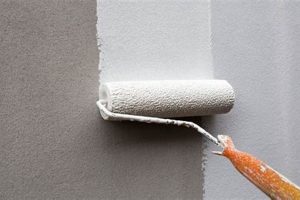
The method of application directly influences the final appearance and performance of a coating. In the context of finishes exhibiting a textured surface, the chosen technique can either enhance or diminish the intended aesthetic effect and protective properties. The uniform distribution of metallic flakes or texturing agents within the coating matrix is critical for achieving a consistent, visually appealing layer. Spray application, whether using conventional air spray, airless spray, or electrostatic methods, is generally preferred for achieving this uniformity, as it allows for controlled atomization and even deposition of the coating material. Brush or roller application, while feasible, may introduce inconsistencies in texture and potentially compromise the finish’s concealing capabilities. The correct nozzle size, pressure settings, and spray pattern overlap are essential parameters that must be carefully controlled to avoid issues such as orange peel, runs, or uneven texture distribution. An example of the importance of controlled application is seen in the automotive industry, where precise spray techniques are employed to achieve a consistent, durable finish on vehicle components.
Furthermore, the substrate’s preparation significantly impacts the coating’s adhesion and long-term durability. Proper cleaning, degreasing, and priming are necessary steps to ensure a strong bond between the coating and the underlying material. Without adequate preparation, the may be prone to chipping, peeling, or corrosion, negating its intended protective function. The ambient temperature and humidity during application also influence the drying and curing process, affecting the final hardness, gloss, and texture. High humidity, for example, can lead to blushing or clouding of the coating, while extreme temperatures can cause cracking or premature failure. Industrial applications, such as the coating of heavy machinery, often require specialized application environments with controlled temperature and humidity to ensure optimal performance.
In conclusion, the relationship between application and this type of surface coating is symbiotic. The choice of application method, meticulous substrate preparation, and controlled environmental conditions are all critical factors that determine the success of the coating process. Understanding and mastering these elements is essential for realizing the full potential of this coating in terms of both aesthetic appeal and functional performance. Challenges in achieving consistent results often stem from inadequate training, improper equipment settings, or a lack of attention to detail during the application process. Addressing these challenges through proper training and adherence to best practices will contribute to a more reliable and repeatable coating outcome.
5. Substrates

The successful application and long-term performance of a textured coating are intrinsically linked to the nature of the substrate onto which it is applied. The substrate’s material composition, surface preparation, and inherent properties exert a significant influence on adhesion, corrosion resistance, and the overall aesthetic outcome. Metallic substrates, such as steel, aluminum, and iron, represent a common application area. However, proper surface preparation, including rust removal and the application of a corrosion-inhibiting primer, is essential to prevent substrate degradation from undermining the coating’s integrity. For example, the application of this coating to steel toolboxes requires thorough cleaning and priming to ensure long-term protection against rust and abrasion. Plastic substrates, including various polymers and composites, present a different set of considerations. Adhesion to plastic surfaces can be challenging due to their inherent chemical inertness and low surface energy. Surface treatments, such as abrasion or chemical etching, may be necessary to improve adhesion. Furthermore, the thermal expansion coefficient of the plastic substrate must be compatible with that of the coating to prevent cracking or delamination under temperature fluctuations.
Non-metallic substrates, such as wood and concrete, also represent viable application surfaces, provided that appropriate preparation and priming are performed. Wood substrates require sealing to prevent moisture absorption, which can lead to blistering or peeling of the coating. Concrete substrates require thorough cleaning to remove efflorescence and the application of a bonding primer to promote adhesion. The selection of a primer that is specifically formulated for the intended substrate is crucial for achieving optimal results. The primer not only enhances adhesion but also provides a barrier against corrosion or other forms of degradation that may originate from the substrate. An illustrative example is the restoration of antique metal furniture, where the careful selection of a primer and the application of coating can revitalize the piece while preserving its historical character.
In conclusion, the substrate forms an integral component of the overall coating system, and its properties must be carefully considered when selecting and applying a textured finish. The success of the coating hinges on proper surface preparation, compatible primer selection, and an understanding of the substrate’s inherent characteristics. Ignoring these factors can lead to premature failure of the coating and a compromised aesthetic outcome. Proper substrate preparation is not merely an ancillary step; it is a foundational element that determines the coating’s longevity and performance across various applications.
6. Composition

The composition of a coating is paramount in determining its aesthetic properties, performance characteristics, and suitability for specific applications. In the context of a finish designed to exhibit a textured surface, the interplay between various components dictates the final appearance and functional attributes of the applied coating.
- Resin System and Binder
The resin system serves as the binder, holding the pigment and other additives together and providing adhesion to the substrate. Common resin types include alkyds, acrylics, epoxies, and polyurethanes, each offering distinct properties in terms of durability, chemical resistance, and UV stability. For instance, a polyurethane-based formulation may be selected for applications requiring high abrasion resistance, such as machinery housings, while an acrylic resin might be preferred for its UV resistance in outdoor applications.
- Texturing Agents and Additives
These agents are responsible for creating the characteristic textured surface. They typically consist of metallic flakes, silicone additives, or other specialized particles that disrupt the smooth flow of the coating during application and drying. The size, shape, and concentration of these agents influence the size and distribution of the textured features. For example, aluminum flakes can impart a metallic sheen and contribute to the visual depth of the finish, whereas silicone additives can create a more pronounced and irregular texture.
- Pigments and Colorants
Pigments provide color and opacity to the coating, influencing its aesthetic appeal and concealing power. The selection of pigments must consider their compatibility with the resin system and their resistance to fading or discoloration under exposure to UV radiation or chemical agents. In addition to conventional pigments, metallic or pearlescent pigments can be incorporated to enhance the visual complexity and depth of the coating. For instance, the addition of a small amount of black pigment to a silver base can create a darker, more industrial-looking finish.
- Solvents and Thinners
Solvents are used to adjust the viscosity of the coating for optimal application. They evaporate during the drying process, leaving behind the solid components of the finish. The choice of solvent must consider its compatibility with the resin system and its environmental impact. Some solvents are more volatile than others and contribute to air pollution. Water-based formulations are increasingly popular due to their lower VOC (volatile organic compound) emissions and reduced health risks.
In summary, the composition determines the final appearance, durability, and application characteristics. A carefully balanced combination of resin, texturing agents, pigments, and solvents is essential for achieving the desired textured effect and ensuring long-term performance across a variety of applications. Alterations in any of these elements will affect the result, such as adding more texturing agent leading to a more rough feel and textured look.
Frequently Asked Questions About Hammered Finish Paint
This section addresses common inquiries regarding hammered finish paint, providing factual information to assist in understanding its properties and applications.
Question 1: What distinguishes this type of coating from other textured paints?
It differs from other textured coatings primarily in its intentional creation of a surface resembling hammered metal. This is achieved through specific additives and application techniques that promote a distinct, irregular pattern.
Question 2: Can it be applied to surfaces other than metal?
While frequently used on metal, it is applicable to other surfaces such as wood and plastic, provided appropriate priming and surface preparation techniques are employed to ensure proper adhesion.
Question 3: What is the typical drying time for this finish?
Drying time varies depending on the specific product formulation, ambient temperature, and humidity. Generally, it requires several hours to become touch-dry and 24-48 hours for complete curing.
Question 4: Is special equipment required for its application?
While brush or roller application is possible, spray application is generally recommended to achieve a uniform, consistent finish. Specialized spray equipment may be necessary for larger projects or industrial applications.
Question 5: How should it be maintained or cleaned?
Maintenance typically involves periodic cleaning with a mild detergent and water. Abrasive cleaners should be avoided as they can damage the textured surface.
Question 6: Is it available in different colors?
It is available in a range of colors, including standard shades and custom mixes. Metallic pigments are often incorporated to enhance the hammered metal effect.
The key takeaways emphasize proper surface preparation, appropriate application techniques, and suitable maintenance practices for achieving optimal results with hammered finish paint.
The next section will explore real-world examples and case studies showcasing its successful application in various industries and projects.
Concluding Assessment
This examination has presented multifaceted attributes. The distinct texture, stemming from compositional elements and influenced by application techniques, serves both aesthetic and functional roles. Its capacity to conceal surface imperfections, coupled with inherent durability factors, positions it as a practical solution in diverse contexts. Substrate compatibility, while broad, necessitates meticulous preparation and primer selection for optimal adhesion and corrosion resistance.
The preceding analysis underscores the significance in protective and decorative coatings. Continued research into advanced formulations and application methodologies will likely expand its utility and broaden its appeal across industrial and consumer sectors. A discerning approach to its selection and utilization remains paramount for achieving desired outcomes.