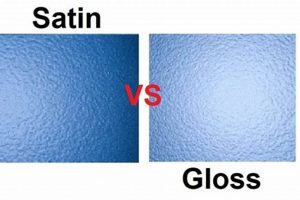
This surface treatment imparts a uniform, matte appearance to stainless steel. The process involves propelling fine media, typically glass beads, at the material’s surface under pressure. The resulting texture is characterized by its non-directional reflectivity, often preferred for aesthetic reasons and its ability to conceal minor surface imperfections. For example, architectural components, medical devices, and food processing equipment frequently employ this type of finish.
The application provides several advantages. It enhances the material’s resistance to fingerprints and smudges, simplifying maintenance. Historically, similar techniques were developed to prepare surfaces for painting or coating, but its current usage extends beyond preparation to become a desired final aesthetic. Moreover, the controlled impact of the media work-hardens the surface, increasing its durability and resistance to wear. This is particularly important in high-traffic or mechanically stressed environments.
The following sections will delve into the specific techniques employed to achieve this texture, the various types of media utilized, and the applications where its unique properties offer significant functional and visual advantages. Detailed comparisons with alternative surface treatments will also be explored, alongside considerations for quality control and long-term performance.
Essential Considerations
Achieving optimal results requires careful attention to several critical factors. These considerations range from media selection to post-treatment cleaning procedures and significantly impact the quality and longevity of the resulting surface.
Tip 1: Media Selection: Selecting the appropriate media is paramount. Glass beads are common, but ceramic or steel shot may be required for specific applications demanding increased abrasion or peening. The size and hardness of the chosen media must be carefully matched to the substrate material and desired surface roughness.
Tip 2: Pressure Control: Maintaining consistent air pressure is essential for uniformity. Fluctuations can lead to uneven texturing, resulting in an unacceptable aesthetic. Pressure settings should be calibrated and monitored throughout the process.
Tip 3: Nozzle Distance and Angle: The distance and angle at which the nozzle is held relative to the surface influence the impact energy and coverage. Maintaining a consistent distance and perpendicular angle promotes uniform treatment.
Tip 4: Surface Preparation: The stainless steel substrate must be thoroughly cleaned and free of contaminants such as oils, grease, and oxides prior to treatment. Inadequate preparation can compromise adhesion and result in inconsistencies in the final surface.
Tip 5: Multiple Passes: In certain instances, multiple passes with varying parameters might be necessary to achieve the desired level of roughness or coverage. This is particularly relevant when dealing with complex geometries or demanding specifications.
Tip 6: Post-Treatment Cleaning: Following the process, the treated material requires thorough cleaning to remove residual media and debris. Improper cleaning can lead to contamination and compromise the corrosion resistance of the stainless steel.
Tip 7: Quality Control: Regular inspection using calibrated instruments to measure surface roughness and visual assessment under controlled lighting is crucial for maintaining consistent quality. Deviations from established standards require immediate corrective action.
Proper execution ensures a consistent, aesthetically pleasing, and durable surface. Adherence to these guidelines minimizes potential defects and maximizes the lifespan and performance of the treated stainless steel components.
The subsequent sections will address common challenges encountered during this process and provide strategies for their resolution, alongside a comparative analysis of different treatment methodologies.
1. Surface Roughness
Surface roughness is a critical parameter directly influenced by bead blast finishing on stainless steel. The process, by its very nature, alters the original surface, creating a texture characterized by peaks and valleys. The degree of this surface alteration, quantified as roughness, is a function of media size, impact velocity, and duration of exposure. This characteristic significantly impacts various properties, including reflectivity, tactile feel, and adhesion characteristics. For example, a higher surface roughness, resulting from larger media or increased blast time, will scatter light more diffusely, leading to a matte appearance. This is desirable in applications where glare reduction is essential, such as instrument panels or surgical tools.
The degree of roughness also influences the ease of cleaning. A smoother surface, achieved with finer media and shorter blast times, is often preferred in hygienic applications, like food processing equipment, as it reduces the potential for bacterial adherence and facilitates thorough cleaning. Conversely, a controlled level of roughness is sometimes deliberately introduced to enhance the adhesion of coatings or paints. In certain industrial applications, a precisely defined roughness profile is specified to ensure proper bonding of protective layers or to improve the grip of components in mechanical assemblies.
In summary, surface roughness is an inherent and controllable outcome of bead blast finishing. Its careful management is crucial to achieving the desired functionality and aesthetic in the final product. Mismanagement can lead to undesirable consequences, from compromised corrosion resistance to reduced cleanability or failed coating adhesion. A thorough understanding and precise control of the process parameters are therefore essential for achieving optimal results across diverse applications.
2. Media Composition

Media composition is a pivotal determinant in the resultant characteristics of stainless steel treated via bead blasting. The material properties of the media directly influence the surface texture, cleanliness, and potential for embedded contaminants. Understanding these relationships is crucial for selecting the appropriate media and achieving the desired finish.
- Glass Beads
Glass beads are frequently employed due to their relative inertness and ability to impart a smooth, uniform matte finish. The composition typically consists of soda-lime glass, which is less likely to contaminate the stainless steel surface. Glass beads are suitable for applications requiring aesthetic enhancement without significant alteration of the surface hardness.
- Ceramic Beads
Ceramic beads, composed of materials such as zirconium oxide or aluminum oxide, exhibit higher hardness and density compared to glass. This results in a more aggressive cleaning action and the ability to induce compressive stress within the surface layers of the stainless steel. They are often preferred when improved fatigue resistance or removal of heavier surface oxides is required.
- Steel Shot
Steel shot, composed of hardened steel alloys, offers the highest impact energy and is used when substantial surface alteration or peening is necessary. The use of steel shot can significantly increase the surface hardness and fatigue life of the stainless steel component. However, the potential for iron contamination necessitates careful post-treatment cleaning to prevent corrosion.
- Organic Media
Organic media, such as plastic beads or walnut shells, are utilized when surface preservation is paramount. These media are softer and less abrasive, minimizing the risk of damage or excessive roughening of the stainless steel surface. Organic media are suitable for delicate components or applications requiring minimal impact on the substrate.
The selection of media composition is contingent upon the specific requirements of the application and the desired properties of the resulting surface. Consideration must be given to the potential for contamination, the desired surface roughness, and the need for any induced compressive stress. Each media type offers a unique balance of properties, necessitating a careful evaluation to ensure optimal performance and longevity of the treated stainless steel component.
3. Impact Velocity

Impact velocity, the speed at which the media strikes the stainless steel surface during bead blasting, exerts a considerable influence on the resulting finish. Increased velocity translates to higher kinetic energy imparted to the substrate, leading to more aggressive material removal and a greater degree of surface deformation. This, in turn, directly affects the roughness, texture, and compressive stress induced in the stainless steel. A higher impact velocity will typically result in a rougher surface profile and increased work hardening. For example, in applications demanding increased fatigue resistance, such as components exposed to cyclical loading, a higher velocity may be employed to induce a beneficial compressive stress layer. Conversely, lower velocities are preferred when a smoother, more aesthetically pleasing finish is required, as is often the case with decorative architectural elements. Control of this parameter is thus essential for tailoring the surface characteristics to the specific needs of the application.
The relationship between impact velocity and the resulting finish is not linear and is significantly influenced by other factors, including media size, composition, and the angle of impingement. For instance, using a larger media size in conjunction with a high velocity can lead to excessive surface damage, while a smaller media size at the same velocity might produce a more refined texture. Similarly, varying the angle at which the media strikes the surface will affect the distribution of impact energy and the resulting surface profile. In the medical device industry, precise control over impact velocity, coupled with careful selection of media, is critical for achieving the required surface finish on implants, where both biocompatibility and mechanical performance are paramount. In such scenarios, deviations from the specified impact velocity can compromise the device’s functionality and safety.
In conclusion, impact velocity is a critical variable in the bead blasting process that directly dictates the surface characteristics of the stainless steel. Its precise control, in conjunction with other relevant parameters, is essential for achieving the desired finish and ensuring the component meets the required performance specifications. Effective management of this factor relies on a thorough understanding of the interplay between process parameters and the material properties of both the media and the stainless steel substrate. Furthermore, regular monitoring and calibration of the blasting equipment are necessary to maintain consistent and repeatable results, mitigating the risk of defects or performance degradation.
4. Material Hardness

The hardness of the stainless steel substrate plays a critical role in determining the final surface characteristics achieved through bead blasting. Softer materials, relative to the blasting media, will exhibit a greater degree of deformation and material removal. This results in a rougher surface profile and a more pronounced matte finish. Conversely, harder stainless steel alloys will resist deformation to a greater extent, leading to a smoother finish with less aggressive texturing. For instance, austenitic stainless steels, generally softer than martensitic grades, will show a more significant change in surface finish after bead blasting using the same parameters. The selection of appropriate media and blasting parameters must therefore account for the inherent hardness of the stainless steel to achieve the desired outcome.
The relationship between material hardness and bead blasting effectiveness is further complicated by work hardening. Certain stainless steel alloys experience an increase in surface hardness as a result of the impact from the blasting media. This localized increase in hardness can alter the subsequent response of the material to continued blasting. For example, if the initial parameters are not carefully controlled, the surface may become excessively hardened, hindering the ability to achieve the desired surface roughness. In practical applications, this phenomenon requires careful calibration of the blasting process, potentially involving multiple passes with gradually adjusted parameters to avoid over-hardening and maintain consistent surface characteristics. This is particularly crucial in industries such as aerospace, where precise control of surface properties is essential for component performance and longevity.
In summary, material hardness acts as a key constraint within the bead blasting process, significantly influencing the resultant surface finish. An understanding of this relationship enables informed decisions regarding media selection and blasting parameters, optimizing the process for specific stainless steel alloys and desired performance characteristics. Ignoring this aspect can lead to inconsistent results, potentially compromising the functionality or aesthetic appeal of the final product. Future research should explore methods for accurately predicting surface finish based on the interplay between material hardness and blasting parameters, enhancing process control and minimizing variability.
5. Corrosion Resistance

The interaction between the described surface treatment and the corrosion resistance of stainless steel is complex and multifaceted. While stainless steel inherently possesses corrosion resistance due to its chromium content, the application of a bead blast finish can either enhance or compromise this property, depending on the parameters employed. Properly executed, the process can remove surface contaminants and create a uniform surface, improving the steel’s passivity and resistance to localized corrosion, such as pitting and crevice corrosion. Conversely, improper execution, including the use of contaminated media or excessive blasting pressure, can introduce surface defects, embed abrasive particles, and disrupt the passive layer, leading to accelerated corrosion. For instance, if carbon steel shot is used instead of stainless steel media, iron contamination can occur, initiating rust formation despite the base material’s inherent corrosion resistance. The importance of adhering to stringent quality control measures throughout the process is, therefore, paramount to preserving and potentially improving the material’s inherent resistance to corrosion.
The practical significance of understanding the interplay between surface treatment and corrosion resistance is evident in numerous applications. In the pharmaceutical industry, stainless steel equipment is subjected to rigorous cleaning and sterilization procedures, which can be highly corrosive. A properly bead blasted surface, using appropriate media and controlled parameters, can provide a smooth, easily cleanable surface that resists the corrosive effects of these processes, maintaining the integrity of the equipment and preventing contamination of pharmaceutical products. Similarly, in marine environments, stainless steel components are constantly exposed to saltwater, a highly corrosive medium. Bead blasting, when performed correctly, can enhance the material’s resistance to chloride-induced corrosion, extending the lifespan of critical components in ships, offshore platforms, and other marine structures. The selection of media, blasting pressure, and post-treatment cleaning procedures must be carefully considered to ensure optimal corrosion performance in these demanding environments.
In conclusion, the impact of this surface treatment on the corrosion resistance of stainless steel is dependent on meticulous process control and appropriate material selection. While the technique offers the potential to enhance passivity and improve resistance to localized corrosion, improper execution can lead to detrimental effects. The key insights underscore the necessity for stringent quality control, careful media selection, and thorough post-treatment cleaning to mitigate the risk of contamination and maintain the inherent corrosion resistance of the stainless steel. Future investigations should focus on developing more precise methodologies for predicting the impact of surface treatment on corrosion performance, enabling more informed decision-making in diverse industrial applications.
6. Aesthetic Qualities

The visual appeal of stainless steel products is often a critical factor influencing consumer preference and perceived value. This surface treatment provides a distinct aesthetic that is frequently favored for its understated elegance and functional appearance. The resulting matte finish offers a unique set of characteristics distinct from polished or brushed surfaces.
- Uniformity of Appearance
The process yields a consistent surface texture, minimizing variations in reflectivity and creating a visually uniform appearance across the treated area. This uniformity is particularly desirable in large surface applications, such as architectural panels or appliance casings, where consistency is crucial for a professional and high-quality aesthetic. Any deviation from this uniformity can be readily apparent and detract from the overall visual appeal.
- Reduced Glare and Reflections
The matte finish significantly reduces glare and specular reflections, creating a more comfortable viewing experience. This is advantageous in environments with strong lighting, such as laboratories or surgical settings, where excessive reflections can be distracting or even hazardous. The reduction in glare also improves the visibility of underlying details or markings on the stainless steel surface.
- Tactile Qualities
The surface imparts a distinct tactile feel, often described as smooth and slightly textured. This tactile element can enhance the user experience, providing a more engaging and sensory interaction with the product. The specific texture can be tailored by adjusting the media size and blasting parameters, allowing for customization of the tactile properties to meet specific design requirements.
- Hiding Minor Imperfections
The texture is effective at concealing minor surface imperfections, such as scratches, dents, or weld marks. This characteristic can be beneficial in applications where maintaining a flawless appearance is challenging, such as in high-traffic areas or environments prone to accidental damage. The finish helps to maintain a consistent and visually appealing surface, even after extended use.
These characteristics, both individually and collectively, contribute to the desirability of this surface on stainless steel. By providing a uniform, low-glare, and subtly textured surface, it offers a versatile aesthetic that complements a wide range of design styles and functional requirements. The ability to conceal minor imperfections further enhances its practicality, making it a preferred choice for applications where both aesthetics and durability are paramount. The subtle elegance and functional appeal contribute significantly to the perceived value and overall satisfaction with the finished product.
Frequently Asked Questions
The following questions address common inquiries regarding the application and characteristics of this specific stainless steel finish.
Question 1: What level of surface roughness is typically achieved?
Surface roughness varies depending on media size and blasting parameters. Typical Ra values range from 0.5 m to 3.0 m. Specific requirements should be clearly defined to ensure consistent results.
Question 2: Does the technique affect the mechanical properties of the stainless steel?
The process can induce compressive stress on the surface, potentially enhancing fatigue resistance. However, excessive blasting can lead to work hardening and reduced ductility. Careful parameter control is essential.
Question 3: How should treated surfaces be cleaned?
Thorough cleaning is crucial to remove residual media and contaminants. Appropriate cleaning methods include ultrasonic cleaning, solvent rinsing, and passivation treatments. Specific procedures depend on the application and potential contaminants.
Question 4: What is the typical lifespan of this finish?
The lifespan depends on environmental factors and the severity of use. In corrosive environments, periodic cleaning and maintenance may be required to preserve the surface integrity. The inherent durability of stainless steel provides a robust base for the finish.
Question 5: Can this surface finish be applied to all grades of stainless steel?
The technique is applicable to most grades of stainless steel. However, softer grades may exhibit greater surface deformation. Adjustments to blasting parameters may be necessary to achieve optimal results for specific alloys.
Question 6: Is the process environmentally friendly?
The environmental impact depends on media selection and waste disposal practices. Glass beads are generally considered less harmful than some other media. Proper containment and recycling of media are essential for minimizing environmental impact.
This overview clarifies key aspects of this particular surface treatment. Precise specifications and adherence to established protocols are crucial for achieving consistent and reliable results.
The subsequent section will explore case studies and real-world applications, providing further insights into the practical benefits and limitations of this surface finish.
Conclusion
This exploration has detailed the characteristics, applications, and considerations surrounding bead blast finish stainless steel. The process imparts a unique surface texture characterized by uniformity, reduced glare, and enhanced tactile properties. Media selection, impact velocity, material hardness, and adherence to best practices are crucial for achieving desired outcomes. Applications range from architectural components to medical devices, each demanding precise control over process parameters to optimize performance and aesthetic qualities.
The ongoing evolution of surface treatment technologies necessitates continued research and refinement of bead blast finishing techniques. This includes the development of more sustainable media, improved process control methodologies, and a deeper understanding of the long-term performance characteristics in diverse operating environments. Such advancements will ensure the continued relevance and effectiveness of bead blast finish stainless steel across a spectrum of industries.