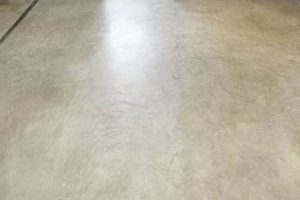
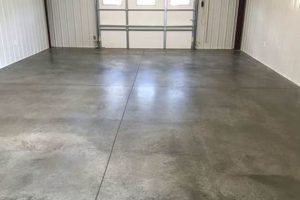
The process of applying a protective or decorative layer to a concrete surface, typically after it has been poured and cured, results in a durable and aesthetically pleasing floor. This encompasses techniques like polishing, staining, epoxy coating, and sealing, each offering different levels of protection and visual appeal. As an example, applying a sealant prevents moisture penetration and enhances stain resistance.
Properly prepared and finalized concrete floors offer several advantages. Increased durability and longevity are significant benefits, reducing the need for frequent replacements. Finished concrete is also easy to maintain, requiring only routine cleaning. Historically, concrete finishing was primarily functional. However, advances in materials and techniques have transformed it into a popular design element.
The subsequent sections will delve into specific methods and materials used in concrete floor finishing, addressing surface preparation, application techniques, and maintenance requirements for optimal results. Detailed information will be presented regarding polishing compounds, stain selection, epoxy application processes, and appropriate sealing agents.
Essential Considerations for Concrete Floor Finishing
Achieving a successful and long-lasting concrete floor finish requires meticulous attention to detail and adherence to best practices. The following tips offer guidance on critical aspects of the finishing process.
Tip 1: Surface Preparation is Paramount: Ensure the concrete surface is clean, dry, and free of debris. Mechanical grinding or acid etching may be necessary to remove contaminants and create proper adhesion for subsequent coatings.
Tip 2: Moisture Content Assessment: Before applying any coatings or sealers, verify the concrete’s moisture content is within the manufacturer’s specified limits. Excess moisture can lead to blistering, delamination, or other failures.
Tip 3: Select Appropriate Materials: Choose finishing materials that are compatible with the concrete substrate and appropriate for the intended use of the floor. Consider factors such as abrasion resistance, chemical resistance, and UV exposure.
Tip 4: Follow Manufacturer’s Instructions: Adhere strictly to the manufacturer’s instructions regarding mixing ratios, application rates, and curing times. Deviations can compromise the integrity and performance of the finish.
Tip 5: Proper Application Techniques: Employ correct application techniques, such as even spreading, uniform coverage, and appropriate overlap, to ensure a consistent and aesthetically pleasing finish. Consider professional installation for complex projects.
Tip 6: Curing is Critical: Allow adequate curing time for the applied finish to fully harden and develop its intended properties. Protect the floor from traffic and environmental factors during the curing process.
Tip 7: Ventilation Matters: Provide adequate ventilation during application and curing to facilitate the evaporation of solvents and prevent the buildup of harmful fumes.
Adhering to these guidelines will enhance the durability, appearance, and longevity of any finished concrete floor. Proper planning and execution are essential for achieving a professional and satisfactory outcome.
The final section provides an overview of common challenges and solutions encountered during concrete floor finishing.
1. Preparation is critical.

Effective execution in concrete floor finishing hinges on meticulous preparation. The quality of the substrate directly influences the adhesion, durability, and aesthetic appeal of the final product. Neglecting preparatory steps can lead to premature failure, increased maintenance costs, and unsatisfactory outcomes.
- Surface Cleaning and Debris Removal
Prior to any finishing application, thorough cleaning is essential. This involves removing dust, dirt, grease, and any loose particles that may interfere with bonding. Failure to remove contaminants prevents proper adhesion, leading to peeling, blistering, or uneven textures. Examples include power washing to remove loose concrete and using degreasers to eliminate oil stains.
- Repairing Cracks and Imperfections
Existing cracks, holes, and other imperfections must be addressed before applying any finishing materials. These flaws can compromise the structural integrity of the finish and detract from its appearance. Filling cracks with appropriate patching compounds and leveling uneven surfaces ensure a smooth and uniform base. A notable example is using epoxy fillers for larger cracks and self-leveling compounds for extensive surface irregularities.
- Profiling the Concrete Surface
Concrete surfaces often require profiling to achieve optimal adhesion. This process involves creating a slightly rough texture that allows the finishing material to bond effectively. Methods include acid etching, grinding, or shot blasting. The selection of the appropriate profiling method depends on the type of concrete, the intended finish, and the desired level of roughness. For example, acid etching is suitable for creating a light profile, while grinding is used for more aggressive roughening.
- Moisture Mitigation
Excessive moisture within the concrete can interfere with the curing process and cause delamination of the finish. Conducting moisture tests and implementing appropriate mitigation strategies are crucial. This may involve applying moisture barriers or allowing sufficient drying time before proceeding. Ignoring moisture levels can lead to significant problems, such as bubbling of epoxy coatings or failure of adhesives.
These preparatory steps, while sometimes time-consuming, are indispensable for achieving a successful and durable concrete floor finish. Each facet plays a vital role in creating a sound foundation upon which the finishing material can properly adhere and perform, ultimately determining the longevity and aesthetic quality of the completed project.
2. Material selection matters.
The choice of materials exerts a profound influence on the outcome of any concrete floor finishing project. The suitability of selected substances directly impacts adhesion, durability, aesthetics, and maintenance requirements. In essence, material selection constitutes a critical component of the process, determining the long-term viability and performance of the finished floor. Consider, for example, a warehouse floor subjected to heavy forklift traffic. Utilizing a standard epoxy coating designed for light residential use would prove inadequate, leading to premature wear and failure. Instead, a high-performance urethane coating, specifically formulated for industrial applications, would be essential to withstand the abrasive forces and ensure longevity. This highlights the direct cause-and-effect relationship between material selection and floor performance.
The practical implications of material selection extend beyond mere durability. The chemical resistance of a coating is paramount in environments where exposure to corrosive substances is likely. In a food processing plant, for instance, the flooring material must withstand frequent cleaning with harsh chemicals and resist staining from food products. Failure to select a chemically resistant coating could result in surface degradation, potential contamination, and costly repairs. Furthermore, aesthetic considerations influence material choice. Polished concrete, with its inherent sheen and customizable staining options, offers a modern and visually appealing solution for retail spaces, while self-leveling epoxy provides a seamless and hygienic surface for healthcare facilities. The diverse range of available materials underscores the need for informed decision-making based on the specific requirements of the environment.
In summary, material selection is not a peripheral concern but an integral aspect of concrete floor finishing. Understanding the properties, limitations, and appropriate applications of various materials is crucial for achieving a successful and durable result. Challenges may arise in accurately assessing the demands of the environment and navigating the wide array of available products. However, careful consideration and informed selection will ensure that the finished concrete floor meets the functional, aesthetic, and performance expectations of the project.
3. Application is important.

The proper application of finishing materials is a critical determinant in the success of any concrete floor finishing project. Irrespective of the quality of materials used or the thoroughness of surface preparation, improper application techniques can significantly compromise the final outcome, leading to reduced durability, aesthetic flaws, and ultimately, premature failure of the finished surface. Understanding and implementing best practices in application is therefore paramount.
- Mixing and Preparation of Materials
The accurate mixing of components, particularly with epoxy coatings and sealers, is essential. Deviations from manufacturer-specified ratios can alter the chemical properties of the material, leading to improper curing, reduced strength, and increased susceptibility to damage. Inadequate mixing can result in an uneven distribution of hardeners or catalysts, creating soft spots or inconsistent finishes. As an example, insufficient agitation of a two-part epoxy can lead to uncured resin pooling on the surface, resulting in a sticky, non-durable area. Proper material preparation ensures consistent performance and longevity.
- Application Techniques and Uniformity
The method of applying the finish directly impacts its final appearance and protective qualities. Consistent and even application is crucial for achieving a uniform thickness and avoiding inconsistencies that can lead to premature wear. Techniques such as using the correct roller nap for coatings, maintaining consistent pressure during application, and overlapping passes to prevent streaking all contribute to a seamless and durable finish. Uneven application, such as leaving roller marks or thin spots, can create areas of weakness prone to abrasion and chemical attack, therefore affecting the floor’s life span.
- Environmental Considerations During Application
Ambient temperature and humidity play a significant role in the curing process of many concrete floor finishes. High humidity can impede the evaporation of solvents in coatings, leading to prolonged curing times and a weakened finish. Similarly, extreme temperatures can affect the viscosity and application properties of materials, making them difficult to apply evenly. Maintaining optimal environmental conditions, often by controlling temperature and ventilation, is essential for proper curing and adhesion. Applying coatings in direct sunlight, for example, can cause rapid surface drying, trapping moisture underneath and leading to bubbling or delamination.
- Timing and Layering
Applying multiple coats of a finish, such as a sealer or epoxy, often requires careful attention to timing. Allowing sufficient time between coats for proper drying and adhesion is crucial. Applying subsequent coats too soon can trap solvents and prevent complete curing, while waiting too long can result in poor inter-coat adhesion. Layering techniques, such as applying a primer coat to improve adhesion or a topcoat for enhanced protection, can significantly extend the lifespan and performance of the finish. Rushing the layering process, like applying a topcoat before the primer is fully cured, can result in a compromised and substandard finish.
The intricacies involved in the application stage underscore its significance in achieving a successful concrete floor finish. By adhering to best practices in mixing, applying, and managing environmental factors, and ensuring proper timing and layering, the longevity, aesthetics, and functionality of the finished floor can be significantly enhanced, reinforcing the importance of application as a vital step in how to finish a concrete floor.
4. Curing time requirements.
The specified duration for curing significantly influences the overall outcome of concrete floor finishing. Adherence to these timeframes is crucial for achieving optimal strength, durability, and long-term performance. Neglecting recommended curing periods can lead to a compromised finish, requiring costly repairs or premature replacement.
- Hydration and Strength Development
Curing time directly correlates with the hydration process of cement particles within the concrete matrix. During this period, cement reacts with water to form calcium silicate hydrate (C-S-H), the primary binding agent responsible for the concrete’s strength. Insufficient curing inhibits complete hydration, resulting in a weaker, more porous material. For example, a concrete floor that is subjected to heavy traffic before the recommended curing period may exhibit premature cracking or surface abrasion. A properly hydrated and cured concrete floor ensures maximum load-bearing capacity and resistance to wear.
- Moisture Management and Reduced Shrinkage
Controlling moisture loss during curing minimizes shrinkage and the development of tensile stresses that can lead to cracking. Slow, controlled drying promotes a more uniform distribution of moisture throughout the concrete, reducing the risk of surface crazing or larger structural cracks. Conversely, rapid drying can induce significant stresses, leading to surface defects and reduced long-term durability. Consider a large concrete slab poured in direct sunlight without proper moisture control; the surface may dry and shrink at a faster rate than the underlying concrete, resulting in cracking. Adhering to recommended curing times and using appropriate moisture retention methods, like covering the floor with plastic sheeting, mitigates these risks.
- Influence on Adhesion of Coatings and Sealers
The level of cure attained by the concrete directly affects the adhesion of subsequently applied coatings, sealers, or other finishing materials. A fully cured concrete surface provides a stable and appropriately porous substrate for bonding. Premature application of coatings onto insufficiently cured concrete can lead to delamination, blistering, or other adhesion failures due to trapped moisture or ongoing chemical reactions within the concrete. For instance, applying an epoxy coating to concrete that hasn’t fully cured can prevent the epoxy from properly bonding, causing it to peel or bubble. Consequently, respecting curing time requirements ensures proper inter-laminar adhesion and maximizes the lifespan of the entire flooring system.
- Impact on Chemical Resistance and Durability
Adequate curing enhances the concrete’s resistance to chemical attack and environmental degradation. A well-cured concrete surface is less permeable, reducing the ingress of corrosive substances that can compromise its integrity. This is particularly important in industrial or commercial environments where exposure to chemicals, salts, or other aggressive agents is common. A concrete floor in a chemical processing plant, if not adequately cured, may be more susceptible to damage from spilled acids or solvents. Proper curing promotes a denser, more durable surface that is better equipped to withstand these challenges, contributing to a longer service life and reduced maintenance costs.
In summary, the observance of specified curing time requirements is not merely a procedural step but a crucial element in the successful execution of how to finish a concrete floor. It directly impacts the strength, durability, adhesion, and chemical resistance of the finished surface, ultimately determining the long-term performance and service life of the floor. Overlooking or shortening curing periods can lead to significant problems that compromise the investment and require costly remediation.
5. Sealing for protection.

Sealing represents a critical protective measure within the broader process of concrete floor finishing. The application of a sealant, typically a penetrating liquid or coating, serves as a barrier against various detrimental elements that can compromise the integrity and aesthetic appeal of the finished concrete surface. Its function is to mitigate damage caused by moisture intrusion, staining agents, abrasion, and chemical exposure, thereby extending the lifespan and maintaining the appearance of the floor. For instance, in a residential setting, a sealed concrete floor in a kitchen or bathroom is less susceptible to staining from spills of food, beverages, or cleaning products, in addition to water damage.
The integration of sealing into the concrete finishing process provides practical advantages applicable across diverse environments. In industrial settings, sealants offer resistance to oils, grease, and chemical solvents, crucial for maintaining a safe and durable work environment. Commercial spaces benefit from the enhanced stain resistance and ease of cleaning provided by sealed concrete floors, reducing maintenance costs and preserving a professional appearance. Furthermore, specialized sealants containing UV inhibitors can protect exterior concrete surfaces, such as patios or walkways, from fading and degradation caused by prolonged sun exposure. Consequently, the strategic selection and application of appropriate sealants are essential for ensuring that finished concrete floors retain their intended functional and aesthetic qualities.
In summation, sealing constitutes a pivotal component of how to finish a concrete floor, contributing significantly to its overall longevity and performance. The primary challenge lies in selecting the correct sealant type that aligns with the specific environmental demands and intended use of the floor. By carefully considering factors such as abrasion resistance, chemical compatibility, and UV stability, and by adhering to proper application techniques, the protective benefits of sealing can be maximized, resulting in a durable, aesthetically pleasing, and easily maintainable concrete floor.
Frequently Asked Questions
This section addresses common inquiries regarding the concrete floor finishing process, providing detailed and objective responses to ensure clarity and understanding.
Question 1: What are the primary factors determining the cost associated with “how to finish a concrete floor?”
The price is influenced by several variables, including the square footage of the area, the existing condition of the concrete surface (requiring additional preparation), the type of finishing technique chosen (e.g., polishing, staining, epoxy coating), and any labor costs involved. More intricate designs or specialized finishes invariably increase the overall expense.
Question 2: How long does the entire “how to finish a concrete floor” process typically take, from start to finish?
The duration of the project varies based on the size of the area, the complexity of the chosen finishing technique, and the environmental conditions. Surface preparation can take one to several days. Applying finishes such as epoxy requires multiple coats with drying times in between. Curing times can add several days to weeks, depending on the product. A typical project may span from a few days to several weeks.
Question 3: Is it possible to undertake “how to finish a concrete floor” as a DIY project, or is professional assistance generally recommended?
While certain simpler finishing techniques, such as applying a concrete sealer, can be managed by homeowners with appropriate preparation and tools, more complex processes like polishing or epoxy coating often necessitate professional expertise. Incorrect application can lead to unsatisfactory results, increased costs for correction, and potential damage to the underlying concrete.
Question 4: What types of maintenance are required to preserve the appearance and integrity of a finished concrete floor?
Maintenance depends on the type of finish applied. Generally, regular sweeping or vacuuming to remove abrasive particles is recommended. Damp mopping with a pH-neutral cleaner is suitable for most sealed or coated floors. Reapplication of sealers or coatings may be required periodically to maintain protection and gloss levels.
Question 5: What are the common problems encountered during the “how to finish a concrete floor” process, and how can they be avoided?
Common issues include cracking, uneven coloring, blistering of coatings, and poor adhesion. These problems can often be avoided by thorough surface preparation, proper mixing and application of materials according to manufacturer instructions, and ensuring appropriate environmental conditions (temperature, humidity) during application and curing.
Question 6: Can existing concrete floors with damage or imperfections be successfully finished, or is replacement sometimes necessary?
It depends on the extent of the damage. Minor cracks and imperfections can often be repaired with patching compounds or concrete overlays. However, severely damaged concrete floors with extensive cracking, heaving, or structural issues may require replacement to ensure a stable and long-lasting finished surface.
In conclusion, thorough planning, proper execution, and ongoing maintenance are key to achieving a successful and durable finished concrete floor.
The next section discusses the environmental considerations associated with concrete floor finishing.
Concluding Remarks on Concrete Floor Finishing
The preceding discussion has elucidated the multifaceted nature of concrete floor finishing. Surface preparation, material selection, application techniques, curing time adherence, and protective sealing are each crucial determinants of a successful outcome. A deficiency in any of these areas can compromise the integrity and longevity of the finished product.
Therefore, informed decision-making, rigorous execution, and diligent maintenance are paramount. Whether undertaking a small residential project or a large-scale industrial installation, adherence to best practices will ensure a durable, aesthetically pleasing, and cost-effective concrete floor that meets the demands of its intended environment. Prioritize thorough research and careful planning to maximize the investment in this fundamental building element.