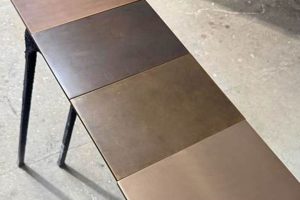
The process involves applying protective coatings to wooden surfaces used in kitchens to prepare food. These surfaces, often made of hardwood strips joined together, require treatment to prevent moisture damage, staining, and bacterial growth. A properly treated surface will repel liquids and create a barrier against food particles penetrating the wood grain.
Protecting these surfaces is paramount for maintaining hygiene and extending the lifespan of the wood. A well-protected surface resists warping, cracking, and deterioration caused by exposure to water and food acids. Historically, various oils and waxes have been used for this purpose, evolving to include modern sealants and varnishes.
The following sections will detail appropriate materials, application techniques, and maintenance strategies necessary for optimal surface longevity and performance. Attention to these details will ensure a durable and aesthetically pleasing food preparation area.
Guidance for Protecting Wooden Food Preparation Surfaces
The following recommendations outline best practices for achieving a durable and food-safe surface. Implementing these techniques will contribute to the longevity and hygiene of wooden countertops.
Tip 1: Select Food-Safe Products: Ensure all sealants, oils, or varnishes are specifically formulated for contact with food. Check product labels for certifications such as NSF or compliance with relevant food safety regulations.
Tip 2: Prepare the Surface Thoroughly: Sand the wood surface with progressively finer grits of sandpaper to achieve a smooth and even texture. Remove all dust and debris before applying any product.
Tip 3: Apply Multiple Thin Coats: Instead of applying one thick coat, apply multiple thin coats, allowing each coat to dry completely between applications. This promotes even coverage and prevents pooling or cracking.
Tip 4: Sand Between Coats: Lightly sand the surface with fine-grit sandpaper between coats to remove any imperfections and create a better bonding surface for the next coat. Ensure dust removal before proceeding.
Tip 5: Maintain Regular Oiling: For oil-based surfaces, regular re-oiling is essential to maintain the protective barrier. The frequency depends on usage, but typically ranges from monthly to quarterly.
Tip 6: Avoid Harsh Cleaners: Refrain from using abrasive cleaners or harsh chemicals, as these can damage the protective coating. Opt for mild soap and water or a dedicated butcher block cleaner.
Tip 7: Address Scratches Promptly: Minor scratches can be sanded lightly and re-oiled to prevent moisture penetration. Deeper scratches may require more extensive repairs.
Adhering to these tips enhances the resistance of wooden surfaces to moisture, stains, and bacterial contamination, thereby contributing to a safer and more hygienic food preparation environment.
The concluding section will summarize the key steps for surface maintenance and address frequently asked questions regarding optimal surface care.
1. Wood Selection

Wood selection is a foundational element influencing the final quality and longevity of wooden food preparation surfaces. The species chosen dictates the surface’s hardness, porosity, and resistance to moisture and bacterial growth, all of which directly impact the efficacy of any protective process.
- Hardness and Durability
Harder wood species, such as maple, walnut, and cherry, offer greater resistance to dents, scratches, and wear. This inherent durability reduces the likelihood of damage that could compromise the protective coating, extending the lifespan of the surface and reducing the need for frequent repairs or reapplication of sealants.
- Pore Size and Absorbency
Different wood species exhibit varying pore sizes. Denser woods with smaller pores are less absorbent, minimizing the penetration of liquids and food particles that can harbor bacteria. This characteristic reduces the risk of contamination and simplifies the cleaning process, contributing to a more hygienic surface.
- Grain Pattern and Aesthetics
The grain pattern contributes significantly to the aesthetic appeal of wooden surfaces. Species like oak and ash have prominent grain patterns, while maple and cherry offer a smoother, more uniform appearance. The choice of grain pattern affects the final look and must be considered in relation to the desired aesthetic outcome and the type of application.
- Sustainability and Sourcing
Responsible sourcing of wood ensures environmental sustainability and ethical considerations. Selecting wood from sustainably managed forests minimizes environmental impact and supports responsible forestry practices. Considerations should include certification from organizations such as the Forest Stewardship Council (FSC).
The selection of wood is inextricably linked to the process, influencing the choice of sealants, application techniques, and maintenance protocols. Careful consideration of these factors ensures a durable, hygienic, and aesthetically pleasing food preparation surface.
2. Food-Safe Sealants
The selection and application of appropriate sealants are paramount in the process, directly influencing the safety, durability, and maintenance requirements of wooden surfaces used for food preparation. The primary function of these sealants is to create a protective barrier, preventing the absorption of liquids, food particles, and bacteria, thereby ensuring a hygienic surface for food handling.
- Composition and Compliance
Food-safe sealants must be composed of materials deemed non-toxic and inert when in contact with food. These products often carry certifications from organizations such as NSF International, indicating compliance with rigorous food safety standards. Examples include formulations based on natural oils, waxes, and certain synthetic polymers specifically approved for food contact. The improper selection of a sealant can lead to chemical leaching, posing a health risk.
- Penetration and Barrier Formation
Effective sealants penetrate the wood grain to create a robust, moisture-resistant barrier. The degree of penetration affects the long-term protection and durability. Some sealants form a surface film, while others saturate the wood fibers. The optimal choice depends on the wood species, intended use, and maintenance requirements. Inadequate penetration can result in surface cracking and increased susceptibility to water damage.
- Maintenance and Reapplication
Regular maintenance, including cleaning and reapplication of the sealant, is crucial for preserving the protective barrier. The frequency of reapplication varies depending on the type of sealant, usage intensity, and environmental factors. Oil-based sealants typically require more frequent reapplication compared to certain synthetic varnishes. Neglecting maintenance can lead to the breakdown of the protective layer, compromising hygiene and potentially damaging the wood.
- Impact on Aesthetics
Food-safe sealants can affect the final appearance of wooden surfaces, influencing the color, sheen, and texture. Some sealants enhance the natural grain and color of the wood, while others may impart a slight tint or gloss. The choice should align with the desired aesthetic and consider the long-term effects on the wood’s natural beauty. Over-application or improper application can result in an uneven or undesirable finish.
In conclusion, food-safe sealants are indispensable for maintaining the integrity and safety of wooden food preparation surfaces. Proper selection, application, and maintenance are essential for achieving a durable, hygienic, and aesthetically pleasing result. The factors outlined above are paramount considerations for ensuring the longevity and safe use of such surfaces.
3. Surface Preparation

Surface preparation constitutes a foundational stage in effectively treating wooden food preparation surfaces. Inadequate or improper surface preparation directly undermines the adhesion, durability, and overall effectiveness of subsequent protective coatings. This initial process involves meticulous cleaning, sanding, and leveling to create an optimal substrate for sealant application.
For instance, consider a surface contaminated with grease or residual adhesive. Sealants applied to such a surface will not properly bond, leading to premature peeling, cracking, and ultimately, failure of the protective barrier. Similarly, an uneven surface, characterized by bumps or gouges, prevents uniform sealant distribution, resulting in inconsistent protection and an aesthetically unappealing outcome. Sanding with progressively finer grits of sandpaper removes imperfections, opens the wood pores to promote sealant penetration, and creates a smooth, even plane. This careful process ensures uniform absorption and consistent coverage, maximizing the sealant’s protective capabilities.
The practical significance of thorough surface preparation lies in its long-term impact on hygiene and maintenance. A properly prepared surface reduces the likelihood of moisture penetration and bacterial growth, simplifying cleaning and reducing the need for frequent resealing. Consequently, the additional time and effort invested in this initial stage translate into a more durable, hygienic, and aesthetically pleasing surface that requires less maintenance and offers enhanced longevity. Addressing these critical details during surface preparation is not merely procedural; it is an investment in the enduring quality and safety of wooden food preparation surfaces.
4. Application Technique

The application technique exerts a significant influence on the outcome when treating wooden food preparation surfaces. The method employed directly impacts the sealant’s penetration, uniformity, and ultimately, the degree of protection afforded to the wood. Improper techniques, such as applying excessively thick coats or neglecting to work the sealant into the grain, compromise the barrier’s integrity and render it susceptible to moisture and bacterial intrusion. For example, applying a polyurethane finish with a brush that leaves streaks can result in uneven protection and an unsightly surface. Conversely, utilizing a fine-foam roller and applying thin, even coats allows for uniform coverage and optimal bonding to the wood fibers. The choice of tool and application method are integral determinants of the surface’s long-term performance.
Practical applications demonstrate the importance of precise application. Consider the case of applying mineral oil to a surface: simply pouring oil onto the wood and allowing it to sit is insufficient. The oil must be actively worked into the grain, allowing it to saturate the wood fibers and provide a deep, protective barrier. Excess oil must then be thoroughly wiped away to prevent a sticky, uneven surface. Similarly, when applying varnish, attention to detail is crucial. Avoiding drips, bubbles, and brush strokes requires a controlled hand and proper application technique. These nuances are not merely cosmetic; they directly affect the surface’s resistance to moisture, stains, and microbial growth. Professional artisans often use specialized spray equipment to apply thin, consistent layers of catalyzed finishes, further illustrating the benefits of proper technique.
In summary, achieving a durable, food-safe surface necessitates meticulous attention to application technique. The appropriate method, combined with the right tools and careful execution, enhances the sealant’s performance and extends the lifespan of the wooden surface. Challenges such as uneven application, trapped air bubbles, and inadequate penetration can be mitigated through proper training and adherence to established best practices. Recognizing the crucial role of application technique is paramount in realizing the full potential of surface treatments, contributing to both the aesthetic appeal and functional integrity of wooden food preparation areas.
5. Curing Time

Curing time represents a critical phase following the application of sealants or finishes on wooden food preparation surfaces. It is the period during which the applied coating undergoes chemical and physical transformations to achieve its final, hardened state. The proper management of curing time directly influences the durability, safety, and longevity of these surfaces.
- Chemical Hardening
Many sealants, particularly those based on polymers or resins, undergo chemical reactions during curing. These reactions form cross-links between molecules, resulting in a hardened, more durable finish. Insufficient curing time can lead to incomplete cross-linking, resulting in a soft, pliable surface that is susceptible to scratches, dents, and chemical damage. For example, a polyurethane finish that is not allowed to fully cure will be more prone to dissolving upon exposure to solvents or acids.
- Solvent Evaporation
Some sealants contain solvents that evaporate during the curing process. The evaporation of these solvents allows the remaining solids to coalesce and form a solid film. If the curing time is too short, residual solvents may remain trapped within the finish, leading to a soft, tacky surface or blistering. Insufficient ventilation during the curing process can exacerbate this issue, prolonging the curing time and potentially compromising the finish’s integrity. For example, applying varnish in a closed room can trap solvents and prolong the curing period significantly.
- Adhesion Development
Curing time is essential for the sealant to properly adhere to the wood surface. During this period, the sealant penetrates the wood pores and forms a mechanical bond. Insufficient curing time can result in poor adhesion, making the finish more prone to peeling or chipping. Proper surface preparation, as discussed previously, enhances adhesion and reduces the risk of delamination, but adequate curing time remains crucial. A poorly adhered finish offers limited protection and increases the risk of moisture penetration and bacterial contamination.
- Off-Gassing and Food Safety
During curing, some sealants may release volatile organic compounds (VOCs). Adequate curing time allows these compounds to dissipate, reducing the risk of off-gassing and ensuring that the surface is safe for food contact. Failure to allow sufficient curing time can result in the transfer of these compounds to food, posing a potential health risk. It is essential to consult the manufacturer’s guidelines regarding recommended curing times and ventilation requirements to ensure compliance with food safety standards. For example, some epoxy resins may require several days to fully cure and release all harmful VOCs.
In summary, curing time is an indispensable element in treating wooden surfaces used for food preparation. Allowing adequate time for chemical hardening, solvent evaporation, adhesion development, and off-gassing is essential for achieving a durable, safe, and long-lasting finish. Neglecting the recommended curing time compromises the finish’s integrity and poses potential health risks, underscoring the importance of adherence to manufacturer’s specifications and best practices.
6. Maintenance Schedule
Adherence to a structured maintenance schedule is not merely ancillary; it is fundamentally interwoven with the durability and longevity of surfaces treated to protect wooden food preparation areas. The effectiveness of any protective coating is contingent upon consistent and informed maintenance practices.
- Regular Cleaning Protocols
Daily cleaning using mild detergents and non-abrasive materials removes food particles and prevents bacterial accumulation. Neglecting this can lead to the breakdown of the protective finish and compromise hygiene. For instance, wiping surfaces with a damp cloth after each use and promptly addressing spills minimizes the potential for staining and microbial growth, thereby preserving the integrity of the finish.
- Periodic Re-oiling or Sealing
Oil-based finishes require periodic reapplication to replenish the protective barrier, while film-forming sealants may necessitate recoating after several years. The frequency depends on usage and environmental conditions. Failing to re-oil or reseal can result in the wood drying out, cracking, or becoming susceptible to moisture damage. A quarterly application of mineral oil or butcher block oil can maintain the surface’s water resistance and prevent the wood from becoming brittle.
- Inspection for Damage
Regularly inspecting for scratches, dents, or signs of water damage is crucial for early intervention. Addressing minor imperfections promptly prevents more significant issues from developing. For example, small scratches can be lightly sanded and re-oiled, while larger damages may require professional repair to maintain the integrity of the protective finish.
- Environmental Control
Maintaining stable humidity levels and avoiding extreme temperature fluctuations minimizes stress on the wood and the protective finish. Excessive dryness can cause cracking, while high humidity can promote mold growth. The use of humidifiers or dehumidifiers can help maintain optimal environmental conditions, thus extending the lifespan of the treated surface.
These facets, when consistently implemented, collectively contribute to the extended lifespan and enhanced performance of surfaces. Ignoring the maintenance schedule undermines the investment in materials and labor, potentially leading to premature degradation and compromising food safety. Therefore, a diligent and informed maintenance strategy is an indispensable component of ensuring the enduring quality of treated wooden food preparation surfaces.
7. Hygienic Practices

Maintaining sanitary conditions on wooden food preparation surfaces is intrinsically linked to their protective treatment. Proper cleaning and disinfection procedures are vital for mitigating the risk of bacterial contamination and ensuring food safety. The following facets underscore the significance of hygienic practices in conjunction with the treatment of these surfaces.
- Regular Cleaning and Sanitization
Consistent removal of food debris using mild detergents and hot water is essential for preventing bacterial growth. Food particles left on the surface can serve as a breeding ground for pathogens like Salmonella and E. coli. Sanitizing solutions, such as diluted bleach or vinegar, can further reduce bacterial loads. For example, wiping the surface with a solution of one tablespoon of bleach per gallon of water after each use effectively minimizes the risk of contamination.
- Appropriate Drying Techniques
Thorough drying after cleaning is crucial for inhibiting microbial proliferation. Moisture left on the surface provides an ideal environment for bacteria and mold to thrive. Using clean, dry cloths or paper towels to absorb excess water is recommended. Allowing surfaces to air dry completely further reduces the risk of microbial growth.
- Avoiding Cross-Contamination
Preventing cross-contamination between raw and cooked foods is paramount. Using separate cutting boards for meats and vegetables minimizes the transfer of harmful bacteria. Surfaces should be thoroughly cleaned and sanitized after contact with raw meat, poultry, or seafood. Designating specific areas for different food types reduces the likelihood of cross-contamination.
- Proper Tool Maintenance
Cutting boards, knives, and other utensils used on wooden surfaces should be regularly cleaned and sanitized. Knives can create small grooves in the wood, providing a refuge for bacteria. Routine cleaning with hot, soapy water and occasional disinfection helps maintain sanitary conditions. Dull knives should be sharpened to prevent excessive force, which can damage the surface and create more crevices for bacterial colonization.
These hygienic practices complement the protective process by minimizing the potential for bacterial contamination and extending the lifespan of the treated surface. Implementing these measures consistently ensures that wooden food preparation areas remain safe and sanitary for food handling. Strict adherence to these protocols enhances food safety and diminishes the risk of foodborne illnesses.
Frequently Asked Questions
The following section addresses common inquiries and misconceptions regarding the proper protective measures and long-term care of wooden food preparation surfaces.
Question 1: What is the optimal frequency for re-oiling butcher block surfaces?
The appropriate re-oiling interval depends on usage intensity and environmental conditions. High-use surfaces may require monthly applications, while surfaces with less frequent use may only need quarterly treatment. Observation of the surface’s dryness and water absorption characteristics should guide the decision. If water no longer beads on the surface, re-oiling is advisable.
Question 2: Are all food-grade mineral oils equally suitable for butcher block care?
While food-grade mineral oil is generally safe, it is prudent to select products specifically formulated for butcher block applications. These formulations may contain additives that enhance water resistance and prevent rancidity. Always verify that the product is certified food-safe by a reputable organization.
Question 3: Can common household cleaners be used on butcher block surfaces?
Abrasive cleaners and harsh chemicals are detrimental to the protective finish and can damage the wood. Mild soap and water or specialized butcher block cleaners are recommended. Avoid products containing bleach, ammonia, or strong solvents.
Question 4: How can scratches and minor damage be addressed on butcher block surfaces?
Light scratches can be sanded gently with fine-grit sandpaper and re-oiled. Deeper scratches or gouges may require more extensive repair, such as filling with wood filler or professional refinishing. Prompt attention to damage prevents moisture penetration and bacterial contamination.
Question 5: Is it necessary to apply a sealant in addition to oil on butcher block surfaces?
The choice between oil and sealant depends on the desired level of protection and maintenance requirements. Oil provides a natural, replenishing barrier but requires more frequent application. Sealants offer greater durability and water resistance but may alter the wood’s appearance and require less frequent maintenance. A combination of oil and sealant may be appropriate in some cases, but compatibility should be verified.
Question 6: How can one prevent warping or cracking of butcher block surfaces?
Maintaining stable humidity levels and avoiding extreme temperature fluctuations is crucial for preventing warping and cracking. Additionally, ensuring that the surface is properly sealed and oiled minimizes moisture absorption, which can contribute to dimensional changes in the wood.
In essence, proper maintenance and informed decision-making are pivotal for maximizing the lifespan and hygiene of wooden food preparation surfaces. Addressing these key concerns ensures lasting quality and safety.
The subsequent section will provide a concluding summary of best practices for protecting wooden food preparation areas.
Conclusion
The preceding analysis has detailed the multifaceted considerations inherent in finishing butcher block countertops. Key elements, including wood selection, sealant application, surface preparation, curing time, maintenance, and hygiene, collectively determine the longevity and safety of these surfaces. Each stage demands careful attention and adherence to established best practices to achieve optimal results.
Ultimately, successful finishing butcher block countertops represents a commitment to both aesthetic appeal and functional integrity. The sustained effort invested in these processes translates to a durable, hygienic, and aesthetically pleasing workspace. Continued vigilance and adherence to recommended maintenance protocols are essential for preserving the value and safety of this investment.