The concluding treatments applied to carbon fiber composites are critical for enhancing their aesthetic appeal and functional performance. These processes involve a variety of techniques designed to smooth the surface, protect the underlying material from environmental degradation, and impart specific visual characteristics, such as gloss level or texture. For example, applying a clear coat of polyurethane resin is a common method to protect the carbon fiber weave from UV damage and provide a polished appearance.
The significance of these final steps extends beyond mere cosmetics. They contribute substantially to the longevity and structural integrity of the composite. By sealing the surface, these processes guard against moisture absorption, chemical attack, and abrasion. Historically, simple waxes were used to improve the look of carbon fiber; however, modern advancements in polymer chemistry have led to more durable and sophisticated solutions that significantly extend the lifespan and maintain the high-performance properties of the material.
Subsequent sections will delve into the specific techniques employed, including sanding, coating application methods (such as spraying and dipping), and polishing procedures. Furthermore, consideration will be given to the types of materials used, their properties, and the factors influencing their selection for different applications. A detailed examination of quality control measures and industry best practices will also be provided.
Key Considerations for Surface Treatment of Carbon Fiber Composites
Optimal surface treatment is crucial for maximizing the performance and lifespan of carbon fiber components. The following guidelines provide essential insights for achieving superior results.
Tip 1: Surface Preparation is Paramount: Thoroughly clean and degrease the carbon fiber surface before applying any coatings. Contaminants can compromise adhesion and lead to premature coating failure. A solvent wipe, followed by a light abrasion, is often recommended.
Tip 2: Select Coatings Compatible with Carbon Fiber: Consider the chemical compatibility between the chosen coating and the carbon fiber resin matrix. Incompatible materials can cause delamination or cracking. Two-part polyurethane or epoxy coatings are generally suitable choices.
Tip 3: Apply Coatings in a Controlled Environment: Environmental factors such as temperature and humidity can significantly impact coating performance. Maintain a stable environment to ensure proper curing and prevent issues like blushing or orange peel.
Tip 4: Utilize Proper Application Techniques: Employ appropriate application methods such as spraying, brushing, or dipping, depending on the coating type and component geometry. Ensure even coating thickness to avoid inconsistencies in appearance and protection.
Tip 5: Adhere to Recommended Curing Schedules: Strictly follow the manufacturer’s recommended curing schedules for the chosen coating. Deviations from these guidelines can compromise the mechanical properties and durability of the surface treatment.
Tip 6: Implement Quality Control Procedures: Regularly inspect coated components for defects such as pinholes, runs, or sags. Implement quality control measures such as adhesion testing and gloss measurements to ensure consistent results.
Tip 7: Consider UV Protection: If the carbon fiber component will be exposed to sunlight, select a coating with UV inhibitors. Prolonged UV exposure can degrade the resin matrix and cause discoloration or fading.
By adhering to these recommendations, manufacturers and applicators can ensure that surface treatments enhance both the aesthetic appeal and the long-term performance of carbon fiber components.
The subsequent discussion will explore advanced techniques for surface enhancement, including polishing and specialized coating systems designed for extreme environments.
1. Surface Preparation

Surface preparation is an indispensable precursor to the successful finishing of carbon fiber composites. Its effectiveness directly influences the adhesion, durability, and overall appearance of the final product. Without meticulous attention to surface condition, even the most advanced finishing techniques will yield suboptimal results.
- Cleaning and Degreasing
The removal of surface contaminants such as mold release agents, fingerprints, and dust is critical. These impurities impede proper bonding between the carbon fiber substrate and any subsequent coatings. Solvent wiping, ultrasonic cleaning, or even plasma treatments are commonly employed to achieve a pristine surface. Inadequate cleaning can lead to coating delamination and a compromised aesthetic.
- Abrasion and Profiling
Creating a micro-profile on the carbon fiber surface enhances mechanical interlocking with the applied finishing material. This is typically achieved through light sanding or scuffing. The degree of abrasion must be carefully controlled; excessive roughness can be visually undesirable, while insufficient profiling may result in poor adhesion. The selection of appropriate abrasive materials is crucial to avoid damaging the carbon fiber weave.
- Inspection and Verification
Prior to proceeding with finishing, a thorough inspection of the prepared surface is essential. This includes visual examination for imperfections such as scratches or remaining contaminants, as well as tests to verify surface energy and cleanliness. The use of techniques like water break tests or contact angle measurements ensures that the surface is properly prepared for optimal coating adhesion.
- Masking and Protection
Selective masking is often necessary to protect specific areas of the carbon fiber composite from the finishing process. Precision masking ensures clean lines and prevents unwanted overspray or material deposition. The choice of masking materials and application techniques is vital for achieving precise and professional results in intricate designs.
The facets of surface preparation outlined above are integral to achieving high-quality carbon fiber finishing. Proper implementation ensures long-lasting protection, enhanced aesthetics, and optimal performance of the final product. The meticulous execution of each step is a non-negotiable requirement for maximizing the benefits of carbon fiber composites across diverse applications.
2. Coating selection

The selection of an appropriate coating is a critical determinant in the success of carbon fiber finishing. The chosen coating directly impacts the aesthetics, durability, and protective capabilities of the finished composite material.
- Material Compatibility
Compatibility between the coating and the carbon fiber’s resin matrix is paramount. Incompatible materials can lead to delamination, cracking, or reduced adhesion. For instance, using a water-based coating on a composite optimized for solvent-based systems can result in poor bonding and premature failure. Coatings should be selected based on their chemical inertness and ability to form a strong interfacial bond with the substrate.
- Environmental Resistance
Coatings provide a barrier against environmental factors that can degrade carbon fiber. This includes UV radiation, moisture, chemicals, and abrasion. For applications exposed to harsh conditions, such as automotive or aerospace components, specialized coatings with high UV resistance and chemical inertness are necessary. Failure to account for environmental factors can lead to discoloration, cracking, and a reduction in the structural integrity of the composite.
- Aesthetic Properties
Coatings contribute significantly to the visual appeal of finished carbon fiber. They can be formulated to provide a range of finishes, from high-gloss to matte, and can be tinted to achieve specific colors. The selection of a coating with the appropriate aesthetic properties is critical for applications where visual appearance is a key consideration, such as in luxury goods or high-performance vehicles. The chosen finish should complement the carbon fiber weave and enhance its visual impact.
- Application Method and Cure Time
The chosen coating must be compatible with the available application methods and the desired production timeline. Some coatings require specialized equipment, such as spray guns or dip tanks, while others can be applied using simpler methods. The cure time of the coating also impacts the overall finishing process. Faster-curing coatings can reduce production time, but may require higher temperatures or specialized equipment. The selection of a coating should take into account both the available resources and the desired production efficiency.
The careful consideration of these facets during coating selection is essential for achieving a high-quality carbon fiber finish that meets the specific performance and aesthetic requirements of the intended application. The interplay between material compatibility, environmental resistance, aesthetic properties, and practical application considerations dictates the ultimate success of the finishing process.
3. Application technique
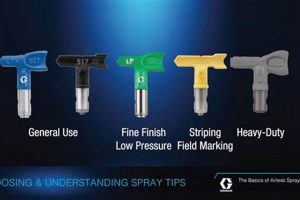
The method by which coatings are applied to carbon fiber composites exerts a direct and significant influence on the final product’s quality. The specific technique employed affects coating thickness uniformity, surface smoothness, and the overall adhesion strength between the coating and the carbon fiber substrate. For instance, a poorly executed spray application can result in uneven coating distribution, leading to areas with insufficient protection against UV radiation or mechanical abrasion. Conversely, a carefully controlled dipping process can ensure consistent coverage, minimizing the risk of localized degradation and enhancing the composite’s long-term durability. In automotive applications, where aesthetics and performance are paramount, precision spraying techniques are often utilized to achieve a flawless, mirror-like finish, maximizing both visual appeal and aerodynamic efficiency.
Different application techniques are suited to various coating types and part geometries. Spraying, for example, is versatile and adaptable to complex shapes, allowing for the application of thin, even layers of paints, clear coats, and protective sealants. However, spraying can also generate overspray and require careful control of environmental conditions to prevent imperfections such as orange peel or solvent popping. In contrast, dipping provides excellent coverage on parts with intricate geometries but is typically limited to liquid coatings with specific viscosity characteristics. Brush application, while suitable for small-scale repairs or touch-ups, is generally less precise and more prone to leaving brush marks, which can detract from the final aesthetic. The selection of the appropriate technique must therefore consider the properties of the coating material, the complexity of the part, and the desired finish quality.
In summary, application technique is not merely a procedural step but an integral component of carbon fiber finishing, impacting both the functional and aesthetic properties of the finished product. The choice of technique must be carefully considered in conjunction with coating selection and surface preparation to ensure optimal performance and durability. Continuous refinement and optimization of application techniques are essential for advancing the capabilities of carbon fiber composites and expanding their use in demanding applications across diverse industries.
4. Curing process

The curing process is an indispensable stage in carbon fiber finishing, critically influencing the final mechanical properties, surface quality, and long-term durability of the composite material. It involves a series of carefully controlled conditions designed to initiate and complete the crosslinking reaction within the applied coating or resin, thereby solidifying the finish and bonding it effectively to the carbon fiber substrate.
- Temperature Control
Maintaining precise temperature control during curing is paramount. Elevated temperatures accelerate the curing process, while insufficient heat can lead to incomplete crosslinking. Incomplete curing results in a soft, tacky surface that is susceptible to scratches and chemical attack. Conversely, excessively high temperatures may cause thermal degradation of the resin matrix, leading to cracking and compromised structural integrity. For example, aerospace-grade carbon fiber components often require multi-stage curing cycles with precisely ramped temperatures to achieve optimal material properties.
- Curing Time
The duration of the curing cycle directly impacts the degree of crosslinking and the overall performance of the finish. Insufficient curing time results in a weaker, less durable coating, while prolonged curing can lead to embrittlement. Manufacturers provide specific curing time recommendations based on the resin formulation and application thickness. Deviations from these recommendations can significantly affect the final product’s mechanical properties. For instance, automotive clear coats typically require a specific curing time to achieve the desired hardness and gloss level.
- Environmental Conditions
Ambient humidity and atmospheric pressure can influence the curing process, particularly for certain coating formulations. High humidity can interfere with crosslinking reactions, leading to a cloudy or uneven finish. In vacuum bagging or autoclave curing processes, controlled pressure ensures uniform consolidation of the carbon fiber layers and optimal bonding with the coating. Careful monitoring and control of environmental conditions are essential for achieving consistent and predictable results.
- Curing Method
Different curing methods, such as oven curing, UV curing, or ambient air curing, offer varying levels of control and efficiency. Oven curing provides uniform heat distribution and precise temperature control, making it suitable for high-performance applications. UV curing offers rapid curing times and is often used for coatings with specific photoinitiators. Ambient air curing is the simplest method but requires careful monitoring of environmental conditions. The selection of the appropriate curing method depends on the specific coating formulation, production volume, and performance requirements.
In essence, the curing process is not merely a post-application step but an integral component of carbon fiber finishing, directly shaping the composite’s structural integrity, protective capabilities, and aesthetic appeal. Careful adherence to recommended curing parameters and the implementation of stringent quality control measures are essential for realizing the full potential of carbon fiber composites in demanding applications.
5. Quality control

Quality control constitutes a fundamental pillar in carbon fiber finishing, serving as the mechanism by which adherence to specified standards and performance criteria is verified. The effectiveness of finishing processes, from surface preparation to coating application and curing, directly impacts the mechanical properties, aesthetic appeal, and long-term durability of carbon fiber composites. Therefore, rigorous quality control measures are indispensable at each stage to mitigate potential defects and ensure consistent high-quality outcomes. For example, in the aerospace industry, stringent quality control protocols are implemented to verify the structural integrity of carbon fiber components used in aircraft construction, where even minor imperfections can compromise safety and performance.
The implementation of quality control in carbon fiber finishing encompasses a range of techniques and methodologies. Visual inspections are routinely conducted to identify surface defects such as pinholes, scratches, and inconsistencies in coating thickness. Non-destructive testing methods, including ultrasonic inspection and X-ray radiography, are employed to detect internal flaws and delaminations that may not be apparent through visual examination. Adhesion testing, such as tape pull tests and cross-cut tests, assesses the bond strength between the coating and the carbon fiber substrate. Furthermore, colorimetry and gloss measurements are used to quantify the aesthetic attributes of the finished surface, ensuring compliance with specified color and gloss standards. In the automotive sector, for instance, robotic vision systems are integrated into production lines to automatically inspect and evaluate the finish quality of carbon fiber components, enabling real-time detection and correction of defects.
Effective quality control in carbon fiber finishing presents several challenges, including the complexity of composite materials, the variability of manufacturing processes, and the need for specialized expertise. Despite these challenges, the integration of robust quality control systems is crucial for ensuring the reliability, performance, and aesthetic appeal of carbon fiber composites across diverse applications. By prioritizing quality control throughout the finishing process, manufacturers can minimize the risk of defects, enhance product value, and maintain a competitive edge in the global market.
6. UV protection

Ultraviolet (UV) radiation presents a significant threat to the long-term integrity and aesthetics of carbon fiber composites. Effective UV protection strategies are therefore integral to the carbon fiber finishing process, preserving the material’s inherent properties and extending its service life.
- Resin Degradation Mitigation
UV radiation degrades the resin matrix that binds the carbon fibers together, leading to discoloration, cracking, and a reduction in mechanical strength. Finishing processes incorporating UV-absorbing additives or UV-resistant coatings mitigate this degradation. For instance, clear coats formulated with hindered amine light stabilizers (HALS) absorb UV energy, preventing it from reaching the underlying resin. This is crucial for automotive components exposed to prolonged sunlight, preventing fading and structural weakening.
- Surface Coating Selection
The choice of coating material significantly influences the level of UV protection provided. Polyurethane coatings, known for their durability and flexibility, can be modified with UV inhibitors to enhance their resistance to sunlight. Epoxy resins, while offering excellent mechanical properties, are inherently susceptible to UV degradation and typically require a protective topcoat. In marine applications, where carbon fiber components are exposed to intense sunlight and saltwater, specialized UV-resistant coatings are essential for preventing premature failure.
- Application Techniques for Uniform Protection
The application of UV-protective coatings must be uniform to ensure consistent protection across the entire surface. Inconsistent coating thickness can lead to localized areas of degradation. Spray application techniques, when properly executed, provide a uniform layer of protection. For complex geometries, electrostatic spraying can enhance coating adhesion and coverage. In architectural applications, where large carbon fiber panels are used, meticulous attention to coating application ensures long-term color stability and prevents unsightly discoloration.
- Maintenance and Reapplication Strategies
UV-protective coatings degrade over time, necessitating periodic maintenance and reapplication. The frequency of reapplication depends on the severity of UV exposure and the type of coating used. Regular cleaning and inspection can identify early signs of degradation, allowing for timely intervention. In high-performance applications, such as racing yachts, coatings are often reapplied annually to maintain optimal UV protection and prevent performance degradation.
These facets of UV protection highlight its crucial role in the comprehensive carbon fiber finishing process. Strategic selection of materials, meticulous application techniques, and diligent maintenance practices are essential for maximizing the longevity and maintaining the aesthetic qualities of carbon fiber composites subjected to UV exposure.
Frequently Asked Questions
This section addresses common inquiries regarding the procedures and considerations involved in achieving optimal results in the treatment of carbon fiber composite surfaces.
Question 1: What constitutes effective surface preparation prior to carbon fiber finishing?
Effective surface preparation involves thorough cleaning to remove contaminants such as mold release agents, followed by abrasion to create a micro-profile for enhanced coating adhesion. Surface energy testing should be conducted to verify adequate preparation.
Question 2: How is the appropriate coating for carbon fiber finishing selected?
Coating selection necessitates considering material compatibility with the carbon fiber resin matrix, environmental resistance requirements (UV exposure, chemical exposure), desired aesthetic properties (gloss level, color), and suitability for the intended application method.
Question 3: What factors influence the quality of coating application in carbon fiber finishing?
Coating application quality is affected by factors such as the chosen application technique (spraying, dipping, brushing), environmental conditions (temperature, humidity), equipment calibration, and the skill of the applicator. Uniform coating thickness is crucial.
Question 4: Why is the curing process so critical in carbon fiber finishing?
The curing process determines the final mechanical properties, surface hardness, and long-term durability of the coating. Precise control of temperature, curing time, and environmental conditions is essential for achieving optimal crosslinking and adhesion.
Question 5: What quality control measures are implemented in carbon fiber finishing?
Quality control measures include visual inspection for defects, non-destructive testing to detect internal flaws, adhesion testing to verify bond strength, and colorimetry to ensure compliance with specified aesthetic standards.
Question 6: How is UV protection achieved in carbon fiber finishing?
UV protection is achieved through the incorporation of UV-absorbing additives in the coating formulation, the selection of UV-resistant coating materials (e.g., polyurethane with HALS), and the application of a uniform protective layer to shield the underlying carbon fiber from radiation damage.
In summary, carbon fiber finishing requires meticulous attention to detail and a thorough understanding of the interplay between surface preparation, coating selection, application techniques, curing processes, quality control, and UV protection. These factors collectively determine the performance and longevity of finished carbon fiber composites.
The next section will delve into case studies that exemplify best practices in carbon fiber finishing across various industries.
Conclusion
This exploration has detailed the critical processes involved in carbon fiber finishing, emphasizing the importance of surface preparation, appropriate coating selection, precise application techniques, controlled curing, rigorous quality control, and robust UV protection. Each element contributes significantly to the overall performance, durability, and aesthetic appeal of carbon fiber composites. Effective implementation of these practices ensures that the inherent advantages of carbon fiber are fully realized.
The ongoing evolution of materials science and application technologies promises further advancements in carbon fiber finishing. Continued research and development are essential to optimize these processes, expand the range of applications, and address the increasing demand for high-performance, aesthetically pleasing carbon fiber components across diverse industries. This commitment to excellence will drive the future of composite material utilization.