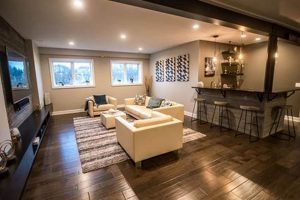
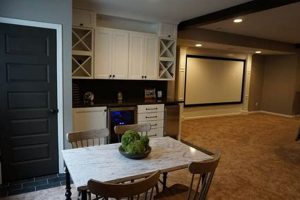
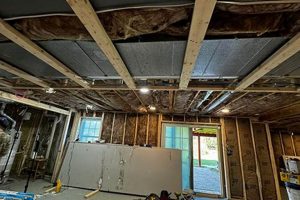
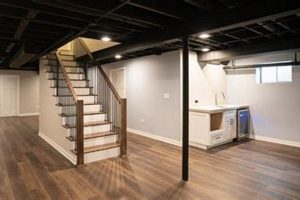
A dark-colored overhead surface in a subterranean living space, often installed after the primary construction, can alter the perceived dimensions and ambiance of the room. This design choice typically involves painting or applying a covering material to the structural components above, effectively concealing pipes, ductwork, and other mechanical systems. An example would be a room where the joists and underside of the flooring above are painted a dark hue to create a sense of height.
The adoption of this aesthetic offers several advantages. It minimizes visual clutter by drawing the eye away from exposed infrastructure, resulting in a cleaner, more refined interior. Furthermore, a darker tone can make a low-ceilinged area feel more spacious by blurring the lines between the overhead plane and the surrounding walls. Historically, the implementation of this technique has evolved from a purely functional solution for hiding unsightly elements to a deliberate design strategy employed to create a sophisticated, modern aesthetic.
Subsequent sections will delve into specific installation methods, optimal lighting schemes, compatible wall colors, and material selection considerations for achieving the desired effect. The practical aspects of sound absorption, maintenance, and cost-effectiveness will also be examined to provide a comprehensive understanding of this interior design option.
Essential Considerations for Dark Overhead Treatments in Subterranean Spaces
This section offers critical guidance for implementing a dark-toned overhead design in a finished basement, focusing on practical application and aesthetic impact.
Tip 1: Lighting Planning is Paramount: Prioritize strategic lighting design. Dark surfaces absorb light; therefore, insufficient illumination can result in a cavernous and unwelcoming environment. Incorporate layered lighting ambient, task, and accent to compensate for the reduction in light reflectivity.
Tip 2: Material Selection Matters: Carefully consider the chosen material. Flat or matte finishes minimize glare and contribute to a seamless, sophisticated appearance. Avoid high-gloss options, as they can reflect light unevenly and accentuate imperfections.
Tip 3: Surface Preparation is Crucial: Ensure thorough surface preparation before application. Clean and prime the existing ceiling to promote adhesion and prevent peeling or flaking. Patch any imperfections for a smooth, uniform finish.
Tip 4: Color Consistency is Key: Maintain consistent color across all surfaces. Utilize the same paint batch or material to avoid subtle variations that can detract from the overall aesthetic. Small discrepancies can be amplified in a confined space.
Tip 5: Ventilation Considerations: Account for ventilation system accessibility. Ensure that any treatment allows for easy access to ductwork and other mechanical components for maintenance and repairs. Integrate access panels seamlessly into the design.
Tip 6: Height Awareness is Essential: Be mindful of ceiling height. While a dark overhead can create the illusion of more space, it may feel oppressive in exceptionally low-ceilinged rooms. Consider lighter shades or alternative treatments in such scenarios.
Tip 7: Coordination with Wall Colors: Harmonize with surrounding wall colors. A dark overhead works best when paired with complementary wall tones. Lighter walls will maximize light reflection and prevent the space from feeling too enclosed. Conversely, darker walls will create a more intimate setting.
Implementing these tips will contribute to a successful and aesthetically pleasing dark overhead treatment in the finished basement, optimizing both the appearance and functionality of the space.
The following sections will address specific design considerations and alternative solutions for achieving optimal results in various finished basement scenarios.
1. Height Perception

Height perception within a finished basement environment is significantly influenced by the treatment of the overhead plane. A dark ceiling alters the perceived boundaries of the room, impacting the sense of spaciousness and overall comfort. The effective management of this visual element is critical to the success of a basement finishing project.
- Visual Recession
Dark colors inherently recede visually. When applied to a ceiling, a darkened plane tends to blur the line between the overhead surface and the surrounding space. This creates the illusion of a higher ceiling, particularly when the actual ceiling height is limited. This effect is predicated on the absorption of light, minimizing reflections that would otherwise define the ceiling’s physical boundary.
- Minimization of Obstructions
A dark ceiling effectively camouflages pipes, ductwork, and other mechanical systems that may be exposed. By concealing these visual obstructions, the perceived height is enhanced as the eye is not drawn to these typically distracting elements. This creates a more uniform and less cluttered overhead view.
- Contrast and Light Reflection
The interaction between the dark ceiling and the surrounding walls plays a crucial role. Lighter wall colors, when paired with a dark ceiling, can amplify the sense of verticality. The contrast highlights the walls, drawing the eye upward and further enhancing the perceived ceiling height. Conversely, darker walls diminish this effect, potentially making the space feel more enclosed.
- Psychological Impact
Color psychology dictates that darker tones tend to convey a sense of calmness and intimacy. In a finished basement, a dark overhead can contribute to a more relaxed atmosphere. The perceived height, combined with the color’s inherent characteristics, can significantly influence the psychological comfort level of the space.
The manipulation of height perception through a darkened overhead is a powerful tool in finished basement design. By carefully considering the interplay of visual recession, obstruction minimization, contrast with surrounding surfaces, and psychological impact, the perceived dimensions of the space can be significantly altered, contributing to a more aesthetically pleasing and functionally comfortable environment. This underscores the importance of integrating this element strategically into the overall design plan.
2. Lighting Optimization
The implementation of a dark-toned overhead surface in a finished basement necessitates a meticulous approach to lighting optimization. This stems from the reduced light reflectivity inherent in darker colors, which can significantly impact the overall illumination and ambiance of the space. Effective lighting design becomes paramount to counteract the light-absorbing properties and ensure adequate visibility and a comfortable environment. A direct consequence of neglecting lighting optimization is a cavernous or unwelcoming atmosphere, negating the intended aesthetic benefits of the dark overhead. The strategic placement of light sources, selection of appropriate fixtures, and control over light intensity are crucial components of a successful installation.
Practical applications of lighting optimization strategies include layered lighting schemes encompassing ambient, task, and accent lighting. Ambient lighting provides overall illumination, while task lighting focuses on specific areas such as workspaces or reading nooks. Accent lighting highlights architectural features or artwork, adding depth and visual interest. Furthermore, the selection of light fixtures with adjustable intensity allows for customization based on the time of day and intended use of the space. Real-life examples can be found in modern basement renovations that incorporate recessed LED lighting with dimming capabilities, combined with strategically placed floor lamps and wall sconces, to achieve a balanced and visually appealing lighting scheme.
In summary, lighting optimization is an inseparable component of incorporating a dark overhead surface in a finished basement. Addressing the challenges posed by reduced light reflectivity through careful planning and execution is essential for realizing the full potential of this design choice. The insights gained from understanding this connection contribute to a more informed approach to basement finishing, leading to spaces that are both aesthetically pleasing and functionally well-lit.
3. Material Selection

The selection of appropriate materials for a darkened overhead plane in a finished basement directly influences the space’s aesthetic appeal, acoustic properties, longevity, and maintenance requirements. This choice extends beyond mere color and encompasses factors of texture, composition, and installation method, all of which contribute to the overall success of the design.
- Acoustic Properties
Materials such as acoustic ceiling tiles or fabric-wrapped panels can significantly reduce sound reverberation and improve the overall acoustic comfort of the basement. In contrast, smooth, hard surfaces like painted drywall or wood may amplify sound, creating an echoey environment. Real-world examples include home theaters where sound absorption is crucial for optimal viewing experiences. The implications extend to everyday use, as reducing noise levels enhances the usability of the space for various activities.
- Fire Resistance
Building codes often dictate fire-resistant materials for ceiling applications. The use of materials such as fire-rated gypsum board or mineral fiber tiles can slow the spread of fire and provide valuable time for occupants to evacuate. Examples include compliance with local regulations requiring specific fire ratings for basement ceilings in residential buildings. Failure to adhere to these standards can pose significant safety risks.
- Moisture Resistance
Basements are often susceptible to moisture issues. Selecting moisture-resistant materials, such as closed-cell spray foam or vinyl-faced ceiling tiles, can prevent mold growth and degradation of the overhead surface. Real-world examples involve basements in humid climates where moisture control is paramount. Ignoring this aspect can lead to costly repairs and health hazards.
- Aesthetics and Maintenance
The chosen material impacts the aesthetic appeal of the ceiling. Options range from the sleek, modern look of painted drywall to the more textured appearance of suspended ceilings with decorative tiles. The material also influences maintenance requirements. Smooth surfaces are easier to clean, while textured surfaces may trap dust and require more frequent attention. Examples include selecting a durable, washable paint for ease of maintenance in high-traffic areas.
The careful consideration of these facets ensures that the selected material not only contributes to the desired aesthetic of the darkened overhead plane but also provides essential functional benefits. These factors directly influence the long-term usability, safety, and comfort of the finished basement space. Prioritizing these considerations is essential for a successful basement remodeling project.
4. Sound Absorption

The correlation between sound absorption and a darkened overhead surface in finished basements is a crucial, often overlooked, aspect of interior design. A dark-colored overhead treatment, while primarily chosen for aesthetic reasons, can significantly influence the acoustic properties of the space, either positively or negatively. The materials selected for this feature, and their application, directly impact the amount of sound absorbed within the room, affecting reverberation, echo, and overall sound quality. A hard, reflective surface, even if dark, will not effectively absorb sound. Conversely, specific sound-absorbing materials, when incorporated into a dark overhead design, can dramatically improve the acoustic environment. Consider a home theater: without proper sound absorption in the overhead plane, audio quality will be compromised, leading to a less immersive and enjoyable experience. Therefore, the aesthetic choice of a darkened overhead mandates a conscious consideration of sound absorption properties.
Practical applications of this understanding extend to material selection and installation techniques. For instance, acoustic ceiling tiles, available in dark colors and various textures, are specifically designed to absorb sound waves. These tiles can be installed as part of a suspended ceiling system, effectively concealing existing infrastructure while simultaneously enhancing the acoustic performance of the room. Alternatively, fabric-wrapped acoustic panels, also available in dark hues, can be mounted directly to the overhead surface. These panels offer superior sound absorption compared to conventional materials like drywall or painted wood. In recording studios, the ceiling is often covered with dark acoustic foam to minimize reflections and create a neutral acoustic environment for recording. The effective integration of these sound-absorbing materials requires careful planning and execution, ensuring that the aesthetic goals are met without compromising the acoustic properties of the space. The installation of proper sound isolation materials ensures noises from upper floors don’t intrude, creating more liveable basement.
In conclusion, the relationship between sound absorption and a darkened overhead plane in finished basements is one of critical interdependence. While a dark ceiling can contribute to the overall aesthetic appeal of a space, it is essential to consider the acoustic implications of the materials selected. By prioritizing sound absorption through the use of specialized materials and installation techniques, a balance between visual aesthetics and acoustic comfort can be achieved. Ignoring this aspect can lead to undesirable sound qualities within the space, detracting from its overall usability and enjoyment. The challenge lies in seamlessly integrating sound-absorbing materials into the design of a darkened overhead, ensuring both aesthetic appeal and acoustic performance are optimized. Understanding this dynamic is vital for any successful finished basement remodeling project.
5. Concealed Infrastructure

The strategic concealment of building infrastructure within a finished basement environment is a primary driver for the adoption of a darkened overhead plane. This design choice directly addresses the challenge of integrating essential mechanical, electrical, and plumbing (MEP) systems into a habitable space while maintaining a clean and aesthetically pleasing interior. The success of this approach hinges on the effective management of these systems and their visual impact.
- Ductwork Integration
Heating, ventilation, and air conditioning (HVAC) ductwork often presents a significant visual obstacle in unfinished basements. A darkened overhead allows for the concealment of these bulky systems, minimizing their visual intrusion. Examples include painting exposed ductwork a dark color to blend seamlessly with the ceiling, or utilizing a suspended ceiling system with dark tiles to completely hide the ductwork. The implication is a more streamlined and less cluttered appearance, enhancing the overall aesthetic appeal of the basement.
- Piping and Plumbing Management
Water pipes, drain lines, and other plumbing components can detract from the finished look of a basement. A darkened overhead offers a means to conceal these elements, either by directly painting them a dark color or by incorporating them within a suspended ceiling system. For instance, exposed copper pipes can be painted black to minimize their visibility. The benefit is a cleaner, more refined appearance, eliminating unsightly plumbing from the visual plane.
- Electrical Conduit and Wiring Organization
Electrical conduit, wiring runs, and junction boxes can create a chaotic and visually distracting overhead. A darkened ceiling provides a way to conceal these elements, contributing to a more organized and aesthetically pleasing space. Examples include running wiring within a suspended ceiling system or painting exposed conduit to match the ceiling color. This results in a more streamlined and less cluttered appearance, enhancing the overall visual appeal of the basement.
- Structural Component Camouflage
In some basement configurations, structural beams, joists, and other load-bearing elements may be exposed. A darkened overhead can serve to camouflage these structural components, minimizing their visual impact. For example, painting exposed wooden beams a dark color can help them blend into the ceiling, reducing their prominence. This approach creates a more cohesive and less visually disruptive overhead plane, contributing to a more refined finished basement environment.
The strategic concealment of infrastructure through a darkened overhead plane significantly contributes to the overall success of a finished basement project. By effectively managing the visual impact of MEP systems and structural components, a more aesthetically pleasing and functional space can be achieved. The integration of these elements is essential for creating a comfortable and visually appealing subterranean living environment. Considerations of accessibility for maintenance and repairs are critical to the long-term success of this approach.
6. Maintenance Access

Efficient maintenance access is a critical, yet often underestimated, consideration in the design and implementation of a finished basement, especially when incorporating a darkened overhead plane. The concealed nature of infrastructure behind a “finished basement black ceiling” necessitates careful planning to ensure that essential systems remain readily accessible for inspection, repair, and upgrades.
- Access Panel Integration
The strategic placement of access panels within the darkened ceiling is paramount. These panels provide entry points to concealed plumbing, electrical wiring, HVAC ductwork, and other critical building systems. Panel placement should align with known locations of shut-off valves, junction boxes, and equipment requiring periodic maintenance. Failure to incorporate appropriately sized and positioned access panels can result in destructive demolition for routine repairs, incurring significant costs and disruption. Industry best practices dictate labeling each access panel with a clear indication of the systems it provides access to, streamlining maintenance procedures.
- Suspended Ceiling Considerations
A suspended ceiling system, frequently utilized in conjunction with a “finished basement black ceiling”, offers a degree of inherent access. However, the ease of access can vary significantly depending on the tile size, suspension grid design, and the presence of obstructions. Ensure that the chosen suspended ceiling system allows for easy removal and replacement of individual tiles, particularly those located near critical infrastructure components. Systems that require specialized tools or complex disassembly procedures should be avoided in areas requiring frequent maintenance access. The selection of lightweight tiles further simplifies maintenance tasks.
- Lighting and Visibility
The darkened nature of the ceiling can impede visibility during maintenance procedures. Adequate lighting within the access panels and the concealed areas is essential for safe and efficient work. Consider incorporating integrated lighting fixtures within the access panels or utilizing portable work lights to illuminate the service area. Furthermore, a reflective surface applied to the interior of access panels can amplify available light, improving visibility. Overlooking this aspect can lead to errors, accidents, and prolonged maintenance times.
- Documentation and Mapping
Accurate documentation of the concealed infrastructure is crucial for efficient maintenance access. Detailed drawings or photographs showing the location of pipes, wiring, and ductwork behind the ceiling should be readily available. These documents should be updated whenever modifications or additions are made to the building systems. A readily accessible “as-built” map can significantly reduce the time required to diagnose and repair problems, preventing unnecessary exploration and potential damage to the ceiling or concealed infrastructure.
Neglecting maintenance access when installing a “finished basement black ceiling” can lead to costly and disruptive repairs in the future. Proactive planning and the integration of appropriate access solutions are essential for ensuring the long-term maintainability and functionality of the finished basement space. By prioritizing accessibility, homeowners and contractors can mitigate the risks associated with concealed infrastructure and ensure the continued comfort and usability of the finished basement.
Frequently Asked Questions
The following questions address common concerns and misconceptions regarding the implementation of a dark overhead plane in a finished basement.
Question 1: Does a black ceiling inherently make a basement feel smaller?
A black ceiling can indeed visually lower the perceived height of a basement if not implemented thoughtfully. However, when paired with strategic lighting and lighter wall colors, the contrasting effect can create an illusion of increased spaciousness by blurring the boundary of the ceiling.
Question 2: What type of paint is best suited for a basement ceiling?
A flat or matte paint finish is generally recommended. These finishes minimize light reflection, creating a more uniform and less distracting appearance. Furthermore, moisture-resistant paints are crucial in basement environments to prevent mold and mildew growth.
Question 3: How can adequate lighting be achieved with a black ceiling?
Layered lighting is essential. This includes ambient, task, and accent lighting. Recessed lighting, track lighting, and strategically placed lamps can compensate for the reduced light reflectivity of a dark ceiling.
Question 4: Is a black ceiling suitable for all basement styles?
While a black ceiling can complement various design styles, it is most effective in modern or contemporary spaces. It may not be the ideal choice for traditional or rustic basements, where lighter colors and more natural materials are typically preferred.
Question 5: How does a black ceiling impact sound absorption?
A standard painted ceiling offers minimal sound absorption. To improve acoustics, consider incorporating sound-absorbing materials such as acoustic ceiling tiles or fabric-wrapped panels into the ceiling design.
Question 6: What are the maintenance considerations for a black ceiling?
A black ceiling can show dust and imperfections more readily than a lighter ceiling. Regular dusting and occasional cleaning with a mild detergent are recommended to maintain its appearance. The ease of maintenance will depend on the material used.
In summary, the success of a black ceiling in a finished basement depends on careful planning and execution. Considerations of lighting, color coordination, material selection, and maintenance are crucial for achieving the desired aesthetic and functional outcomes.
The subsequent section will provide a comparative analysis of alternative ceiling treatments for finished basements.
Conclusion
The preceding discussion has explored the multifaceted considerations surrounding the implementation of a finished basement black ceiling. It has underscored the importance of carefully weighing factors such as lighting optimization, material selection, sound absorption, and access to concealed infrastructure. The successful integration of a darkened overhead plane hinges on a comprehensive understanding of these interconnected elements.
Ultimately, the decision to incorporate a finished basement black ceiling should be guided by a holistic assessment of the space’s unique characteristics and intended purpose. A well-executed design can transform a subterranean area into a sophisticated and functional living environment. Continued research and careful planning remain essential for achieving optimal results in this endeavor.