The process of completing an interwoven band, typically crafted from embroidery floss or yarn, involves securing the loose ends to prevent unraveling and achieving a neat, professional appearance. This often entails knotting, braiding, or weaving the remaining strands together and trimming any excess material. Securing the final loop or clasp is also crucial for its functionality as a wearable item.
Successfully concluding the construction of such an item enhances its longevity and aesthetic appeal. A well-executed closure ensures the object remains intact during wear, preventing premature degradation. Historically, these items have symbolized bonds between individuals, making the finalization a symbolic act of solidifying that connection. The act of completion, therefore, elevates a simple craft project to a meaningful emblem of affection and commitment.
The subsequent sections will detail specific techniques for achieving a durable and visually appealing closure, explore various design options for incorporating the fastening mechanism, and discuss troubleshooting common issues encountered during this final stage of the creation process. These techniques will provide the reader with the knowledge to confidently complete their project.
Essential Completion Guidance
The following guidelines offer proven methods for finalizing interwoven bands, ensuring durability and aesthetic appeal.
Tip 1: Secure the Knots: Reinforce all knots used throughout the construction process with a dab of clear-drying fabric glue. This preventative measure minimizes the risk of loosening and unraveling, particularly under stress.
Tip 2: Consistent Tension: Maintain uniform tension while creating the finishing knots. Uneven tension can lead to puckering or distortion of the overall design. Practice on scrap floss before applying it to the finished piece.
Tip 3: Strategic Tail Management: Carefully weave the loose tails back into the existing pattern for several rows before trimming. This integrates the ends seamlessly and adds structural integrity to the termination point.
Tip 4: Precise Trimming Technique: Use sharp, dedicated embroidery scissors to trim the tails as close to the woven surface as possible without cutting the structural threads. Dull scissors can cause fraying.
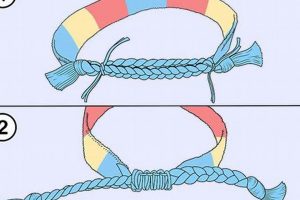
Tip 5: Consider Adjustable Closures: Implement a sliding knot closure for adjustability. This allows the wearer to customize the fit and accommodates varying wrist sizes.
Tip 6: Incorporate Beads or Charms: Integrate beads or charms at the ends for added visual appeal and to provide a more secure anchor point for the final knots. Choose elements that complement the existing design.
Tip 7: Protect with Sealant: Apply a thin coat of fabric sealant to the termination knots to further prevent fraying and ensure long-lasting security. Select a non-toxic sealant suitable for skin contact.
Adhering to these tips provides a higher level of craftsmanship, ensuring the longevity and aesthetic value of the crafted item. The commitment to detail results in a superior finished product that properly reflects the time and effort invested in its creation.
The subsequent section will address design considerations for incorporating closures and fasteners, providing a comprehensive guide to complete the intertwined band creation process.
1. Secure Knotting

Secure knotting forms an essential component in the successful completion of an interwoven band. It provides structural integrity to the completed item, preventing unraveling and ensuring the longevity of the piece. Without properly secured knots, the entire construction is at risk of disintegration, negating the time and effort invested in its creation.
- Prevention of Unraveling
The primary role of secure knotting is to prevent the threads from coming undone. This is particularly critical at the beginning and end of the design, as these are the points most susceptible to stress and wear. Insufficiently secured knots will loosen over time, leading to fraying and ultimately, the destruction of the piece. For example, using a surgeon’s knot or applying fabric glue reinforces the standard overhand knot, adding an extra layer of security.
- Maintenance of Design Integrity
Beyond simple security, the method of knotting contributes to the overall aesthetic of the piece. Consistent and evenly tightened knots maintain the intended pattern and prevent distortion. In contrast, poorly executed knots can create unsightly gaps or unevenness, detracting from the visual appeal. An example is the use of square knots, which, when consistently tied, create a uniform and visually pleasing texture.
- End Point Reinforcement
The terminal knots, used to complete the piece, require particular attention. These knots bear the brunt of stress during wear and must be robust enough to withstand repeated tension. Techniques such as creating a loop-and-knot closure or incorporating a braided finish provide additional reinforcement. Failing to adequately secure the terminal knots will result in premature failure of the bracelet.
- Material Compatibility
The type of knot used should be appropriate for the materials employed. Thicker threads may require larger, more complex knots, while finer threads can be secured with smaller, more discreet knots. The knot’s friction should also be considered; some knots may slip more easily with certain types of yarn or floss. Testing different knotting methods on scrap material helps to determine the most suitable technique for the specific project.
In summary, secure knotting is not merely a finishing touch but an integral part of the creation process. The success of completion hinges on the correct application of secure knotting techniques, ensuring the durability and aesthetic quality of the final intertwined band. Properly executed knots transform a simple craft into a lasting symbol of connection.
2. Tail Integration

Tail integration constitutes a critical phase in completing an interwoven band, directly impacting the final product’s durability and aesthetic presentation. The incomplete handling of loose thread ends, or “tails,” frequently leads to unraveling, a compromised appearance, and a shortened lifespan of the piece. The systematic incorporation of these tails into the existing structure is thus not merely an aesthetic choice but a necessary structural component. The act of weaving tails back into the body of the band secures the knots and prevents premature disintegration. For example, consider a meticulously patterned band where the tails are left exposed; the aesthetic appeal is immediately diminished, and the risk of snagging or unraveling significantly increases. Conversely, when the tails are carefully threaded back into the established pattern, the ending is seamless and the structure is reinforced.
Practical application of tail integration involves several techniques. One such method involves using a tapestry needle to weave the tails back through several rows of the existing pattern, effectively anchoring them within the structure. Another technique involves splitting the tails into individual strands and weaving them in different directions, further distributing the tension and minimizing the risk of a visible bulge. Ignoring tail integration results in not only aesthetic compromise but also functional deficiency. The failure to properly integrate the tails is a common cause of breakage, particularly in areas subject to frequent movement or friction. This understanding allows for a transition of the intertwined band from a temporary craft to a lasting symbol of affiliation.
In summary, tail integration is an indispensable step in completing the interwoven band creation process. Proper integration reinforces structural integrity, prevents unraveling, and enhances the overall aesthetic. Although time-consuming, these techniques transform a basic handmade object into a resilient and visually pleasing symbol of connection. Overcoming challenges related to tail integration requires patience, precise technique, and a commitment to detail, all contributing to the creation of a durable and aesthetically appealing finished product.
3. Consistent Tension

Maintaining uniform strand tautness is paramount to a professionally completed interwoven band. Variations in tension during construction negatively impact the final product’s structural integrity and aesthetic quality. This uniformity is not merely an aesthetic consideration; it directly affects the item’s durability and overall appearance.
- Structural Integrity
Uneven tension weakens the overall structure. Tighter strands bear disproportionately more load, increasing the risk of breakage or deformation over time. Conversely, looser strands may snag or pull out, leading to unraveling. Consistent tension distributes stress evenly, promoting a stronger and more resilient finished product. A visibly taught area will have a shorter lifespan due to the pressure.
- Pattern Definition
Varying tension distorts the intended pattern, particularly in complex designs. Strands pulled too tightly can compress or warp surrounding elements, while slack strands create gaps or sagging. Consistent tension ensures that the design elements align correctly and retain their intended proportions, resulting in a clear and aesthetically pleasing pattern. If the item has the name in block letters a difference in tautness is visibly obvious.
- Aesthetic Uniformity
Even tension contributes to a smooth and uniform surface texture. Inconsistencies create a bumpy or uneven appearance, diminishing the overall quality. Consistent tension yields a polished and professional result, enhancing the item’s visual appeal. An example includes comparing the result of a first attempt vs the fifth attempt for the creator.
- Weavability Control
Adjusting tension controls the closeness of weaves within the design. An intentional tension increase creates a denser weave and therefore a sturdier band. Conversely, decreasing the tension will cause more gapping in the band, and in some instances allow for the inclusion of gems or jewels between strings.
The adherence to consistent tension throughout the weaving process is thus essential for creating a durable, visually appealing, and structurally sound interwoven band. This attention to detail transforms a simple craft into a lasting and aesthetically pleasing representation of connection, emphasizing both form and function. Adjusting tension control allows for many options to be included in the final piece.
4. Precise Trimming

Precise trimming is inextricably linked to successfully concluding the creation of an interwoven band. This final step directly impacts the artifact’s aesthetic appeal and long-term integrity. Poorly executed trimming compromises the visual finish, potentially leading to fraying and unraveling, thereby diminishing the crafted piece’s value and longevity. For instance, jagged or uneven cuts leave exposed ends susceptible to wear, necessitating premature repairs or disposal. Conversely, meticulous and accurate trimming ensures a clean, professional appearance, preventing degradation and preserving the item’s symbolic significance as a token of affection. The act becomes integral to transforming a raw creation into a polished emblem of friendship.
The methodology of precise trimming extends beyond mere aesthetics. Appropriate tools, such as sharp embroidery scissors or rotary cutters, are essential for achieving clean cuts without damaging the surrounding threads. Employing techniques such as heat sealing (for synthetic materials) or applying a fabric sealant further mitigates the risk of fraying. Consider the scenario where multiple strands of varying colors are used; imprecise trimming can blur the design, diminishing the intended visual complexity. Deliberate and controlled trimming, however, accentuates the individual colors and patterns, enhancing the bracelet’s overall artistic impression. This reinforces the crucial role of skillful execution in realizing the desired final outcome.
Conclusively, precise trimming represents a critical culmination of the crafting process, acting as both a protective measure and an aesthetic enhancement. Neglecting this phase undermines the time and effort invested in creating the woven band. Achieving a durable, visually appealing product requires understanding the relationship between accurate trimming and the long-term preservation of the craft. This understanding facilitates the transformation of a simple handcrafted item into a lasting symbol of personal connection, reinforcing the value of skillful completion.
5. Closure Method

The choice of closure method is integral to the functionality and overall success in the finishing of an interwoven band. This decision determines not only how the item is secured around the wrist but also significantly impacts its durability and aesthetic appeal. For example, an improperly chosen or executed closure can lead to premature breakage or an uncomfortable fit, negating the purpose and sentimentality associated with the crafted piece. Conversely, a well-selected and expertly implemented closure ensures a secure, comfortable fit while enhancing the band’s visual cohesiveness. The closure method, therefore, is a crucial element that bridges the gap between a completed woven design and a wearable symbol of connection.
Examples of commonly employed closure methods include adjustable sliding knots, loop-and-knot systems, and clasps or buttons. Each method offers distinct advantages and disadvantages depending on the materials used, the complexity of the design, and the desired aesthetic. An adjustable sliding knot provides versatility in sizing but may require periodic readjustment. A loop-and-knot closure offers a secure and traditional finish but lacks adjustability. Clasps and buttons provide a more formal and durable option but can be more challenging to integrate seamlessly into the woven design. The selection of the closure should be carefully considered to align with the practical needs and aesthetic vision for the finished item.
In conclusion, the closure method represents a critical element in the finalization of an interwoven band. This step directly influences the artifact’s functionality, durability, and overall aesthetic. Selecting an appropriate closure technique, accompanied by careful and precise execution, ultimately ensures that the finished item serves as a lasting and aesthetically pleasing symbol of the bond it represents. Overlooking or underestimating the importance of this final step compromises the quality of the entire crafting process.
6. Durability Enhancement
The act of completing an interwoven band necessitates strategies aimed at maximizing its lifespan. Durability enhancement, therefore, constitutes a critical component in the final stages. The methods employed directly impact the artifact’s ability to withstand wear and tear, thereby extending its service as a symbol of enduring connection. Absent durability measures, the intricate patterns and careful craftsmanship are rendered temporary, susceptible to unraveling, fraying, and eventual disintegration. As an example, consider two identical items, one treated with sealant and the other left untreated; the former demonstrably resists moisture and abrasion, maintaining its structural integrity for a prolonged period, while the latter deteriorates rapidly. This illustrates the pragmatic importance of incorporating durability measures when completing the craft.
Practical application of durability enhancement involves several techniques. The application of fabric sealant to knots and exposed thread ends serves as a preventative measure against fraying. Heat sealing, when appropriate for the material composition, fuses the fibers together, creating a more robust termination point. Reinforcing stress points with additional stitching or strategically placed beads adds physical resilience. Moreover, selecting high-quality materials from the outset contributes significantly to the item’s overall durability. Implementing such measures increases the likelihood that the finished item will retain its aesthetic appeal and structural integrity over an extended duration. An example of the successful application of these steps ensures that an item given as a gift will resist disintegration for several years.
In summary, durability enhancement is a vital element in transforming a completed woven band from a transient creation to a lasting emblem. It demands a proactive approach, encompassing careful material selection, strategic reinforcement, and protective finishing techniques. Failure to prioritize durability undermines the time, effort, and symbolic value invested in the craft. Consequently, recognizing and implementing these measures is essential for ensuring the completed item endures as a tangible representation of connection.
Frequently Asked Questions
This section addresses common inquiries regarding techniques, challenges, and best practices associated with finalizing interwoven bands, providing clarity and practical guidance for achieving professional and durable results.
Question 1: What constitutes a secure knot for terminating an interwoven band?
A secure knot, for this purpose, should effectively resist slippage and prevent unraveling. Suitable options include the surgeon’s knot, square knot, or a modified overhand knot reinforced with fabric glue. The choice depends on the material and desired aesthetic, but the knot’s primary function is to maintain structural integrity.
Question 2: How should one manage loose thread ends to prevent fraying and maintain a clean appearance?
Loose thread ends, or tails, should be woven back into the existing pattern using a tapestry needle. This conceals the ends and anchors them securely within the structure. Trimming excess thread close to the woven surface, followed by the application of a fabric sealant, further minimizes fraying.
Question 3: What factors contribute to inconsistent tension during the creation process, and how can it be mitigated?
Inconsistent tension typically arises from variations in hand pressure or interruptions during the process. To mitigate this, practitioners should strive for a consistent grip and maintain a steady rhythm. Regular breaks are advisable to prevent fatigue, which can contribute to uneven tension.
Question 4: Is heat sealing a viable option for securing the ends of all interwoven bands?
Heat sealing is only appropriate for synthetic materials, such as nylon or polyester. Applying heat to natural fibers, like cotton or silk, can damage or weaken the threads. When using synthetic materials, exercise caution to avoid melting or discoloring the surrounding woven structure.
Question 5: What are the advantages and disadvantages of different closure methods, such as sliding knots versus clasps?
Sliding knots offer adjustability and ease of use, but they may require periodic readjustment. Clasps provide a more secure and durable closure, but they can be more challenging to integrate seamlessly into the design and may not be suitable for all materials or styles.
Question 6: How can fabric sealant be applied effectively to enhance durability without compromising the item’s aesthetic?
Fabric sealant should be applied sparingly and precisely to the knots and thread ends. A thin coat is sufficient to provide protection without creating a stiff or glossy appearance. Allow the sealant to dry completely before handling the item to prevent sticking or discoloration.
In summary, successfully finalizing an interwoven band necessitates meticulous attention to detail, employing appropriate techniques, and understanding the properties of the materials used. Addressing these common questions provides a foundation for achieving professional and long-lasting results.
The subsequent section will explore advanced design considerations, providing insights into incorporating intricate patterns and embellishments to elevate the craftsmanship of interwoven bands.
Concluding the Process
The comprehensive exploration of how to finish a friendship bracelet has detailed essential techniques for ensuring both durability and aesthetic appeal. From secure knotting and strategic tail integration to consistent tension and precise trimming, each step contributes to the overall quality and longevity of the interwoven band. Selecting the appropriate closure method and employing durability enhancement strategies further solidifies the item’s integrity.
Mastering these techniques transforms a simple craft into a lasting symbol of connection. Continued practice and attention to detail are vital to produce work that reflects dedication and precision. The knowledge disseminated herein serves as a foundation for creating interwoven bands that endure as tangible representations of friendship and artistry.