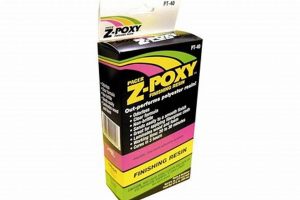
This product is designed to rejuvenate a vehicle’s exterior by addressing imperfections in the painted surface. It’s a treatment frequently used to remove oxidation, minor scratches, swirl marks, and other blemishes that can dull the original luster. For example, a hazy or faded paint job can often be significantly improved through the proper application of this type of solution.
The application of such a product offers several benefits, including enhanced aesthetic appeal and potential preservation of the vehicle’s value. By removing surface contaminants and correcting minor flaws, it contributes to a smoother, more reflective finish. Historically, these solutions have evolved from simple polishes to complex formulations incorporating advanced abrasives and protective agents.
The following discussion will delve into the specific types of these treatments available, application techniques, considerations for different paint types, and long-term maintenance strategies to preserve the restored finish.
Application Strategies for Surface Rejuvenation
Achieving optimal results with surface rejuvenation requires careful planning and execution. The following tips offer guidance for effective application and long-term preservation of a vehicle’s finish.
Tip 1: Surface Preparation is Paramount: Before application, the vehicle’s surface must be thoroughly cleaned. Wash the vehicle to remove loose dirt and debris, then use a clay bar to eliminate bonded contaminants. This ensures the treatment can effectively address imperfections without interference.
Tip 2: Product Selection Based on Paint Condition: Different formulations are designed for varying levels of paint damage. A mild compound is appropriate for light oxidation and swirl marks, while more aggressive compounds are necessary for deeper scratches. Selecting the correct product minimizes the risk of further damage.
Tip 3: Test in an Inconspicuous Area: Prior to treating the entire vehicle, test the selected product in a small, hidden area. This allows for observation of the product’s effects on the specific paint type and confirmation of desired results without compromising visible surfaces.
Tip 4: Controlled Application is Essential: Apply the product using a dual-action polisher with appropriate pads. Use low speeds and consistent pressure to avoid creating holograms or uneven correction. Overlapping passes ensure uniform coverage and consistent results.
Tip 5: Remove Residue Thoroughly: After polishing, remove all residue with a clean microfiber cloth. Failure to remove residue can result in clouding or hazing of the finish. Multiple passes with fresh cloths may be necessary.
Tip 6: Consider Environmental Conditions: Avoid applying surface rejuvenation products in direct sunlight or extreme temperatures. Optimal conditions typically involve a shaded area with moderate temperatures to ensure consistent product performance and prevent premature drying.
Tip 7: Protection After Restoration: After restoring the finish, apply a wax or sealant to protect the newly corrected surface. This barrier shields the paint from environmental contaminants and UV radiation, extending the life of the restoration.
Proper application and ongoing maintenance are crucial for maximizing the benefits of this type of surface treatment. Adhering to these guidelines will contribute to a long-lasting, aesthetically pleasing finish.
The subsequent sections will explore specific product types and address advanced techniques for achieving professional-grade results.
1. Abrasive properties
Abrasive properties are central to the function of any surface rejuvenation product. The ability to effectively remove surface imperfections, such as scratches, oxidation, and swirl marks, depends directly on the type and concentration of abrasives present in the formulation.
- Abrasive Particle Size and Type
The size and type of abrasive particles determine the aggressiveness of the product. Coarser abrasives are used for removing more significant imperfections, while finer abrasives are employed for polishing and refining the finish. Examples of abrasive types include aluminum oxide, cerium oxide, and silicon carbide. The selection of the appropriate abrasive depends on the severity of the paint damage and the desired level of correction.
- Abrasive Concentration
The concentration of abrasives within a product formulation dictates its cutting power. Higher concentrations allow for faster removal of imperfections but also increase the risk of creating new swirl marks or holograms. Lower concentrations offer a more controlled approach, suitable for less damaged finishes and more experienced users.
- Abrasive Suspension and Lubrication
Effective abrasive action requires proper suspension and lubrication. The carrier fluid, often a combination of oils and solvents, ensures that the abrasive particles are evenly distributed and lubricated during application. This reduces friction and prevents the abrasives from clumping or scratching the paint surface.
- Abrasive Breakdown and Diminishing Abrasives
Some advanced formulations utilize diminishing abrasives, which break down into smaller particles during the polishing process. This allows for both cutting and polishing in a single step, reducing the need for multiple products and improving the overall finish. The controlled breakdown of abrasives minimizes the risk of over-correction and maximizes clarity.
In summary, the abrasive properties are a critical factor in determining the effectiveness and safety of any surface rejuvenation product. Careful consideration of the abrasive particle size, concentration, suspension, and breakdown characteristics is essential for achieving optimal results and avoiding potential damage to the vehicle’s finish.
2. Chemical Composition

The chemical composition of automotive finish restorers is a primary determinant of their performance, influencing their ability to correct imperfections, enhance gloss, and protect the underlying paint. Understanding the roles of various chemical components is crucial for selecting an appropriate restorer.
- Solvents and Carriers
Solvents and carriers facilitate the application and distribution of active ingredients. These compounds, such as mineral spirits and naphtha, dissolve and suspend abrasive particles and polishing agents, ensuring even coverage on the surface. The choice of solvent affects evaporation rates and the product’s overall workability, influencing the ease of application and residue removal.
- Abrasives and Polishing Agents
These components are responsible for removing surface imperfections. Abrasives like aluminum oxide and cerium oxide physically abrade the clear coat, reducing the appearance of scratches and swirl marks. Polishing agents, often finer grades of abrasives or chemical polishing compounds, refine the surface to enhance gloss. The balance between cutting power and polishing ability is determined by the type and concentration of these agents.
- Protectants and Gloss Enhancers
Protectants, such as waxes, polymers, and silicones, create a barrier against environmental contaminants and UV radiation, extending the life of the restored finish. Gloss enhancers, like resins and oils, improve the refractive index of the surface, increasing its reflectivity and shine. These components contribute to the long-term appearance and durability of the restored paint.
- Additives and Stabilizers
Additives and stabilizers improve the product’s overall performance and shelf life. Emulsifiers ensure proper mixing of oil and water-based components, while thickeners control viscosity and prevent settling. UV absorbers protect the paint from fading and oxidation, while antioxidants prevent the degradation of chemical compounds within the restorer itself, maintaining its effectiveness over time.
In summation, the effectiveness of an automotive finish restorer is dictated by the synergistic interaction of its chemical constituents. Proper selection considers the specific needs of the vehicle’s finish, balancing corrective capabilities with protective and aesthetic enhancements.
3. Application Method

The application method is a critical determinant in the effectiveness of any automotive finish restorer. It directly impacts the consistency of results, the potential for damage to the paint surface, and the overall aesthetic outcome. An improperly executed application can negate the benefits of even the highest-quality restorer, while a skilled application can maximize the potential of a moderately performing product. The choice of application technique must align with the specific formulation of the restorer, the condition of the vehicle’s finish, and the desired level of correction.
For example, rotary buffers, while capable of rapid correction, require considerable skill to avoid creating holograms or burning through the clear coat, particularly on softer paints. Dual-action polishers offer a more controlled and forgiving approach, reducing the risk of damage while still providing effective correction. Hand application, while less aggressive, is suitable for minor imperfections or for applying finishing polishes and waxes. The pads used in conjunction with machine application also play a crucial role; different materials and textures are designed for specific purposes, from cutting to polishing. Furthermore, factors such as pad speed, pressure, and overlap must be carefully controlled to ensure uniform correction and minimize the risk of unevenness or swirl marks.
In conclusion, the application method is not merely a step in the restoration process, but an integral component that significantly influences the final outcome. A thorough understanding of the available techniques, equipment, and their respective limitations is essential for achieving optimal results and preserving the integrity of the vehicle’s finish. Failure to prioritize the application method can lead to unsatisfactory results and potential damage, highlighting the importance of careful planning and execution.
4. Paint Compatibility

Paint compatibility represents a critical consideration when selecting and applying automotive finish restorers. The interaction between the restorer’s chemical components and the vehicle’s existing paint system directly influences the success and safety of the restoration process. Incompatibility can lead to a range of adverse effects, from minor cosmetic issues to significant paint damage.
- Clear Coat Sensitivity
Clear coats vary significantly in their chemical composition and hardness. Some clear coats are more susceptible to damage from aggressive solvents or abrasives found in certain restorers. For example, a restorer designed for harder, more durable clear coats may cause hazing, cracking, or even delamination of a softer clear coat. Identifying the type of clear coat and selecting a compatible restorer is crucial.
- Single-Stage vs. Two-Stage Paints
Single-stage paint systems, where the color and clear coat are combined, react differently to restorers compared to two-stage systems, which have a separate clear coat layer. Restorers formulated for two-stage systems may be too aggressive for single-stage paints, potentially removing too much material and altering the color. Conversely, restorers designed for single-stage paints might not be effective on the harder clear coats of two-stage systems.
- Paint Age and Condition
The age and condition of the paint influence its susceptibility to damage from restorers. Older paints may be more brittle and prone to cracking, while oxidized or faded paints may react unpredictably. Restorers with strong solvents can further weaken aged paint, leading to premature failure. A gentler approach is often necessary for older or compromised paint finishes.
- Previous Repairs and Repaints
Vehicles with previous repairs or repaints may have differing paint formulations or thicknesses compared to the original factory finish. These areas can react differently to restorers, potentially resulting in uneven correction or color mismatches. Testing the restorer in an inconspicuous area of a repaired panel is advisable before applying it to the entire vehicle.
In summary, paint compatibility is a multifaceted consideration requiring careful evaluation of the vehicle’s paint type, age, condition, and repair history. Selecting a restorer specifically formulated for the paint system in question minimizes the risk of damage and ensures a successful and aesthetically pleasing restoration.
5. Clarity enhancement

Clarity enhancement represents a primary objective in the application of an automotive finish restorer. The intended outcome of using such a product is the removal of surface imperfections that impede light reflection, thus reducing the overall clarity and brilliance of the paint. This enhancement manifests as a restored depth of color and a heightened reflectivity, resulting in a more visually appealing finish. The efficacy of a finish restorer in achieving clarity is directly related to its ability to eliminate swirl marks, minor scratches, oxidation, and other forms of surface contamination. Without adequate clarity enhancement, the restorative process is incomplete, leaving the finish dull and lacking in visual impact. For example, a vehicle subjected to environmental pollutants over time may exhibit a hazy or cloudy appearance. A finish restorer, when properly applied, can remove this layer of oxidation, revealing the original clarity of the paint beneath.
The method by which a finish restorer achieves clarity enhancement varies depending on its formulation. Abrasive compounds physically remove the outermost layer of the paint, leveling the surface and eliminating imperfections. Chemical polishes utilize reactive agents to smooth the surface and increase its reflectivity. Regardless of the specific mechanism, the end result is a more uniform and reflective surface. Furthermore, the level of clarity enhancement achieved can be quantified using gloss meters, which measure the specular reflection of light from the painted surface. Higher gloss readings indicate greater clarity and a more visually appealing finish. Detailing professionals routinely use these meters to assess the effectiveness of various finish restorers and application techniques.
In conclusion, clarity enhancement is an indispensable component of the automotive finish restoration process. It is the metric by which the success of the treatment is ultimately judged, as it directly contributes to the aesthetic appeal and perceived value of the vehicle. While factors such as protection and longevity are also important, clarity enhancement remains the immediate and most noticeable benefit. The selection and application of an appropriate finish restorer should therefore prioritize its ability to effectively restore the paint’s inherent clarity.
6. Protective qualities
The protective qualities inherent in an automotive finish restorer are crucial for long-term preservation of the vehicle’s appearance. While the immediate effect of a restorer is often the removal of surface imperfections, its ability to impart a protective barrier against environmental contaminants, UV radiation, and oxidation is equally significant. The inclusion of protective agents, such as waxes, polymers, or ceramic coatings, within the restorer’s formulation directly influences the longevity and durability of the restored finish. Without these protective components, the benefits of surface correction are quickly negated, as the underlying paint becomes vulnerable to re-oxidation and damage.
For example, a vehicle treated with a restorer lacking UV inhibitors will experience accelerated fading and discoloration when exposed to sunlight. Similarly, a restorer that does not provide adequate protection against water spots or chemical etching will see the restored finish quickly degraded by environmental pollutants. The presence of hydrophobic polymers in the restorer formulation causes water to bead and roll off the surface, reducing the likelihood of water spots. Additionally, sealants and coatings create a physical barrier that shields the paint from minor abrasions and chemical attacks. Consider a scenario where two vehicles undergo similar restorative treatments, but one is treated with a restorer containing ceramic nanoparticles. The ceramic-infused finish will exhibit superior resistance to scratches, chemical etching, and UV damage compared to the vehicle treated with a conventional restorer, thus extending the duration of the restored appearance.
In conclusion, the protective qualities of an automotive finish restorer are not merely an ancillary benefit, but an integral aspect that determines the long-term value of the restoration. The inclusion of protective agents within the restorer’s formulation safeguards the corrected paint surface from environmental degradation, thereby maintaining its aesthetic appeal and potentially preserving the vehicle’s resale value. Therefore, careful consideration of the protective properties of a finish restorer is essential for achieving a durable and lasting enhancement of the vehicle’s appearance. The understanding that the protective qualities of the restorer is just as important as the cutting abilities, and should be noted during the restoring process.
7. Longevity factors

Longevity factors significantly influence the perceived value and effectiveness of any automotive finish restorer. The product’s ability to not only correct existing imperfections but also provide lasting protection against future degradation determines its overall utility. The interaction between the restorer’s chemical composition, application technique, and the prevailing environmental conditions dictates the duration of its benefits. A restorer exhibiting superior cutting and polishing capabilities offers limited long-term value if its protective properties are deficient, leading to rapid re-emergence of surface defects.
Consider, for instance, two vehicles subjected to identical environmental conditions after undergoing restorative treatments with different products. Vehicle A receives a treatment employing a finish restorer formulated with advanced UV inhibitors and durable polymer sealants. Vehicle B is treated with a restorer that excels in defect removal but lacks robust protective additives. Over time, Vehicle A exhibits significantly less fading, oxidation, and water spotting compared to Vehicle B. This disparity highlights the direct correlation between longevity factors and the sustained visual appeal of the restored finish. The application technique is also relevant; proper surface preparation and thorough product removal contribute to enhanced bonding and extended protection.
The effective integration of longevity factors within automotive finish restorers poses ongoing challenges for product developers. Balancing abrasive properties with durable protective qualities requires sophisticated formulations. Addressing diverse environmental conditions and varying paint types further complicates the design process. Ultimately, the practical significance of understanding longevity factors lies in making informed purchasing decisions that prioritize both immediate visual improvement and sustained protection for the vehicle’s finish, ensuring long-term aesthetic preservation and potentially enhancing resale value.
Frequently Asked Questions
The following section addresses common inquiries regarding the use, application, and limitations of automotive finish restorers. This information aims to provide clarity and guidance for vehicle owners and detailing professionals.
Question 1: What distinguishes an automotive finish restorer from a standard car polish?
Automotive finish restorers typically possess more aggressive abrasive properties than standard polishes. While both aim to enhance paint gloss, restorers are formulated to correct more significant imperfections, such as oxidation, swirl marks, and light scratches. Standard polishes primarily refine the surface after defect correction.
Question 2: Can an automotive finish restorer remove deep scratches?
Automotive finish restorers are primarily designed for the removal of superficial imperfections. Deep scratches that penetrate the clear coat or reach the base coat may require professional repair techniques, such as wet sanding or repainting. Attempting to remove deep scratches with a restorer alone can lead to clear coat thinning or damage.
Question 3: How frequently can an automotive finish restorer be applied to a vehicle?
Frequent application of automotive finish restorers is not recommended. Each application removes a small amount of the clear coat, and excessive polishing can lead to premature clear coat failure. The frequency of application should be determined by the severity of paint degradation and should be minimized through proper washing and waxing techniques.
Question 4: Is it necessary to apply a wax or sealant after using an automotive finish restorer?
The application of a wax or sealant after using an automotive finish restorer is highly recommended. The restorer removes protective layers from the paint surface, leaving it vulnerable to environmental contaminants and UV radiation. A wax or sealant provides a protective barrier, extending the life of the restored finish.
Question 5: Can an automotive finish restorer be used on all types of automotive paint?
Not all automotive finish restorers are suitable for all paint types. Different paint systems, such as single-stage and two-stage finishes, have varying levels of sensitivity to abrasives and solvents. Selecting a restorer specifically formulated for the vehicle’s paint type is crucial to avoid damage or discoloration.
Question 6: What are the potential risks associated with improper use of an automotive finish restorer?
Improper use of an automotive finish restorer can result in several adverse effects, including swirl marks, holograms, clear coat thinning, and paint discoloration. Over-aggressive polishing or the use of incompatible products can permanently damage the paint surface, necessitating costly repairs. Proper application techniques and product selection are essential.
The information provided in this FAQ section is intended as a general guide. Specific recommendations may vary depending on the vehicle’s paint condition and the selected product. Consulting with a professional detailing service is advisable for complex paint correction needs.
The subsequent section will explore advanced techniques for achieving professional-grade results in automotive finish restoration.
Automotive Finish Restorer
This discussion has explored the multifaceted nature of automotive finish restorers, emphasizing the critical interplay between abrasive properties, chemical composition, application methods, paint compatibility, clarity enhancement, protective qualities, and longevity factors. A thorough understanding of these elements is paramount for achieving optimal results and preserving the integrity of a vehicle’s paint surface.
The diligent application of appropriate techniques and careful product selection remain essential. The responsible use of an automotive finish restorer is a commitment to the preservation and enhancement of a valuable asset. Further research and professional guidance are encouraged to fully realize the potential of this technology and maintain the long-term aesthetic appeal of vehicles.