



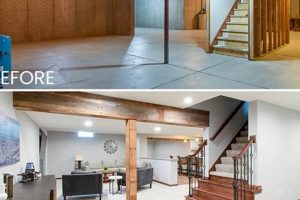
Transforming underutilized below-grade spaces into functional and aesthetically pleasing living areas within the Indianapolis metropolitan area is a common home improvement project. This process typically involves insulating walls, installing flooring, adding electrical and plumbing systems, and incorporating features such as drywall, lighting, and other desired amenities to create a usable environment. Examples include converting unfinished basements into home theaters, guest suites, home offices, or recreational rooms.
Completing this type of renovation project can significantly increase property value and overall living space. Historically, homeowners have sought to maximize usable square footage within their existing residences, and basement remodeling provides a cost-effective solution compared to building an addition. Furthermore, a professionally finished lower level can improve energy efficiency, reduce noise transmission, and enhance the overall comfort of the home.
Subsequent sections will delve into key considerations for planning a lower-level remodel, including budgeting and cost estimation, selecting qualified contractors, navigating local building codes and permitting processes, and exploring popular design trends for below-grade spaces. This information aims to provide a comprehensive guide for homeowners considering this type of home improvement project.
Essential Considerations for Lower Level Remodeling Projects
This section outlines vital considerations for successful basement renovations within the Indianapolis area. Adherence to these guidelines can mitigate potential challenges and optimize project outcomes.
Tip 1: Define Project Scope and Objectives: Clearly articulate the intended use of the renovated space. This will inform design decisions, material selection, and budgetary allocations. A detailed plan minimizes costly alterations during the construction phase.
Tip 2: Establish a Realistic Budget: Conduct thorough research to determine prevailing costs for materials and labor. Obtain multiple quotes from qualified contractors and factor in contingency funds for unforeseen expenses. Adhering to a well-defined budget is crucial for financial prudence.
Tip 3: Prioritize Moisture Mitigation: Invest in comprehensive waterproofing measures to prevent water intrusion and subsequent mold growth. This may include interior or exterior drainage systems, vapor barriers, and appropriate ventilation. Neglecting this aspect can lead to significant structural damage and health concerns.
Tip 4: Ensure Adequate Insulation: Employ appropriate insulation materials to maintain comfortable temperatures and minimize energy consumption. Consider local climate conditions and select insulation with a suitable R-value. Proper insulation contributes to long-term cost savings and enhanced comfort.
Tip 5: Verify Code Compliance and Permits: Research local building codes and obtain all necessary permits before commencing any construction activities. Failure to comply with regulations can result in fines, delays, and mandatory remediation work. This step ensures safety and legal compliance.
Tip 6: Select Qualified Professionals: Engage licensed and insured contractors with a proven track record in basement renovation projects. Verify references and review portfolios to assess their expertise and quality of workmanship. Professional execution ensures a durable and aesthetically pleasing outcome.
Tip 7: Plan for Egress and Safety: Ensure the renovated space meets egress requirements for emergency escape. This may involve installing an egress window or door that meets specific size and functionality standards. Safety considerations are paramount in basement remodeling.
Diligent planning and execution, guided by these considerations, are essential for a successful transformation of below-grade space. These tips are designed to mitigate risk and optimize the investment in a home improvement project.
The subsequent article sections will further elaborate on specific design and material considerations relevant to this type of renovation project.
1. Cost Optimization

Cost optimization, within the context of basement finishing projects in Indianapolis, represents the strategic allocation of financial resources to achieve desired remodeling outcomes while minimizing unnecessary expenditures. This involves a detailed assessment of material costs, labor rates, permitting fees, and potential unforeseen expenses. A primary cause of budget overruns in such projects is inadequate initial planning and a failure to secure competitive bids from multiple contractors. The effects of neglecting cost optimization can range from project delays and compromised material quality to complete project abandonment due to financial constraints. The component’s importance stems from its direct impact on project feasibility and return on investment. For instance, homeowners who invest time in comparative material shopping and explore alternative design solutions may realize significant cost savings without sacrificing desired aesthetics or functionality.
The practical application of cost optimization in basement renovation projects extends beyond simple price comparisons. It encompasses value engineering principles, which involve identifying opportunities to reduce costs without compromising performance or longevity. For example, utilizing cost-effective insulation materials with comparable R-values can significantly lower overall insulation expenses. Similarly, careful consideration of lighting fixtures and plumbing fixtures can result in long-term energy and water savings, offsetting initial investment costs. Furthermore, staging the project in phases, if feasible, allows homeowners to manage cash flow and prioritize essential elements over purely cosmetic enhancements. Another significant example involves efficient space planning. Avoiding unnecessary walls or complex architectural features reduces material requirements and labor time. Homeowners benefit by consulting with experienced contractors and designers who can provide guidance on cost-effective alternatives and value-added solutions specific to lower-level renovations.
In summary, cost optimization is a fundamental element of successful basement finishing projects. By employing strategies such as comparative shopping, value engineering, and phased implementation, Indianapolis homeowners can maximize the value of their investment and achieve their desired remodeling outcomes within a predetermined budget. Overlooking this critical aspect increases the risk of financial strain and project shortcomings. Integrating cost optimization into the initial planning stages is paramount to a project’s ultimate success and long-term value.
2. Code Compliance

Adherence to established building codes is a non-negotiable aspect of basement finishing projects within Indianapolis. These codes are designed to ensure the safety, structural integrity, and habitability of remodeled spaces, protecting both occupants and the property’s overall value.
- Egress Requirements
Building codes mandate specific egress requirements for finished basements, typically requiring at least one operable window or exterior door that meets minimum size and accessibility standards. This is to ensure occupants can safely evacuate in the event of a fire or other emergency. Failure to meet these requirements can result in the denial of occupancy permits and potential safety hazards.
- Fire Safety
Fire safety regulations govern material selection and construction methods to minimize fire hazards. This includes the use of fire-resistant drywall, proper sealing of electrical penetrations, and installation of smoke detectors. In Indianapolis, adherence to these codes is essential to reduce the risk of fire-related injuries and property damage.
- Electrical and Plumbing Standards
Finished basements require electrical and plumbing systems that comply with local and national codes. This encompasses proper wiring, grounding, and installation of fixtures, as well as adherence to plumbing codes for water supply and drainage. Non-compliant electrical or plumbing work can lead to electrical shocks, fire hazards, and water damage.
- Ceiling Height Regulations
Building codes typically specify minimum ceiling heights for habitable spaces, including finished basements. In Indianapolis, failure to meet these height requirements can render the space non-compliant and potentially unusable as a living area. This regulation aims to ensure adequate headroom and a comfortable living environment.
The stringent enforcement of building codes in Indianapolis underscores the importance of engaging qualified contractors who possess a thorough understanding of local regulations. Ignoring code compliance during the process of basement finishing can lead to costly rework, legal liabilities, and compromised safety. Therefore, integrating code compliance into all stages of the project, from initial planning to final inspection, is paramount to a successful and legally sound renovation.
3. Moisture Management

Moisture management represents a crucial component of any successful basement finishing project within the Indianapolis area. The region’s climate, characterized by seasonal temperature variations and a high water table in certain areas, makes basements particularly vulnerable to moisture-related problems. Ignoring this aspect can lead to significant structural damage, health hazards, and compromised indoor air quality.
- Foundation Waterproofing
Foundation waterproofing involves the application of protective barriers to exterior foundation walls to prevent water penetration. This can include coatings, membranes, and drainage systems. Inadequate waterproofing can result in water seepage through foundation cracks and porous concrete, leading to basement flooding and structural deterioration. Examples of effective waterproofing methods include applying a waterproof membrane to the exterior foundation walls during new construction or excavating and applying a sealant to existing foundations. The implications for Indianapolis homeowners neglecting this aspect are significant, potentially involving costly repairs and health issues due to mold growth.
- Interior Drainage Systems
Interior drainage systems are designed to collect and redirect water that enters the basement through walls or floors. These systems typically consist of a perforated pipe installed along the perimeter of the basement floor, connected to a sump pump that discharges the water away from the foundation. These systems are critical in older homes where exterior waterproofing may be compromised. Examples of interior drainage solutions include the installation of a French drain along the interior perimeter. The absence of such systems can cause standing water, fostering mold and mildew growth, damaging finished surfaces, and creating an unhealthy living environment.
- Vapor Barriers and Ventilation
Vapor barriers are materials installed on interior walls and floors to prevent moisture from migrating through the structure. Effective ventilation strategies are essential for removing excess humidity from the basement environment. Inadequate vapor barriers and poor ventilation can lead to condensation on walls and ceilings, creating a breeding ground for mold and mildew. Examples of effective strategies involve the use of closed-cell spray foam insulation with an integrated vapor barrier and the installation of a dehumidifier to maintain optimal humidity levels. Indianapolis homeowners who overlook these measures risk compromising indoor air quality and the long-term durability of their finished basement.
- Sump Pump Systems
Sump pump systems consist of a pump installed in a sump pit, designed to remove accumulated water from around the foundation. These systems are particularly important in areas with high water tables or poor drainage. Sump pumps effectively prevent basement flooding and water damage, particularly during periods of heavy rainfall. Examples of effective sump pump installations include a battery backup system to ensure functionality during power outages. The implications of a malfunctioning or absent sump pump in Indianapolis can be severe, potentially resulting in extensive water damage and the loss of valuable possessions.
The interrelation of these four key facets of moisture management is essential for ensuring a dry and healthy basement environment. Homeowners within Indianapolis pursuing below-grade remodeling must prioritize professional assessment and implementation of appropriate moisture control measures. These preventative steps will protect their investment and contribute to a comfortable and healthy living space. Integrating these moisture management strategies is not merely an optional consideration; it is a fundamental prerequisite for successful below-grade space renovation.
4. Design Flexibility

Design flexibility, within the context of basement finishing in Indianapolis, refers to the capacity to adapt the intended use and aesthetic features of the remodeled space to meet specific homeowner needs and preferences. This adaptability is a primary driver for choosing to finish a basement, as it offers a blank canvas for creating customized living areas not readily available elsewhere in the home.
- Adaptable Space Allocation
Basements often present large, open floor plans, facilitating the creation of various layouts. This allows homeowners to allocate space according to their requirements, such as incorporating a home theater, guest suite, home office, recreational area, or a combination thereof. An example includes dividing a basement into a home gym, a children’s play area, and a storage space while ensuring natural light and ventilation are optimally distributed. In Indianapolis, this adaptability is valuable, as homes may lack dedicated spaces for specific activities, and basement finishing provides a tailored solution.
- Customizable Aesthetic Elements
Design flexibility extends to aesthetic choices, allowing homeowners to select materials, finishes, and architectural details that align with their personal style. This includes flooring types, wall treatments, lighting fixtures, and decorative elements. For instance, a homeowner may opt for a modern aesthetic with clean lines, minimalist dcor, and energy-efficient lighting, or a more traditional design with warm colors, wood accents, and cozy furnishings. This allows the remodeling to complement the existing home or provide a unique design identity. This customization aspect ensures the finished basement integrates seamlessly with the homeowner’s lifestyle.
- Integrated Functionality
Design flexibility permits the seamless integration of various functional elements, such as plumbing, electrical, and HVAC systems, while adapting to the existing infrastructure. This includes planning for bathroom additions, wet bars, home theater wiring, and efficient heating and cooling solutions. An example would be incorporating a full bathroom with custom tile work or a home theater with concealed wiring and soundproofing. Efficiently integrating these elements maximizes usability and enhances the overall value of the finished space.
- Future-Proofing and Adaptability
Design flexibility also entails incorporating elements that allow for future modifications and adaptations. This includes planning for potential changes in lifestyle, family size, or technological advancements. For instance, incorporating flexible wiring systems that can accommodate future technological upgrades or designing spaces that can be easily reconfigured to serve different purposes. This proactive approach ensures the remodeled basement remains functional and relevant over time. By planning for change, Indianapolis homeowners can avoid costly renovations in the future and maximize the long-term utility of their finished basement.
The convergence of adaptable space allocation, customizable aesthetics, integrated functionality, and future-proofing collectively defines the importance of design flexibility. In the Indianapolis context, where homes often vary in size and style, this flexibility allows homeowners to create unique and functional living spaces within their basements, tailored precisely to their individual needs and preferences, substantially enhancing the value and utility of their homes.
5. Contractor Selection

The successful completion of a basement finishing project in Indianapolis is inextricably linked to the selection of a qualified contractor. The contractor serves as the central point of coordination, managing various subcontractors, procuring materials, and ensuring adherence to building codes and project timelines. A poorly chosen contractor can lead to substandard workmanship, cost overruns, code violations, and project delays, transforming what should be an improvement into a costly and stressful experience. Conversely, a competent contractor provides expertise in design, construction, and project management, ensuring a smooth and efficient renovation process.
The significance of contractor selection is exemplified by projects involving complex structural modifications or intricate design features. For instance, if a homeowner desires to install a new egress window to comply with safety regulations, the contractor must possess the experience and knowledge to accurately assess the structural integrity of the foundation wall, obtain necessary permits, and execute the installation according to code. Similarly, for projects involving specialized finishes or custom millwork, the contractor’s network of skilled subcontractors becomes crucial in achieving the desired aesthetic outcome. Real-life scenarios in Indianapolis demonstrate that homeowners who prioritize contractor qualifications, verify licenses and insurance, and carefully review references often achieve superior results compared to those who base their decision solely on price.
In summary, contractor selection constitutes a pivotal decision for homeowners undertaking basement remodeling. The contractor’s expertise directly impacts the quality, cost-effectiveness, and overall success of the project. Thorough due diligence in vetting potential contractors, including verifying credentials, reviewing portfolios, and securing detailed bids, is essential. While cost remains a consideration, prioritizing experience, reliability, and a proven track record of successful basement finishing projects in Indianapolis mitigates potential risks and maximizes the likelihood of a positive outcome. Selecting the right contractor transforms a potentially daunting undertaking into a rewarding enhancement of the home.
Frequently Asked Questions
The subsequent questions and answers address common inquiries regarding below-grade renovation projects within the Indianapolis metropolitan area. The aim is to provide clear and concise information to homeowners considering such an undertaking.
Question 1: What is the typical cost range for completing a basement renovation in Indianapolis?
The expenditure varies substantially based on the project scope, materials selected, and the complexity of the design. On average, expect to spend between $35 to $75 per square foot for a standard transformation. High-end finishes and structural alterations can significantly increase this cost.
Question 2: Are permits required for the process?
Yes, the acquisition of necessary permits from the Indianapolis Department of Metropolitan Development is mandatory for most basement renovation projects. This ensures compliance with building codes and safety regulations. Consult with a qualified contractor or the department directly to ascertain specific permit requirements.
Question 3: How long does it typically take to complete a typical basement project?
Project duration is contingent upon the scope of the work. A basic project might take 4-8 weeks, while more complex projects involving structural changes or custom designs can extend beyond 12 weeks. Unforeseen issues, such as weather delays or material shortages, may also impact the timeline.
Question 4: How can potential moisture problems be mitigated?
Effective moisture management strategies include foundation waterproofing, interior drainage systems, vapor barriers, and sump pump installation. Addressing these issues is crucial to prevent water damage, mold growth, and compromised indoor air quality.
Question 5: Is it necessary to hire a professional contractor for a basement remodel?
While some homeowners may attempt DIY renovations, engaging a qualified and licensed contractor is highly recommended. Contractors possess the expertise to navigate building codes, manage subcontractors, and ensure quality workmanship. Improperly executed work can lead to costly repairs and safety hazards.
Question 6: How does this type of project impact property value?
A professionally finished lower level can significantly enhance property value by adding functional living space and improving the overall appeal of the home. The precise increase in value depends on various factors, including the quality of the renovation, the location of the property, and current market conditions.
The above responses offer a general overview of common inquiries regarding basement remodeling. Homeowners are advised to seek professional guidance and conduct thorough research to make informed decisions.
The following article sections delve into specific cost considerations associated with projects in Indianapolis.
Conclusion
This exploration of basement finishing Indianapolis has underscored the multifaceted nature of transforming underutilized below-grade spaces. Factors such as cost optimization, code compliance, moisture management, design flexibility, and, critically, contractor selection all contribute significantly to the success or failure of such projects. Careful attention to each of these aspects is paramount for homeowners seeking to enhance the value and utility of their properties within the Indianapolis metropolitan area.
The decision to undertake a basement renovation represents a substantial investment, both financially and in terms of time and effort. A well-planned and executed project can yield significant returns, creating valuable living space and increasing property value. Homeowners are strongly advised to conduct thorough research, seek professional guidance, and prioritize quality workmanship to ensure a positive and lasting outcome. The long-term benefits of a properly finished lower level far outweigh the potential risks associated with inadequate planning or execution.
![Define: What Does Finished Basement Mean? [Explained] | Best Final Touch: Elevate Your Projects with Professional Finishing](https://bestfinaltouch.com/wp-content/uploads/2026/05/th-167-300x200.jpg "Define: What Does Finished Basement Mean? [Explained] Best Final Touch: Elevate Your Projects with Professional Finishing")