![Top Choice: Best Finish for Pine [Guide & Tips]](data:image/svg+xml;base64,PHN2ZyB4bWxucz0iaHR0cDovL3d3dy53My5vcmcvMjAwMC9zdmciIHdpZHRoPSI0NzQiIGhlaWdodD0iNjAiIHZpZXdCb3g9IjAgMCA0NzQgNjAiPjxyZWN0IHdpZHRoPSIxMDAlIiBoZWlnaHQ9IjEwMCUiIHN0eWxlPSJmaWxsOiNjZmQ0ZGI7ZmlsbC1vcGFjaXR5OiAwLjE7Ii8+PC9zdmc+ "Top Choice: Best Finish for Pine [Guide & Tips] Best Final Touch: Elevate Your Projects with Professional Finishing")
Selecting the optimal protective coating for softwood, like that derived from coniferous trees, is a critical decision that impacts both the aesthetic appeal and the longevity of the wood product. The ideal coating not only enhances the natural beauty of the grain but also provides a durable barrier against moisture, scratches, and UV damage. Examples include penetrating oils, film-forming varnishes, and specialized paints designed for wood surfaces.
The appropriate surface treatment is essential for preserving the integrity of this readily available and often economical material. A well-chosen coating can prevent discoloration, warping, and cracking, thereby extending the lifespan of furniture, trim, and other wooden items. Historically, different cultures have employed various methods, from natural waxes to more modern synthetic polymers, to achieve the desired protection and appearance. Understanding the properties of different coatings is key to successful long-term preservation.
The subsequent sections will delve into the specific characteristics of various coating types, offering guidance on application techniques, surface preparation, and considerations for achieving a durable and attractive result. Furthermore, different options are assessed considering both ease of application and environmental impact.
Applying Protective Coatings to Softwood
Achieving optimal results when coating softwood requires careful consideration and adherence to specific techniques. The following tips provide essential guidance for ensuring a durable and aesthetically pleasing surface.
Tip 1: Surface Preparation is Paramount: Thoroughly sand the wood surface, progressing through progressively finer grits (e.g., 120, 180, 220), to create a smooth and even base. Remove all dust particles using a tack cloth or vacuum cleaner to ensure proper adhesion.
Tip 2: Select a Compatible Primer: Applying a primer designed for wood surfaces is crucial, especially for paint applications. The primer seals the wood pores, reduces absorption of the topcoat, and promotes better adhesion. Tinted primers can also enhance the final color.
Tip 3: Consider a Wood Conditioner: Prior to staining, a wood conditioner can prevent blotching, which is a common issue with softwood due to its uneven density. Apply the conditioner according to the manufacturer’s instructions and allow it to dry completely before staining.
Tip 4: Apply Thin, Even Coats: Avoid applying thick coats of coating, as this can lead to drips, runs, and uneven drying. Instead, apply multiple thin, even coats, allowing each coat to dry completely before applying the next. Lightly sand between coats with fine-grit sandpaper (e.g., 320 grit) to remove any imperfections.
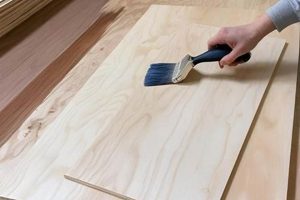
Tip 5: Choose the Right Application Method: Select the appropriate application method based on the chosen coating and desired finish. Brushes are suitable for smaller projects and detailed work, while sprayers provide a more even finish on larger surfaces. Rollers are effective for applying coatings to flat surfaces.
Tip 6: Temperature and Humidity Control: Environmental conditions significantly impact the drying process. Ensure the workspace is well-ventilated and maintain a moderate temperature and humidity level. Avoid applying coatings in direct sunlight or during periods of high humidity.
Tip 7: Test in an Inconspicuous Area: Prior to applying the coating to the entire project, test it in an inconspicuous area to ensure the desired color and finish are achieved. This allows for adjustments to be made without affecting the visible surfaces.
Adhering to these guidelines enhances the longevity and appearance of coated softwood, resulting in a professional-quality finish. Proper preparation, compatible products, and controlled application are crucial factors for success.
The subsequent section will explore specific product recommendations and case studies, illustrating best practices in real-world applications.
1. Surface Preparation

Achieving an optimal surface treatment for softwood is inextricably linked to the meticulousness of surface preparation. This foundational stage dictates the adhesion, uniformity, and overall longevity of the subsequent coating layers. Without proper preparation, even premium-grade coatings are prone to premature failure, resulting in a compromised aesthetic and diminished protective qualities.
- Sanding Uniformity
Uniform sanding ensures a consistent surface profile, eliminating variations in porosity that can lead to uneven coating absorption. Inadequate sanding results in blotchiness, particularly when stains are applied. For example, coarse sanding leaves deeper scratches that absorb more stain, creating dark patches. Proper sanding, using progressively finer grits, creates a homogenous surface that accepts the stain evenly.
- Dust Removal
The presence of dust particles inhibits proper adhesion between the wood substrate and the applied coating. Dust interferes with the mechanical bond, creating weak points susceptible to chipping and peeling. Effective dust removal methods, such as vacuuming followed by wiping with a tack cloth, are essential to ensure a clean surface for optimal coating adherence. Failure to remove dust invariably results in a compromised and visually imperfect treatment.
- Defect Rectification
Addressing existing defects, such as dents, scratches, and blemishes, is critical for achieving a smooth, professional-grade. Minor imperfections can be rectified with wood filler or patching compounds, while larger defects may require more extensive repairs. Ignoring these imperfections leads to a final treatment that accentuates these flaws, diminishing the overall aesthetic appeal. A pre-treatment inspection allows for defect identification and subsequent remediation.
- Resin Extraction
Softwood, especially freshly cut lumber, often contains pockets of resin that can interfere with coating adhesion and curing. Resin bleed-through can cause discoloration and bubbling, compromising the treatment’s integrity. Solvent wiping can help remove resin.
The combined effect of these surface preparation facets directly influences the ultimate success of softwood coating. By prioritizing meticulous sanding, thorough dust removal, defect rectification, and resin extraction, one creates an ideal canvas for achieving a durable, aesthetically pleasing, and long-lasting surface treatment. Compromising on surface preparation inevitably undermines the potential of the chosen treatment, resulting in suboptimal performance and visual shortcomings.
2. Primer Compatibility

Primer compatibility constitutes a critical element in achieving an optimal surface coating on softwood. The porous nature of this wood necessitates a primer that effectively seals the substrate, thereby preventing excessive absorption of the topcoat. Incompatible primers may fail to create a proper barrier, leading to uneven color saturation, increased coating consumption, and potential adhesion issues. For instance, using an oil-based primer beneath a water-based topcoat can result in poor adhesion and premature coating failure, necessitating costly rework. This emphasizes the cause-and-effect relationship between primer selection and the ultimate quality of the surface coating.
The selection of a compatible primer directly influences the longevity and aesthetic appeal of the finished product. Primers designed for wood surfaces typically contain additives that promote adhesion and prevent tannin bleed-through, a common problem with certain types of softwood. Furthermore, some primers are specifically formulated to enhance the color and sheen of the topcoat. A real-world example of the practical significance of this understanding can be found in furniture restoration. Utilizing a shellac-based primer on old softwood furniture prior to painting helps to prevent the tannins from the wood from staining the new paint layer, ensuring a consistent and attractive finish. The absence of a suitable primer often results in discoloration, requiring multiple coats of paint to achieve the desired opacity and uniformity.
In summary, primer compatibility is paramount for obtaining a high-quality surface treatment on softwood. Improper primer selection can lead to a range of problems, including poor adhesion, uneven color saturation, and premature coating failure. The understanding of primer compatibility is not merely theoretical; it is a practical necessity for achieving durable and aesthetically pleasing results. Challenges may arise in identifying the optimal primer for specific softwood types and topcoat combinations; however, careful consideration of product specifications and performance characteristics will lead to success. The proper choice of primer serves as a vital foundation for maximizing the potential of the surface coating, ensuring its longevity and visual appeal.
3. Stain-blocking

The necessity of stain-blocking arises when striving for an optimal finish on softwood. Resinous compounds and extractives present within softwood can migrate to the surface, causing discoloration and compromising the aesthetic qualities of applied coatings. Implementing effective stain-blocking measures is, therefore, integral to achieving a consistent, high-quality treatment.
- Tannin Inhibition
Softwood species, such as pine, contain tannins that are prone to leaching through coatings, resulting in undesirable brown or yellow staining. Stain-blocking primers contain specialized additives that effectively inhibit tannin migration, preventing discoloration of the overlying treatment. For example, using a quality stain-blocking primer before applying a light-colored paint on knotty pine can prevent the knots from bleeding through and discoloring the paint. This ensures that the final treatment maintains its intended color and appearance, avoiding unsightly blemishes caused by tannin bleed.
- Resin Sealing
Resin pockets within softwood can exude to the surface, especially under warm conditions, interfering with coating adhesion and causing surface imperfections. Stain-blocking primers create a barrier that effectively seals the resin, preventing it from seeping through and disrupting the finish. A practical illustration of this benefit can be seen in the preparation of pine trim for painting. Without a stain-blocking primer, the resin can dissolve into the paint, causing it to remain tacky or create visible drips. Properly sealing the resin ensures a smooth, durable, and aesthetically pleasing painted surface.
- Knot Stabilization
Knots in softwood are particularly susceptible to resin exudation and can also absorb coatings unevenly, leading to variations in color and sheen. Stain-blocking primers specifically formulated for knot stabilization prevent resin bleed and create a uniform surface for subsequent coatings. In the context of crafting pine furniture, stain-blocking primers play a pivotal role in ensuring that the knots are effectively sealed and prepared for staining or painting, resulting in a consistent and visually appealing final product. This enhances the overall quality and durability of the furniture.
- Prevention of Extractive Bleed
Various extractives, beyond tannins and resins, can migrate from softwood and cause discoloration or interfere with the adhesion and curing of coatings. Stain-blocking primers act as a comprehensive barrier against these extractives, preventing their migration and ensuring a stable, uniform surface. Consider the application of a clear coat on pine paneling. Without adequate stain-blocking, the extractives from the wood can discolor the clear coat over time, resulting in an aged and unattractive appearance. The use of a quality stain-blocking primer mitigates this risk, preserving the clarity and integrity of the topcoat.
The effective implementation of stain-blocking measures is a crucial determinant in achieving an optimal coating on softwood. By inhibiting tannin migration, sealing resin pockets, stabilizing knots, and preventing extractive bleed, stain-blocking primers create a stable and uniform surface that enhances the performance and longevity of the chosen treatment. These factors collectively contribute to the creation of a durable, aesthetically pleasing, and high-quality finish on softwood.
4. Application technique

Achieving an optimal surface on softwood is intrinsically linked to the chosen application technique. The method employed for applying the coating significantly influences the final appearance, durability, and protective qualities of the treatment. Improper application can negate the benefits of even the highest quality materials, resulting in an unsatisfactory outcome.
- Brush Application
Brush application is suitable for smaller projects and intricate details. Brush selection is crucial; natural bristle brushes are generally preferred for oil-based coatings, while synthetic brushes are better suited for water-based products. Proper brush loading and stroke technique are essential to avoid brush marks and ensure uniform coverage. For instance, when applying varnish to pine furniture, overlapping brushstrokes can create an uneven finish. Consistent pressure and a controlled pace yield the most aesthetically pleasing result.
- Spray Application
Spray application, using either airless or conventional sprayers, provides a smooth and even finish on larger surfaces. This method is particularly effective for achieving a professional-grade appearance. Proper spray gun setup, including nozzle selection and pressure adjustment, is critical to prevent runs, sags, and orange peel texture. Furthermore, maintaining a consistent distance and angle from the surface ensures uniform coating thickness. Consider applying lacquer to a pine tabletop; a properly calibrated sprayer delivers a flawless, factory-like finish that is difficult to achieve with other methods.
- Roller Application
Roller application is appropriate for large, flat surfaces, such as paneling or doors. Selecting the correct roller nap is important; a shorter nap is suitable for smooth surfaces, while a longer nap is better for textured surfaces. Applying even pressure and overlapping each pass prevents streaking and ensures uniform coverage. When coating a pine door with paint, a high-density foam roller can provide a smooth, consistent finish, minimizing brush marks and maximizing the paint’s protective properties.
- Wiping Application
Wiping application is commonly used for applying penetrating oils and stains. This method involves applying the coating liberally and then wiping off the excess with a clean cloth. This technique allows the coating to penetrate the wood pores, enhancing its natural grain and providing a durable, low-sheen finish. For example, applying Danish oil to pine shelving using a wiping technique accentuates the wood’s natural beauty while providing a protective barrier against moisture and scratches.
In conclusion, the chosen application technique profoundly impacts the final result of any coating applied to softwood. Whether brushing, spraying, rolling, or wiping, the selected method must be carefully matched to the coating type, surface characteristics, and desired aesthetic. Mastery of these techniques is paramount for achieving a durable, visually appealing, and long-lasting surface. Different products are available depending on the application used.
5. Drying conditions
The conditions under which a coating cures on softwood exert a significant influence on the attainment of an optimal surface. Ambient temperature, humidity levels, and ventilation directly affect the rate of solvent evaporation and the cross-linking process of the coating molecules. Deviations from the manufacturer’s recommended drying parameters can lead to a range of problems, including prolonged tackiness, blistering, cracking, and impaired adhesion. For instance, applying an oil-based varnish to pine furniture in a high-humidity environment can result in a cloudy or milky finish due to moisture entrapment within the coating film. This underscores the cause-and-effect relationship between drying conditions and the ultimate appearance and durability of the surface.
Maintaining appropriate drying conditions is essential for ensuring that the coating forms a cohesive, durable, and aesthetically pleasing layer. Elevated temperatures can accelerate drying, but if excessive, may cause the surface to skin over before the underlying coating is fully cured, leading to internal stresses and eventual cracking. Conversely, low temperatures can slow the drying process, increasing the risk of dust contamination and prolonging the project timeline. Adequate ventilation facilitates the removal of solvents, preventing the accumulation of fumes and promoting uniform drying. The practical significance of this understanding is evident in professional woodworking shops, where climate-controlled environments are often employed to optimize the curing process and minimize the potential for defects. Proper climate control for finishes can be achieved in smaller settings by use of dehumidifiers, air conditioning, and heaters.
In summary, optimal drying conditions are a non-negotiable component in achieving a high-quality treatment on softwood. Inappropriate drying conditions can undermine the performance of even the best coatings. Challenges in managing these conditions may arise due to seasonal variations or limited access to controlled environments; however, careful monitoring and adjustment of temperature, humidity, and ventilation can mitigate these risks. The ability to regulate the drying environment enables maximization of the coating’s potential, ensuring a durable, aesthetically pleasing, and long-lasting finish. Product choice and proper environment are key. Proper climate control can significantly improve the results.
6. Type of finish
The correlation between the specific coating employed and the achievement of an optimal outcome on softwood is direct and multifaceted. The selection of a particular coating dictates the aesthetic qualities, protective capabilities, and long-term performance of the treated wood. A coating that is ill-suited to the characteristics of softwood will inevitably result in a compromised finish, regardless of meticulous surface preparation or application technique. For example, a brittle, high-gloss varnish applied to a pine floor subjected to heavy traffic will likely develop cracks and scratches, detracting from its appearance and diminishing its protective function. This illustrates how the inherent properties of the coating must align with the intended application and the wood’s inherent characteristics to achieve the desired outcome. Consider the difference between a penetrating oil and a film-forming polyurethane. The oil soaks into the wood fibers, emphasizing the grain and providing a natural look, while the polyurethane creates a hard, protective shell on top of the wood. Each has its benefits for particular applications.
Furthermore, the interplay between coating type and application environment influences the final result. A water-based acrylic lacquer, while offering low odor and ease of cleanup, may not provide adequate moisture resistance for exterior softwood applications, leading to warping and decay. Conversely, a spar varnish, formulated for marine environments, provides exceptional water resistance but may yellow over time and require more frequent reapplication when used indoors. Understanding the chemical composition, performance characteristics, and application limitations of different coating types is, therefore, essential for making informed decisions and achieving a durable and aesthetically pleasing surface. In the furniture making arena, understanding the difference in hardness, durability, and UV resistance is important to product longevity.
In summary, the selection of an appropriate coating is a pivotal determinant in achieving an optimal finish on softwood. The chosen coating must be compatible with the wood’s characteristics, aligned with the intended application, and capable of withstanding the environmental conditions to which it will be exposed. Challenges may arise in balancing aesthetic preferences with functional requirements; however, a thorough understanding of the properties and limitations of different coating types enables informed decision-making and ensures a durable, aesthetically pleasing, and long-lasting surface treatment. Different top coats are important. Careful research is a key component in making these selections.
7. UV protection

Ultraviolet (UV) radiation presents a significant threat to surface coatings applied to softwood. Its relevance in achieving a durable and aesthetically pleasing result lies in the prevention of degradation, discoloration, and subsequent failure of the protective film. Effective UV protection is, therefore, a critical consideration when selecting a coating intended for use in environments exposed to sunlight.
- Lignin Degradation Inhibition
UV radiation promotes the breakdown of lignin, a complex polymer within wood cell walls. This degradation results in surface discoloration, often manifesting as a graying or yellowing effect. Coatings formulated with UV absorbers or stabilizers mitigate this process by absorbing or reflecting harmful UV rays. For instance, a clear exterior varnish containing UV inhibitors preserves the natural color of pine siding, preventing premature graying. The inclusion of UV inhibitors is paramount in maintaining the aesthetic integrity of the coated surface.
- Coating Film Stabilization
UV exposure can induce chain scission and cross-linking within the coating film itself, leading to embrittlement, cracking, and loss of adhesion. UV stabilizers scavenge free radicals generated by UV radiation, preventing or slowing down these degradation processes. A marine-grade spar varnish, designed for boats, exemplifies this principle. It contains a high concentration of UV stabilizers to withstand prolonged exposure to sunlight and saltwater, thereby extending the lifespan of the coating and protecting the underlying wood.
- Prevention of Binder Breakdown
The binder component of a coating, responsible for holding the pigment together and adhering the film to the substrate, is susceptible to UV degradation. This breakdown results in chalking, where the pigment particles are released from the surface, creating a powdery residue. Coatings with UV-resistant binders, such as acrylic polymers, exhibit superior resistance to chalking. An example of this is found in exterior acrylic paints used on pine trim. These paints maintain their color and gloss for extended periods, reducing the need for frequent repainting and preserving the appearance of the wood.
- Enhancement of Coating Longevity
The integration of UV protection mechanisms directly translates to increased coating longevity. By preventing lignin degradation, stabilizing the coating film, and protecting the binder, UV-resistant coatings extend the service life of the treated softwood. This not only reduces maintenance costs but also minimizes the environmental impact associated with frequent recoating. Decks constructed of pine benefit immensely from the use of UV-resistant stains or sealants, as these products significantly prolong the deck’s lifespan and preserve its structural integrity and visual appeal.
The strategic incorporation of UV protection is essential for optimizing the performance and extending the lifespan of surface treatments applied to softwood. By addressing the specific degradation mechanisms induced by UV radiation, coatings formulated with UV absorbers, stabilizers, and resistant binders ensure a durable, aesthetically pleasing, and long-lasting result. The careful selection of UV-resistant coatings is, therefore, a crucial aspect of achieving the best possible outcome for softwood in environments exposed to sunlight.
Frequently Asked Questions
This section addresses common inquiries and clarifies essential considerations pertaining to selecting and applying appropriate surface treatments to softwood materials, such as pine.
Question 1: Is surface preparation truly necessary for softwood?
Meticulous surface preparation is paramount. Softwood’s porous nature demands thorough sanding to ensure uniform absorption and adhesion of any subsequent coating. Failure to adequately prepare the surface will result in uneven color penetration, compromised adhesion, and a diminished aesthetic outcome.
Question 2: What is the significance of using a primer on softwood?
A compatible primer is essential for sealing the porous surface of softwood. It minimizes excessive absorption of the topcoat, promotes adhesion, and prevents the migration of tannins and resins that can discolor the final finish.
Question 3: How does one prevent blotching when staining softwood?
Blotching, or uneven stain absorption, can be mitigated by applying a wood conditioner prior to staining. This pre-treatment evens out the porosity of the wood, allowing for uniform stain penetration and a more consistent color.
Question 4: What factors influence the drying time of surface treatments on softwood?
Drying time is affected by ambient temperature, humidity levels, and ventilation. Elevated humidity and low temperatures will prolong drying, while adequate ventilation facilitates solvent evaporation and promotes faster curing. Adherence to the manufacturer’s recommendations for drying conditions is crucial.
Question 5: Are all coatings equally suitable for both interior and exterior softwood applications?
No. Coatings intended for exterior use must possess UV resistance, moisture protection, and flexibility to withstand the elements. Interior coatings may prioritize aesthetics and ease of application over extreme weather resistance. Selecting a coating appropriate for the intended environment is essential for longevity and performance.
Question 6: How does one ensure a durable surface on softwood flooring?
Durability on softwood flooring is achieved through a combination of factors, including thorough sanding, the application of multiple coats of a durable finish (such as polyurethane), and regular maintenance. Avoid using abrasive cleaners and consider applying a protective wax or polish to prolong the life of the finish.
In summary, achieving a satisfactory surface coating on softwood necessitates careful attention to surface preparation, primer selection, application technique, drying conditions, and the specific requirements of the intended application. Prioritizing these factors ensures a durable, aesthetically pleasing, and long-lasting outcome.
The subsequent section will provide case studies illustrating the principles discussed herein.
Best Finish for Pine
This exploration has elucidated the critical factors influencing the selection and application of an optimal coating for softwood substrates. Surface preparation, primer compatibility, stain-blocking techniques, application methodologies, drying conditions, finish selection, and ultraviolet protection have been established as interconnected elements directly impacting the durability, aesthetic appeal, and longevity of the final product. A failure to adequately address any single facet can compromise the overall outcome, negating the benefits of otherwise sound practices.
The discerning application of these principles demands a comprehensive understanding of wood science, coating chemistry, and environmental considerations. The pursuit of excellence in softwood treatment requires a commitment to informed decision-making and meticulous execution. Continued research and refinement of coating technologies will undoubtedly yield further advancements, enabling ever-greater levels of protection and aesthetic enhancement. The legacy of craftsmanship is built upon a foundation of knowledge, skill, and unwavering dedication to achieving the best possible result.