Surface treatments applied to the lower level’s foundation slab offer both aesthetic enhancements and protective qualities. These applications range from simple sealants that guard against moisture to elaborate decorative overlays that mimic the appearance of tile or stone. The selection often depends on the intended use of the space and the desired visual effect.
Employing a suitable covering provides significant value by increasing the durability and longevity of the underlying structure. Furthermore, it can create a more comfortable and visually appealing environment, increasing property value and improving the functionality of the space. Historically, these treatments have evolved from purely utilitarian solutions to sophisticated design elements.
The following sections will delve into the types of available options, the installation process involved, associated costs, and essential maintenance procedures for achieving a successful and long-lasting result.
Essential Considerations for Subterranean Slab Surface Treatments
The successful application of surface treatments on lower-level foundation slabs requires careful planning and execution. These guidelines provide essential considerations for achieving optimal results and ensuring long-term satisfaction.
Tip 1: Conduct Thorough Moisture Testing: Prior to any application, comprehensive moisture testing is paramount. High moisture levels can compromise the adhesion and longevity of many coatings, leading to costly failures. Employ a calcium chloride test or relative humidity probe to accurately assess moisture vapor transmission rates.
Tip 2: Proper Surface Preparation is Critical: Achieving adequate adhesion depends on meticulous surface preparation. This typically involves mechanical abrasion, such as grinding or shot blasting, to remove contaminants, laitance, and existing coatings. The resulting surface should be clean, dry, and profiled appropriately for the selected product.
Tip 3: Select Appropriate Materials Based on Usage: The choice of materials should align with the intended use of the space. High-traffic areas may require more durable and abrasion-resistant options, such as epoxy coatings, while less frequently used areas may be suitable for more decorative stains or sealers.
Tip 4: Consider the Existing Slab Condition: Assess the slab for cracks, imperfections, or unevenness. Repairs may be necessary before applying any surface treatment. Self-leveling underlayments can address uneven surfaces and create a smooth, uniform base for the final layer.
Tip 5: Understand the Impact of Temperature and Humidity: Environmental conditions significantly influence the application and curing process. Maintain appropriate temperature and humidity levels as specified by the manufacturer to ensure proper adhesion and curing. Avoid application during periods of extreme temperature fluctuations.
Tip 6: Adhere to Manufacturer’s Instructions: Closely follow the manufacturer’s instructions for mixing, application, and curing times. Deviating from these guidelines can lead to substandard performance and premature failure of the treatment.
Tip 7: Apply a Protective Sealer: Regardless of the chosen treatment, a protective sealer is recommended to enhance durability and resistance to stains and abrasion. Reapply the sealer periodically to maintain its protective properties.
Implementing these guidelines ensures a durable, aesthetically pleasing, and long-lasting surface, improving the value and utility of the subterranean space.
The next section will provide a detailed overview of the various options available, exploring their specific characteristics, advantages, and disadvantages.
1. Moisture Mitigation

Moisture control represents a fundamental prerequisite when considering surface treatments for lower-level foundation slabs. Excess moisture permeating the slab can compromise the integrity of applied coatings, leading to adhesion failure, microbial growth, and diminished aesthetic appeal. Effective mitigation strategies are therefore integral to the long-term success of any floor finishing project.
- Vapor Barriers and Underlayments
The installation of vapor barriers beneath the slab during construction, or the application of moisture-resistant underlayments before treatment, constitutes a primary defense. These barriers impede moisture migration from the soil into the slab, reducing the likelihood of subsequent coating issues. Example: Utilizing a polyethylene film beneath a newly poured slab. Implication: Reduced risk of blistering or peeling of applied finishes due to hydrostatic pressure.
- Penetrating Sealers and Waterproofing Membranes
The application of penetrating sealers or waterproofing membranes directly to the existing slab provides a secondary layer of protection. These materials chemically react with the slab, creating a hydrophobic barrier that repels moisture. Example: Applying a silane-siloxane based sealer to an existing slab. Implication: Prevents moisture from rising through the slab pores, thereby protecting the coating system.
- Dehumidification and Ventilation Systems
Controlling ambient humidity levels within the lower level also contributes to overall moisture management. Dehumidification systems remove excess moisture from the air, while adequate ventilation promotes air circulation, reducing condensation. Example: Installing a whole-house dehumidifier in a moisture-prone basement. Implication: Reduces surface moisture accumulation, especially in humid climates, thereby preserving finish integrity.
- Proper Site Grading and Drainage
Effective moisture mitigation begins outside the structure. Ensuring proper site grading directs water away from the foundation. Functional gutters and downspouts prevent water accumulation around the building’s perimeter. Example: Correcting negative grading along the foundation. Implication: Minimizing hydrostatic pressure against the foundation walls and slab, consequently reducing moisture intrusion.
Implementing a comprehensive moisture control strategy, encompassing both preventative measures and ongoing monitoring, safeguards the investment in subterranean slab surface treatments. By addressing moisture issues proactively, the longevity and performance of the chosen finish are significantly enhanced, resulting in a more durable and aesthetically pleasing space.
2. Surface Preparation

The success of any surface treatment on a lower-level foundation slab is inextricably linked to the quality of the surface preparation. This foundational step dictates the adhesion, longevity, and overall performance of the chosen finish, necessitating a thorough and meticulous approach.
- Cleaning and Decontamination
The removal of contaminants, such as dirt, oil, grease, and existing coatings, is paramount. Mechanical abrasion, chemical cleaning, or a combination of both are employed to achieve a clean substrate. Example: Pressure washing with a degreasing agent followed by abrasive blasting. Implication: Ensures proper bonding between the slab and the applied finish, preventing delamination and premature failure.
- Profiling the Surface
Creating an adequate surface profile enhances mechanical adhesion. This involves roughening the surface to provide a “tooth” for the finish to grip onto. Methods include grinding, shot blasting, and acid etching. Example: Using a concrete grinder with diamond tooling to create a CSP (Concrete Surface Profile) of 3. Implication: Increases the surface area available for bonding, improving the overall strength and durability of the finished floor.
- Repairing Cracks and Imperfections
Addressing existing cracks, spalls, and other imperfections is crucial for achieving a uniform and aesthetically pleasing surface. These repairs typically involve filling the defects with a patching compound or epoxy. Example: Filling hairline cracks with a flexible epoxy crack filler. Implication: Prevents moisture infiltration through the cracks and provides a smooth, level surface for the application of the finish.
- Moisture Testing and Mitigation
Assessing moisture vapor transmission rates is essential, particularly in lower-level environments. Elevated moisture levels can compromise the adhesion and longevity of many floor finishes. Moisture mitigation strategies, such as applying a moisture vapor retarder, may be necessary. Example: Performing a calcium chloride test to determine the moisture vapor emission rate. Implication: Prevents blistering, bubbling, and other moisture-related issues that can damage the finish and lead to costly repairs.
In essence, proper preparation creates an ideal foundation for the subsequent application of the chosen finish. By rigorously addressing cleaning, profiling, repairs, and moisture control, the resulting floor is more likely to exhibit superior performance, durability, and aesthetic appeal, maximizing the value and utility of the subterranean space.
3. Material Selection

The selection of materials directly dictates the performance and longevity of a lower-level foundation slab treatment. Material choice impacts moisture resistance, durability under load, aesthetic qualities, and maintenance requirements. Failure to consider these factors results in premature deterioration, increased maintenance costs, and potential health concerns. For example, selecting a non-breathable epoxy coating for a slab with high moisture vapor transmission rates invariably leads to blistering and delamination. Conversely, employing a penetrating silane-siloxane sealer on a dry slab enhances its resistance to water intrusion and staining without altering its natural appearance.
Practical application hinges on a thorough understanding of the environmental conditions within the subterranean space and the intended use of the area. High-traffic zones, such as workshops or playrooms, require durable and abrasion-resistant materials like polyurethane coatings or polished surfacing. Conversely, infrequently used storage areas may benefit from simpler and more economical solutions, such as acrylic sealers. Consideration must also be given to the potential for hydrostatic pressure and the likelihood of water intrusion. In such cases, moisture-mitigating underlayments or specialized waterproofing membranes offer crucial protection.
Ultimately, informed material selection represents a critical component of successful lower-level foundation slab treatments. It necessitates a comprehensive assessment of site-specific conditions, performance expectations, and budgetary constraints. While seemingly straightforward, overlooking this step compromises the entire project, resulting in costly remediation and diminished long-term satisfaction. Choosing suitable materials ensures lasting protection, enhanced aesthetics, and a functional subterranean environment.
4. Cost Effectiveness
The implementation of foundation slab treatments in subterranean environments presents a complex interplay between initial investment and long-term economic viability. Opting for a surface treatment requires a thorough evaluation of both immediate costs, encompassing materials and labor, and the potential for future savings realized through enhanced durability, reduced maintenance, and prevention of structural damage. Selecting the least expensive option upfront may prove fiscally imprudent if it necessitates frequent repairs or fails to adequately protect the underlying slab from moisture intrusion or physical degradation. For instance, the installation of a budget-friendly acrylic sealer, while initially appealing due to its low cost, could require reapplication every one to two years, potentially exceeding the cost of a more durable epoxy coating over its lifespan.
A comprehensive cost-effectiveness analysis factors in several key elements. Material selection plays a pivotal role, as different finishes possess varying lifespans and resistance to wear and tear. Labor expenses also contribute significantly to the overall cost, influenced by the complexity of the application process and the prevailing market rates. Beyond the initial investment, the ongoing maintenance expenses associated with each type of treatment must be considered. Certain surfaces, such as polished slab, require minimal upkeep beyond routine cleaning, while others, such as stained surfaces, may necessitate periodic resealing to maintain their aesthetic appeal. A decision to invest in a moisture mitigation system also influences the overall cost equation. The mitigation system cost must be weighed against the potential damage from the water that can compromise the structural integrity of the slab, leading to a much higher expense in the long run.
Achieving optimal cost-effectiveness hinges on a strategic approach that considers the totality of expenses, from installation to maintenance and potential long-term savings. Balancing upfront investment with projected lifecycle costs allows for an informed decision that maximizes the value derived from subterranean foundation slab treatments, ultimately yielding a durable, aesthetically pleasing, and economically sustainable space. A cost-effective finish will save on costs linked to human health. Mold exposure costs average $6000.00 per incident. Prevention is much less expensive than remediation.
5. Durability

The service life and resilience of lower-level foundation slab surface treatments are fundamentally tied to durability. Durable finishes withstand the rigors of daily use, resisting abrasion, impact, and chemical exposure, ultimately minimizing the need for frequent repairs or replacements. The inherent porous nature of concrete renders it susceptible to moisture absorption and staining. Absent a durable protective layer, water penetration leads to cracking from freeze-thaw cycles and provides a breeding ground for mold and mildew, directly impacting structural integrity and indoor air quality. For example, a lower-level recreation room subjected to heavy foot traffic and occasional spills requires a finish exhibiting high abrasion resistance and impermeability to liquids. Failure to select a durable finish, such as an epoxy coating or polished concrete, results in premature wear, staining, and potential moisture-related issues, incurring additional expenses for remediation.
The durability of a treatment also dictates its ability to withstand applied loads and resist physical damage. Lower-level slabs often serve as support structures for heavy equipment, storage units, or recreational appliances. A durable finish effectively distributes these loads and prevents cracking or spalling, preserving the structural integrity of the slab. Furthermore, a durable treatment resists the ingress of chemicals, such as de-icing salts or cleaning agents, which can corrode the concrete over time. Consider a lower-level garage used for vehicle storage. The slab surface is constantly subjected to the weight of automobiles, as well as exposure to oil, gasoline, and road salts. A durable, chemical-resistant coating, such as a polyurethane or epoxy system, prevents deterioration of the underlying concrete and extends the lifespan of the floor. Applying a durable surface contributes to increased property values.
In summary, durability constitutes a critical determinant of the long-term performance and economic viability of surface treatments for lower-level foundation slabs. Prioritizing the selection of durable materials and application techniques safeguards the investment, minimizes maintenance requirements, and preserves the structural integrity of the slab, ensuring a safe, functional, and aesthetically pleasing subterranean environment. Challenges in achieving optimal durability often stem from improper surface preparation, inadequate moisture mitigation, or the selection of inappropriate materials for the intended use of the space. By carefully addressing these factors, specifiers and contractors can maximize the durability and extend the lifespan of lower-level foundation slab treatments.
6. Aesthetics
The aesthetic dimension of treatments applied to subterranean concrete foundations warrants explicit consideration. While functional attributes like moisture resistance and durability remain paramount, the visual appeal directly influences the perceived value and usability of the lower level. A visually uninviting space, regardless of its structural integrity, is less likely to be fully utilized, diminishing its overall return on investment. The choice of finish, therefore, extends beyond mere protection to encompass the creation of a comfortable and inviting environment. An unfinished or poorly finished slab often presents a cold, utilitarian appearance, limiting its potential as a living or recreational area. A professionally treated surface, conversely, enhances the spaces ambience, transforming it into a more desirable and functional extension of the home. This directly affects the resale value of the property.
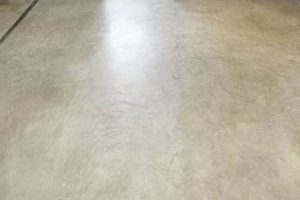
The aesthetic possibilities encompass a broad spectrum, ranging from simple, clean lines achieved through polished surfaces to elaborate decorative effects using stains, dyes, and overlays. Staining, for instance, offers a cost-effective means of imparting color and depth, mimicking the appearance of natural stone or tile. Overlays, such as micro-toppings or epoxy coatings with decorative flakes, provide even greater design flexibility, enabling the creation of custom patterns and textures. Furthermore, the application of sealers with varying sheens matte, satin, or gloss further fine-tunes the visual impact. The selection of an aesthetic approach must align with the intended use of the space and the overall design aesthetic of the residence. For example, a modern, minimalist aesthetic may favor a polished surface with a subtle gray stain, while a more traditional design may incorporate a textured overlay with a warmer color palette. Many homeowners opt for acid etching techniques for a unique look.
In conclusion, prioritizing aesthetics in subterranean concrete foundation treatments yields tangible benefits beyond mere visual appeal. It enhances the usability of the space, increases property value, and fosters a more positive living environment. Neglecting this crucial aspect undermines the full potential of the lower level, limiting its functionality and detracting from the overall value of the residence. Therefore, aesthetics should be regarded as an integral component of any comprehensive treatment plan, carefully considered in conjunction with functional requirements to achieve a balanced and optimized outcome.
7. Maintenance
Sustaining the integrity and aesthetic appeal of finished surfaces in subterranean environments is fundamentally linked to appropriate maintenance practices. The investment in surface treatments necessitates a commitment to ongoing care, ensuring long-term performance and preventing premature degradation. The level and type of maintenance required vary depending on the selected finish and the usage of the space.
- Regular Cleaning Protocols
The establishment of consistent cleaning protocols forms the cornerstone of any maintenance strategy. Routine sweeping, vacuuming, and damp mopping remove loose debris, preventing abrasive wear and the buildup of stains. The choice of cleaning agents should be compatible with the specific finish, avoiding harsh chemicals that can damage the surface. Example: Employing a neutral pH cleaner on an epoxy-coated floor to prevent etching or discoloration. Implication: Prolongs the lifespan of the finish and preserves its aesthetic qualities.
- Protective Measures Against Abrasion and Impact
Implementing protective measures minimizes the risk of physical damage. Utilizing mats at entryways traps dirt and grit, preventing it from being tracked onto the finished surface. Furniture pads protect against scratching and scuffing from moving furniture. Avoiding dropping heavy objects mitigates the potential for impact damage. Example: Placing a heavy-duty rubber mat under a weightlifting bench in a basement gym. Implication: Reduces the likelihood of surface imperfections, extending the need for costly repairs or refinishing.
- Periodic Sealer Reapplication
Certain surface treatments, such as stained or sealed surfaces, require periodic reapplication of the protective sealer. This replenishes the protective layer, maintaining its resistance to moisture, stains, and abrasion. The frequency of reapplication depends on the type of sealer and the level of traffic. Example: Reapplying a penetrating silane-siloxane sealer to a stained surface every three to five years. Implication: Prevents the ingress of moisture and contaminants, preserving the color and integrity of the stain.
- Prompt Stain and Spill Remediation
Addressing spills and stains promptly is crucial for preventing permanent discoloration. Blotting up spills immediately and using appropriate cleaning agents for stain removal minimizes the risk of long-term damage. Identifying the type of stain and selecting the corresponding cleaning solution ensures effective remediation without harming the finish. Example: Using a poultice to draw out an oil stain from a porous surface. Implication: Prevents stains from setting into the surface, preserving its aesthetic appeal and simplifying future cleaning efforts.
Consistent adherence to these maintenance practices safeguards the investment in subterranean foundation treatments, ensuring long-term performance and aesthetic satisfaction. Failure to implement a proactive maintenance program results in premature degradation, increased repair costs, and diminished value of the finished space. Careful planning and diligent execution of maintenance protocols are essential for preserving the integrity and appearance of finished lower-level foundations.
Frequently Asked Questions
This section addresses common inquiries regarding the selection, application, and maintenance of surface treatments applied to lower-level foundation slabs. The following questions and answers provide guidance for achieving a durable and aesthetically pleasing result.
Question 1: What are the primary benefits of applying a surface treatment to a subterranean foundation slab?
Surface treatments provide protection against moisture intrusion, enhance durability, improve aesthetics, and increase the usability of the space. They also contribute to improved indoor air quality by mitigating mold and mildew growth.
Question 2: How is moisture managed in a subterranean environment prior to applying a surface finish?
Moisture management involves a multi-faceted approach, including vapor barriers beneath the slab, penetrating sealers, dehumidification systems, and proper site grading to direct water away from the foundation.
Question 3: What constitutes proper surface preparation before applying a concrete finish?
Proper surface preparation encompasses thorough cleaning to remove contaminants, profiling to enhance adhesion, and repairing cracks or imperfections to create a smooth and uniform substrate.
Question 4: What factors influence the selection of appropriate materials for a subterranean foundation slab finish?
Material selection is guided by the intended use of the space, the existing slab conditions, moisture levels, aesthetic preferences, and budgetary constraints. Durability and resistance to abrasion and chemicals are also key considerations.
Question 5: What maintenance practices are essential for preserving the integrity of a treated subterranean foundation slab?
Essential maintenance practices include regular cleaning with appropriate cleaning agents, protective measures against abrasion and impact, prompt stain and spill remediation, and periodic reapplication of sealers, as needed.
Question 6: How can cost-effectiveness be optimized when selecting a surface treatment for a subterranean slab?
Cost-effectiveness is optimized by considering the totality of expenses, from initial installation to ongoing maintenance, and potential long-term savings derived from enhanced durability and reduced repair costs. Balancing upfront investment with projected lifecycle costs is crucial.
In summary, the successful application of surface treatments on subterranean foundation slabs hinges on careful planning, meticulous execution, and a commitment to ongoing maintenance. Addressing moisture issues, selecting appropriate materials, and implementing consistent cleaning protocols are essential for achieving a durable, aesthetically pleasing, and functional space.
The following section will explore potential problems, troubleshooting advice, and guidance for addressing challenges encountered during the process.
Concrete Finishes for Basement Floors
The preceding sections have provided a comprehensive exploration of surface treatments applied to lower-level foundation slabs. Key aspects discussed include moisture mitigation, surface preparation techniques, material selection criteria, and the importance of both aesthetic considerations and ongoing maintenance. Durability and cost-effectiveness emerged as central themes, underscoring the need for informed decision-making throughout the process.
Implementing appropriate surface treatments on subterranean foundation slabs represents a significant undertaking with long-term implications. A thorough understanding of the principles outlined herein, coupled with meticulous execution and adherence to industry best practices, is essential for achieving a durable, aesthetically pleasing, and functional space. Continued vigilance and proactive maintenance are crucial for preserving the integrity of the finish and maximizing the return on investment.